

This year we set off to visit Puglia in southern Italy. The itinerary for this 10-days road trip, which we completed in October, focused on Salento and the region south of Bari. It is in this part of the heel of Italy’s boot that you’ll find the most beautiful beaches and the most charming typical villages. We also made a short detour into the Basilicata region to visit Matera.
I have already written several articles on the blog about each of the cities we visited. This more general article is presented as a practical guide to planning a road trip in Puglia. I share all our best tips and recommendations, as well as our feedback on the itinerary to choose, the budget, the most beautiful beaches, the must-see attractions, and where to stay during a driving tour in Puglia.
What to do in Puglia : planning your trip
Best time to visit Puglia in Italy
Southern Italy can be visited all year round, but some periods are more favorable than others.
- April to June and September to October : spring and autumn are a great time to visit Puglia. You can swim from May (or earlier for those less sensitive to cold) until the end of October. Prices are lower and there are fewer crowds.
- July and August : summer is the high season in Italy, the time when there are the most tourists, with crowded beaches and traffic jams. It can also be very hot and prices are at their highest. If you prefer peace and quiet, avoid visiting in the height of summer.
- Between November and March : in winter the weather can be rainy and many shops and restaurants are closed in seaside resorts and villages. It is a season to avoid except at Christmas, when tourism increases again for the holiday season. Some villages display beautiful festive light decorations.
While there, we used the Lonely Planet guide to visit Puglia and I highly recommend it. It is very well done, with plenty of explanations about the sites to see and advice on finding the most beautiful beaches. Combined with the Carnets Voyages blog, you’ll have all the useful information to plan your stay in Puglia 🙂
How to get to Puglia ?
Unless you are already traveling in Italy, the best way to reach Puglia is by plane. This region of southern Italy has two international airports : Bari and Brindisi. These two cities are quite close to each other, barely 120 km apart. So unless you plan an itinerary focused only on the south or the north, the choice of airport is not very important. You will likely pass through both Bari and Brindisi during your road trip in Puglia.
For our part, we chose the cheapest flight. To do this, I use Skyscanner to compare flights and find the best fares. Brindisi won via ITA Airways. In October there are no direct flights from Nice, so we had a layover in Rome.
Another option is to go via Naples but this involves more driving. You then have to cover 250 km (2h40 by car) to reach Matera.
How to get around ?
Car rental : we rented a car to complete this 10-days road trip in Puglia. This way we were completely free and able to reach beaches located away from city centers. To find the best car rental prices, I recommend using the AutoEurope comparison site. I have been using it for many years for my trips and am very satisfied. Cancellation is free until the last moment. We chose the company Sicily by Car, the prices are very attractive and the service impeccable.
Bus and train : it is possible to visit Puglia without renting a car. It will take a bit longer and you won’t be able to go everywhere, but the cities are well connected by bus and train. For destinations not accessible by public transport, you can opt for organized excursions from major cities.
How much time to spend in Puglia ?
This is a difficult question to answer because it depends on your travel style. There is a big difference between someone who spends hours in museums or on the beach and travelers who rush through visits to see as much as possible. To get a good overview of the region, I think you need at least one week of vacation. In 7 days you will be able to explore a large part of Puglia, but not everything.
For our part, we did a 10-days road trip in Puglia to make a large loop. However, we were not able to go all the way north to the Gargano National Park. If you want to complete a full tour of Puglia, you need at least 2 weeks, or 14 to 15 days.
If you only have 3 to 5 days for a short stay, you will need to focus on a smaller area. In this guide, I indicate the time needed to visit each site. You can then create your own itinerary.
Lastminute deals
You can also check Lastminute, where you often find attractive offers and deals. There are self-drive tours as well as all-inclusive stays in hotels and holiday clubs.
Budget guide to Puglia
The budget depends on how you travel, and for the same itinerary it can vary greatly depending on the category of accommodation and where you eat. Puglia and southern Italy are not expensive destinations (much less than northern Italy). Prices are affordable, especially when traveling outside the high season.
To give you an idea, here is our budget for 10 days in Puglia in October 2023 (2 people) :
- Round-trip flight Nice–Brindisi : €259 per person
- Car rental for 10 day s: €187 (found on AutoEurope)
- Fuel : €120 for 1,177 km
- Accommodations for 9 nights : €710 (average €79 per night)
- Meals and visits : €676
- TOTAL : €1,952
10-days road trip in Puglia: our itinerary (map)
I have shown on the map below the itinerary we followed during our 10-days road trip in Puglia. The starting and ending point is Brindisi Airport. There is no specific order to follow for the visits, you can travel in whichever direction you prefer.
We chose to start in southern Salento to enjoy the beaches (this is where they are most beautiful) as it was already mid-October. This choice proved wise because afterward we had rain or cloudy weather. We covered 1,177 km during this 10-days road trip in Puglia.
- Day 1: arrival in Brindisi and drive to Martano in Salento
- Day 2: Otranto, bauxite quarry, Faraglioni di Sant’Andrea, and Grotta della Poesia
- Day 3: Gallipoli, Posto Vecchio beach, and Santa Maria di Leuca
- Day 4: Lecce
- Day 5: Galatina and Nardò (rain)
- Day 6: Matera
- Day 7: Polignano a Mare and Monopoli
- Day 8: Alberobello, Locorotondo, Cisternino, and Ostuni
- Day 9: Ceglie Messapica (rain)
- Day 10: return to Brindisi Airport

Where to stay to visit Puglia ?
To explore Salento, the southernmost part of Puglia between Lecce and Santa Maria di Leuca, we chose a single accommodation. We wanted a base that would allow us to easily explore the region for 4 days. We found exactly what we were looking for in the village of Martano, very centrally located, in a beautiful typical farmhouse whose owner speaks French. We 100% recommend this place, it is Masseria Petra.
We then spent one night in Matera (I recommend this place) to enjoy this magnificent city in the evening. However, this is not essential since it is only 1 hour from Alberobello. We then spent one night in a trullo in Alberobello (like this one) to experience this typical accommodation. For the last 3 nights we chose accommodation between Ostuni and Brindisi (I particularly recommend this B&B) so as not to be too far from the airport on departure day.
You can choose a single accommodation to visit the entire Itria Valley (from Alberobello to Ostuni) as well as Polignano a Mare and Monopoli. For more information and addresses, I invite you to read my article on where to stay in Puglia.
Things to do in Puglia
The beaches and cities in this travel guide are presented in the order we followed during this Puglia road trip. To navigate more easily and search for information about a specific site, use the menu at the beginning of the article.
This is a lot of information, but I wanted this guide to be as comprehensive as possible. You can then make your own selection to create your own Puglia itinerary in 5, 7, 10, or 15 days.
Otranto
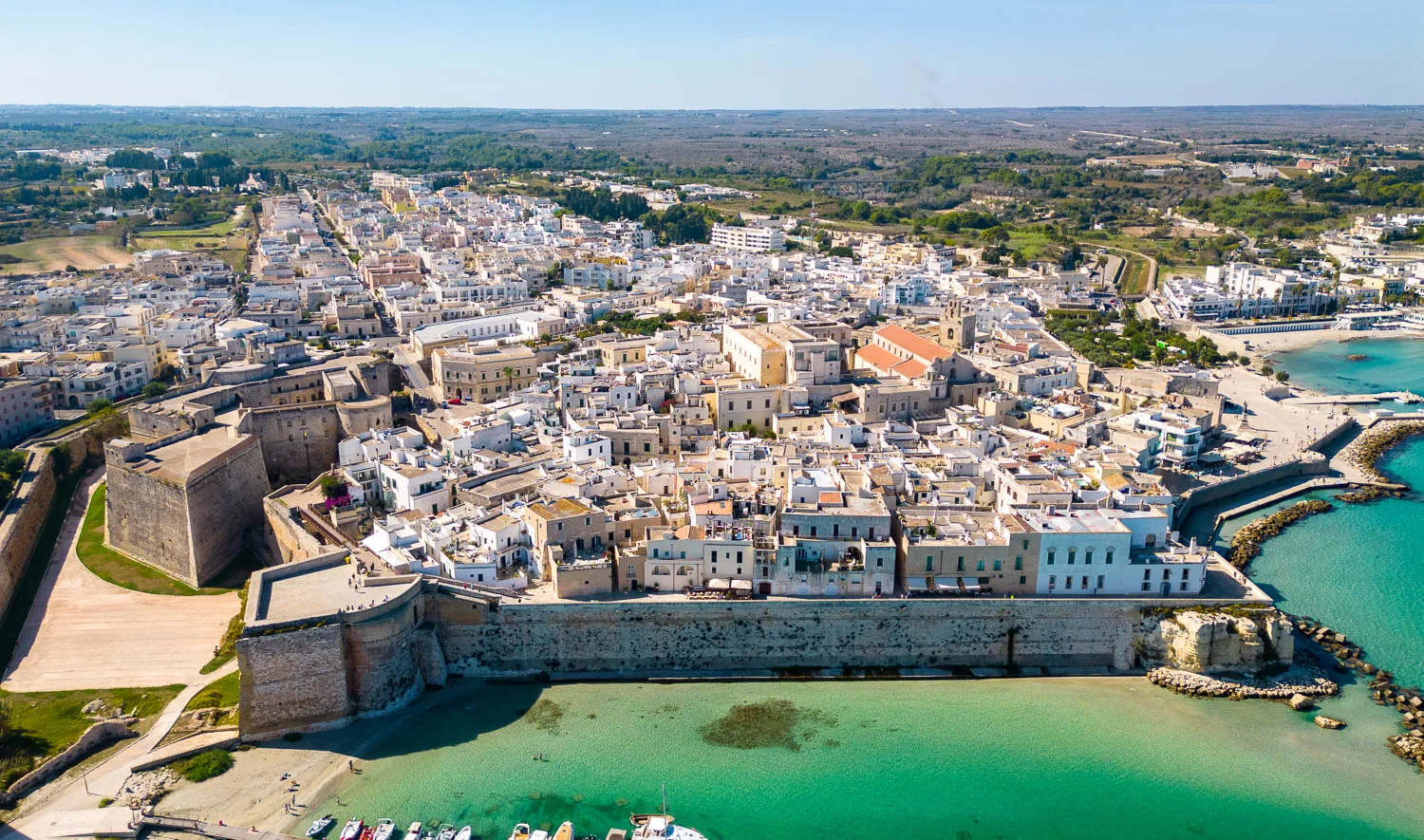
We began this road trip in Puglia with the city of Otranto located on the Adriatic coast of Salento. This charming medieval town, which has several interesting buildings, is surrounded by walls dating back to the Byzantine period. As the region experienced successive occupations over the centuries, the walls and castle were later reinforced by the Normans, the Angevins, and then the Kingdom of Spain. Within the historic center, the cathedral and the Byzantine church are among the must-see sites.
Otranto has a pleasant seaside promenade (lungomare) lined with bars and restaurants. It is the ideal place to enjoy an aperitivo at the end of the day. There is also a beautiful sandy beach with turquoise water right at the foot of the city walls.
To discover more about all the things to see, I invite you to read my article what to do in Otranto.
Visiting time : half a day
Accommodations in OtrantoWe chose a single accommodation to visit Salento because the distances between the two coasts are not great. The idea was to choose a centrally located place, and we chose the town of Martano. You will find many typical Puglia farmhouses there. Our choice was Masseria Petra. We 100% recommend it. For those who prefer to stay by the sea to be as close as possible to the beach, here are some great places in Otranto :
|


Bauxite quarry
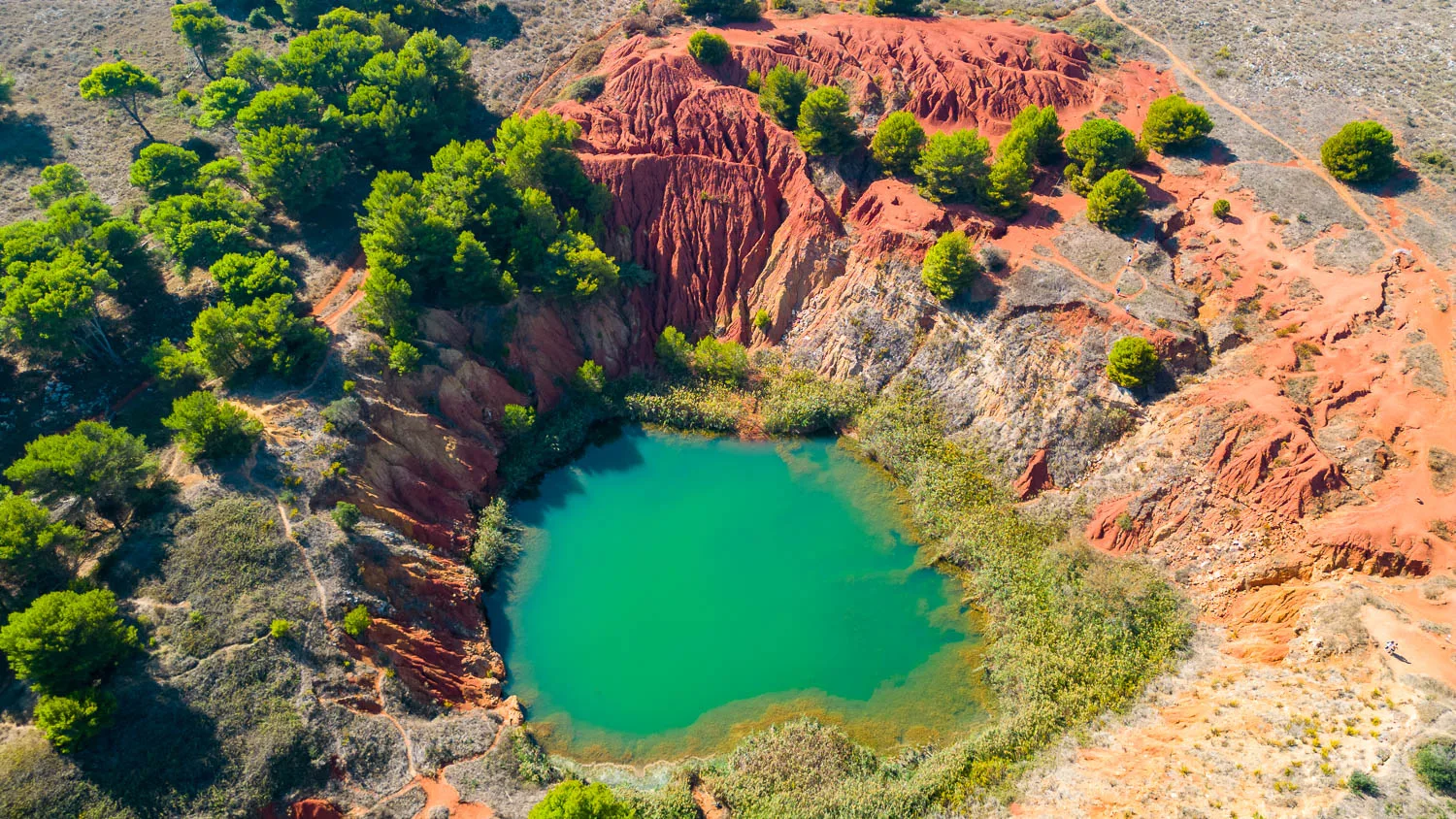
After spending the morning wandering through the streets of Otranto, we drove to the bauxite quarry located 2.6 km south. This former aluminum extraction site, operated until 1976, has become an Instagram spot since an emerald-green lake formed there. The rust-colored rock contrasts with the color of the lake. The photo is especially striking from an aerial view. Without a drone the spectacle is less impressive.
Parking is paid (€3) to reach the bauxite quarry (map). You then have to walk 10 minutes along a path to reach the viewpoint.
Visiting time : 30 minutes
Faraglioni di Sant’Andrea
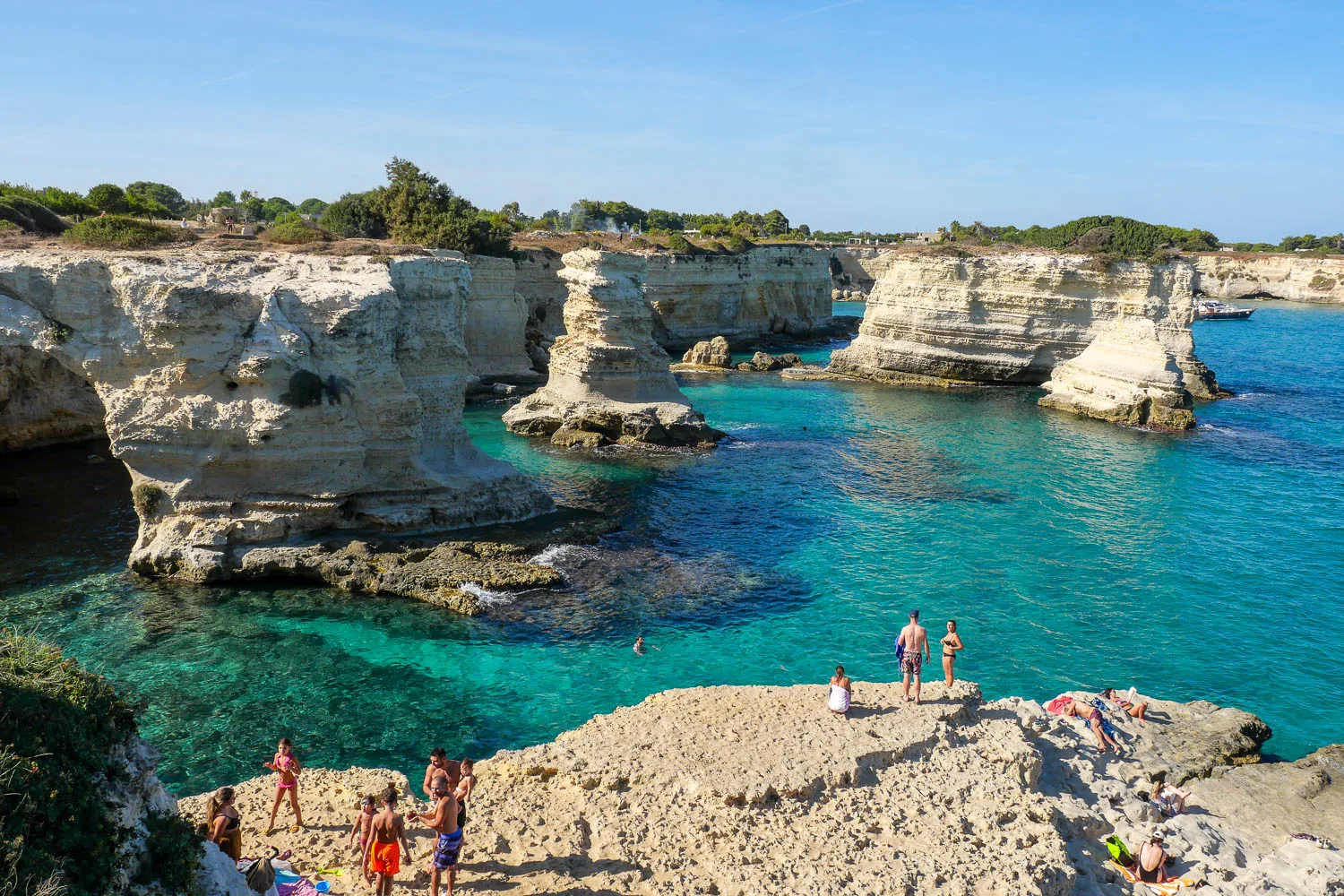
After this short detour south of the city, we head north to reach the Faraglioni di Sant’Andrea, 14 km from Otranto. Faraglioni are rock stacks that, due to erosion, have detached from the cliff and now stand in the sea. These unusual geological formations can be observed around the fishing village of Torre Sant’Andrea. The place is ideal for swimming and also offers a pleasant hiking trail to enjoy the viewpoints.
To park on site, there is a public paid parking area between 01/05 and 30/09 from 8:30 a.m. to midnight (€1.50 per hour). You will find it at this address. Campervans are not allowed, but there is a campsite just behind.
Visiting time : 1 hour or more if swimming


Grotta della Poesia
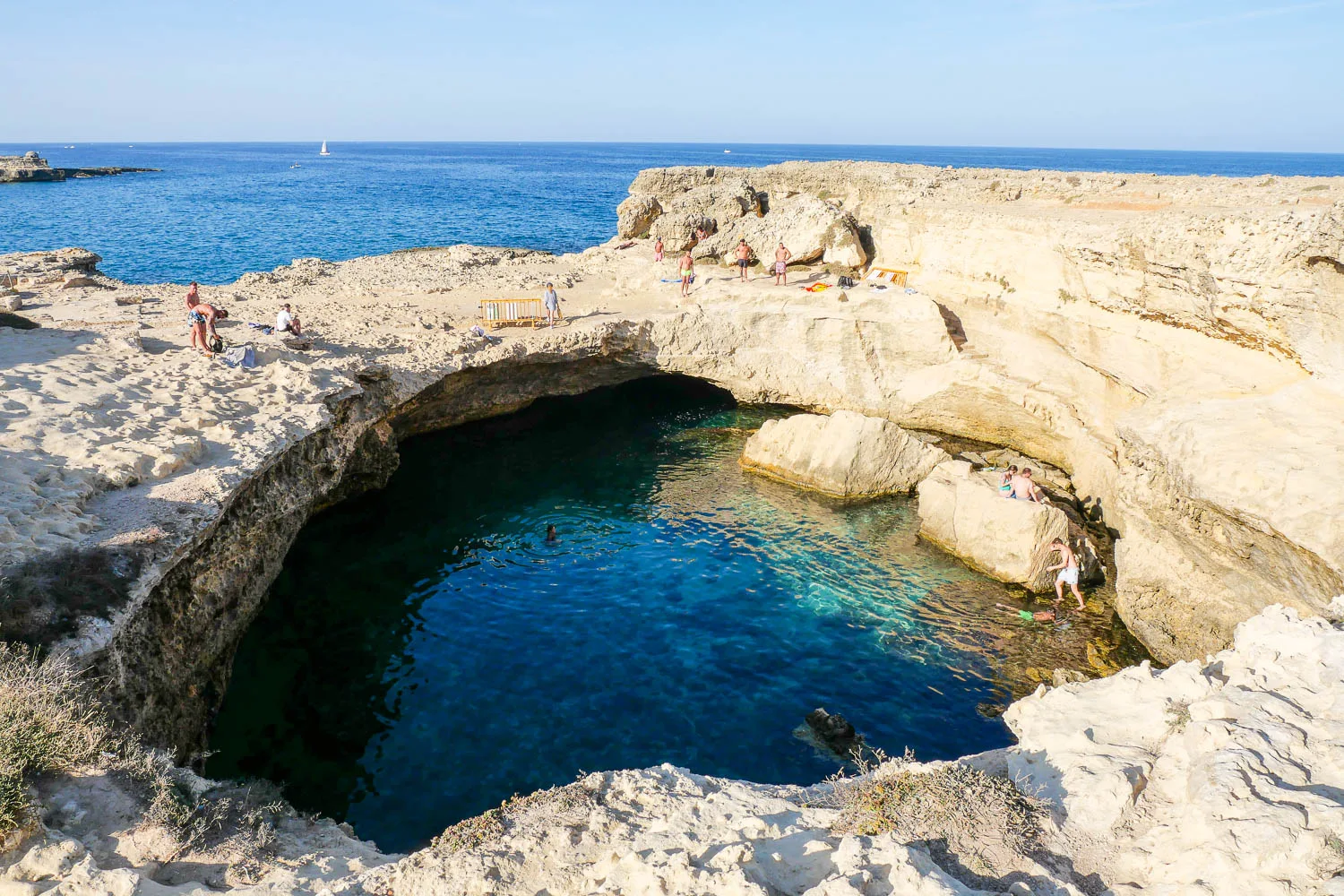
Continuing north for another 10 minutes, you reach another must-see site in Puglia, the Grotta della Poesia (Grotta della Poesia in Italian). The roof of this cave collapsed, forming a natural pool. There is even a tunnel connecting it to the sea. Once again, this is a very popular site on social media, where you often see people swimming. However, in reality, swimming in the Grotta della Poesia is strictly forbidden. Yet none of the locals seem to respect this ban. The ground around the site is unstable.
The Grotta della Poesia is part of an archaeological site that also includes the site of Roca Vecchia further north. Messapian inscriptions (as well as Latin and Greek) have been discovered on the cave walls. If you want to swim legally, it is better to do so 100 meters north in the coves of Torre di Maradico.
Access to the Grotta della Poesia is paid (€3) and includes a guided tour of the archaeological site (duration 1h30). However, most visitors simply go to see the cave. To reach the site, you must use this parking area. The rate is €1.80 per hour every day between 8:30 a.m. and midnight.
Visiting time : 1 hour or more if swimming


Gallipoli
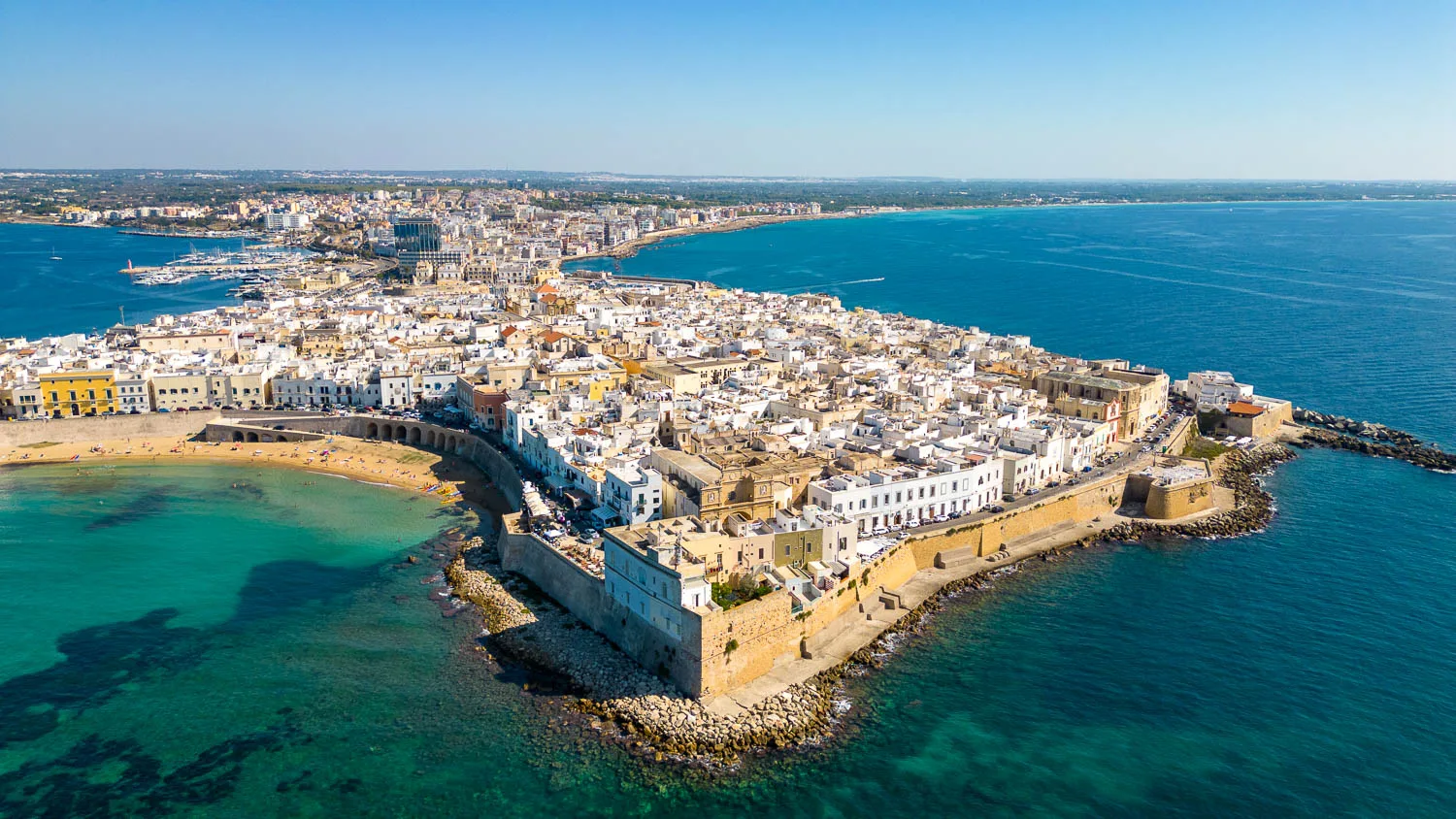
The next morning we set off for Gallipoli on the Ionian coast of Salento. The historic center of this city is located on an island connected to the mainland by a bridge. It contains a charming maze of streets with several remarkable buildings and museums. Among them is the magnificent cathedral with its sculpted façade and frescoes. Gallipoli also has an imposing castle guarding the entrance to the old port. The old town houses several underground oil mills, remnants of the time when the city exported olive oil throughout Europe.
In addition to its center, which we loved, Gallipoli has a beautiful sandy beach right at the foot of the city walls (Spiaggia della Purità). Everything is in place to fall in love with it, it was one of our highlights in Puglia. Be aware that in high season the city and its surroundings are well known for partying. Many young Italians come here in summer and the atmosphere can be quite different.
If you want to learn more and not miss any must-see sites, I invite you to read my article on things to do in Gallipoli.
Visiting time : half a day
Accommodations in GallipoliLike Otranto, Gallipoli can be a good base on the Ionian coast for visiting Salento. Here are some good places I recommend in the city and its surroundings.
|


Posto Vecchio beach
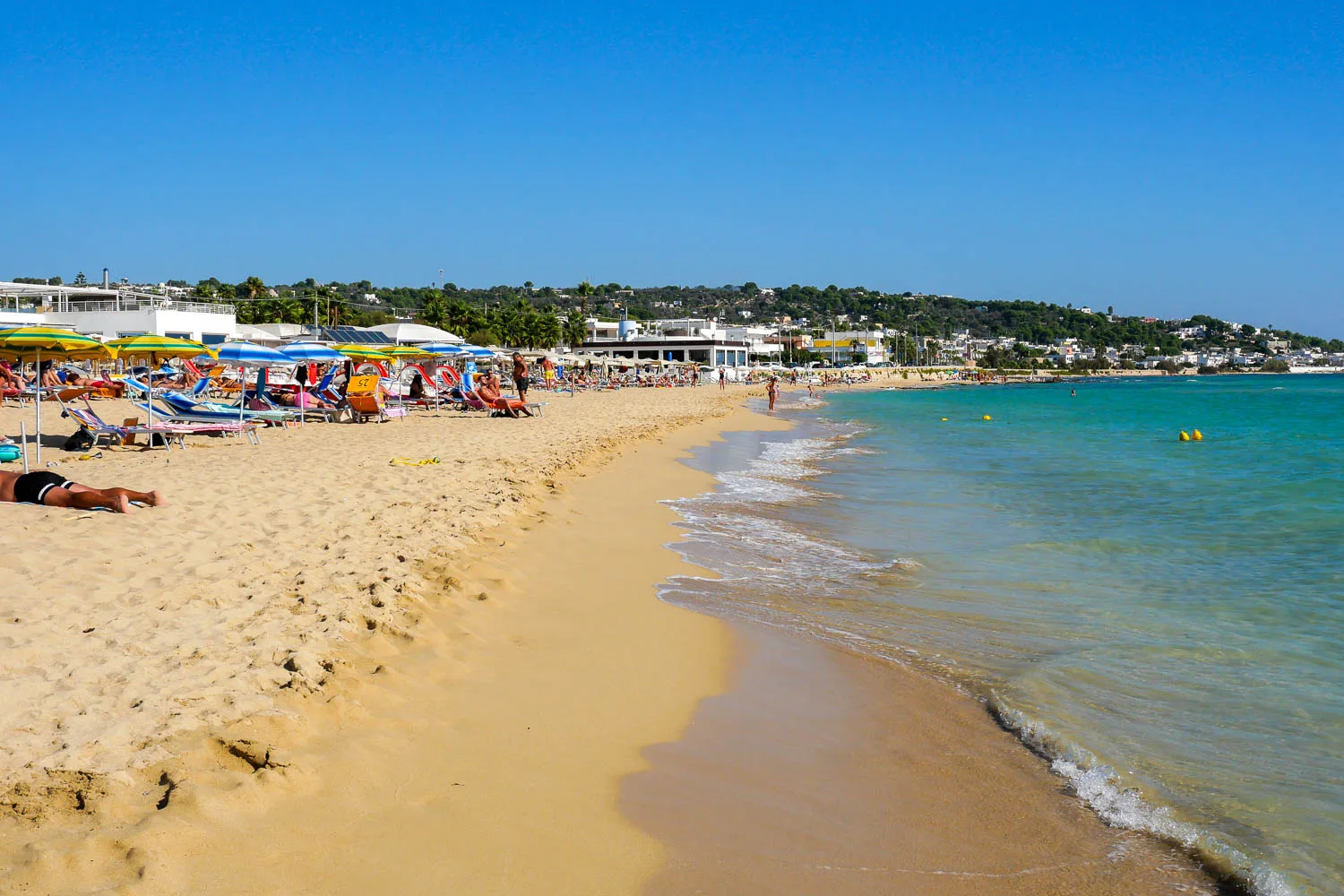
To spend part of the afternoon, we chose one of the most beautiful beaches in Salento : spiaggia di Posto Vecchio. It is located 41 km (35 minutes by car) south of Gallipoli and 15 minutes north of Santa Maria di Leuca (map). This wild beach has fine golden sand and turquoise water — it’s no coincidence it is nicknamed the Maldives of Salento. We took the opportunity to have a picnic on the beach with focaccias bought in Gallipoli. The water was a bit cool (around 21°–22°C), but I still went swimming (Daniela, who is more sensitive to cold, preferred not to). We are used to our Mediterranean Sea, which reaches 26°C in summer.
A large part of the beach is free to access, but there are also several private beach clubs offering sun loungers and umbrellas. We had no trouble parking in October, but I imagine it is more difficult in July and August. In addition to paid parking in season, there are private parking lots for €3 per day.
Santa Maria di Leuca
At the end of the day we head to Santa Maria di Leuca, the southernmost point of Puglia. The cape is marked by a 47-meter-high lighthouse. Right next to it, the Santuario di Santa Maria de Finibus Terrae is a pilgrimage site. This ochre-colored stone church was built in the 18th century on the remains of a Roman temple. The interior is very simple and offers nothing particularly interesting.
The cape of Santa Maria di Leuca offers a beautiful panorama of the sea as well as the town and port. However, there is nothing in particular to do. You can still come for the sunset. You can stop if you pass by, but I do not consider the town one of the must-see sites in Puglia.
There are several sea caves along the coast of Santa Maria di Leuca. You can visit them on a 1.5-hour boat trip during the day or at sunset. Prices start from €8 per person. Information and reservations on this site. You can also choose this 3-hour activity, which includes swimming stops.
Visiting time : 1 to 2 hours


Lecce
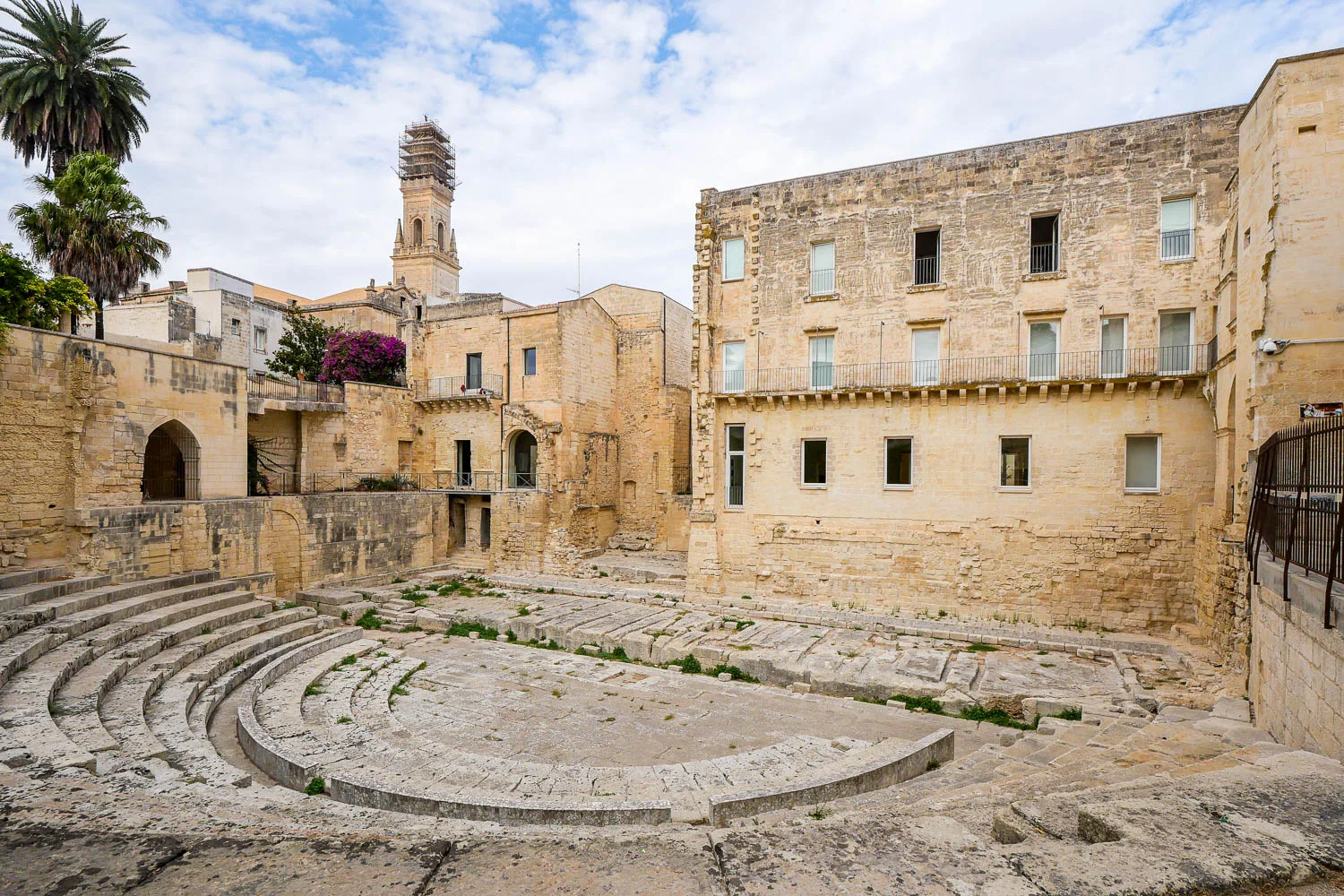
The third day of this itinerary in Puglia is dedicated to visiting Lecce, the capital of Salento. The city is famous for its Baroque architecture, which flourished here during the 17th century. The historic center contains many religious buildings and churches, as well as Roman remains. It is clearly the most important city in Puglia in terms of heritage and architecture. Lecce is one of the must-see places in Puglia. Allow a full day to explore its monuments.
I will not detail all the things to see in the Florence of the South (its nickname), as there is so much to do. Instead, I refer you to my guide for things to do in Lecce.
If you want to know what to do in Puglia without a car, it is possible to visit the surroundings of Lecce with a tour. I particularly recommend this one, which includes Gallipoli, Galatina, Santa Maria di Leuca, and Otranto.
Visiting time : 1 day
Accommodations in LecceLecce is an excellent base for visiting Salento for those looking for a lively city with nightlife. Its location means all the main sites in the region are less than an hour away. Here are some great places I recommend :
|


Galatina and Nardò
When I planned our itinerary to visit Puglia, I intended to go to the beach that day. But the rainy weather changed our plans. So we looked for an alternative by visiting inland towns. Salento has many towns and villages that history and architecture lovers will enjoy visiting. Others will prefer to head to the beach.
I’ll mention it again, but Salento has the most beautiful beaches in Puglia, so take advantage while you’re in the area. If you’re undecided, I had noted the very beautiful spiaggia di Punta Prosciutto (map) on the Ionian coast for that day.
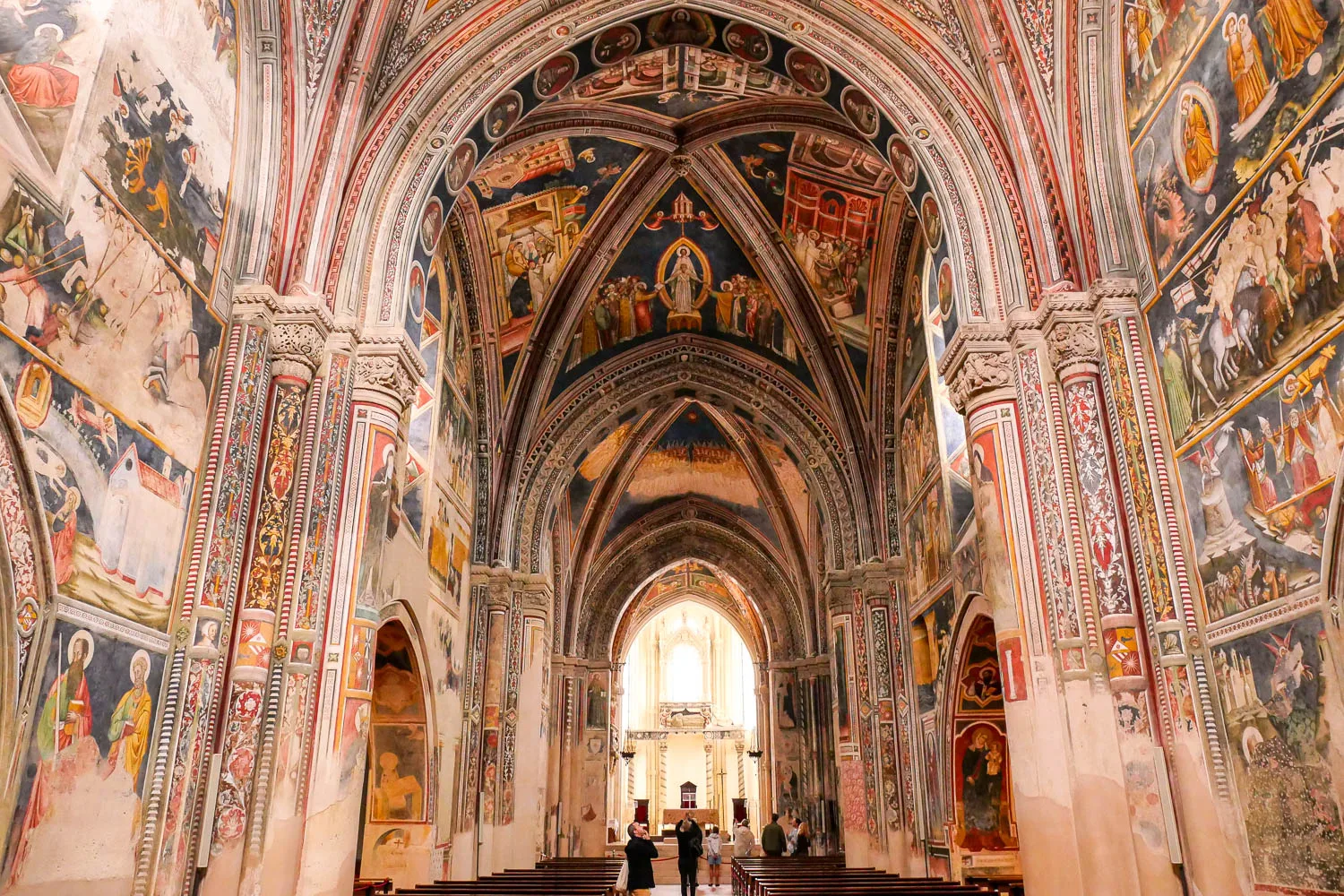
Galatina is located 25 km south of Lecce. Although it resembles many inland towns in Puglia, it hides a small treasure not to be missed : the magnificent Basilica di Santa Caterina d’Alessandria (free entry). This 14th-century basilica, blending Romanesque and Gothic styles typical of Puglia, features superb frescoes. It was built on the foundations of a Byzantine church dating back to the 9th century. As for the façade, it has a finely sculpted portal whose lintel bas-relief depicts Christ among the twelve apostles.
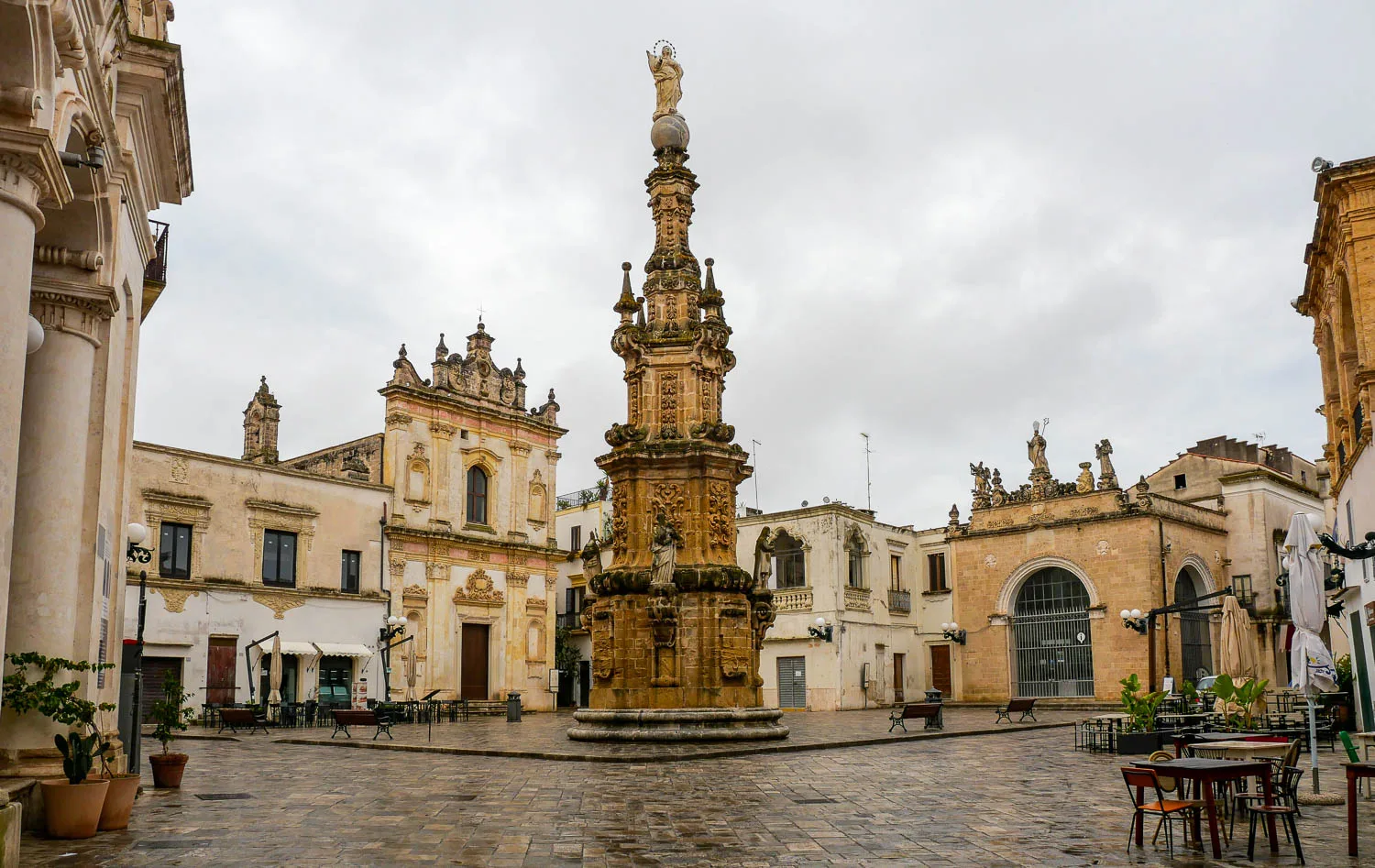
Nardò is a 20-minute drive from Galatina. Its historic center features beautiful buildings from the 17th and 18th centuries, typical of Lecce Baroque. While strolling through the streets, you discover churches, a theater, a cathedral, an Aragonese castle, and several small museums. Piazza Salandra, surrounded by numerous monuments, is the heart of the old town (pictured below). It is a shame the weather was not on our side, because with sunshine I think Nardò must be magnificent.
Visiting time : 2 hours for each town
Matera
We leave Salento and head toward Matera in the Basilicata region. It is no longer Puglia, but this UNESCO World Heritage city is well worth the detour. And it is only one hour from Alberobello, which does not represent a major deviation in our Puglia road trip itinerary.
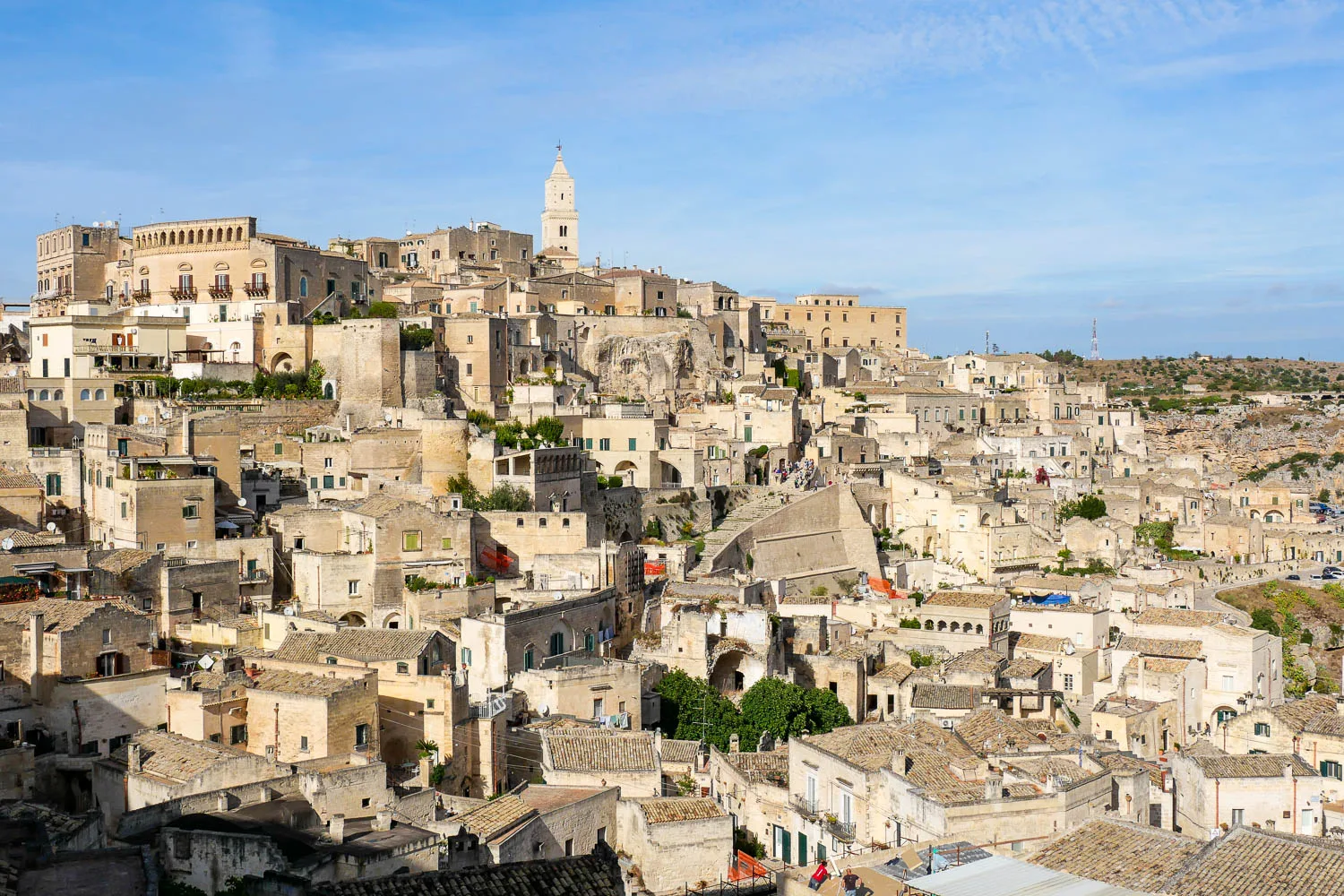
Matera is famous for its sassi, cave dwellings built around a canyon. It also has many rock churches. Walking through this city, one of the oldest in the world, is absolutely charming. It immerses you in another world. It is no wonder the city has been chosen as a filming location for several movies.
To fully enjoy the atmosphere, the ideal option is to spend a night there (which we did). At nightfall, the illuminated streets of the old town transform Matera into something like a nativity scene. This is particularly visible from the viewpoints. To discover everything there is to see and do, I recommend reading my article what to do in Matera.
Visiting time : half a day to one day
Accommodations in MateraIf you can and are not just visiting for the day, spend a night in Matera to enjoy its atmosphere. There are also fewer tourists in the evening. Here are some places I recommend, you will find others in the article dedicated to Matera.
|


Monopoli
After this detour in the Basilicata region, we return to visit Puglia. We went directly to the city of Monopoli on the Adriatic coast rather than going to Alberobello, which was closer. We knew that arriving in the late morning would mean too many tourists. That’s why we dedicated this day to Monopoli and Polignano a Mare.
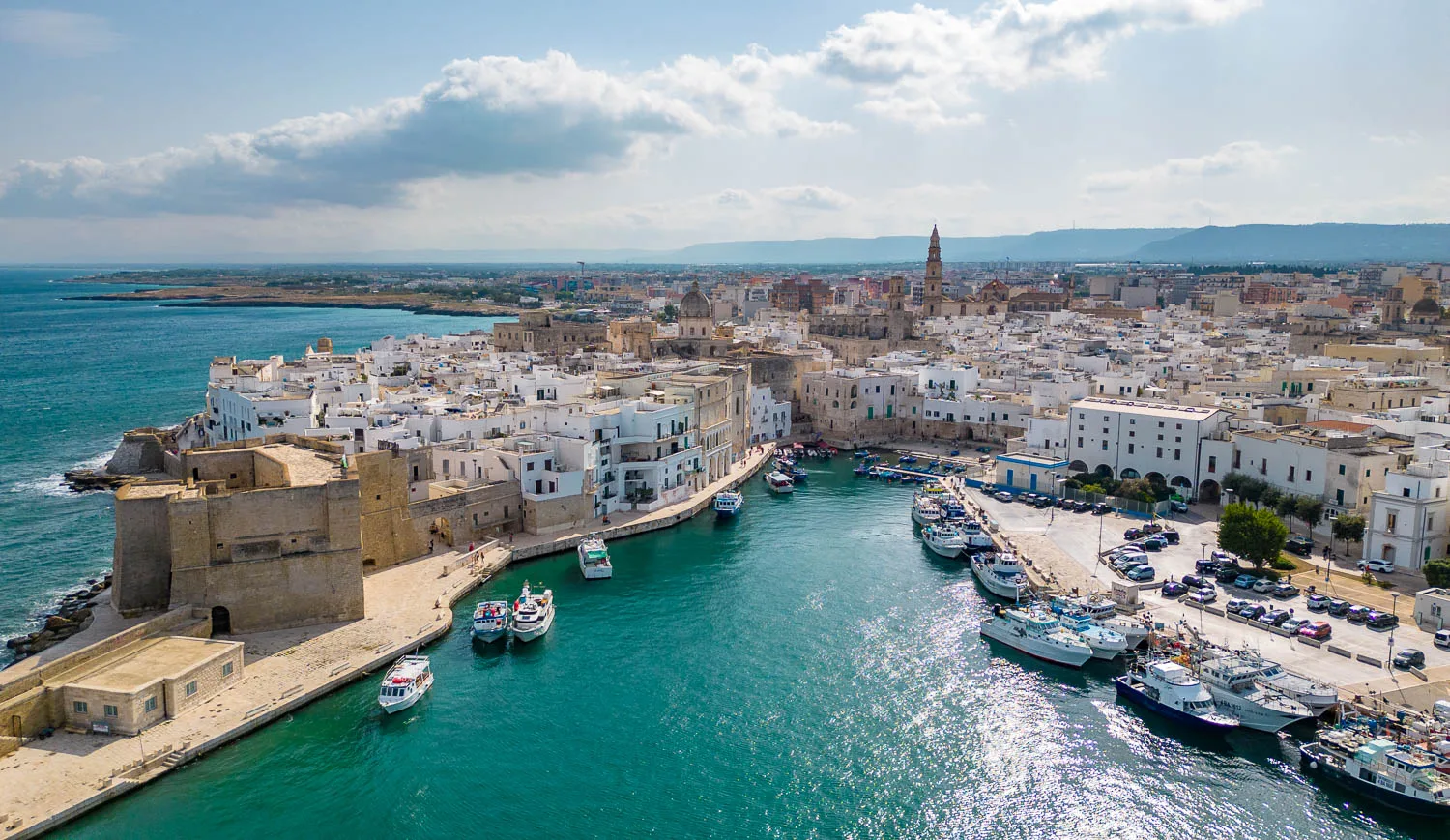
The historic center of Monopoli is partly surrounded by walls and bastions. At the end of the pier, a castle guards the entrance to the old port where blue boats wait to return to the sea. Inside the historic center you’ll find churches and palaces, which you discover while wandering through narrow streets. Those who enjoy relaxation and sunshine can enjoy the sandy beach right at the foot of the walls. We really liked Monopoli, especially as there were not many people. We also took the opportunity to have lunch there, where many seafood specialties are served.
If you want to learn more about the city, I invite you to read my article what to do in Monopoli.
Visiting time : half a day
Accommodation around Monopoli and Polignano a MareThese two cities on the Adriatic coast are a good base for visiting northern Puglia, especially if you want to be close to the sea and beaches. You can easily reach the towns of the Itria Valley that I discuss later in this guide. Here are some places I recommend :
|


Polignano a Mare
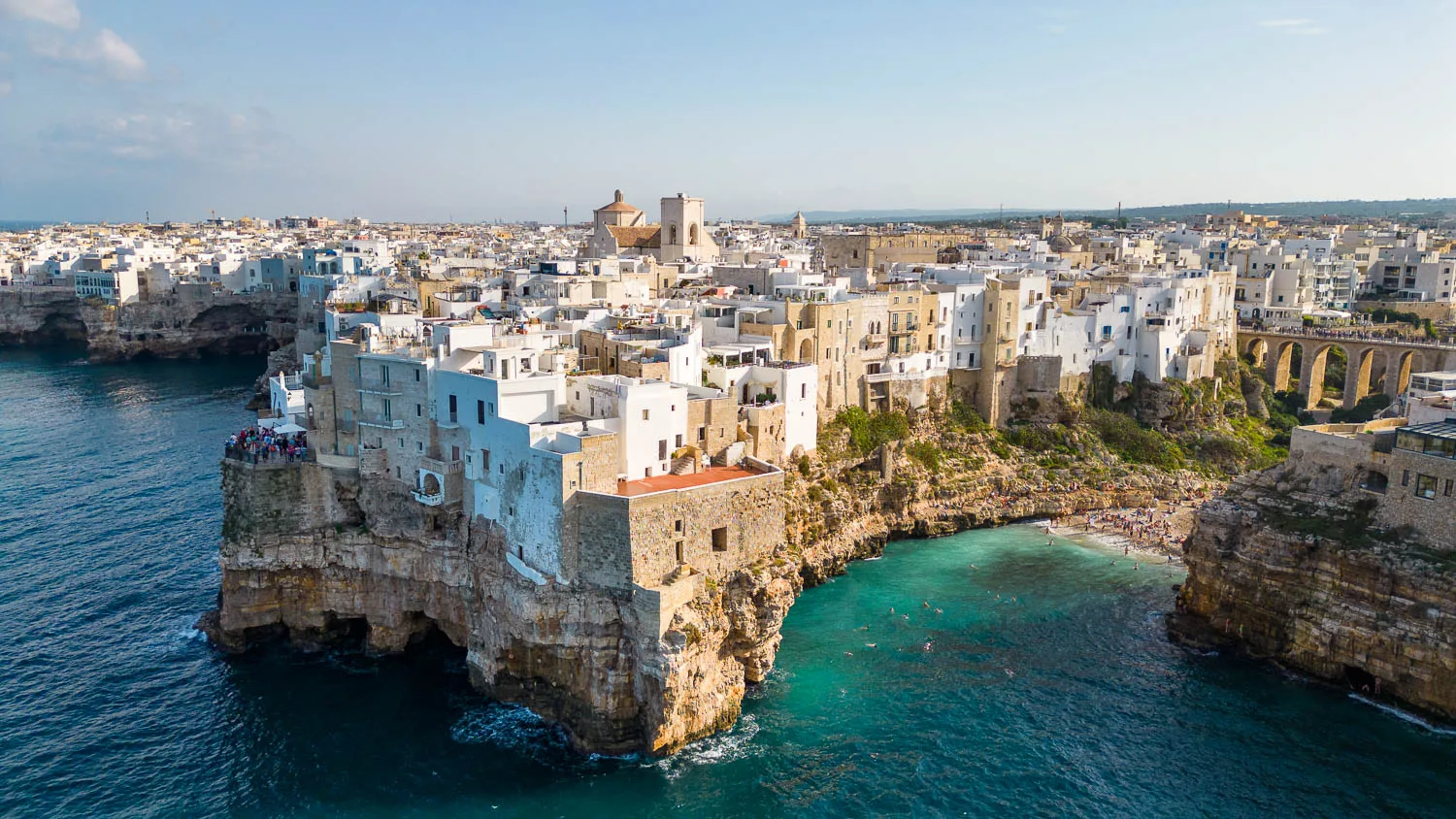
The town of Polignano a Mare, perched on a cliff, is one of the postcard images of Puglia. And for this reason most tourists include it in their itinerary. I recommend doing the same, its historic center is charming (I know, I say that often) and offers beautiful views of the sea. The most famous viewpoint overlooks Lama Monachile beach, a strip of pebbles wedged between two cliffs that has made Polignano a Mare famous.
I invite you to read the post what to do in Polignano a Mare to discover all the things to see in the old town and its surroundings.
The cliffs of Polignano a Mare are home to many sea caves that can be explored. The more adventurous can try this paddleboarding trip. If you prefer to relax while enjoying the scenery, I recommend this cruise to the caves with an aperitif.
Visiting time : half a day


Alberobello
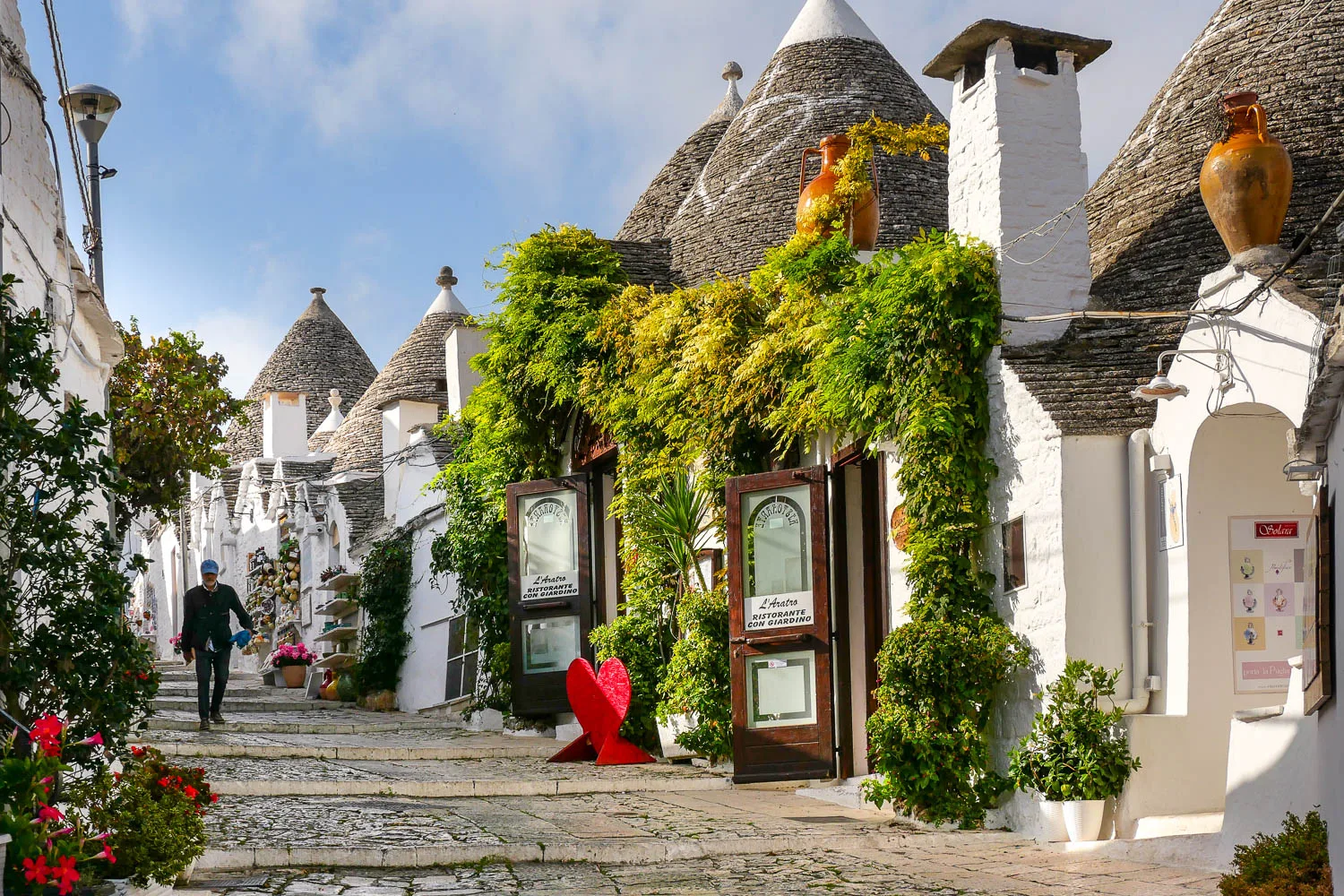
This is the most famous site and one of the best things to do in Puglia. Alberobello has the highest concentration of trulli, the typical houses of the Itria Valley. There are nearly 1,500 spread across two different districts. Alberobello is very touristy, and many organized tour buses stop here. That’s why we came early in the morning, so we could take photos without anyone in them. In October we didn’t have much trouble, but in summer it must be a real challenge.
Alberobello is not an authentic village, I prefer to warn you. Most of the trulli have been converted into souvenir shops and tourist accommodation. When walking through the streets, you sometimes feel like you’re at Disneyland. But the charm still works (especially if you’re alone), and it would be a shame to miss it.
I have written a complete guide to visiting Alberobello, where I share my Instagram photo spots and plenty of tips.
Visiting time : 2 hours
Accommodations in trulli in AlberobelloYou should take advantage of your time in the Itria Valley to experience a night in a trullo. It’s part of the package when visiting Puglia 😀 And we also gave in to the temptation. It also allows you to be on site early the next morning. Here are some places I recommend, you will find others in my post on Alberobello.
|


Ostuni
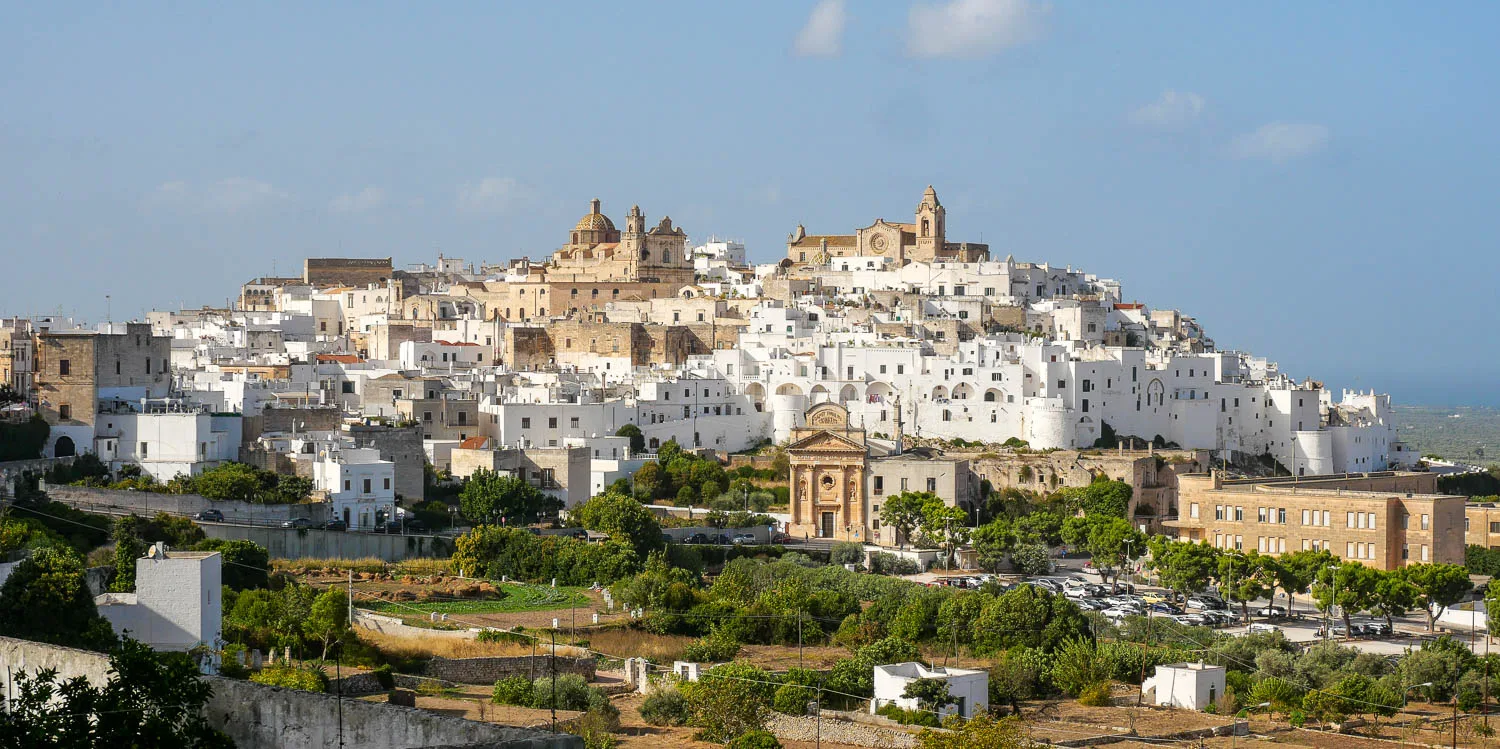
Perched on a hill in the Itria Valley, this town nicknamed the White City is well worth a visit. It owes its name to the façades of its houses, which were whitewashed in the 17th century to fight the plague epidemic. The historic center, surrounded by walls, has several beautiful monuments to see, such as the cathedral and two museums that notably trace local history.
But it is mainly for its pleasant atmosphere and views over the countryside that you should visit. Ostuni is a popular spot for tourists at the end of the day. Many people come to enjoy the bars with terraces and the restaurants. The ideal time to visit is late afternoon to enjoy the soft light and cooler temperatures. You can then explore the countryside on an electric bike ride.
To learn more, head to my article on things to do in Ostuni. Don’t hesitate to include it in your Puglia itinerary.
Visiting time : 2 hours to half a day


Itria Valley
The Itria Valley in central Puglia stretches roughly between Alberobello and Brindisi. This is where the famous trullo originated. The valley is known for its many villages and countryside planted with olive trees and vineyards. I will present the few villages we visited, but if you feel like exploring the whole region, allow several days. However, be careful not to get overwhelmed if you are not a big fan of historic towns when visiting Puglia, in the end it can feel a bit repetitive.
Locorotondo is located 8 km south of Alberobello. It looks very much like Ostuni — it is also a hilltop village made up of houses with whitewashed façades. Among the buildings in the historic center that we really liked is the Church of Madre di San Giorgio Martire, which has a beautiful dome. The old town also offers lovely views of the countryside and bars/restaurants inviting you to take a break.
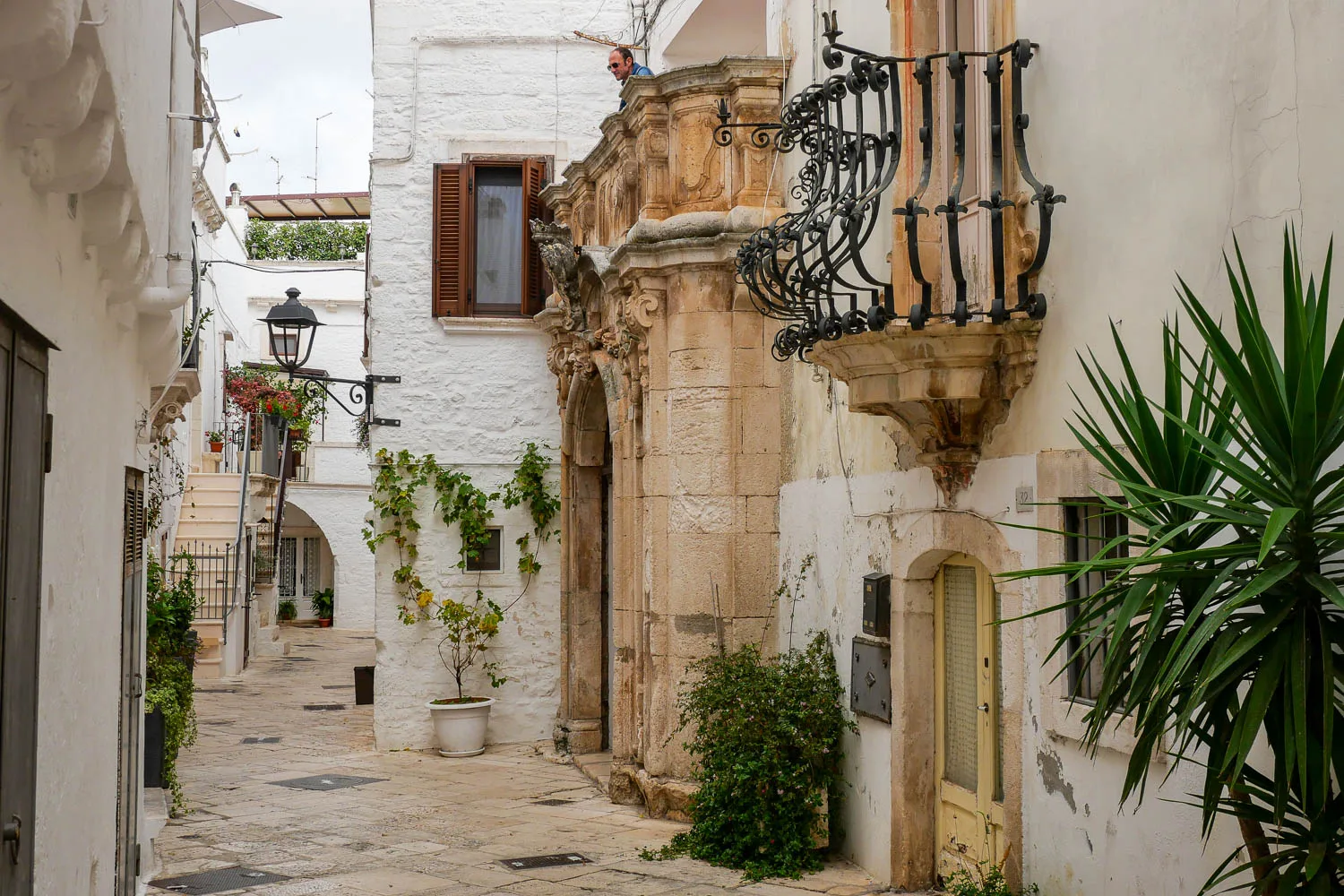
Continuing 9 km south, you reach Cisternino, which, like Locorotondo, is listed among the most beautiful villages in Italy (Borghi più belli d’Italia label). It is less touristy than the previous one — we hardly saw anyone there. It must be said that Cisternino does not have major landmarks that attract tourists. However, those who love authentic villages away from the usual routes will enjoy it.
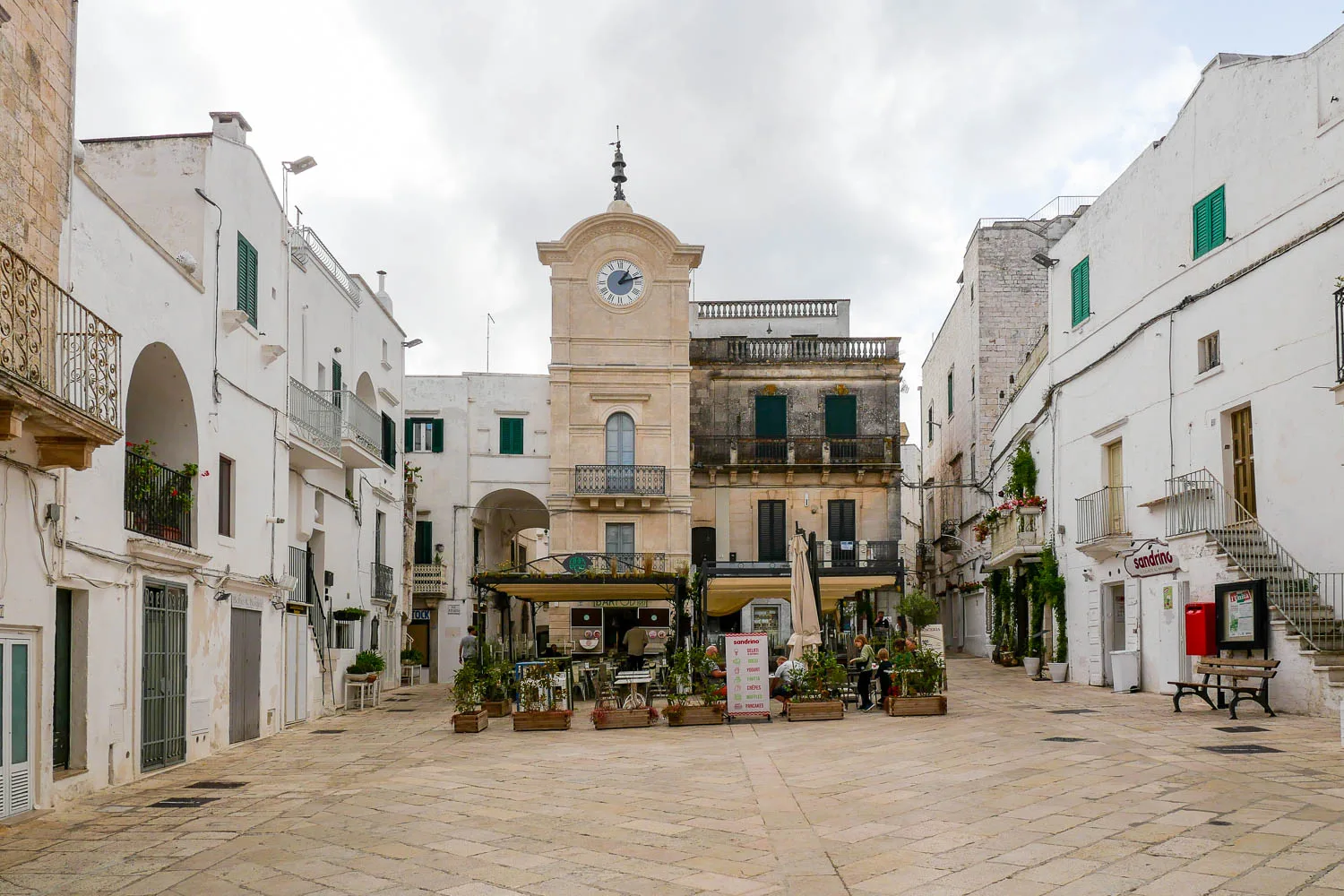
Ceglie Messapica is 12 km southwest of Ostuni. We had not planned to visit this village, but a rainy day led us to explore inland rather than enjoy the beach. It was a pleasant surprise because the historic center of Ceglie Messapica has many historical sites and a few charming squares (especially in good weather).
If you only want to visit one of these three villages, I recommend Locorotondo. But if you don’t have much time to explore Puglia, you can skip it, you won’t miss anything essential.
Visiting time : 1 to 2 hours per village
Accommodations in Itria ValleyTo visit the villages of the Itria Valley (Alberobello, Ostuni, Locorotondo, …) as well as Polignano a Mare and Monopoli, you can choose a single accommodation. The distances are not great and this avoids having to unpack and repack your suitcase every time. Here are a few places I recommend in the countryside around Ostuni.
|
Tips for visiting Puglia
Beware of ZTL zones
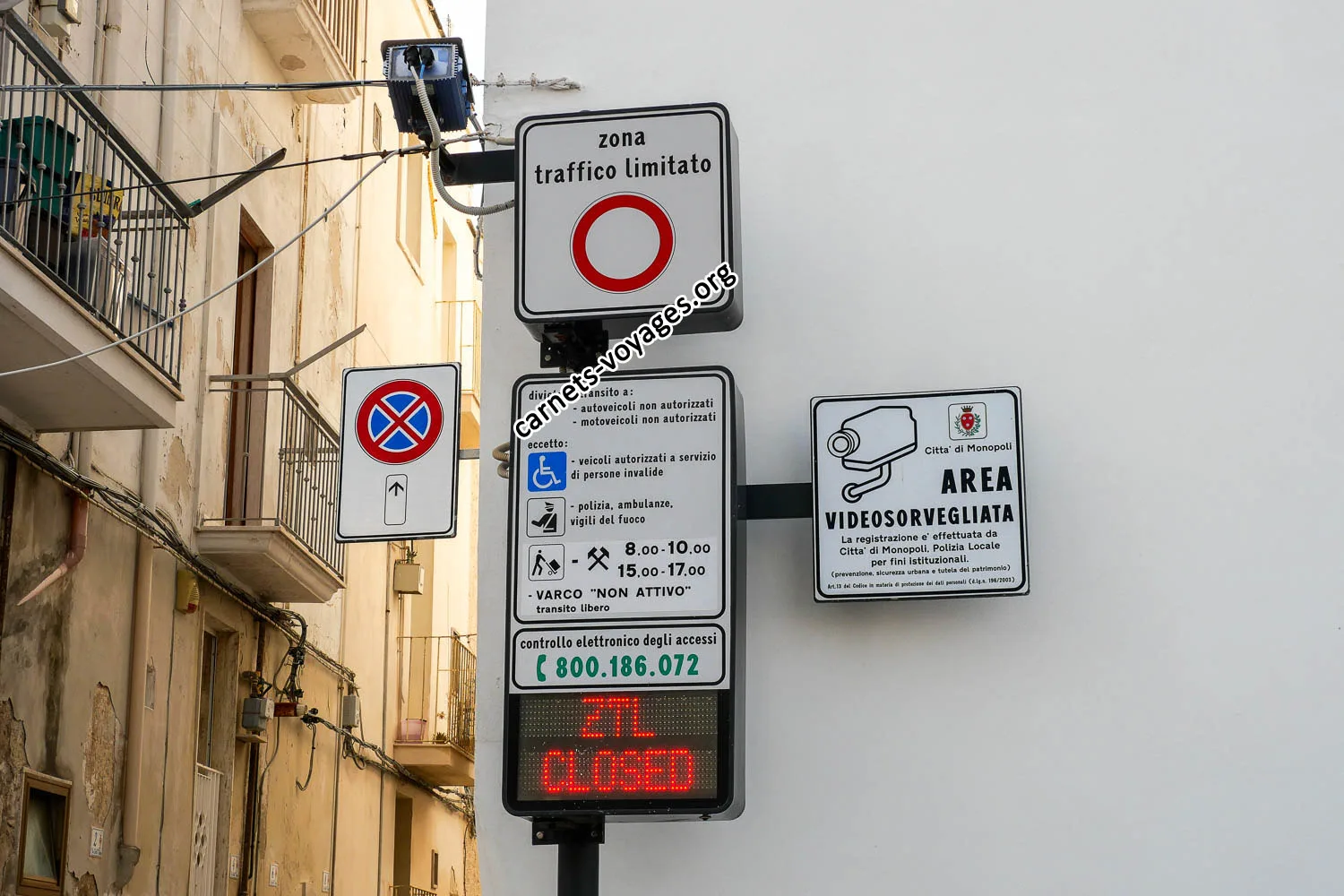
You may be wondering what ZTL zones are. If you have never traveled in Italy, you will quickly discover this feature found in most Italian city centers. You will often come across them when visiting Puglia. The acronym ZTL stands for a limited traffic zone, or zona a traffico limitato in Italian. It is an area closed to vehicles except with special authorization. As a tourist, you will only be allowed to enter a ZTL if you have accommodation inside it. In this case, your hotel will send your license plate number to the local authorities.
Be aware that fines for entering a ZTL without authorization are high (between €80 and €300), and you won’t be able to say you didn’t know. Before entering a ZTL, there are always signs (a red circle with a white center) indicating that the street is restricted, as well as cameras. Some ZTL zones are only active at certain times, which is indicated on the sign. In the most touristy cities in Puglia, there are illuminated signs showing whether the ZTL is active or not, and it is even written in English.
In any case, I advise against entering a ZTL even if it is not active (unless you have accommodation there). You will not find parking spaces inside anyway (often narrow streets). The best option is to use nearby parking lots.
Parking
In the low season we found free parking, but in the high season expect to pay every time you visit a city or a beach. In summer, parking is often an issue and lots are crowded. The cost of parking and street parking is generally €2 per hour.
On the street, pay attention to the different colors of the road markings. Blue indicates paid parking, white indicates free parking, and yellow is reserved for residents.
What do you eat in Puglia ?
Italy is famous for its gastronomy, and Puglia is no exception. It’s impossible to go hungry, restaurants, bakeries, and takeaway snack shops can be found almost everywhere. After our trip to Austria, it was nice to return to good food.
It’s no surprise that you obviously eat pasta there. In Puglia, the specialty is orechietta, a type of ear-shaped pasta. The most popular recipe is orecchiette alle cime di rapa (with broccoli rabe), but I prefer them with ragù (photo 5). Fish is also widely featured, served with pasta (photos 1 and 2) or as a main course. And how could we forget the famous burrata (a mozzarella-based cheese filled with cream), which is another specialty of Puglia. Olive oil is also very present in Puglian cuisine.
For a quick bite (which we often did at lunchtime), you can find takeaway panzerotti (stuffed pizza dough turnovers) and focacce. On the sweet side, pastry shops sell many types of cookies and pasticciotto (photo 6), a shortcrust pastry filled with custard cream.
The Italian menu is a bit different from the French one if you’re not used to it. It consists of primi (mainly pasta), secondi (meat and fish dishes), and side dishes (often vegetables), the contorni. Each dish is ordered separately. Don’t order all three courses unless you have a very big appetite, as the portions are generous.


Money and mobile phone
The use of credit card is widespread throughout Italy, and few places do not accept them. Most establishments have a payment terminal. Of course, if you buy fish directly from fishing boats, don’t expect to use a credit card. All parking meters can also be paid by card (or coins). I used very little cash during this road trip in Puglia.
As for mobile phones there have been no additional charges for using your mobile phone in 27 European countries. For mobile internet (data roaming), pricing varies greatly depending on the operator and the type of plan, so I recommend checking before visiting Puglia.
For non european travelers who want to use their mobile phone in Italy, I recommend getting an eSIM. This allows you to keep your original SIM card to receive calls and SMS while using the eSIM to connect to unlimited 4G/5G internet. The advantage is that the connection is active as soon as you arrive in the country. The price depends on the number of days. By clicking on this link you will get a 5% discount.
My opinion on a trip to Puglia
Puglia is a destination that has the advantage of appealing to the whole family. There are many historic cities with rich heritage that are a pleasure to visit. The Baroque style of Lecce, an architectural movement popular in the 17th century, spread from the capital of Salento to the surrounding cities, offering superb palaces and churches.
Beach lovers will find plenty to enjoy in Puglia. With a coastline of 865 km stretching from the Adriatic Sea to the Ionian Sea, there is something for everyone. From long golden sandy beaches with turquoise waters (on the Ionian Sea side) to cliffs, caves, and coves along the Adriatic Sea, you will be spoiled for choice. The water is warm and clear everywhere — a real treat. We went swimming during our stay in Puglia in mid-October.
Aside from the beaches and cities, the landscapes inland in Puglia are not very varied. Most of the time, they consist of large dry expanses where olive trees, vineyards, and cereals are cultivated here and there. Unlike our trip to Tuscany, we never found a photo spot worth stopping for. Another negative point is the presence of a lot of waste in the countryside, especially along the roads. This was also the case in Sardinia. I would say it seems to be a specialty of southern Italy, but Daniela won’t like that 🙂 (she’s from Naples).
If we had had more time, I would have liked to go up to Gargano National Park for hiking. But it was too far from Salento, where we spent most of our time and which, for me, is the most beautiful region along with the Itria Valley. In the end, north of Bari there are few must-see sites.
This guide should help you to organize a Puglia road trip. If you have general questions about things to do in Puglia, feel free to ask them in the blog comments. If your question concerns a specific city, refer to the corresponding article, you will most likely find the answer there.