
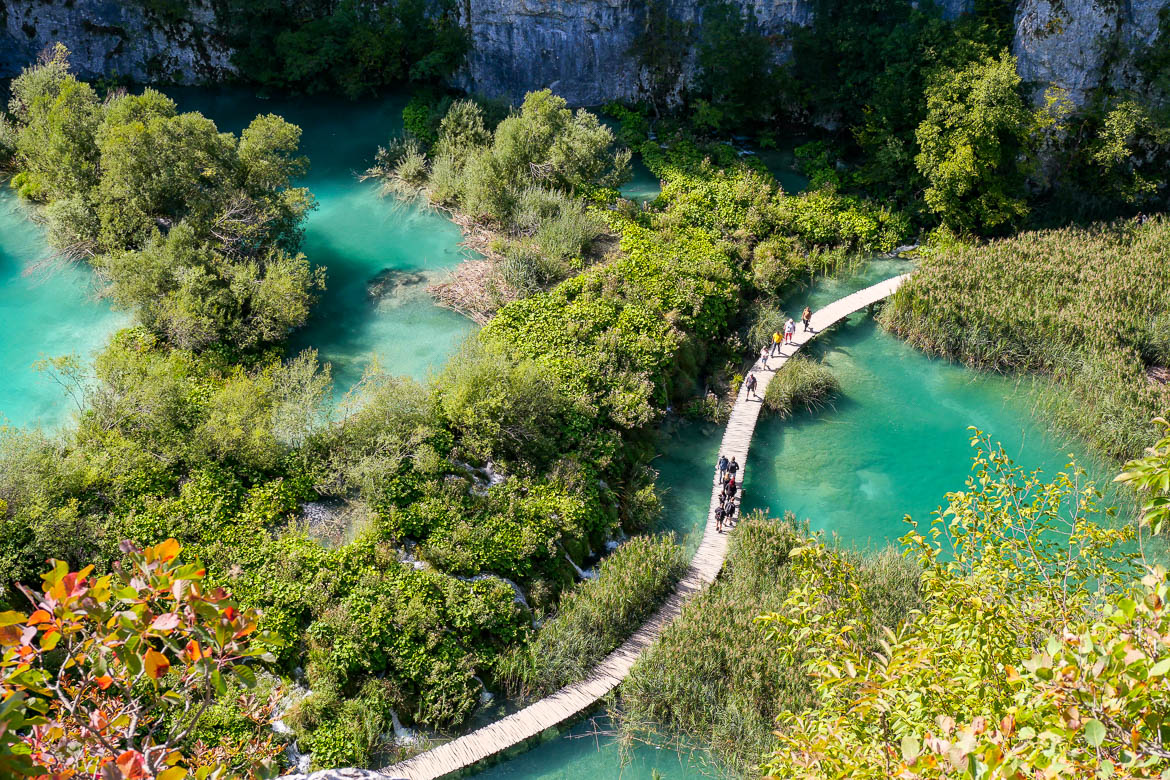
Planning a trip to Croatia? If there’s one thing not to miss, it’s visiting Plitvice Lakes, the most beautiful natural site in the country. This park, made up of 16 turquoise lakes connected by 92 waterfalls, is listed as a UNESCO World Heritage Site. It can be explored on foot via one of 8 circular routes that follow wooden boardwalks crossing the lakes and waterfalls.
With so many different lake tour programs, it can be difficult to find your way around. To help you prepare for your visit, here’s my complete guide with tips and practical information on what to see and do in Plitvice Lakes National Park, which route to choose, and where to stay in Plitvice and nearby.
Which tour program should you choose to visit Plitvice Lakes?
To better understand the different routes and hiking trails in Plitvice, here is the general map of the park. Everything in brown corresponds to the marked walking trails you can follow. In black and white, the route of the panoramic train (they call it that, but it’s more like a bus) connecting stations St1, St2, and St3 on the southern shore. And in white dotted lines, the electric boat routes between stations P1, P2, and P3.

To visit Plitvice Lakes, you can choose between 8 different lake tour programs labeled A to K (you can see the route details on the official website). Route K, which covers all the trails, is 18.3 km long and takes 6–8 hours of walking. It can be done from entrance 1 or 2. Unless you’re a big hiking enthusiast, I don’t recommend route K. It’s really long, and the section between stations P2 and P3, which can be done by electric boat, doesn’t add anything. You’re just walking through the forest along Lake Kozjak with no waterfalls.
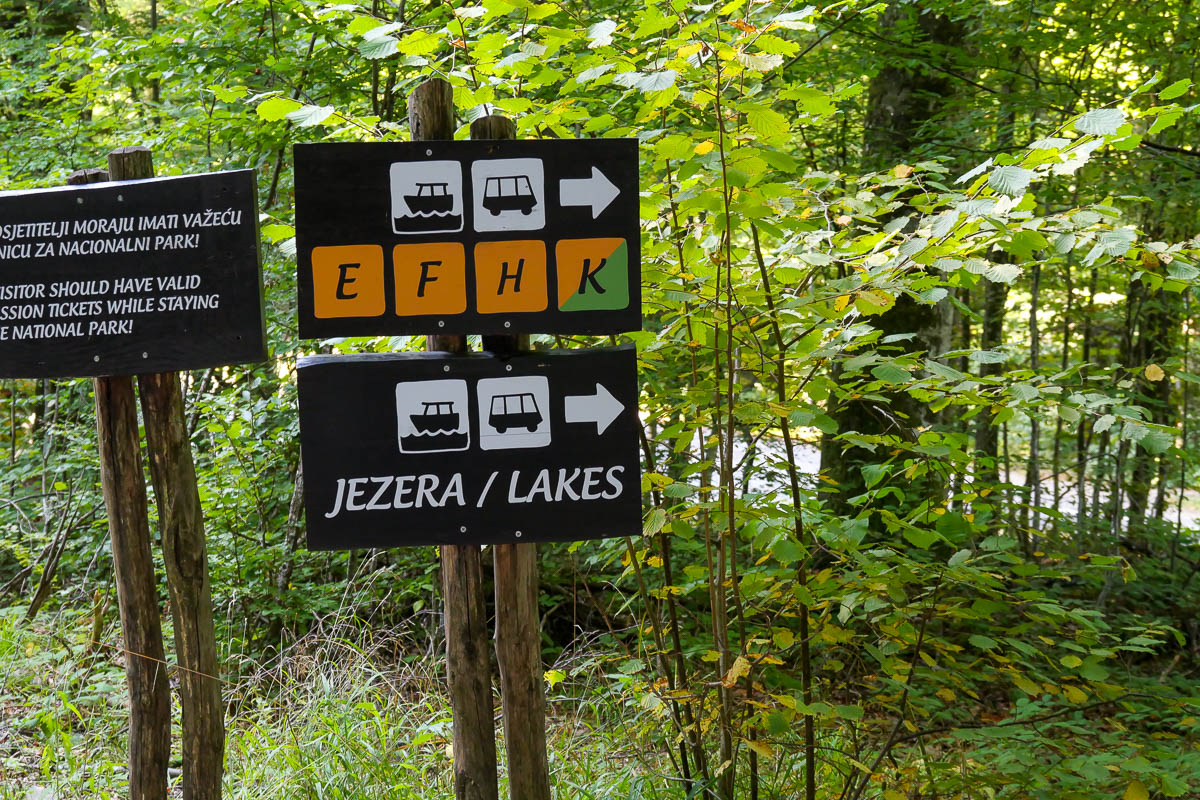
So which route should you choose to visit Plitvice Lakes? It depends on how much time you have and whether you’re in a hurry. I’ll give you my tips and opinion below. The walk presents no difficulty since most of the route is flat. This isn’t really a factor unless you have difficulty walking. The color coding of the routes is simple: orange for routes starting from entrance 2 and green for those starting from entrance 1.
Short routes (around 3 hours): A, B, and F
If you’re visiting the park from Split or Trogir, you might not have much time once you arrive. In that case, I recommend focusing on the lower lakes, which are the most impressive. You’ll see the park’s highest waterfall (Veliki Slap) as well as the elevated viewpoint over the boardwalk (the one seen in all the photos).
There are 3 routes that take less than 3 hours to visit Plitvice Lakes: routes A (3.5 km), B (4 km), and F (4.6 km). Routes A and B start from entrance 1, while route F (which follows the same path as B) starts from entrance 2. I recommend choosing B or F as they include the boat ride on Lake Kozjak.
Full routes (4 to 6 hours): C and H
Routes C and H are, in my opinion, the best option to visit Plitvice Lakes in full. You’ll see both the lower and upper lakes (the order depends on your starting entrance). To connect the two areas and shorten travel time, you’ll take the train-bus shuttle (you don’t see much of the lakes during the ride) and especially the electric boat, which offers a beautiful ride on Lake Kozjak, the largest lake in the park.
What’s the difference between routes C and H? Simply the starting point—the path around the lakes is the same. Route C is 8 km long (green marker) and starts from entrance 1, while route H is 8.9 km (orange marker) and starts from entrance 2.
I haven’t mentioned routes E and K because they’re less interesting in my opinion. As mentioned earlier, route K is very long (18 km on foot) and doesn’t offer more than routes C and H. As for route E, it focuses only on the upper lakes, meaning you’ll miss the best spots in the park. You could combine routes E and F (both start from entrance 2), but that’s almost the same as route H.
Our choice: route H
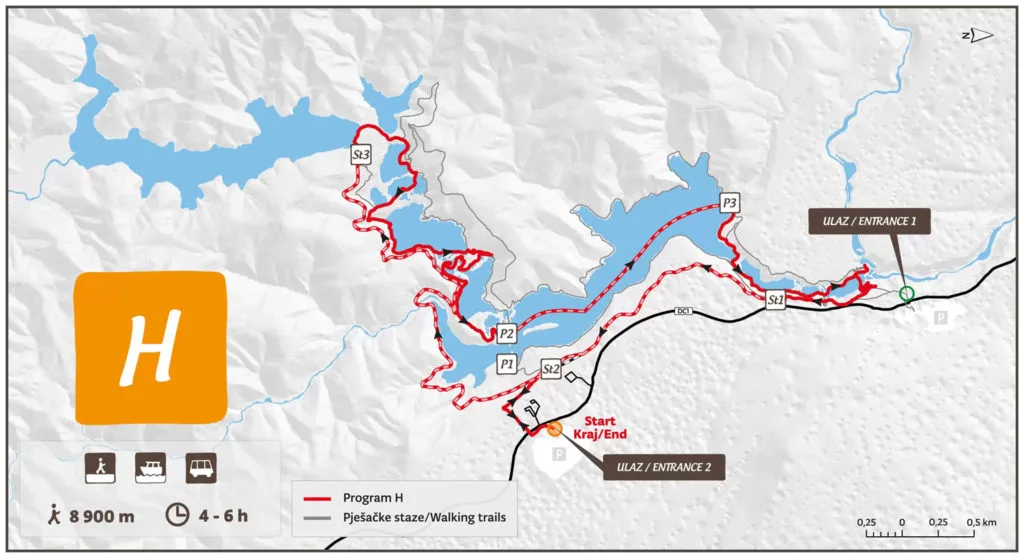
We wanted to see as much as possible in the park without too much walking—if you follow the blog, you know Daniela isn’t a big fan of hiking. Since we entered through entrance 2, we naturally chose route H, which is 8.9 km long with an estimated visit time of 6–8 hours (we took 6 hours in total at a relaxed pace, including waiting for shuttles).
Even if it sounds long, you don’t feel like you’re walking that much. The well-marked trails are mostly flat (only the cliffside section near entrance 1 climbs), and there are plenty of breaks for photos, lunch halfway through, and waiting for shuttles. Overall, it’s accessible for the whole family, and the distance shouldn’t scare you.
Visiting Plitvice Lakes
It’s one of the most visited sites in Croatia, and even though we weren’t there in peak season (late September), we arrived at 8:30 a.m. to avoid crowds on the boardwalks (at least at the start of our route). After parking in the paid lot at entrance 2, we headed to the ticket office to buy our entry tickets. At that hour, there was hardly anyone.
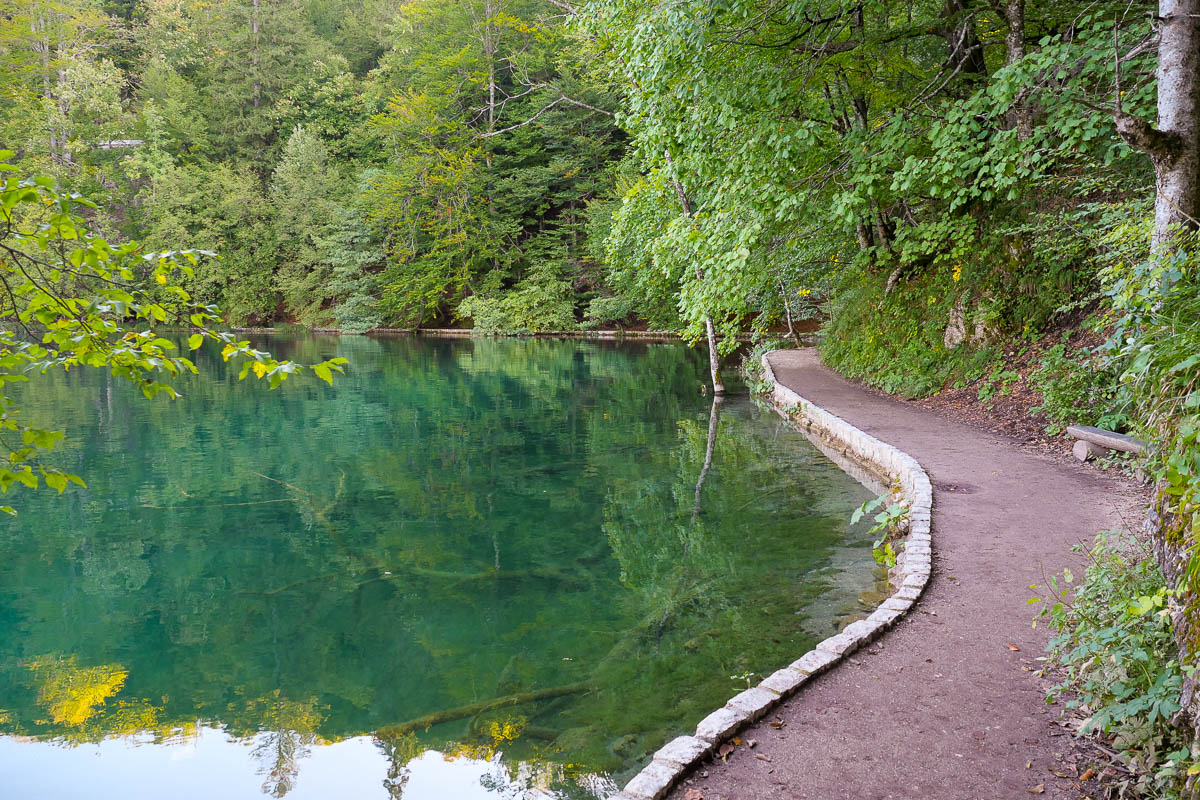
The routes in the park are well signposted, with signs indicating the path to follow using route letters. But before walking on the upper lakes boardwalks, we had to reach the panoramic train at station St2, a 10-minute walk from the parking lot. They call it a train, but it’s more like a bus shaped like one. After a 10-minute ride, we arrived at station St3, which marks the start of the upper lakes route.

Upper lakes
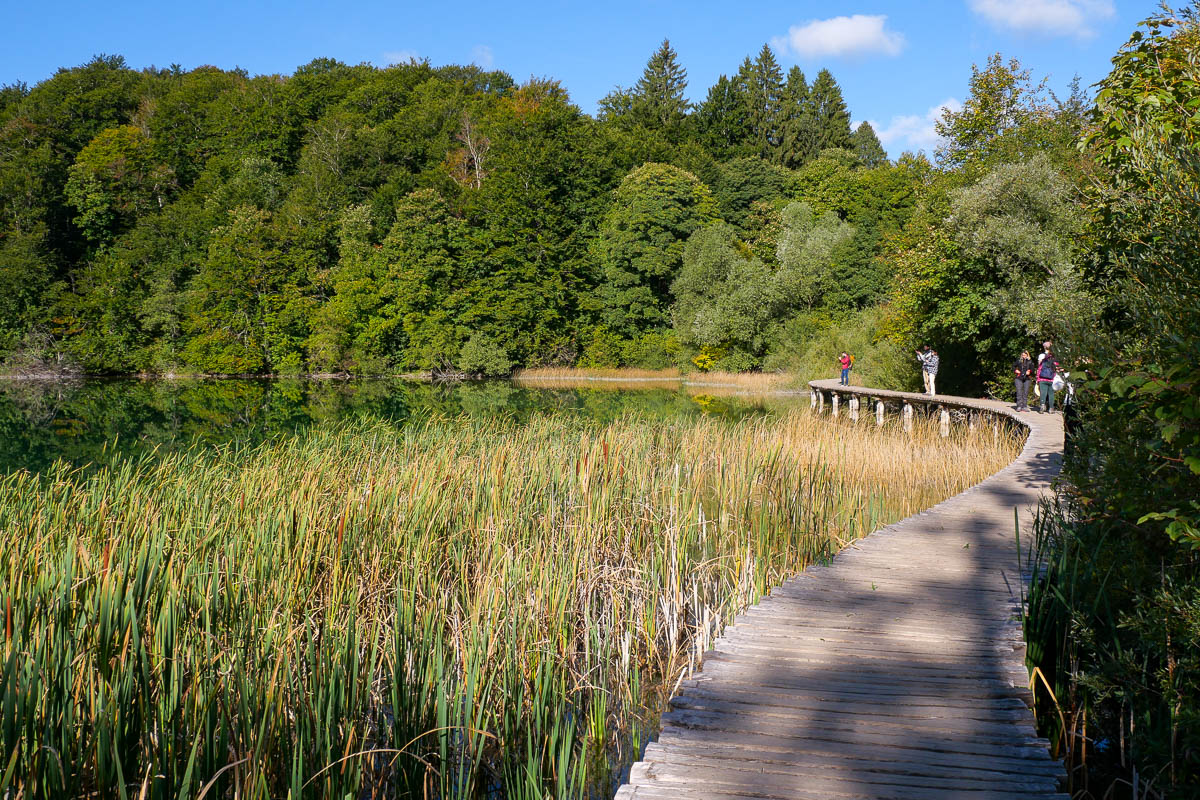
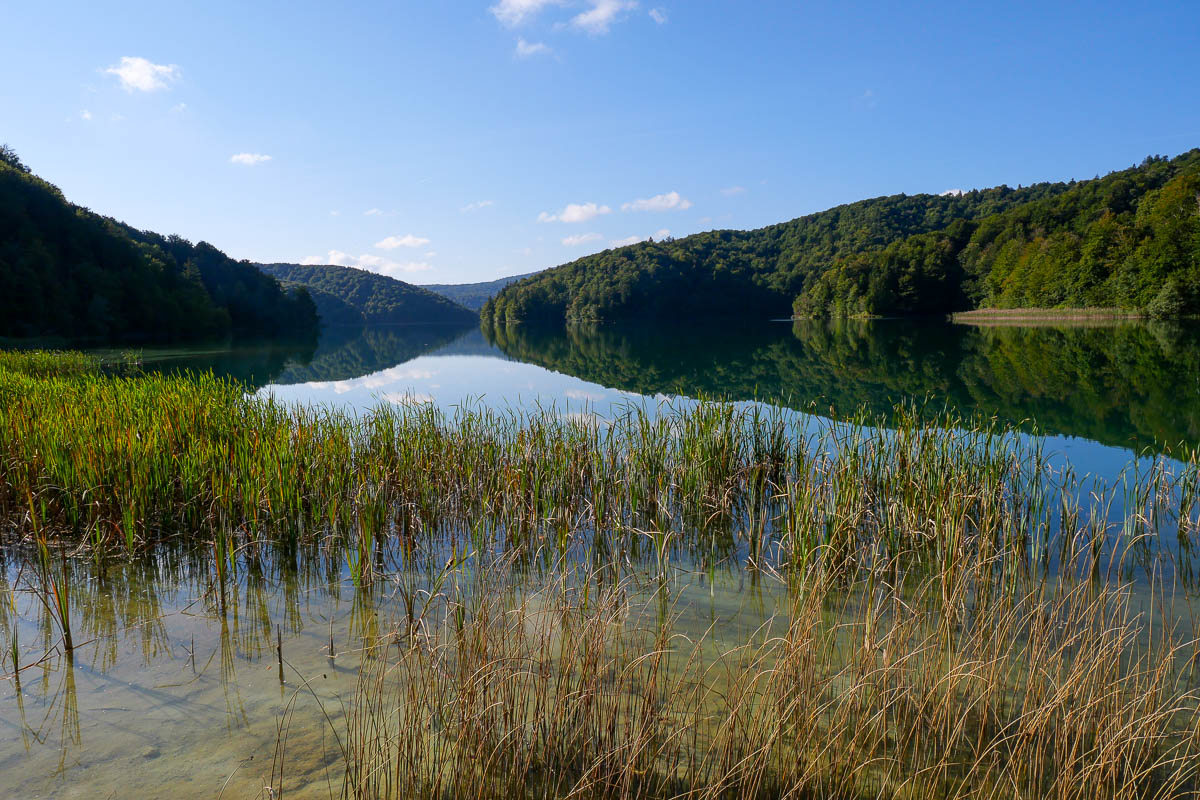
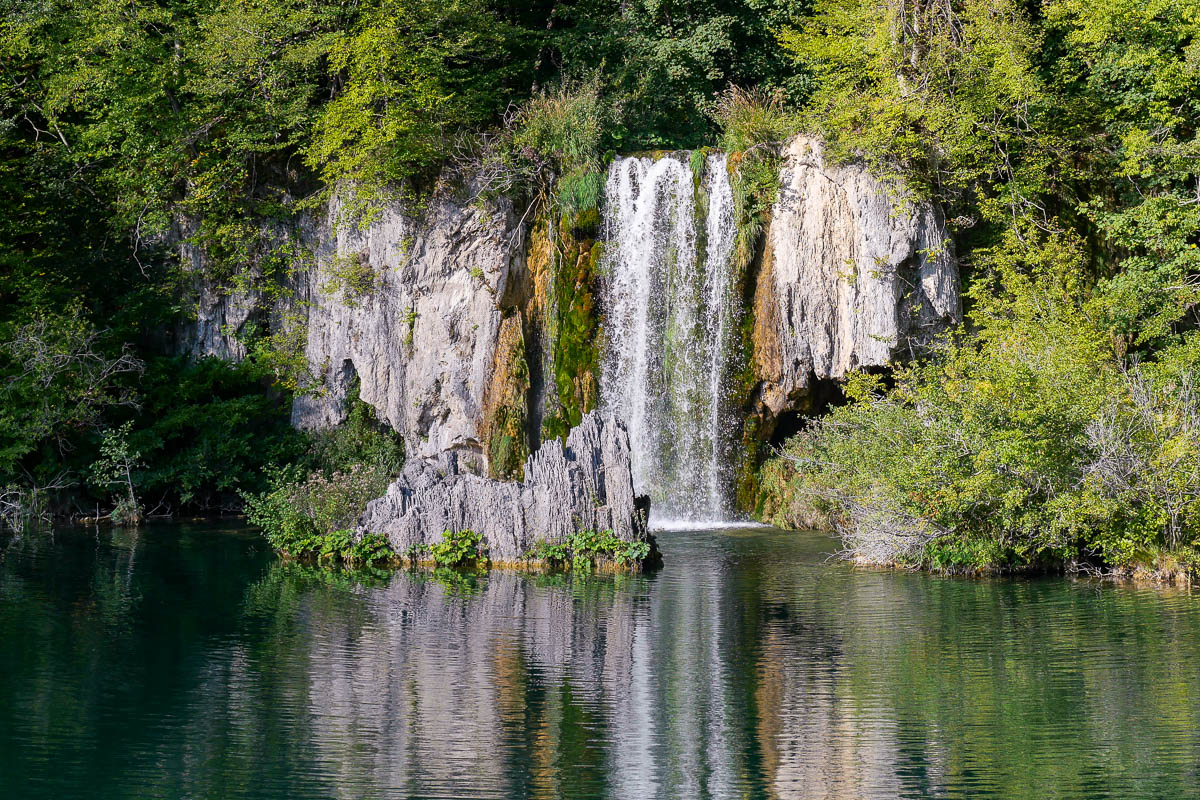
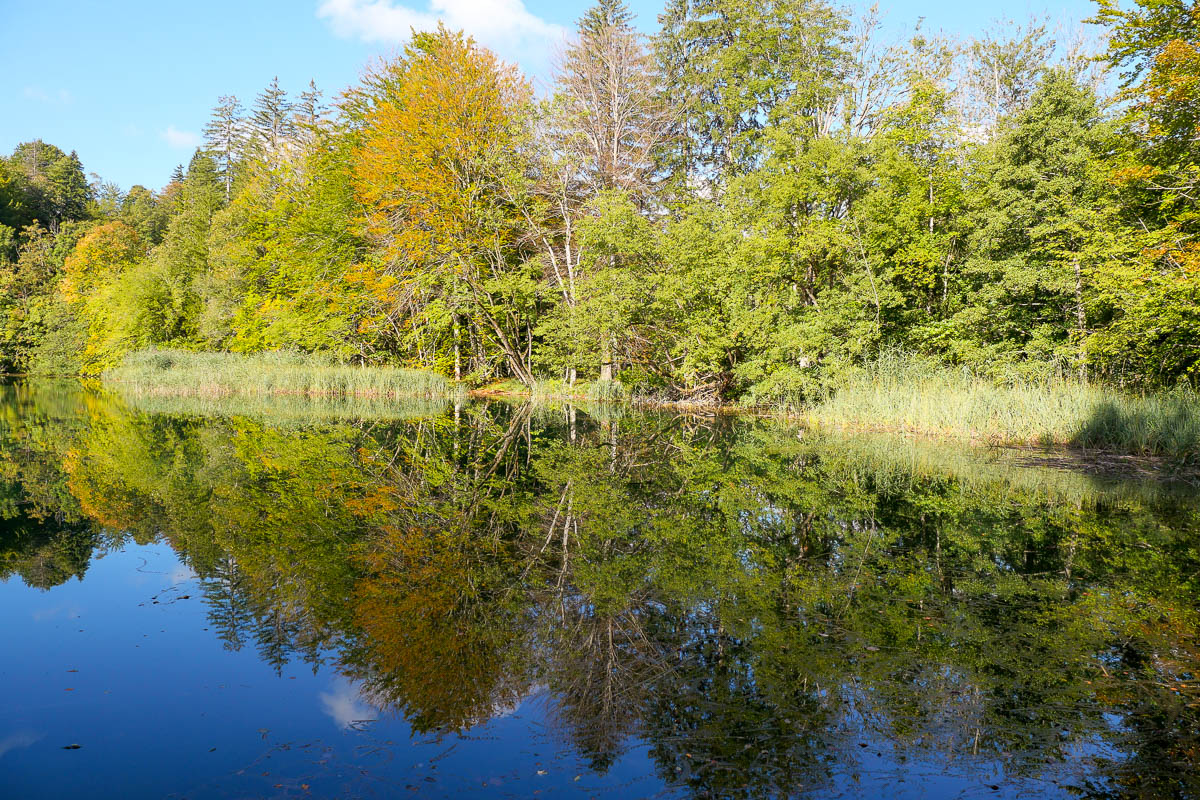
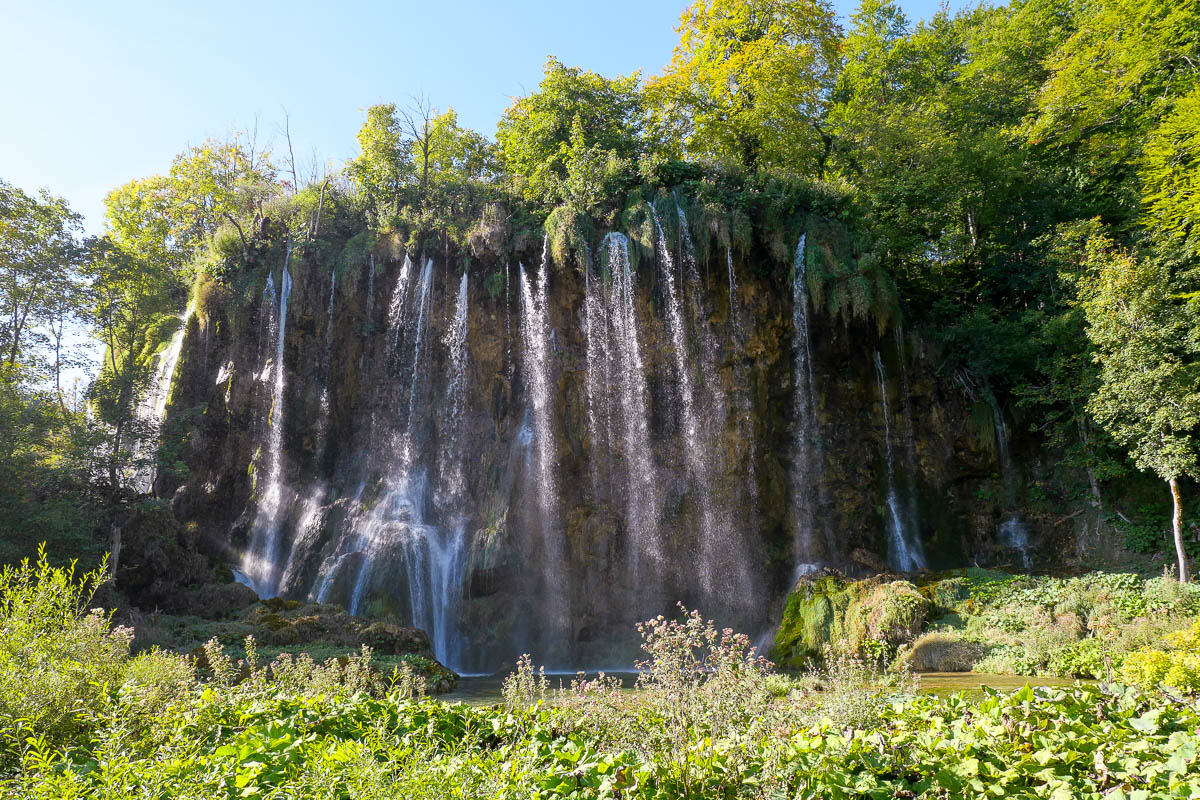
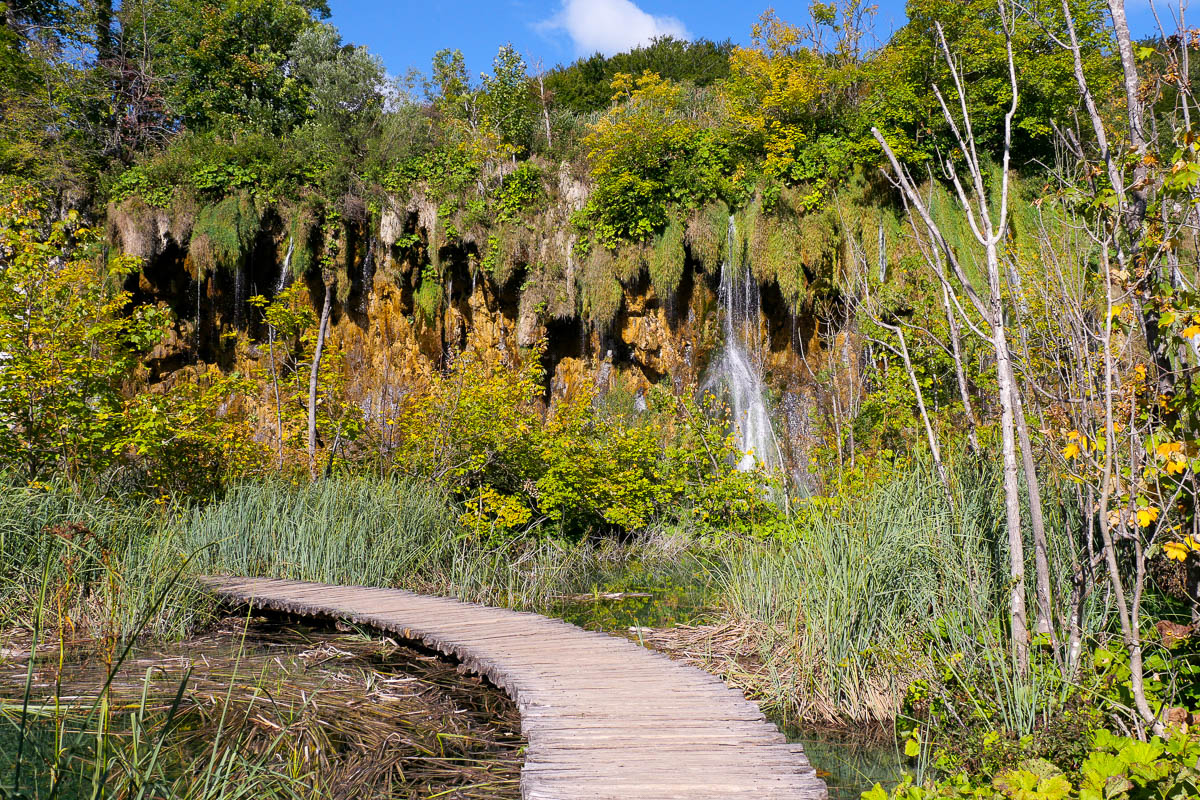
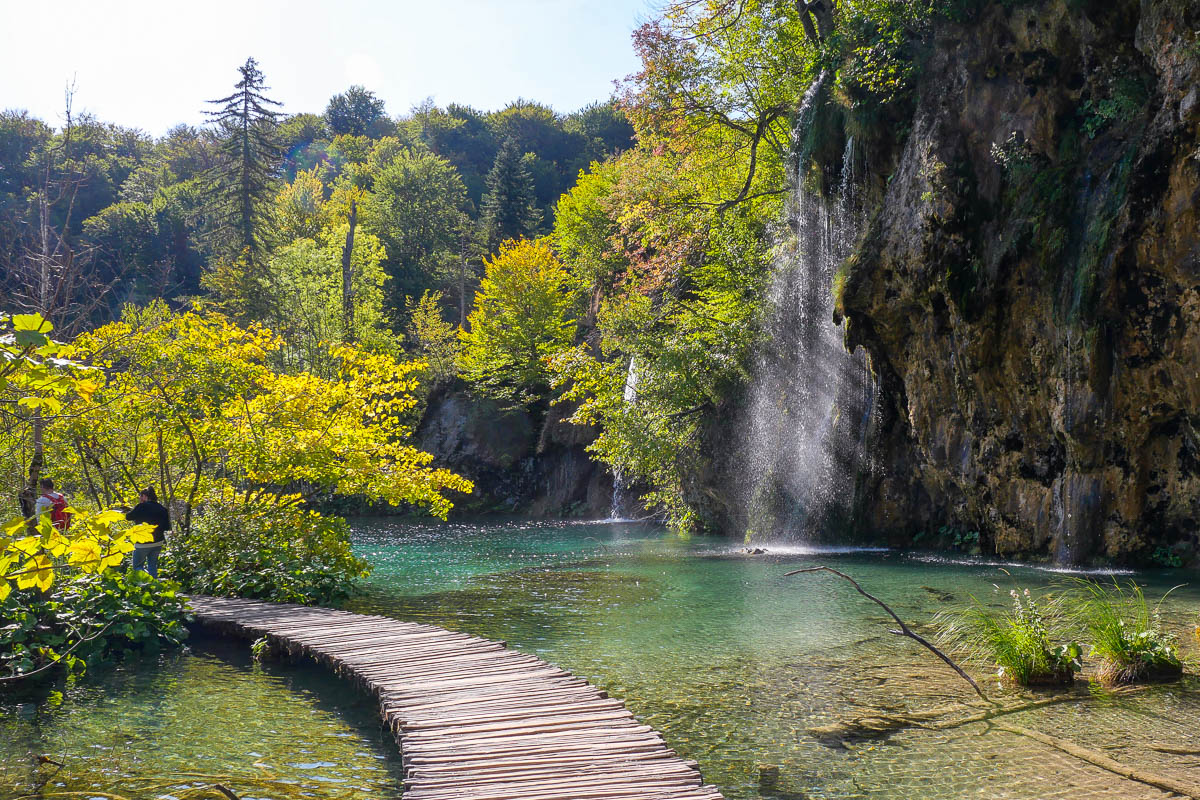
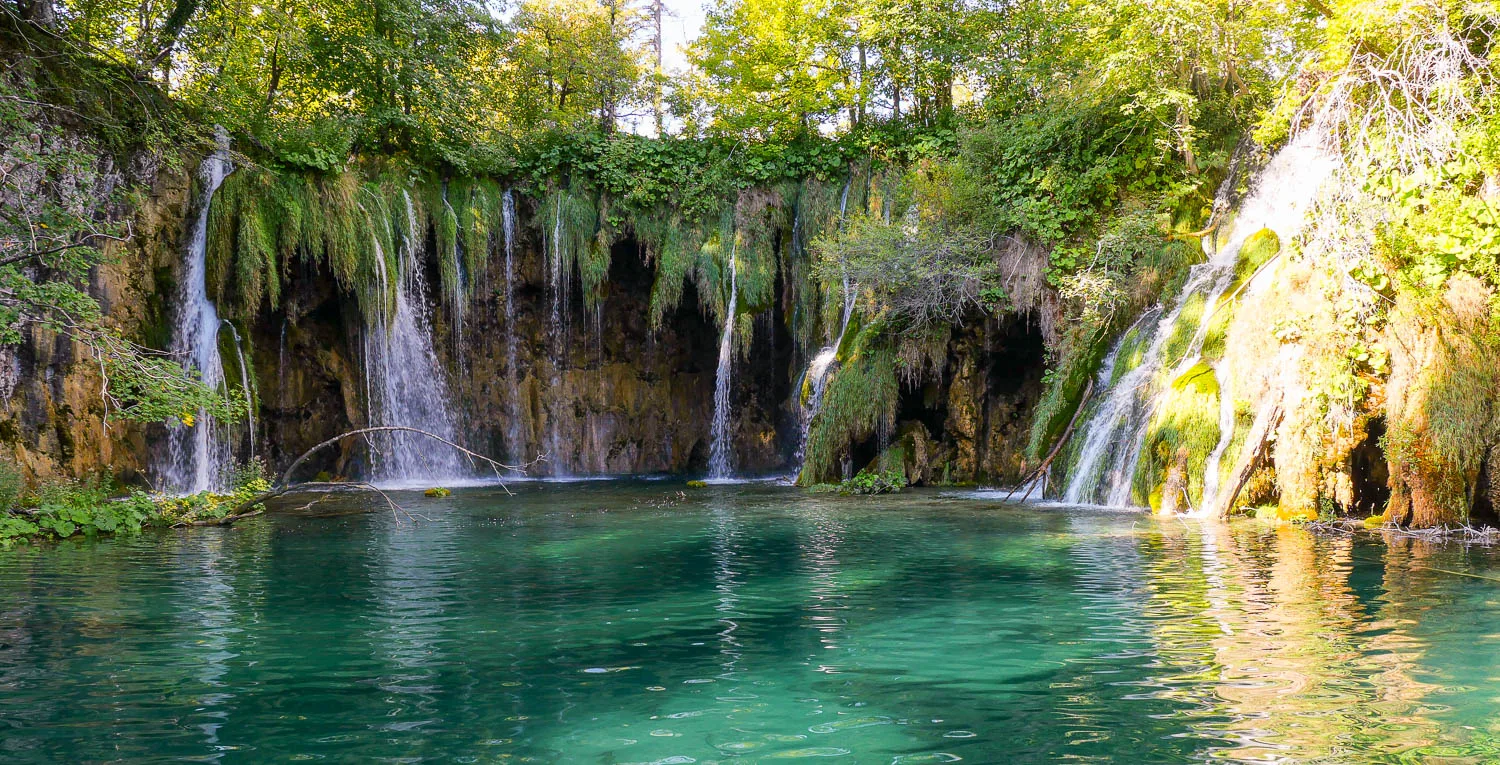
The trail starts on wooden boardwalks along one of the largest lakes in Plitvice National Park. The weather was great and there weren’t many people—perfect conditions (my biggest concern before coming was the weather). The route heads south toward smaller lakes where we see our first waterfalls (including one 28 meters high) and tufa barriers. The landscapes reflect in the lakes like mirrors—it’s stunning. This section of the upper lakes ends at boat station P2. It took us 1 hour 20 minutes at a relaxed pace to walk from St3 to P2.
In high season, there may be a wait to board the boat between P2 and P3, as there’s only one shuttle every 30 minutes. But in September, we had no problem boarding quickly. For your information, swimming is not allowed in Plitvice Lakes, just like in Krka National Park. Drones are also prohibited, with signs reminding visitors inside the park.
Lower lakes
The boat takes us in 15 minutes across Lake Kozjak (station P3), where the large picnic area and snack stands are located (see “where to eat in the park” below). This is where we ate our sandwiches before continuing route H. From the lower lakes onward, we encountered many more people on the boardwalks. All routes pass through here, and we crossed paths with those who started later on routes going in the opposite direction (A, B, and C).

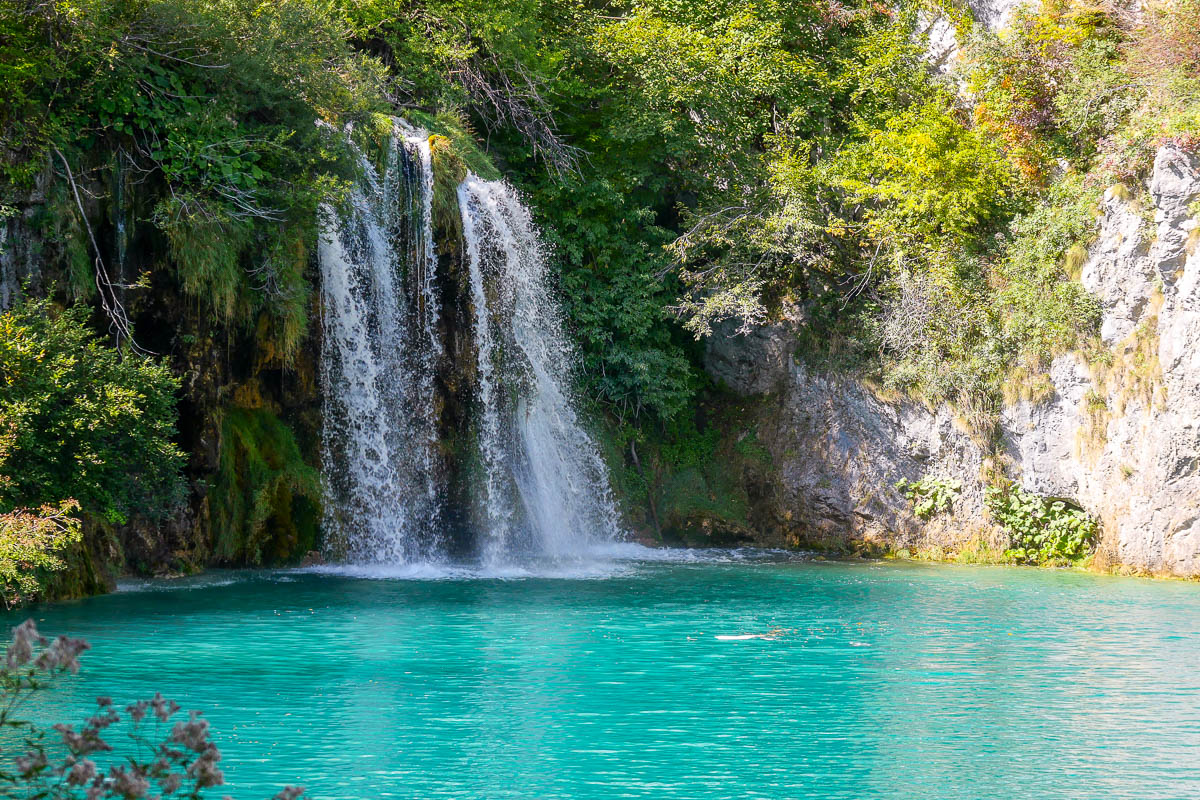
The rest of route H follows the eastern edge of the lake before reaching smaller lakes connected by waterfalls, including one 10 meters high flowing into turquoise water. The lower lakes were carved into a canyon whose walls rise up to 40 meters (the route ends at the top of this canyon). The lakes form a staircase created by tufa barriers. You can clearly see this later when you gain elevation along the cliffside path.

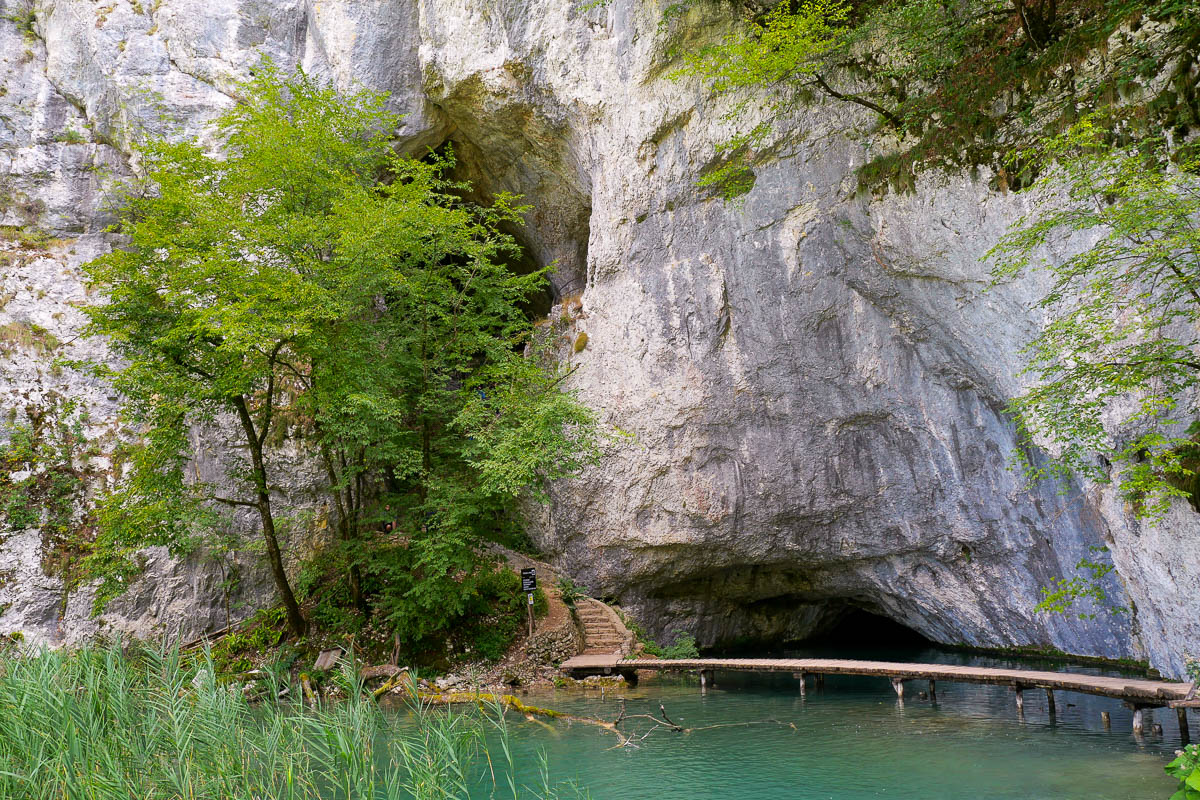
At some point, you’ll reach a lake where a fork branches off to the right. The wooden boardwalk leads to a cave that allows you to climb to the top of the canyon (for a great viewpoint). You can go up, but you absolutely need to come back down to continue route H (direction “Big Waterfall”), otherwise you’ll miss the highest waterfall in Plitvice National Park. You’ll pass by this viewpoint anyway later on the return route. The cave itself isn’t interesting, and this way you’ll avoid the 80 meters of stairs. I know what I’m talking about—I made the mistake of going up and back down 🙂

Veliki Slap waterfall
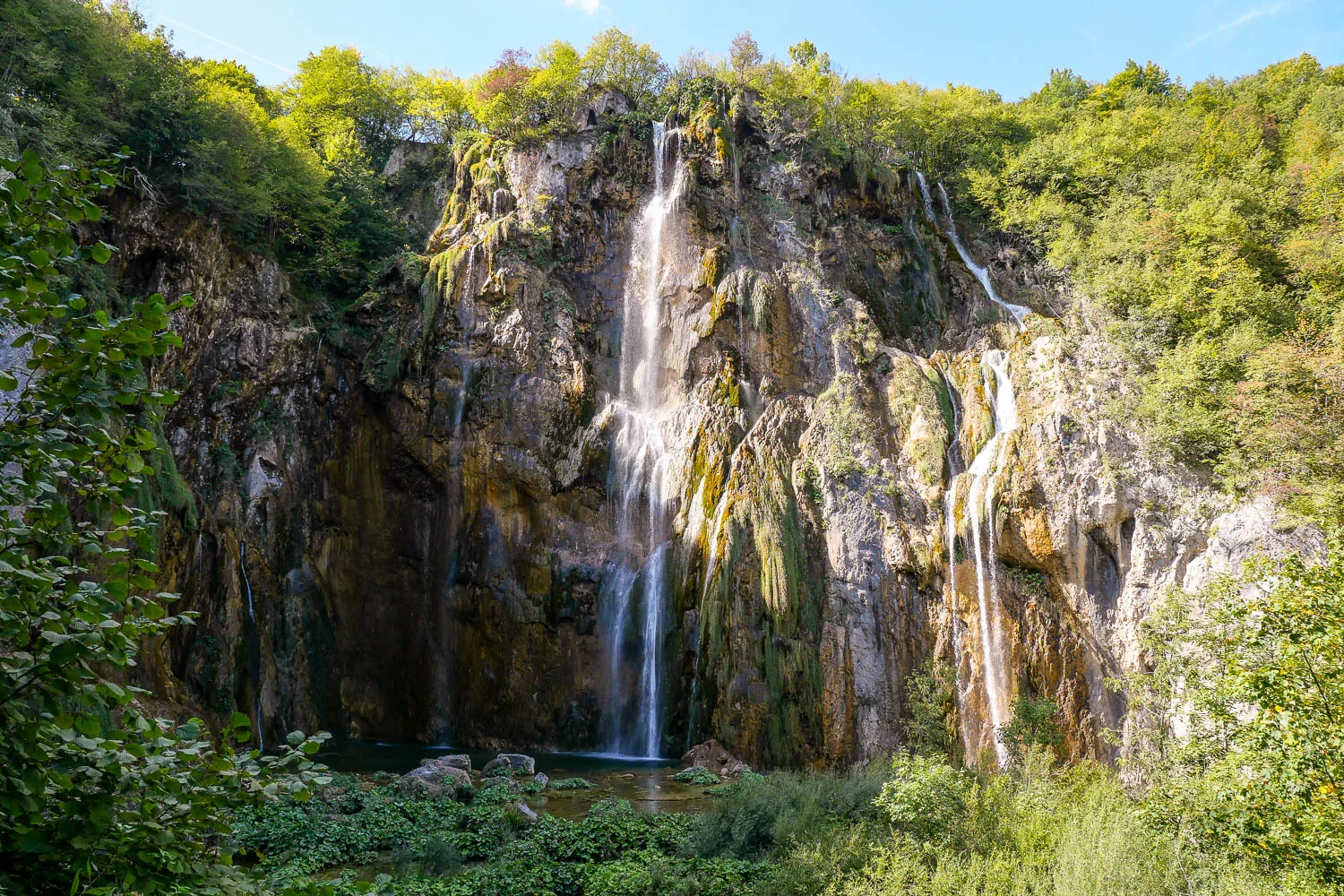
At the end of the boardwalks near entrance 1, you reach the largest waterfall in Croatia (Veliki Slap). It measures 87 meters in total (67 meters for the main drop), and its flow varies from 4,000 L/s to 80 L/s depending on the season. In September, there wasn’t much water, and to be honest, I was a bit disappointed—I expected something more spectacular. If you want to see powerful waterfalls, visit in June or early summer.
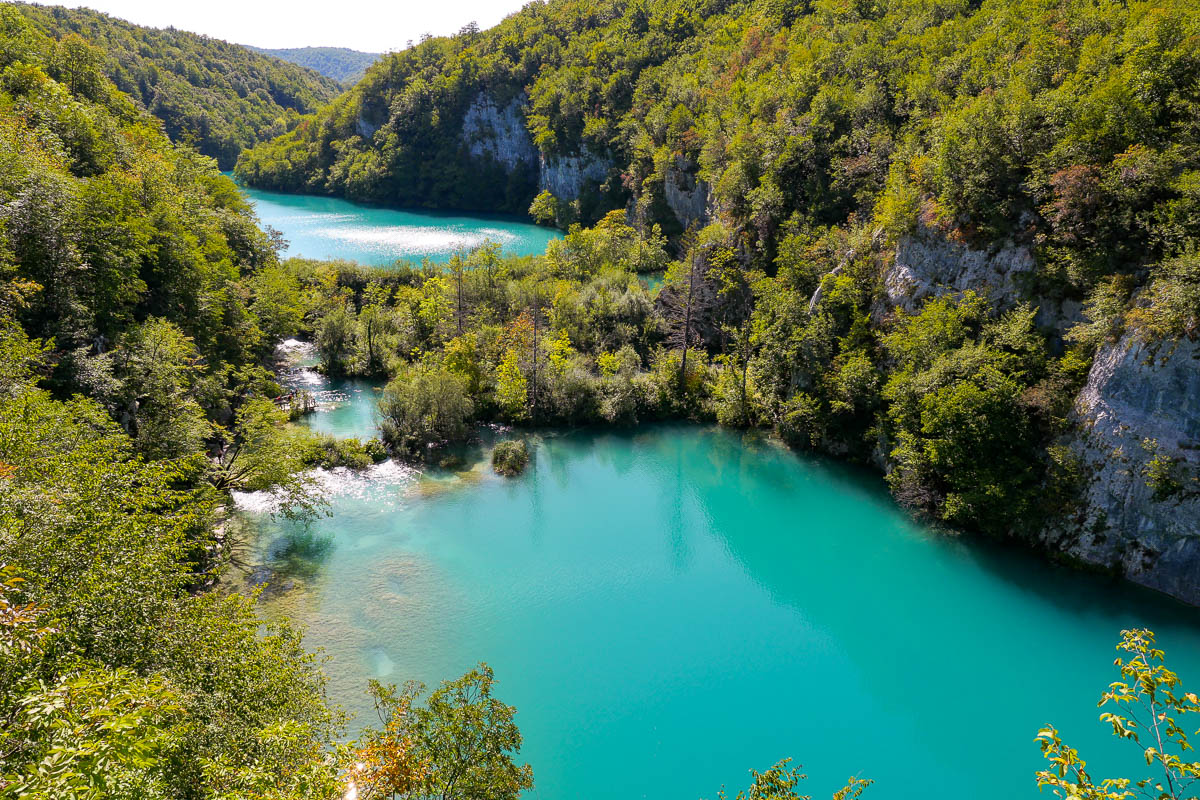
After the waterfall, the trail climbs to the top of the gorge, offering a magnificent panoramic view of the lakes and Veliki Slap. This cliffside path provides the most photogenic views in Plitvice National Park. After a few minutes, you reach station St1, where the train-bus takes you back to station St2 and the parking lot at entrance 2. It took us 1 hour 15 minutes to explore all the lower lakes (excluding lunch break).



Where to eat in the park?
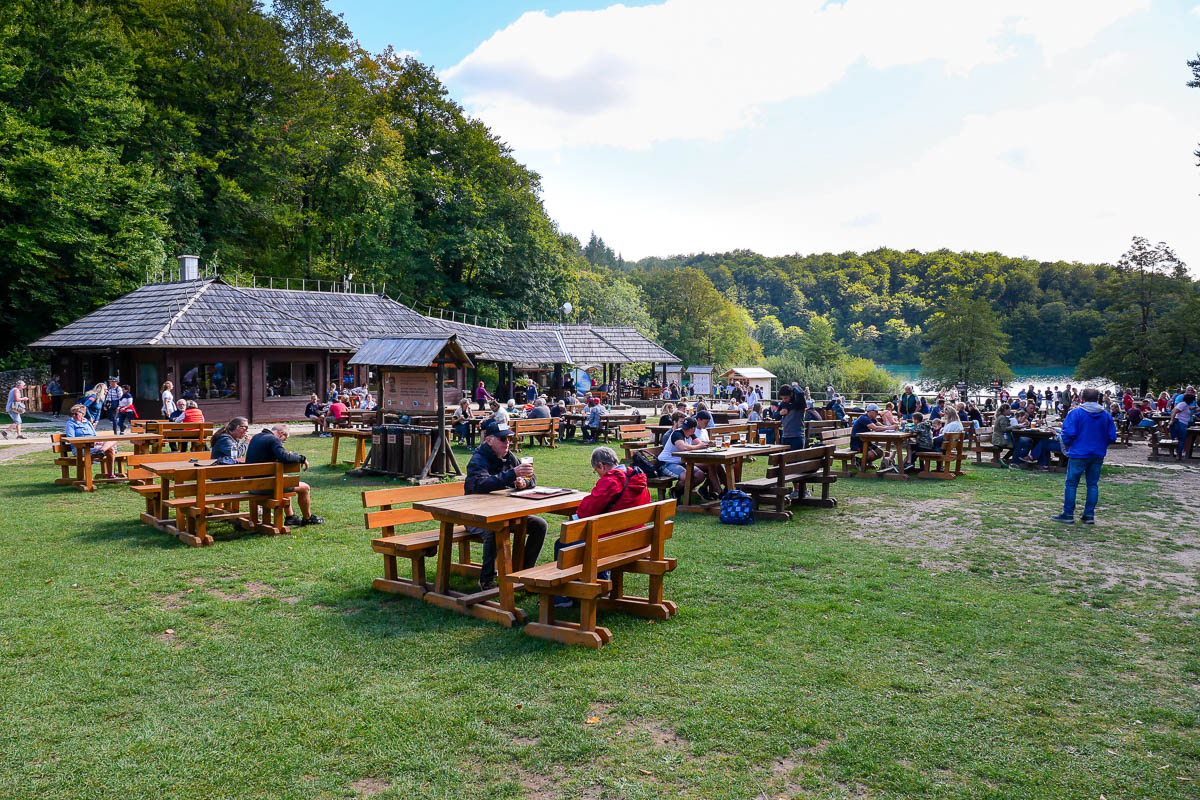
A large dining area with picnic tables is located at boat station P3. It sits halfway between the upper and lower lakes, so you’ll likely pass through around lunchtime (very well planned, right?). If you didn’t bring your own food, several wooden stands sell fast food. You’ll find sandwiches (€10), burgers (€11), and fries (€4). Don’t expect gourmet dining—there are no restaurants in this part of the park. Drinks include beer (€3) and a 1-liter bottle of water (€2).
To find a proper restaurant, you’ll need to go to one of the park entrances. However, they’re not ideally located since you’re unlikely to pass by during lunch (they’re at the start or end of routes). If you want to eat at a restaurant, I recommend those in nearby villages instead.

Where to stay in Plitvice and nearby?
To be on the trails early in the morning and avoid crowds, it’s best to stay in Plitvice itself (inside the park) or in nearby villages. One key rule: book well in advance, as demand is high (even in September, we struggled to find accommodation). If you plan ahead, you can find great, affordable places. Staying inside the park also saves you the parking fee.
Here are some good accommodation options in and around Plitvice. Options inside the park are very limited—only 4 hotels, all managed by the national park. However, you’ll find many guesthouses in nearby villages. Prices vary by season, with peak rates in summer.
Where to stay inside Plitvice Park?
- 93 € : Hotel Bellevue, one of the cheapest options inside the park. Located at entrance 2, it offers rooms of various standards, with or without views. Breakfast included and free private parking.
- 157 € : Hotel Jezero, a 3-star hotel at entrance 2, just 300 meters from Lake Kozjak. The rooms have a dated 1980s decor, but facilities include a sauna, jacuzzi, restaurant, and pool. Breakfast included and free private parking.
- 157 € : Hotel Plitvice, near Hotel Jezero but rated 2 stars. It offers rooms with views of the lake or park and a restaurant. Breakfast included and free private parking.
Where to stay in villages around the park?
- 41 € : Lake House 1, the cheapest accommodation near Plitvice Lakes. Located 5 minutes by car from the park entrance. Excellent optional breakfast.
- 53 € : Guesthouse Green Valley, a high-standard local 4-star guesthouse with large wooden rooms, some with balconies. Garden with picnic tables. Breakfast €10.
- 54 € : Green lakes house, a bed and breakfast in the village of Rustic Lodge Plitvice, less than 5 km from both park entrances. Beautiful rooms with tasteful decor. Breakfast €10.
- 65 € : Rustic Lodge Plitvice, located less than 5 km from both park entrances, this guesthouse offers beautiful, tastefully decorated rooms. Breakfast is available for an additional €10.
- 68 € : B&B Millenium House, a 4-star guesthouse with excellent reviews. Offers generous meals with breakfast included and lunch/dinner optional. Located 2.4 km from entrance 2.
Tips and practical information for visiting Plitvice Lakes
How to get to Plitvice Lakes?
Plitvice Lakes National Park is quite remote from other tourist sites, and it was a bit tricky to decide when to include it in our Croatia road trip itinerary. You can get there by car, bus, or organized tour.
Plitvice Lakes are located 2 hours by car from Zagreb and Zadar, 2.5 hours from Sibenik, and 3h20 from Split (GPS coordinates for entrance 2). Follow signs for “Plitvička Jezera”—it’s well marked. Since it’s quite a distance, the most practical option is to stay nearby (which we did).
Buses run to both park entrances from Zagreb (2h), Zadar (2h30), Sibenik (4h), and Split (4h30). This is a good option for budget solo travelers, but I recommend renting a car—it’s faster and avoids stress about return bus schedules. For the best rates, I recommend using AutoEurope for car rental in Croatia. If you prefer not to organize anything yourself, you can opt for a tour (see below).
Tours to visit Plitvice Lakes
This can be a good option if you don’t want to deal with transport or parking. You can choose between a guided tour or exploring on your own with free time on-site. Some tours include entrance tickets, saving you from long lines at the ticket office. Check what’s included carefully. Free cancellation is available up to 24 hours in advance.
- From Zagreb: Plitvice & Rastoke Guided Day Trip with Ticket
- From Split or Trogir: Plitvice Lakes Guided Tour with Entry Tickets
- From Zadar: Plitvice Lakes Day Trip with Guide and Boat Tour
- From Split: Plitvice Lakes Full-Day Trip
Which entrance to choose and where to park?
The park has two entrances: entrance 1 at the eastern end and entrance 2 between the upper and lower lakes. Both have paid parking (€1.5 per hour, €15 per day for campervans, free for motorcycles). Payment is made before exiting, near the ticket office.
Entrance 2 is less crowded, which is why we chose it. It helps avoid long queues at the ticket office. We visited at the end of September and, arriving early in the morning, there were almost no people.
How much does entry to Plitvice National Park cost?
Prices vary by season, and since Croatia adopted the euro in 2023, prices have increased significantly. Between June 1 and September 30, tickets cost €40 per adult and €15 per child. The price includes electric boat and train transport. In summer, the park is open from 7 a.m. to 7 p.m. (ticket sales until 4 p.m.).
Personally, I find the price quite expensive, even for a UNESCO site. With children, parking, and lunch, it’s easy to reach €150 for a visit—a significant budget.
There’s a discounted rate if you enter after 4 p.m. (about 30% cheaper). However, since the park closes at 7 p.m., it’s not really worth it unless you plan to do a short route (A, B, or F). Two-day tickets are also available for €60 in high season.
In April, May, and October, tickets cost €25 per adult and €9 per child. Off-season (November to March), it’s much cheaper (€10 / €4). Students should bring their ID for discounts.
Tickets can be purchased on-site at the entrances or online in advance via the official website by selecting your date and time.
Can you swim in Plitvice Lakes?
The answer is simple: no. Swimming is not allowed in Plitvice Lakes—and thankfully! Imagine what the park would look like with thousands of people in the water, not to mention the ecological impact on this fragile environment. The park has been protected since 1893 and has been a UNESCO World Heritage Site since 1979. If you want to swim, head to the beach instead. The water here is probably quite cold anyway.
Best time to visit Plitvice
Weather is the main factor when visiting Plitvice Lakes. It’s a mountainous area (between 368 and 1,278 meters) with a climate very different from the coast. During our road trip, I checked the weather every day to make sure we visited on a sunny day (even adjusting our itinerary if needed). With clouds or rain, the colors are completely different. Two periods stand out as the best times to visit:
- Late spring and early summer (around June): waterfalls are at their most powerful, and tourist crowds haven’t peaked yet.
- Early autumn (October): the contrast between the blue lakes and vibrant red and golden foliage is stunning. Ticket prices are also lower.
September, when we visited, is also a great time with fewer crowds than summer. However, at the end of September, autumn colors hadn’t fully appeared yet. If possible, avoid July and August, when the park is at its busiest (over one million visitors per year). Boardwalks are crowded, parking is full, and ticket lines are long. If you have no choice, arrive very early.
What to wear in Plitvice Park?
Wear comfortable clothing and hiking shoes or good sneakers. The routes follow wooden boardwalks and dirt trails with no technical difficulty, but flip-flops are not recommended (and strollers are not suitable). Temperatures are cooler than elsewhere in Croatia. In September, we wore sweaters and windbreakers and were even cold during lunch. Some German tourists were in T-shirts—but they’re more resistant to the cold 🙂 Bring warm clothing, especially outside July and August.
Can you bring your dog to Plitvice Park?
Dogs are allowed in Plitvice Lakes National Park but must be kept on a leash at all times (including on boats and trains). Your pet can follow you on the trails and boardwalks but is not allowed to swim in the lakes or waterfalls.
How long to visit Plitvice Lakes?
It’s hard to give an exact duration as it depends on many factors and the route you choose. Ideally, plan a full day to fully enjoy it (especially in high season), but you can get a good overview in half a day if you’re short on time.
Based on our experience, in pure walking time (excluding transport), we took 1h20 for the upper lakes and 1h15 for the lower lakes at a relaxed pace. Add lunch, bus/train and boat rides (10–15 minutes each), and especially waiting time for shuttles. This last factor can significantly extend your visit. There’s only one boat every 30 minutes between P2 and P3, and queues can be long in summer. In September, it wasn’t too crowded—we entered at 8:30 a.m. and left at 2:30 p.m.
What activities can you do around the park?
Near the waterfalls explored on foot, several activities are offered by private providers. Here are a few ideas for adrenaline seekers:
- Guided Buggy Tour in Plitvice Lakes National Park: a 3h30 (96 km) tour offering breathtaking views and stunning landscapes.
- Tandem paragliding flight: relax and enjoy the scenery while your professional instructor handles everything. Launch points vary depending on weather.
- Walking tour through abandoned Zeljava airbase: explore the hidden depths of this once-secret military complex.
You now have all the information you need to visit Plitvice Lakes in Croatia. If you still have questions, feel free to ask in the comments. And if this article helped you, don’t hesitate to share it!