

With its Venetian feel and colorful façades, visiting Rovinj in Croatia almost feels like a trip to Italy. If the resemblance is so striking, it’s because the Istria region in northwestern Croatia was under Venetian rule for a long time, and the city was then called Rovigno. From that period, it has retained its Croatian/Italian bilingualism, which was quite convenient for us. Rovinj is the most beautiful town in Istria and our favorite in Croatia—it’s no coincidence that it’s nicknamed “the Pearl of Istria.”
What to do in Rovinj? In this travel guide, I share all the must-see sights, the best places to grab a drink while watching the sunset, and which beaches to swim at. And to help you plan your stay, I also include the best places to stay in Rovinj and the surrounding area during a road trip in Croatia.
The 11 best things to do in Rovinj
Everything there is to see in Rovinj is located within the old town, which is entirely pedestrian. You’ll need to leave your car in one of the parking areas at the entrance (see below for my tips and recommendations on where to park). The historic center doesn’t have many major monuments or landmarks, but simply wandering through the streets is enough to fall under the charm of this Italian-influenced town. Allow 1 day to visit Rovinj and 2 to 3 additional days to explore the surroundings.
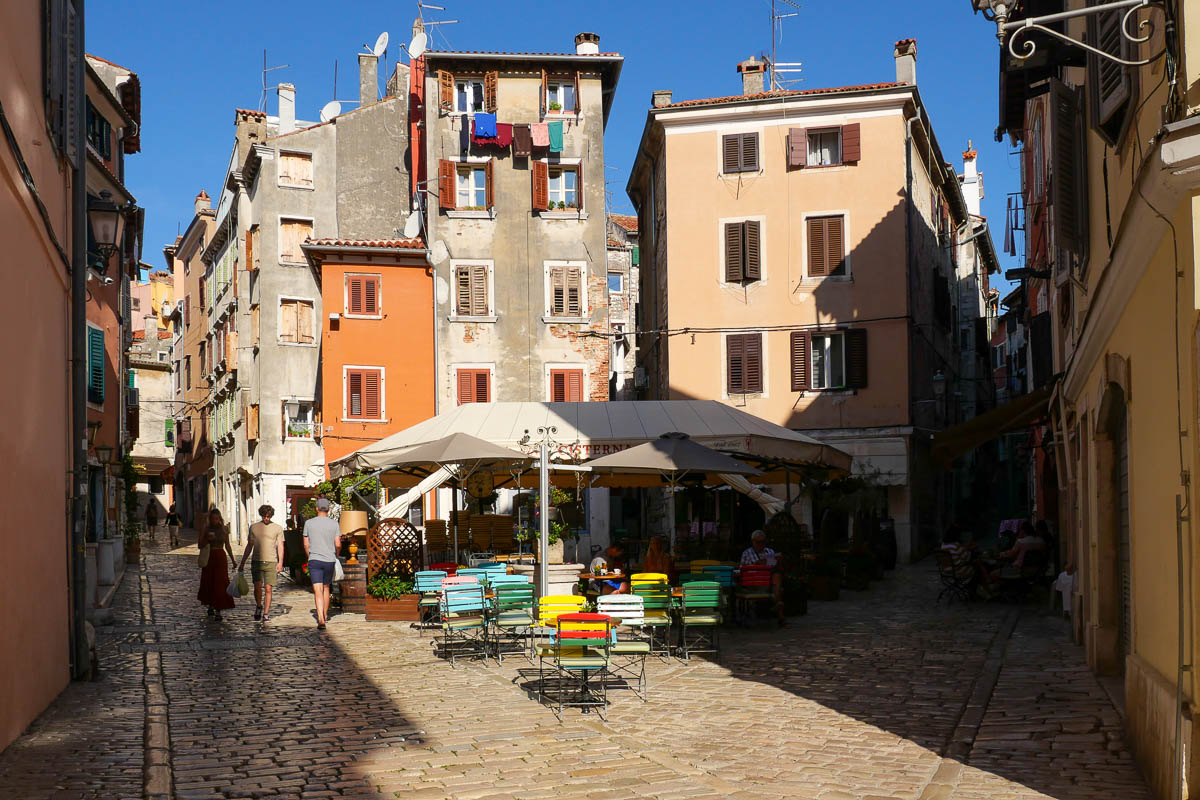
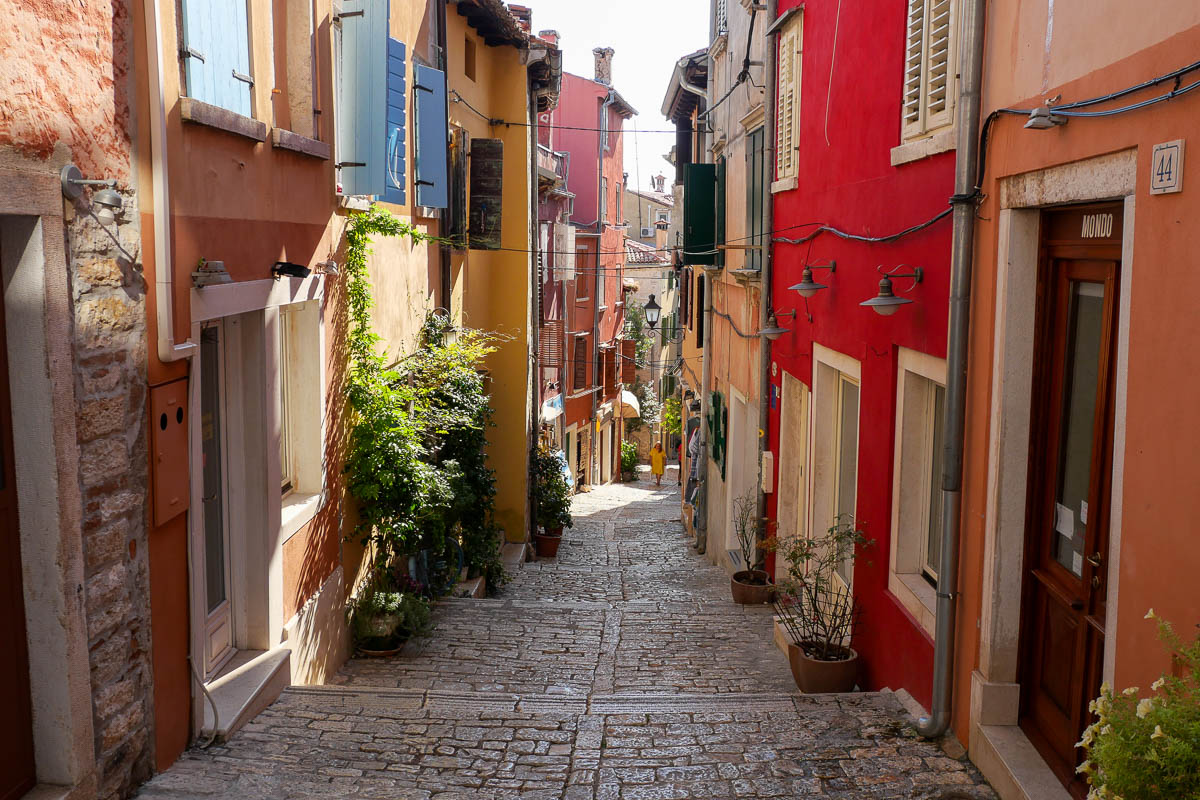
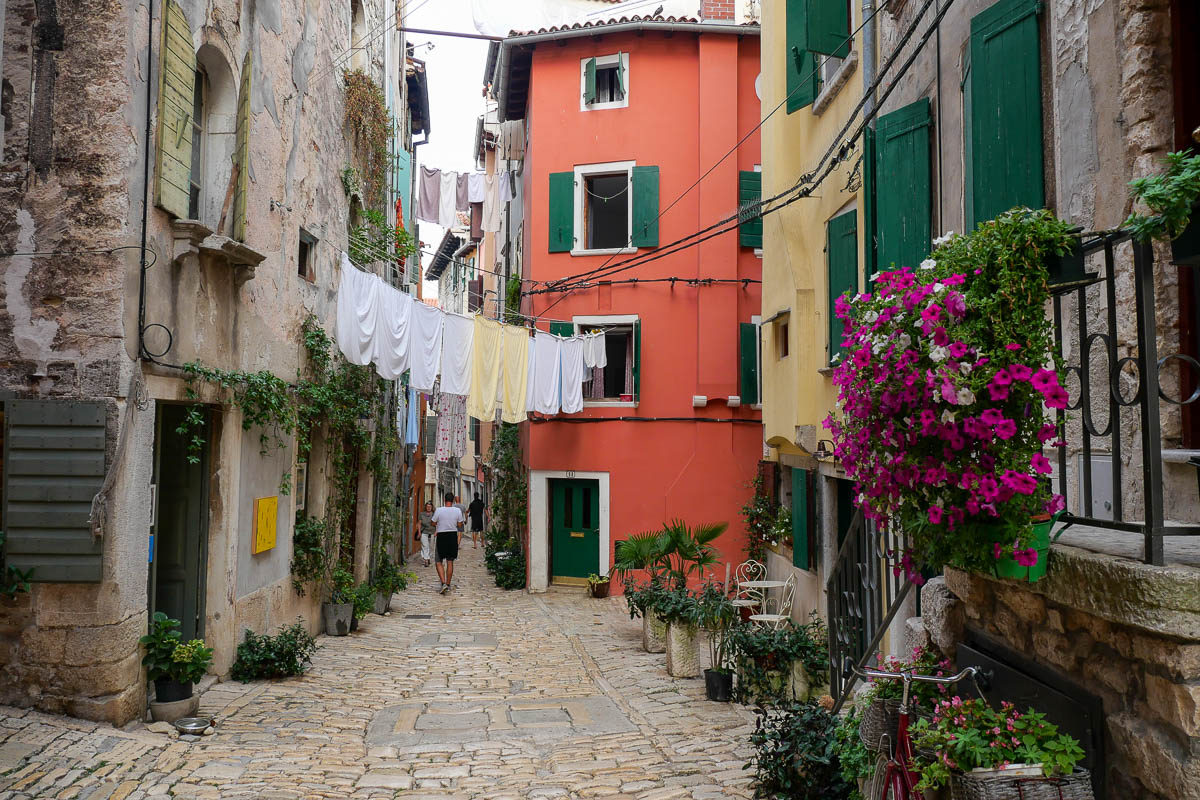
Wander through the cobbled streets of the old town
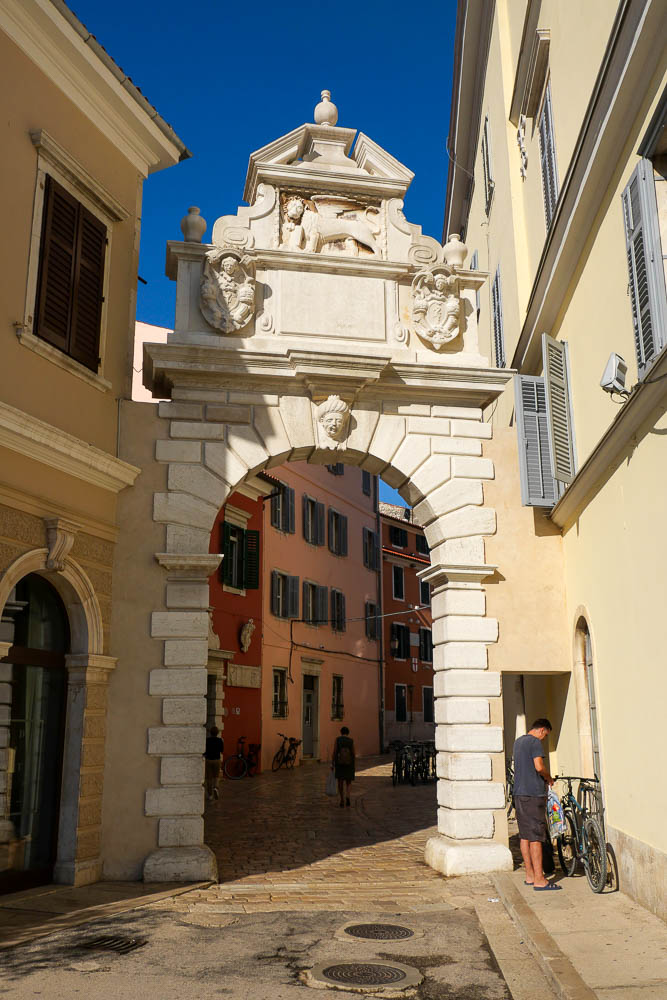
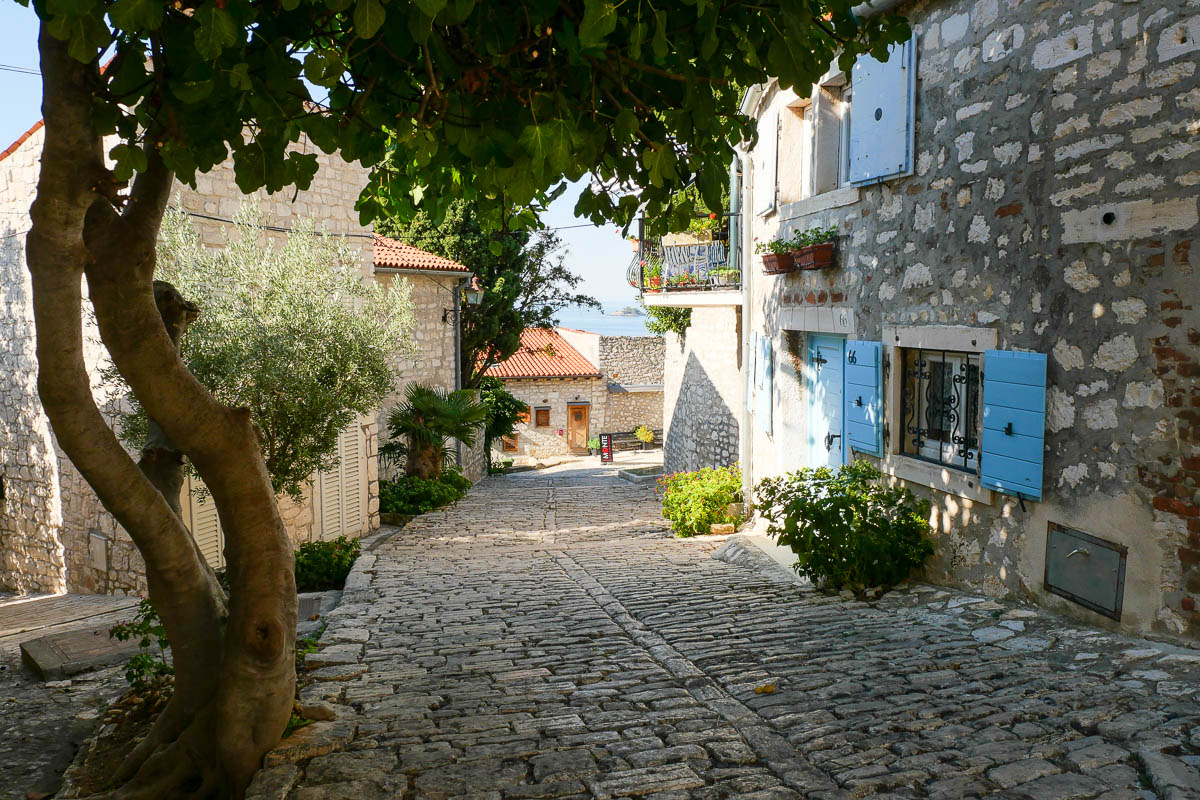
Inside Rovinj’s old town is a maze of narrow cobbled streets that gently slope up toward St. Euphemia’s Church. There are several entrances to access the old town, but I recommend going through the Arch of Balbi, the former city gate built in 1679. It is located just after the museum, recognizable by its beautiful red façade. This baroque stone arch is decorated with a Turk’s head topped by a Venetian lion, reminders of Ottoman and Venetian rule.
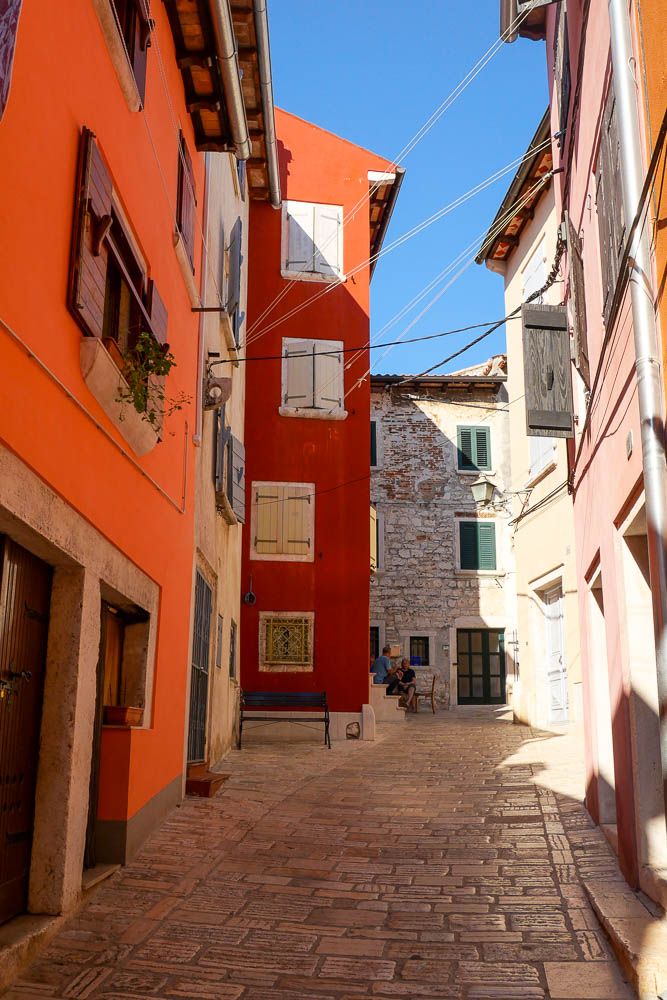
From this gate, continue straight through the streets and you’ll come across Grisia Street, the main street of the old town, lined with many souvenir shops and galleries. The houses feature beautiful painted façades in shades of red, pink, orange, and ochre. At the top of the hill, near St. Euphemia’s Church, you’ll find stone houses.
Don’t hesitate to wander aimlessly and explore the different streets while visiting Rovinj—the old town is small, and you won’t get lost. With its circular shape, you’ll always end up back on the promenade that runs around the peninsula.


Climb the bell tower of St. Euphemia’s Church
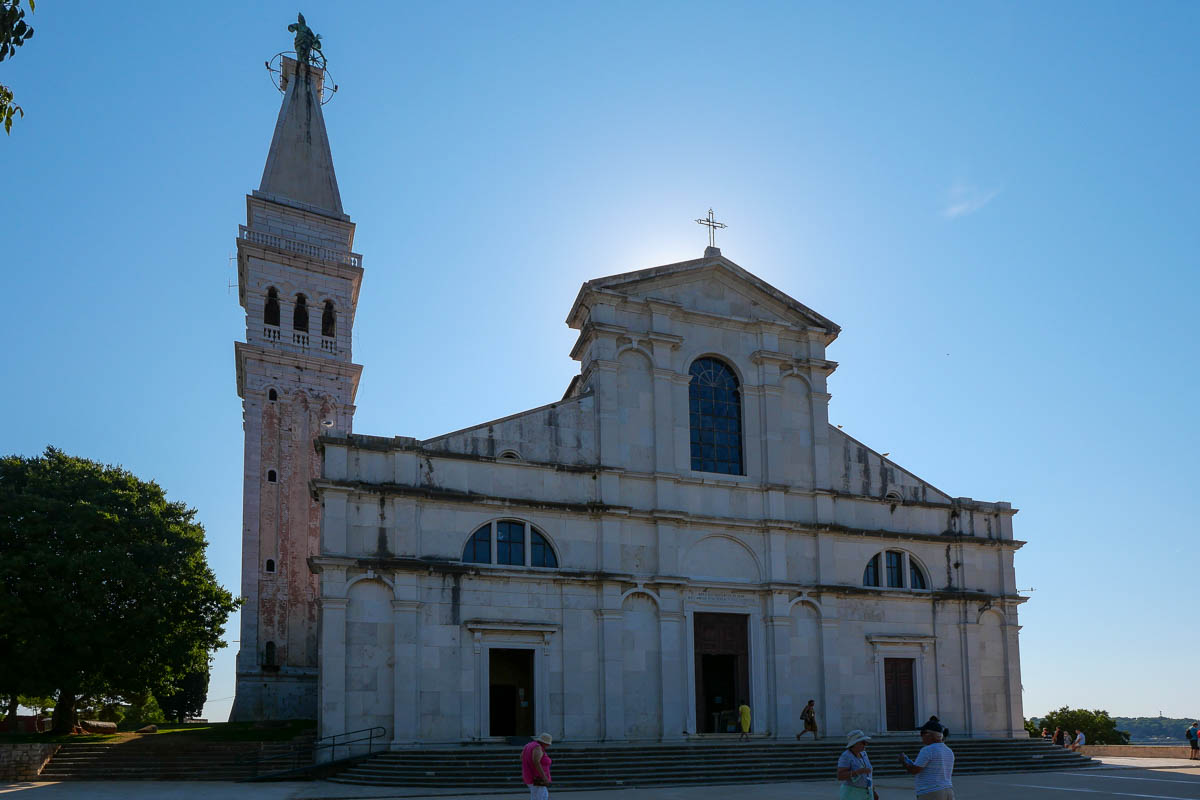
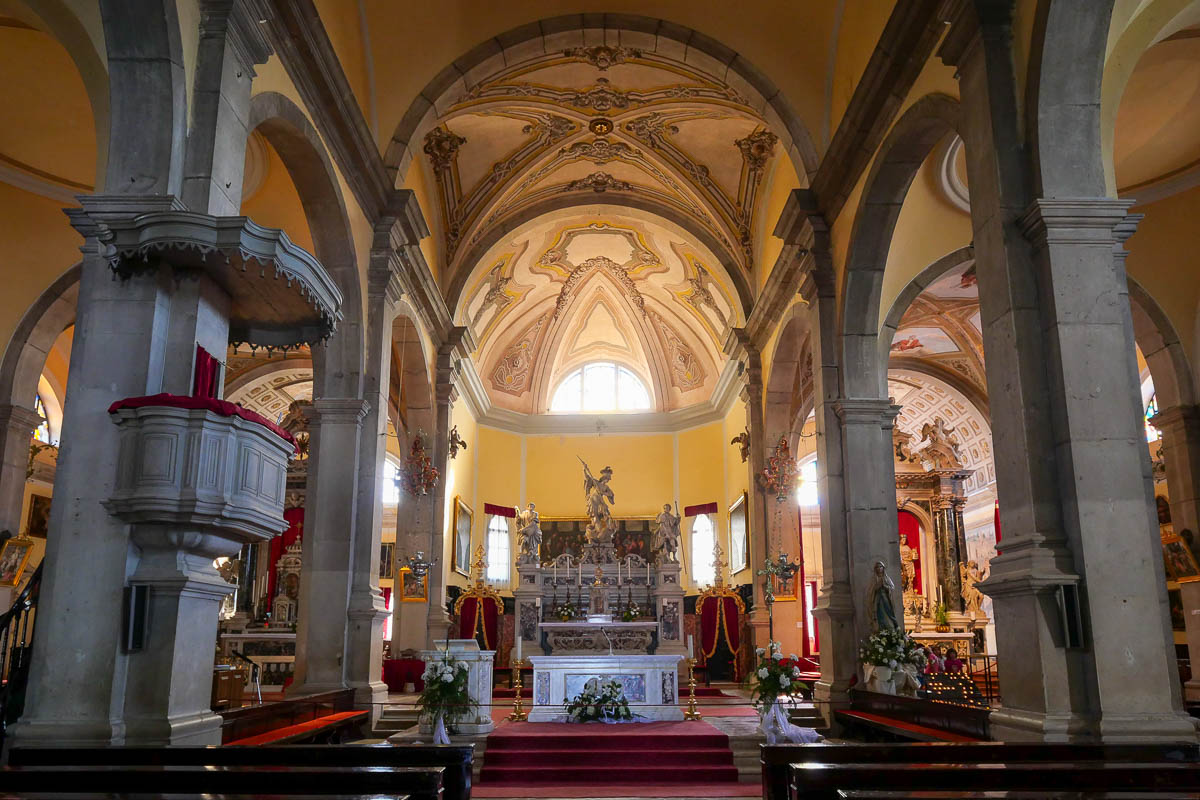
Built between 1725 and 1736 on the hill of Rovinj’s old town, St. Euphemia’s Church is the largest in Istria. Inside, you’ll find three large altars with marble statues as well as three large paintings. The ceiling is decorated with frescoes. The relics of St. Euphemia, the city’s patron saint who was martyred under the Roman Emperor Diocletian in 304, are displayed in a marble sarcophagus behind the right altar.
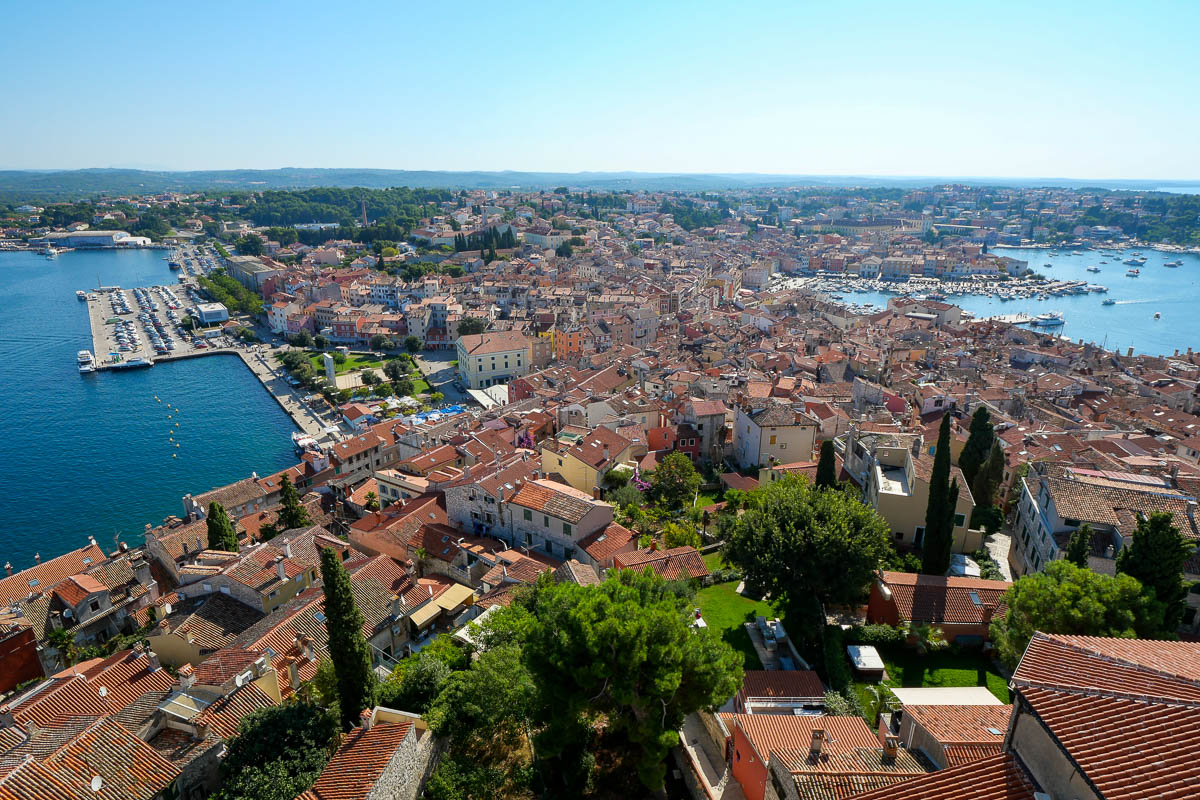
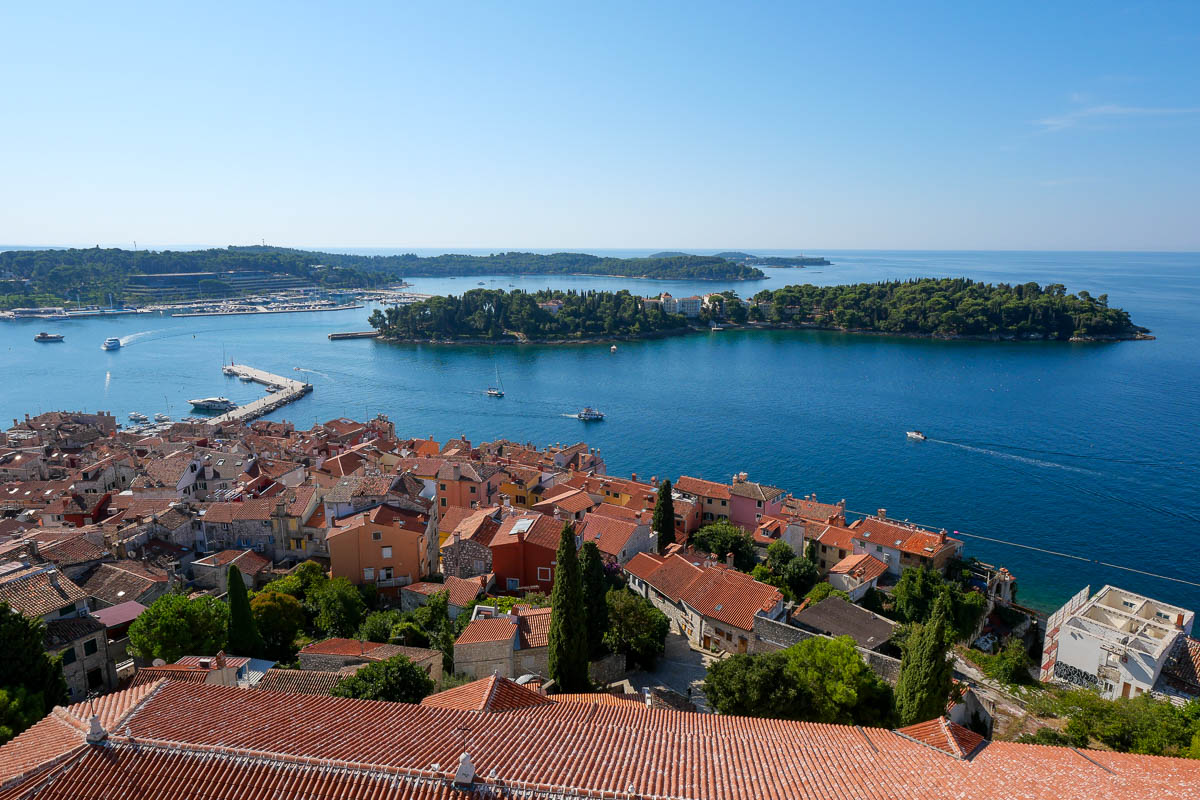
The 61-meter bell tower attached to the church is older than the church itself—it was built between 1654 and 1680, modeled after the campanile in St. Mark’s Square in Venice. At the top stands a 3.90-meter copper statue of St. Euphemia that rotates with the wind. You can climb the 189 steps of the bell tower to enjoy a beautiful panoramic view over Rovinj. The entrance fee is €3 (open from 10 a.m. to 8 p.m.).
If you don’t want to climb to the top of the bell tower (like Daniela, who got vertigo because of the slightly spaced wooden steps), the esplanade in front of the church already offers a beautiful view over the sea and the islands.
Admire the colorful façades along the waterfront
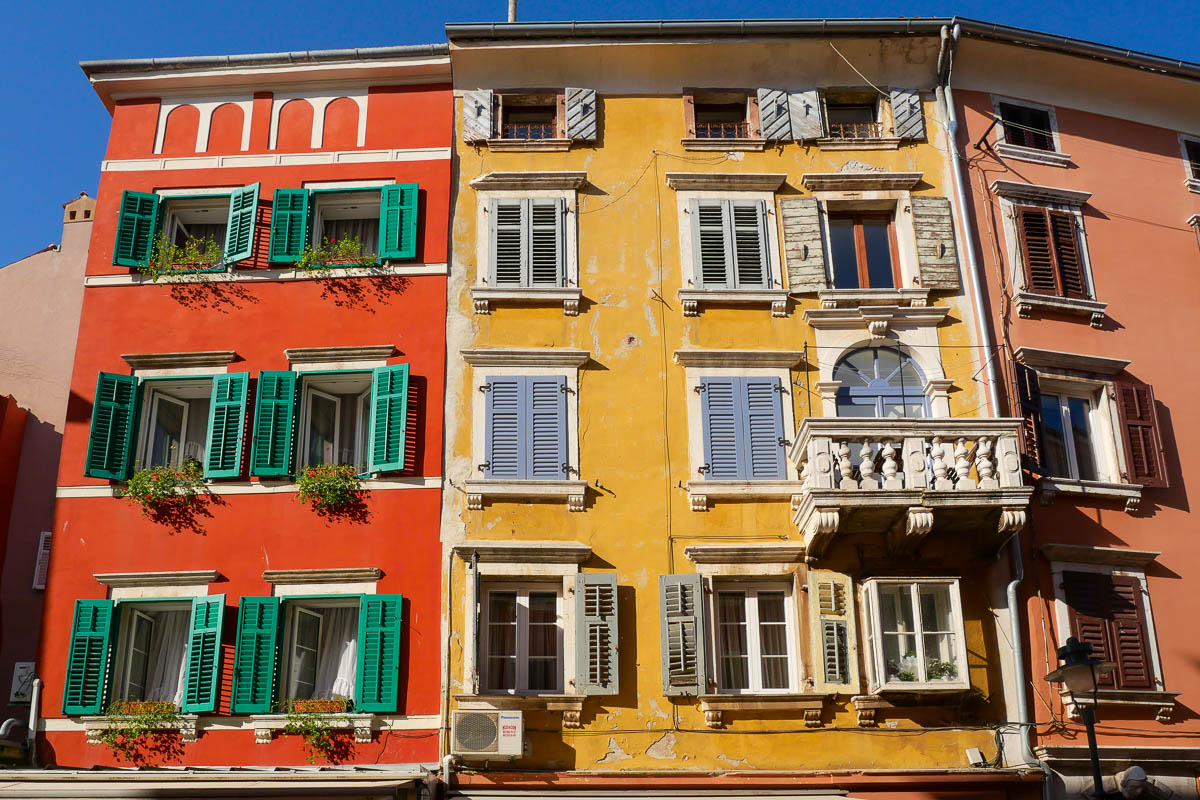
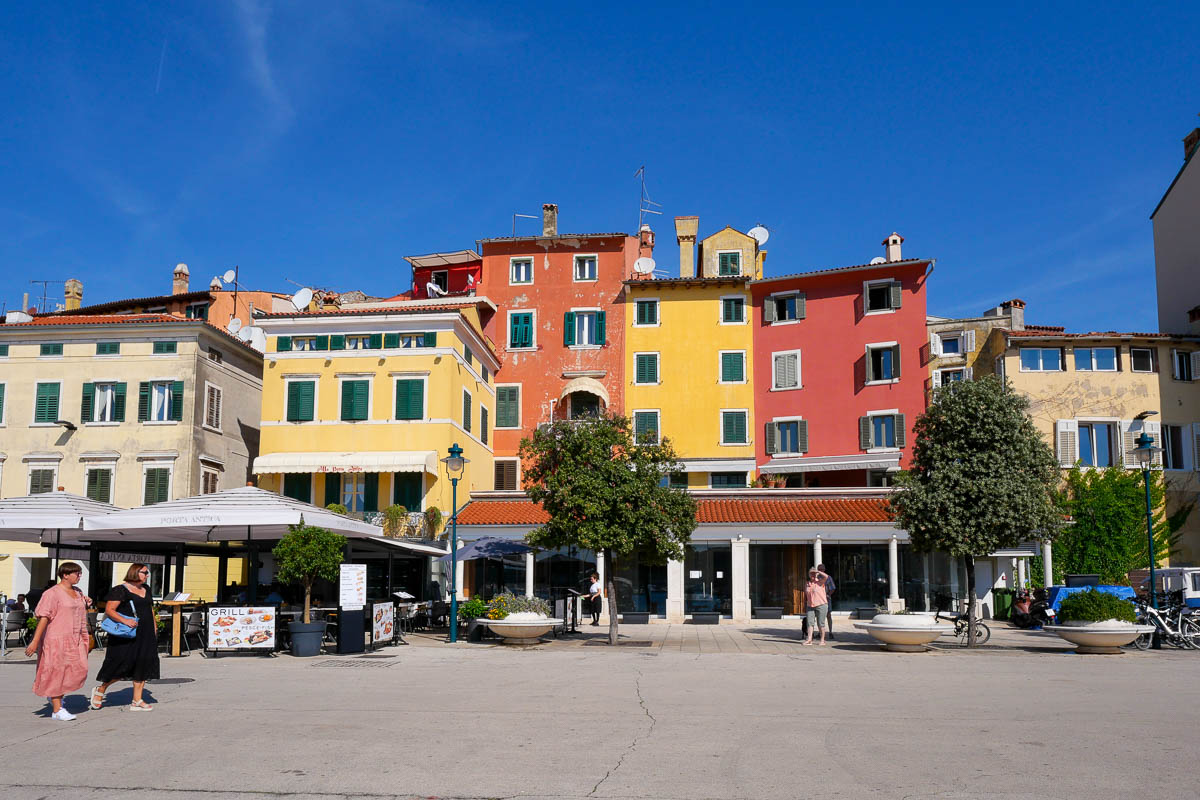
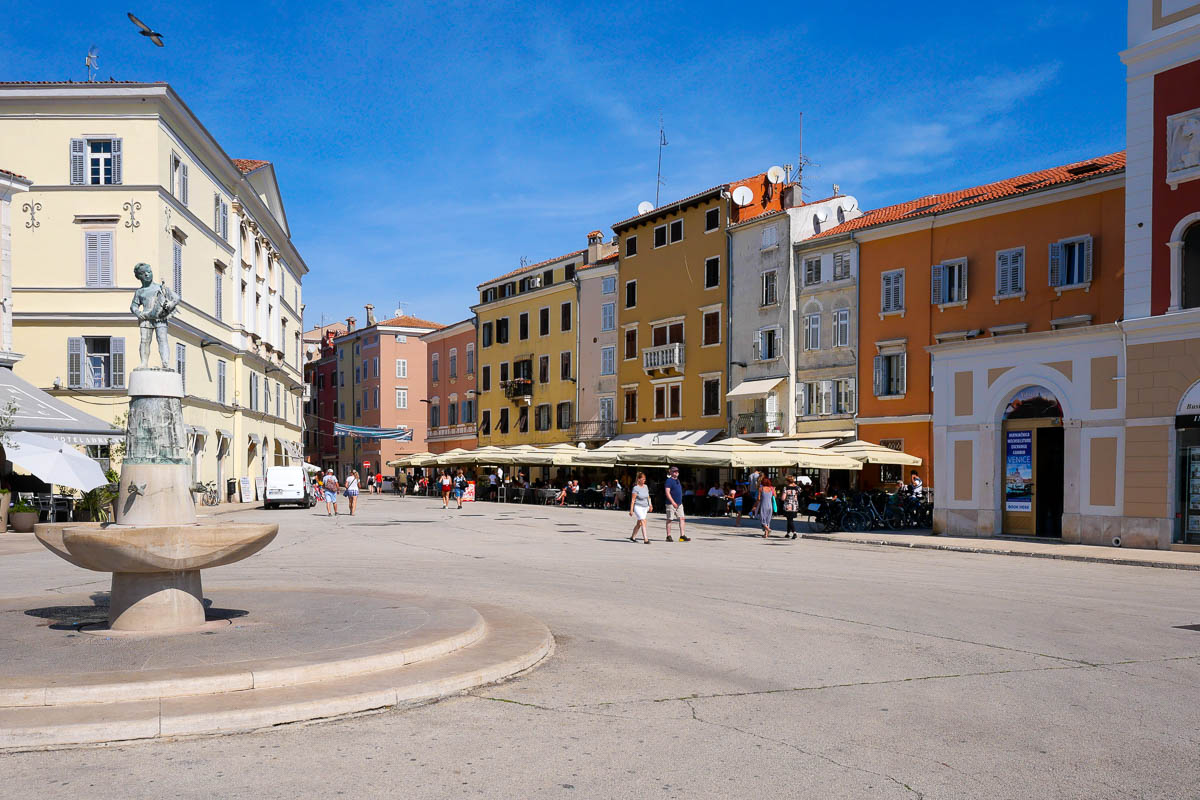
Around Marshal Tito Square, south of the old town, you’ll find some of the most beautiful houses in Rovinj. The colorful façades, ranging from yellow to red and illuminated by the sun (unlike in the narrow streets of the old town), are very photogenic. You might even notice a resemblance to the Cinque Terre in Italy.
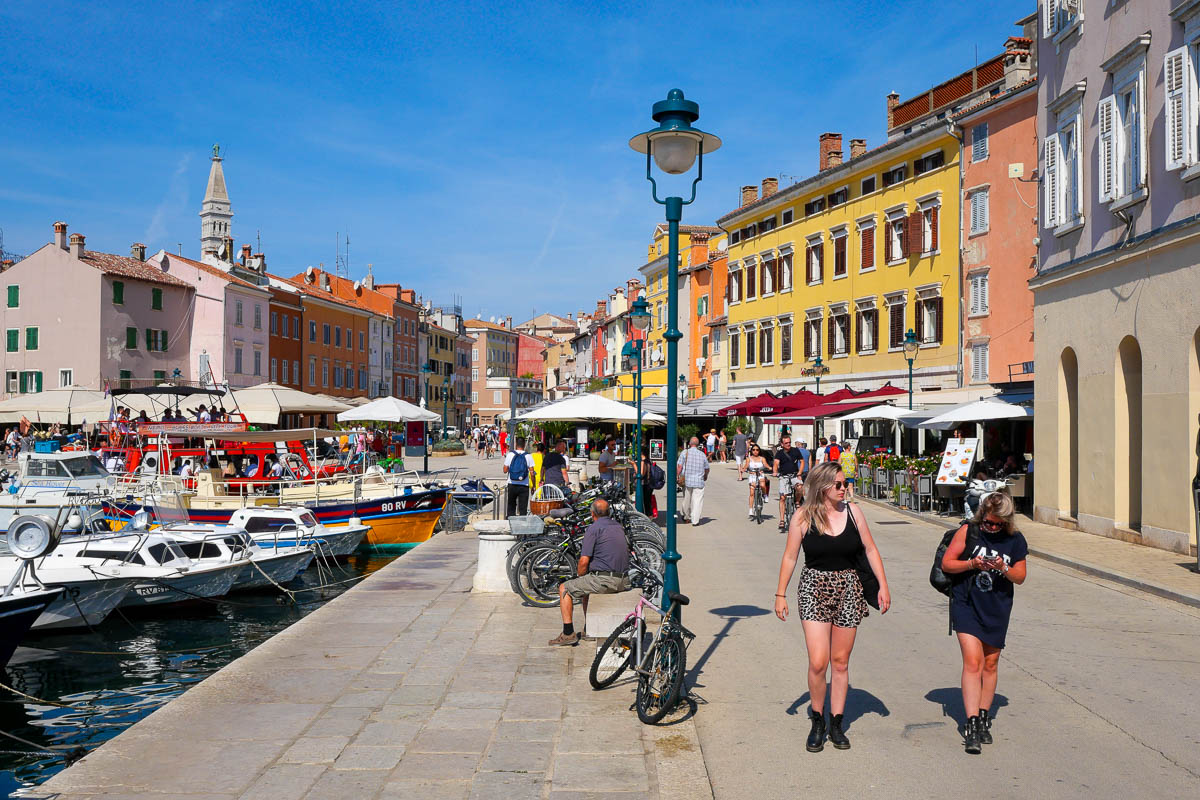
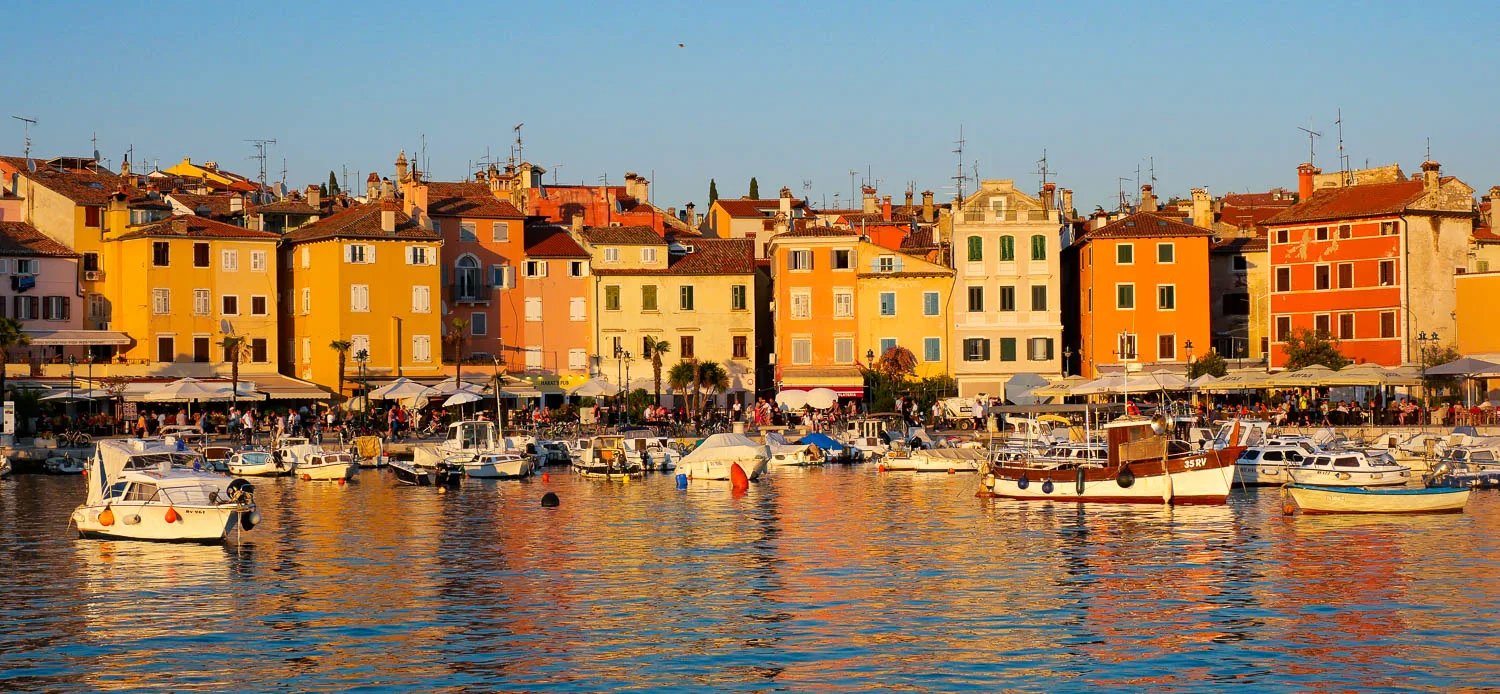
In the center of Tito Square, there is a fountain topped with a small statue, and a clock tower stands on the eastern side. It’s one of the city’s main squares, and unless you visit early or in the off-season, it’s always crowded with tourists. It’s a must-see when visiting Rovinj, as it connects the promenade around the peninsula with the harbor quays. The harbor is also lined with many small colorful houses that are especially stunning at sunset.


Enjoy the view from the harbor
Along the quays of Rovinj’s harbor facing the old town, many restaurants and bars with terraces have set up. You’ll find some of the best dining spots in the region, but prices often match their reputation. Even if you don’t eat there, stop for a drink to admire the stunning view over Rovinj—one of the most beautiful in the city. Alternatively, you can simply walk to the end of the pier for one of the best photo spots in Rovinj 🙂
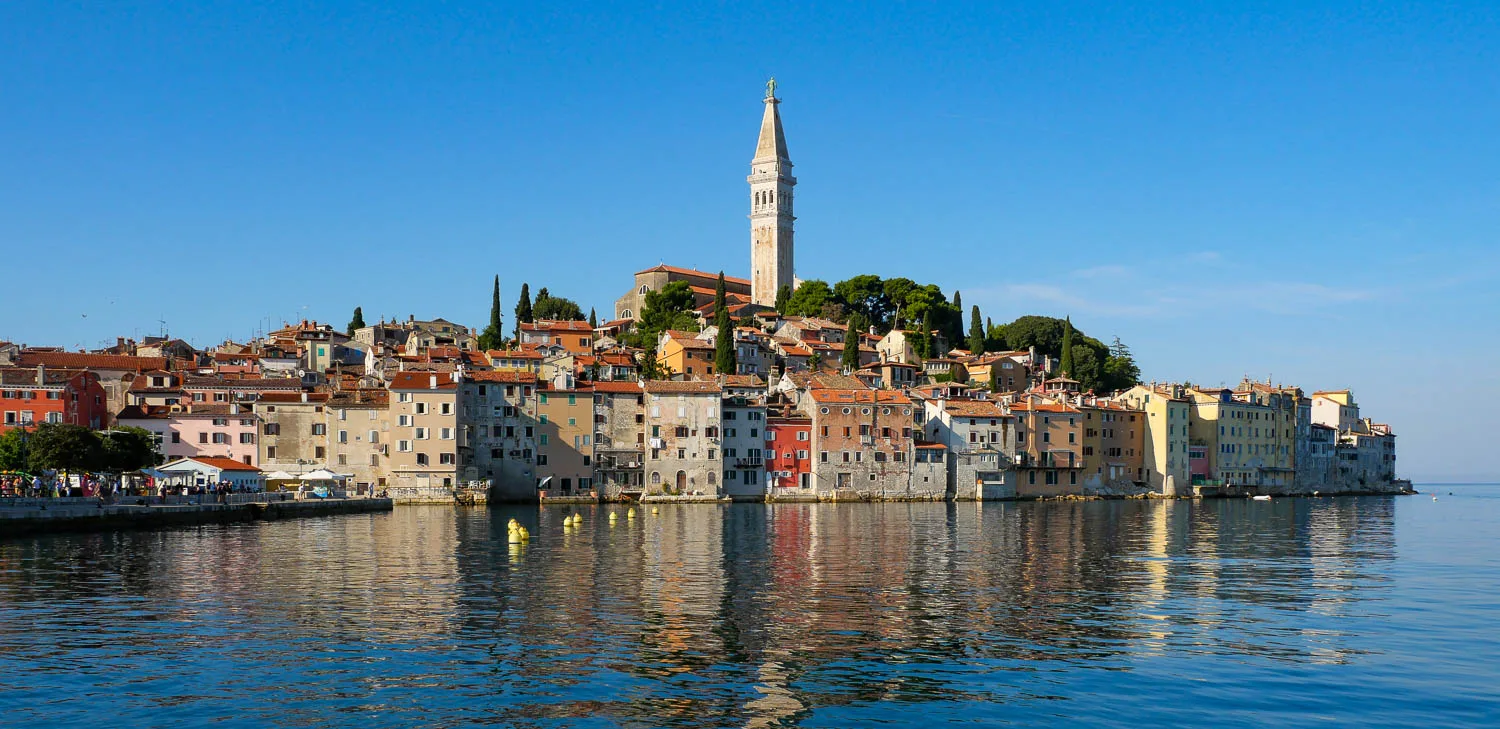
To fully appreciate the bell tower and colorful houses from every angle, don’t miss the viewpoint located north of the peninsula near the excursion boat dock and the large parking area. A small photography tip: since the viewpoint faces west, it’s best to go in the morning for better light (in the afternoon, the sun is directly in front of you).
Rovinj’s harbor was ranked the second most picturesque harbor in the Mediterranean in 2013 by the “Mediterranean Maritime Heritage Federation.”

Watch the sunset over the Adriatic
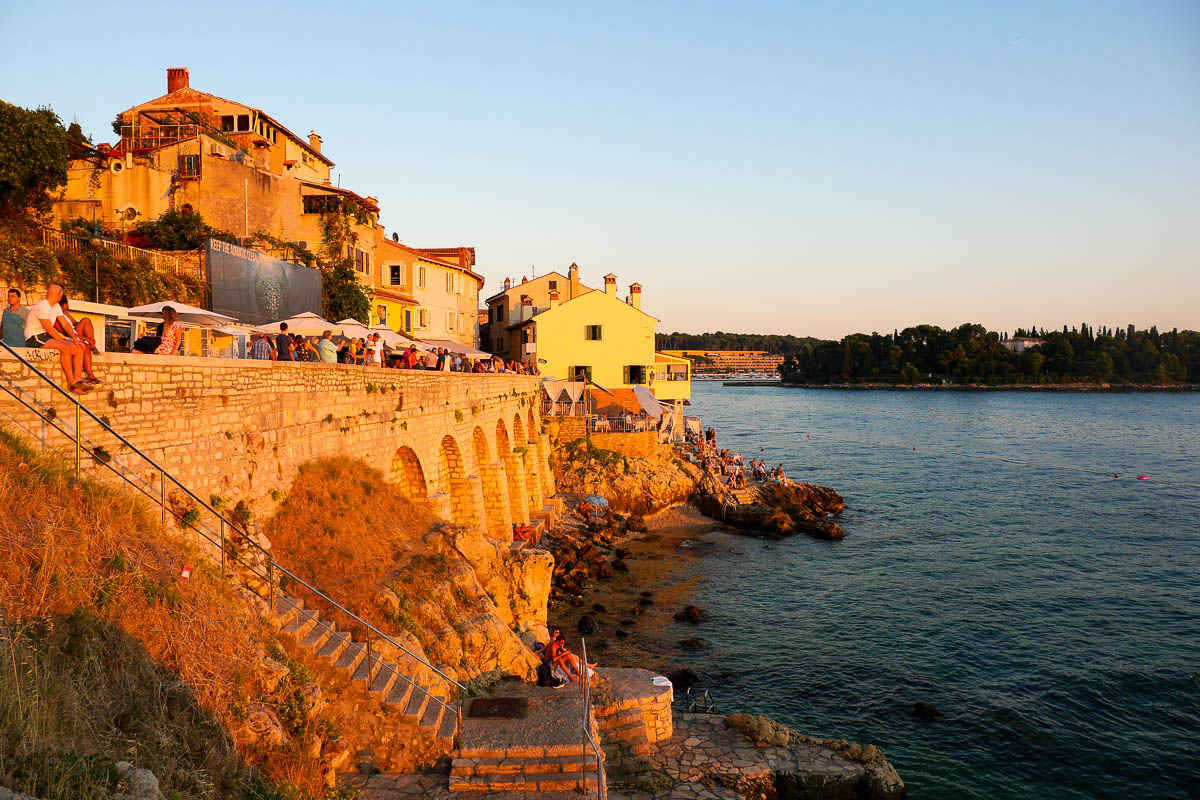
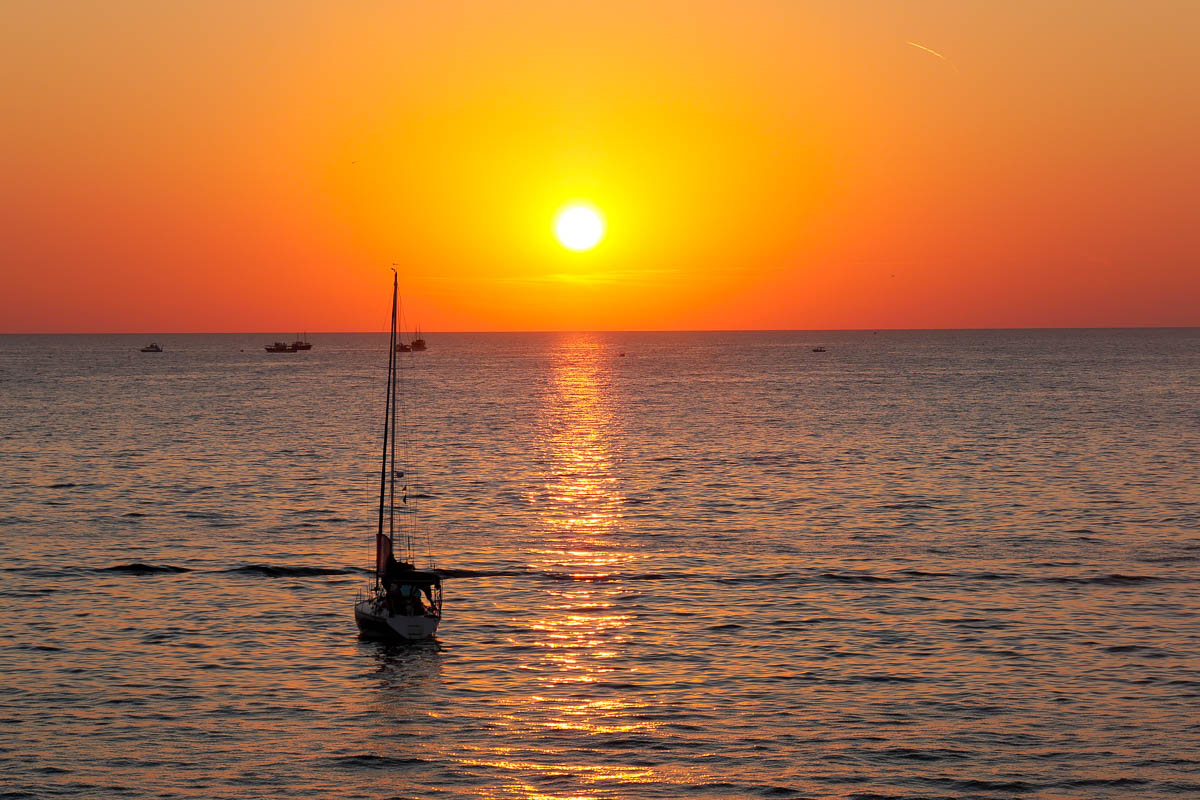
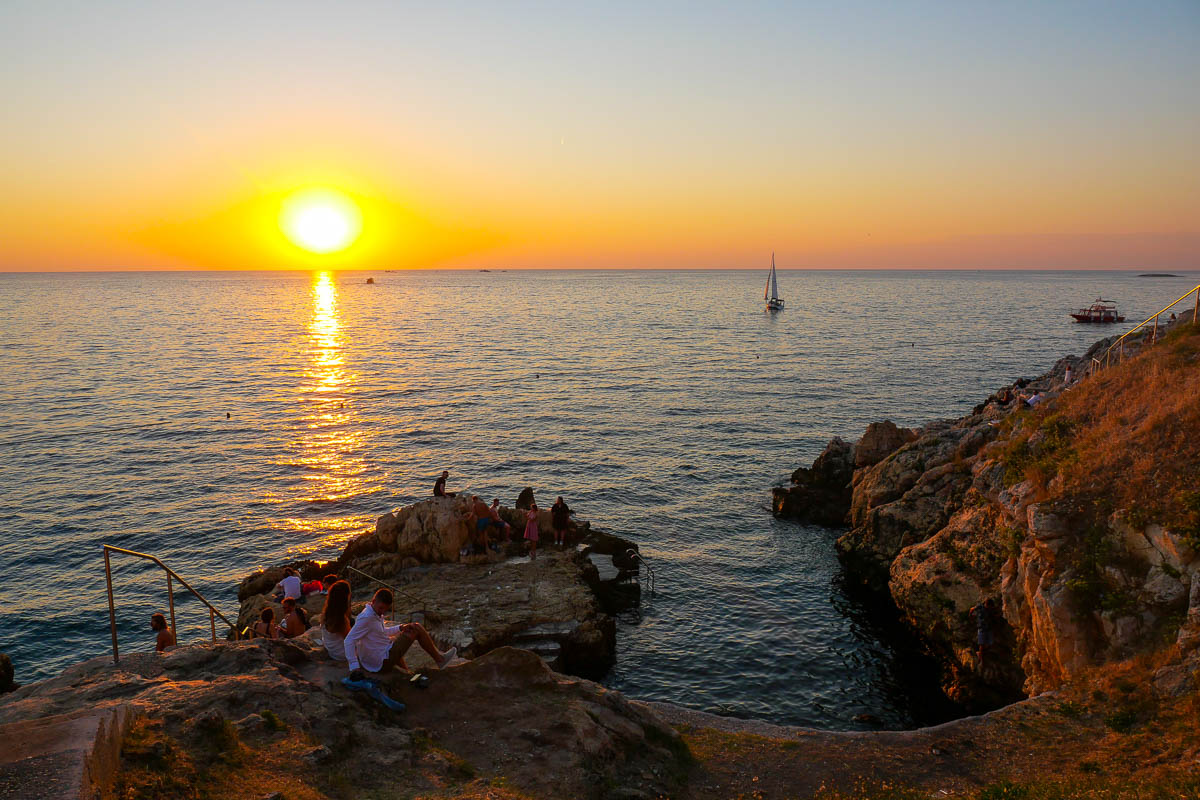
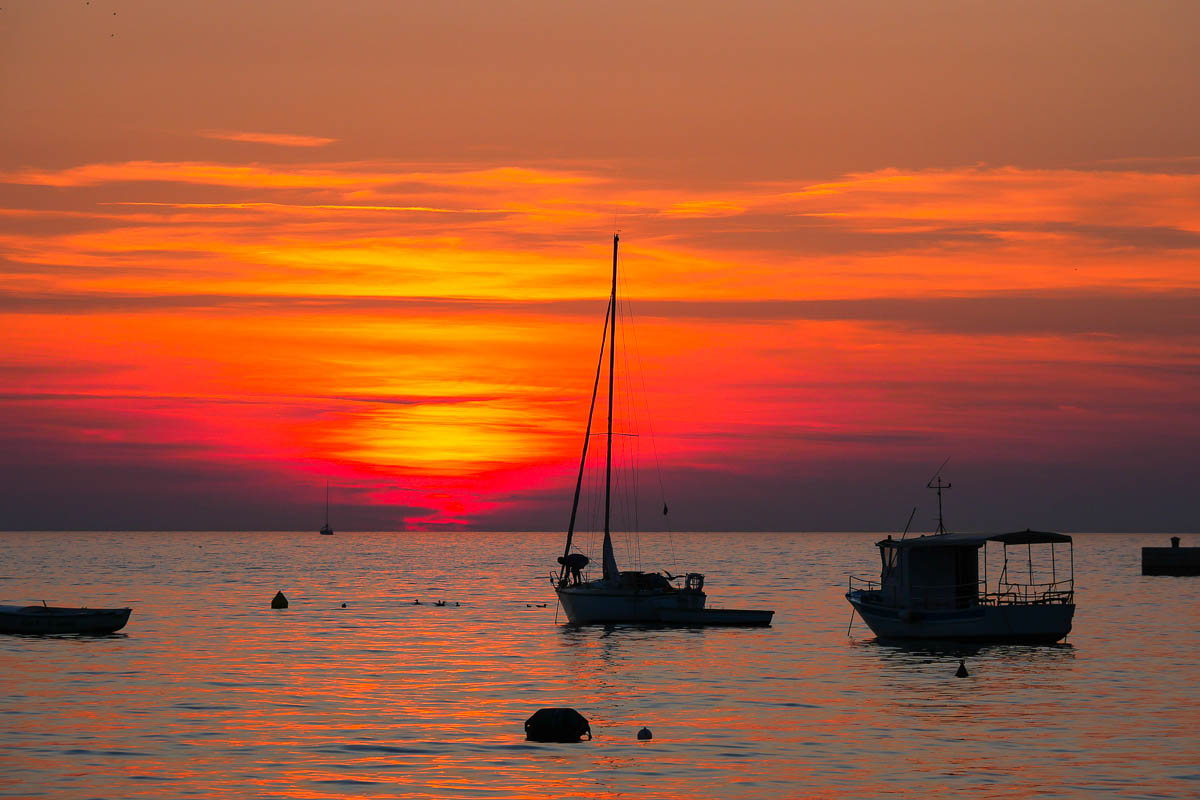
Since Rovinj is located on Croatia’s west coast, you’ll enjoy spectacular sunsets over the Adriatic Sea. The best spots are Balota Beach along the promenade (perfect for relaxing with a beer by the water), and the quays south of the peninsula, offering a view over the entire bay with the old town on the right and St. Catherine’s Island in front.
Watching the sunset is one of the best things to do in Rovinj. You’ll see many people enjoying drinks while sitting on the rocks or at the terraces of the many bars in the historic center. Don’t miss this free show that takes place every evening 🙂
Swim at Rovinj’s beaches
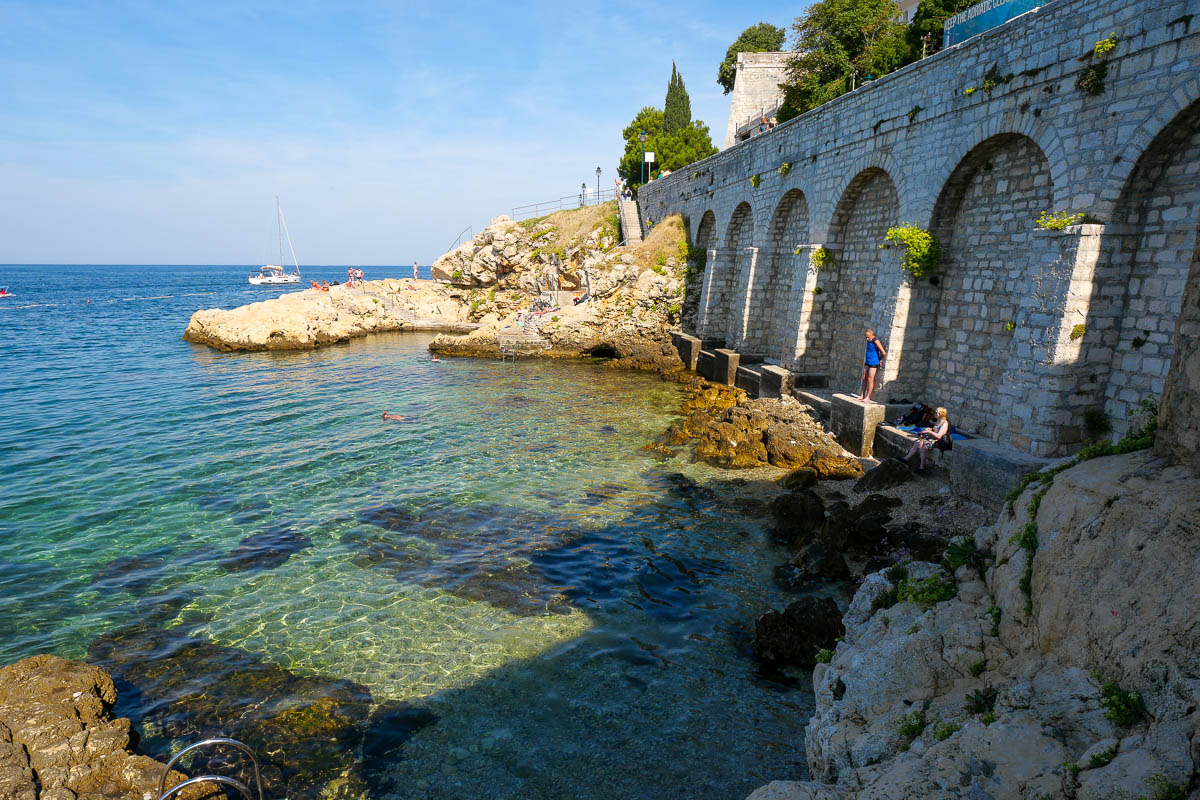
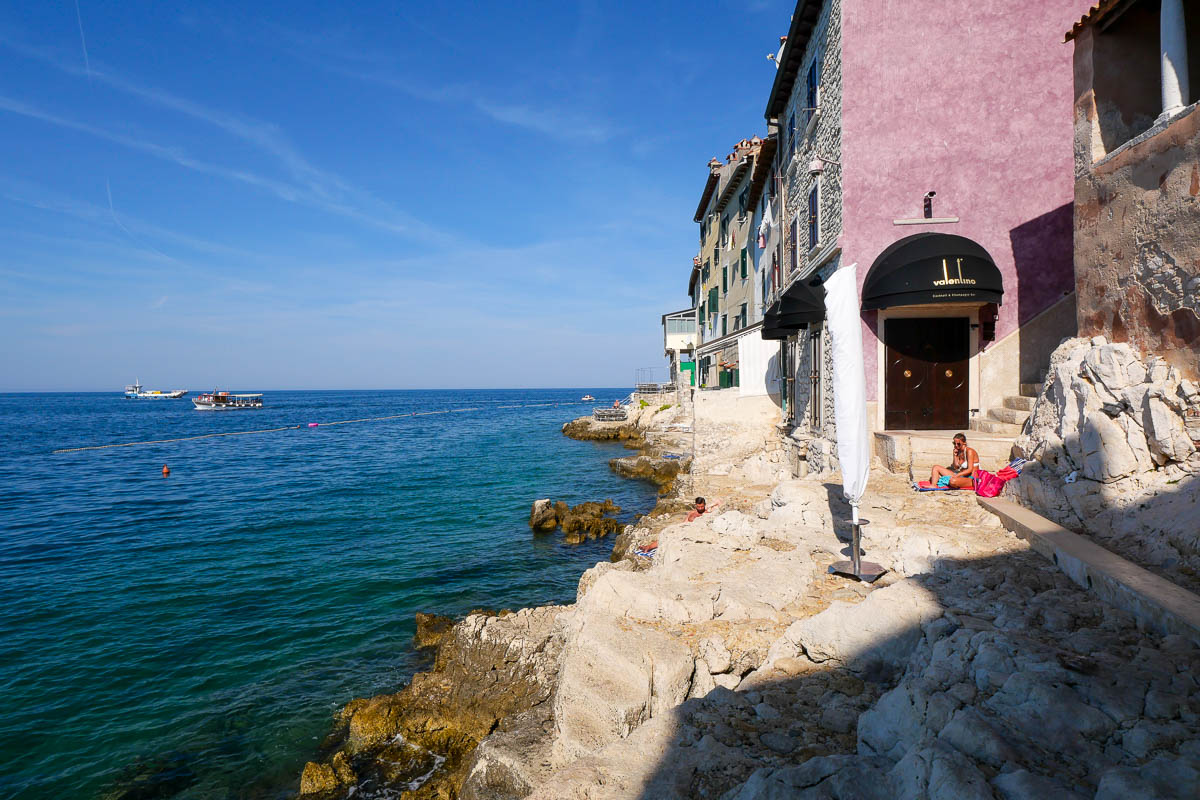
If you want to swim in Rovinj without leaving the old town, you’ll find two small beaches for sunbathing. Don’t expect long sandy stretches—beaches in the old town are mainly rocky areas by the sea with access to clear, transparent water.
The first and smallest beach is located between Valentino Bar and Mediterraneo Cocktail Bar. It can be accessed via stairs from Sv. Kriza Street, which runs around the peninsula. A few flat rocks allow you to lay your towel. The second, slightly larger beach is Balota Beach, mentioned earlier for sunset views. It’s located 200 meters further. The beach is equipped with stairs, a small platform, and a ladder for entering the water. A safety net separates the swimming area from passing boats.
For a proper beach with pebbles and sun loungers, you’ll need to head further south toward Zlatni Rt Park. Mulini Beach, located 1 km south of the old town, is the most well-known.
We didn’t spend much time at the beach during our trip to Croatia—we have to admit we were a bit disappointed, as most beaches aren’t particularly remarkable. To be fair, we live on the French Riviera, so we’re a bit picky when it comes to beaches. Not to mention that we had returned two months earlier from a road trip in Corsica, where the beaches are among the most beautiful in Europe. In any case, we didn’t come to visit Rovinj for the beaches.
Have a drink by the sea
Whether to enjoy a sunset or simply the sea and island views, having a San Servolo (Istria’s craft beer) on one of the terraces in the old town was one of our favorite things to do in Rovinj 🙂 It became a bit of a ritual after spending the day exploring inland villages or coastal towns.
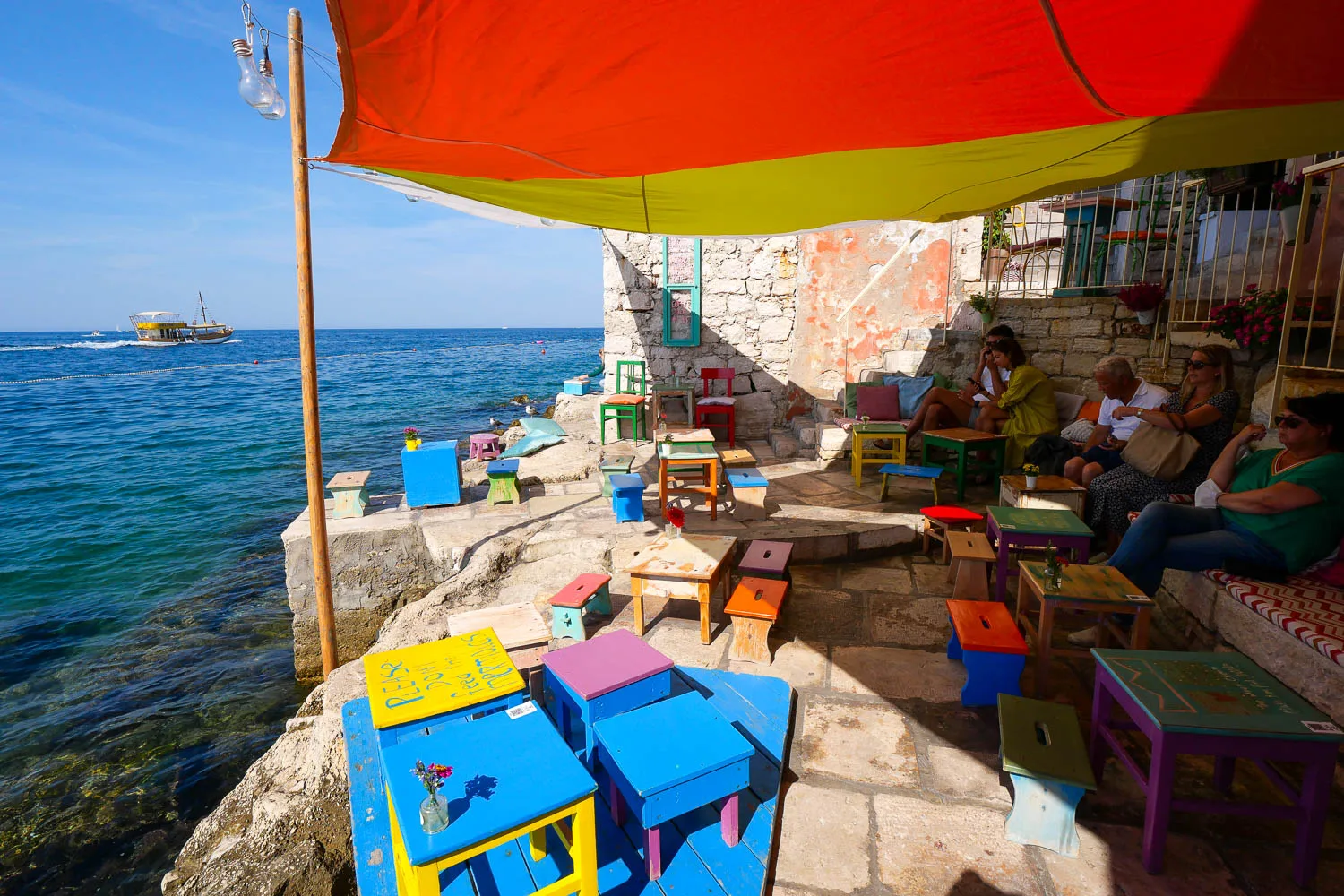
For this, we found a great spot at the Mediterraneo Cocktail Bar, where you can sit at small colorful wooden tables and stools. It’s accessed through an archway on Kriza Street. There aren’t many seats, and the place is quite popular with tourists, so if you want to watch the sunset, arrive early.
Visit the town museum
This museum, housed in a beautiful 17th-century baroque palace, is divided into several sections showcasing archaeology, history, ethnography, and Croatian art. It features both permanent and temporary exhibitions—you can find the schedule on the museum’s official website. Opening hours and ticket prices vary depending on the season (it appears to have been closed for renovations in early 2023).
From June to August: 65 KN / Open daily from 10 a.m. to 10 p.m.
From September to May: 15 KN / Open from 10 a.m. to 1 p.m., Tuesday to Saturday
For art and history lovers, or if you’re looking for things to do in Rovinj when it rains, it can be a good visit idea. That said, we personally skipped the town museum.

Buy local products at the market
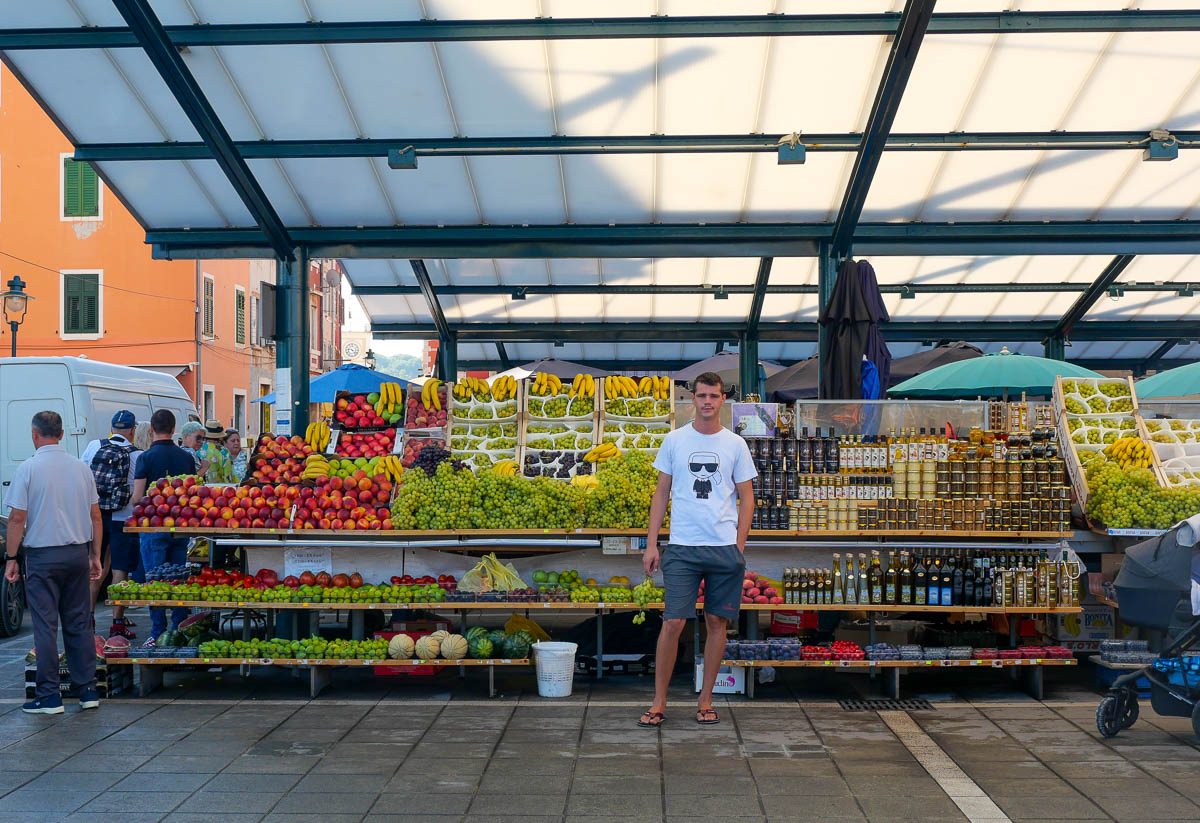
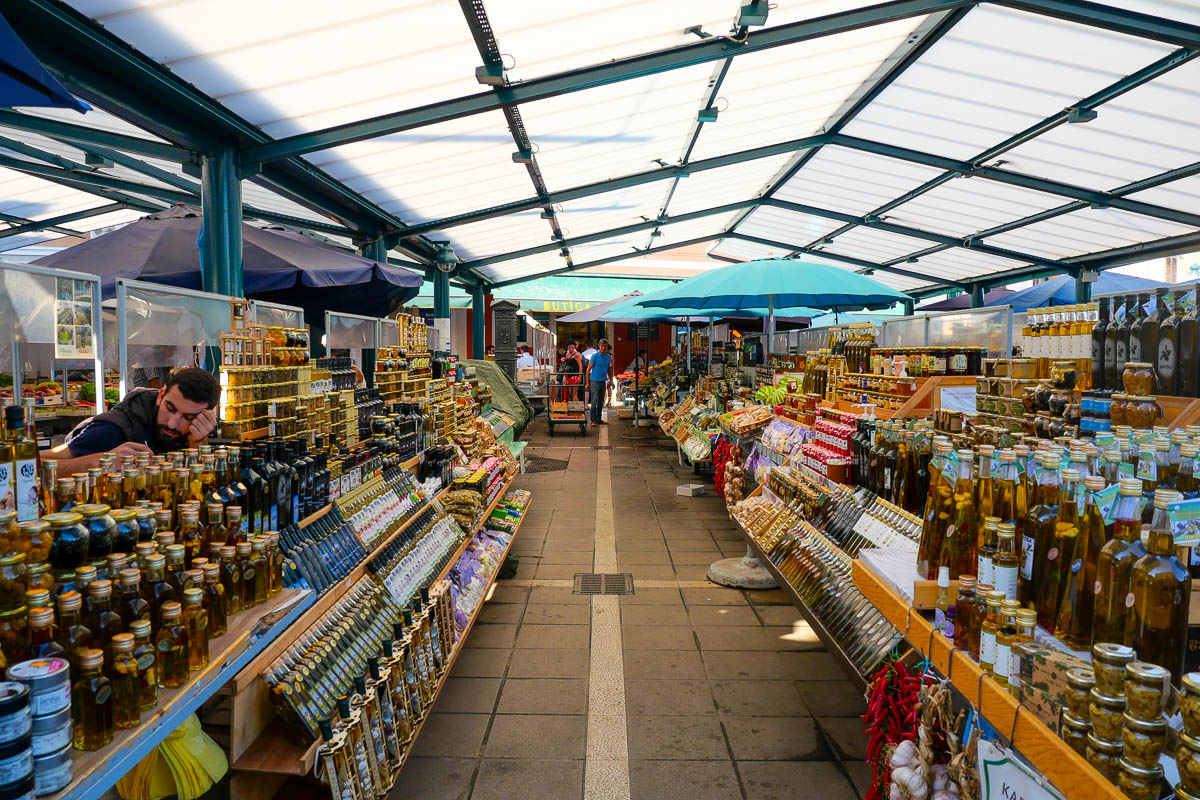
Arriving from the north side of the city, you’ll quickly come across a covered market (Gradska Tržnica) offering many local specialties as well as fruits and vegetables. You’ll find cheese, wine, olive oil, and honey, along with one of the region’s most famous specialties—truffles. As Rovinj is very touristy, prices are quite high. If you visit inland villages, you’ll find the same products at lower prices.
Go sea kayaking around the islands
This excursion will appeal to nature lovers and outdoor enthusiasts. Departing from Rovinj, you’ll paddle around the islands and along the peninsula’s coastline. With a bit of luck, you might even spot dolphins.
This half-day sea kayaking excursion, including visits to 3 islands and a lighthouse, is accessible to children from 8 years old, with the only requirement being that they know how to swim. All necessary equipment is provided.
Rental boat in Rovinj
Want to explore the islands off the coast of Rovinj or discover the coastline at your own pace? Renting a private boat is the solution. If you don’t have a boating license, don’t worry—it’s possible to rent a boat with a skipper. The advantage is that they can show you all the hidden beaches and caves in the region. It’s an original way to visit Rovinj.
Click&Boat is a leading online boat rental platform, with over 55,000 boats from private owners and professionals. It’s an ideal option for a private cruise.
What to do around Rovinj
Visiting Rovinj and its old town won’t take more than a day. But if you’re staying longer, here are some ideas for things to see and do in the surrounding area. Thanks to its central location on the Adriatic coast, Rovinj is a great base for exploring nearby attraction.
Lim fjord (Limski kanal)
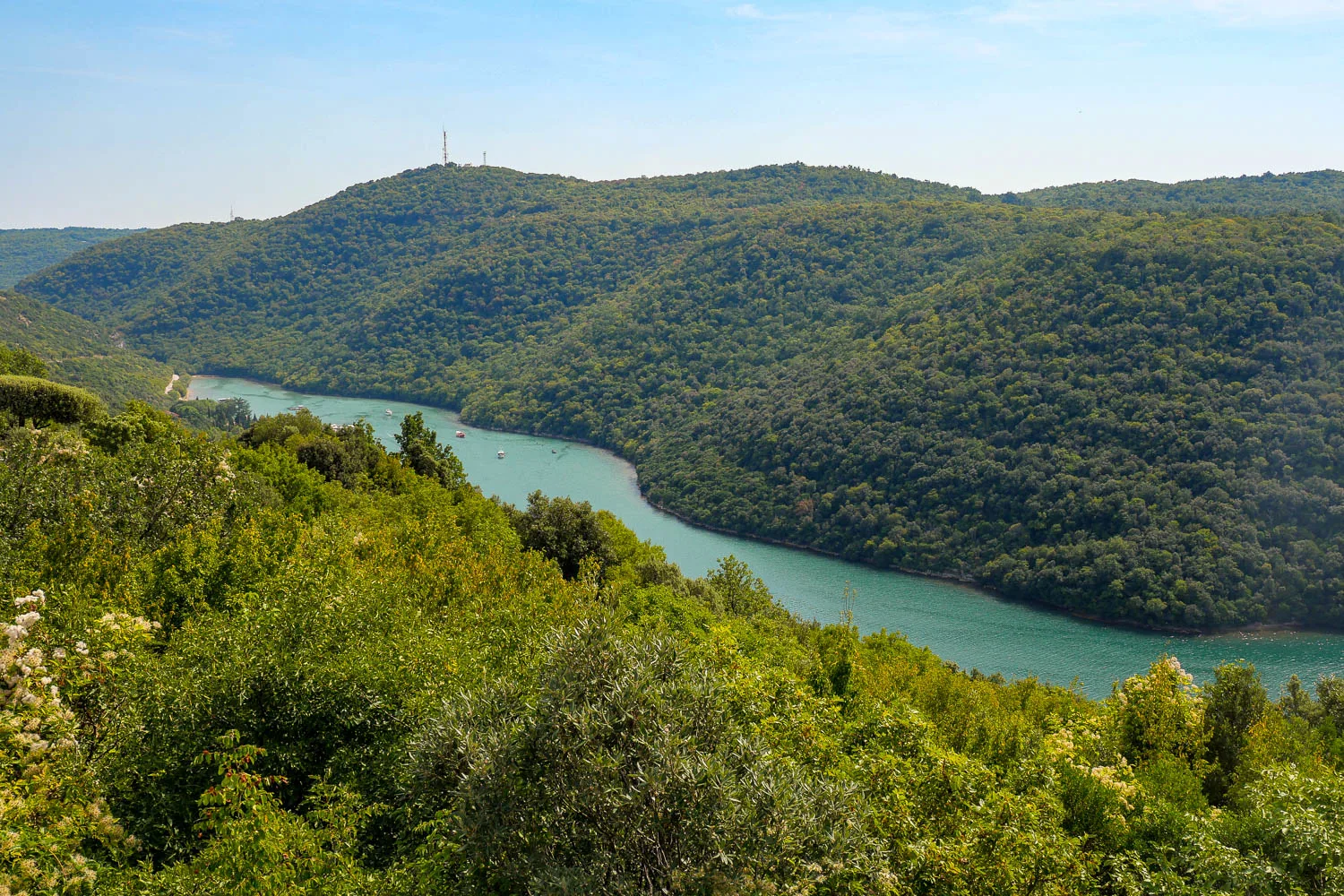
Limski Kanal is located 13 km north of Rovinj. If you’re doing a road trip in Istria, you’ll likely see it from the road. Vendors selling local products along the roadside have set up viewpoints next to their shops to attract tourists. We stopped here to take the photo below.
The Lim Fjord, 10 km long and 600 meters wide, is used for fish, mussel, and oyster farming. In summer, you can visit the fjord by boat from Rovinj—many stands at the harbor offer this excursion. You can also go there by car, and you’ll find a small beach on site. Just a heads-up: it’s not as spectacular as the fjords in Norway.
Among the activities available, you can go sea kayaking. Departing from Rovinj, you’ll paddle up the fjord and stop twice to swim, picnic, and snorkel near the end.
Visit Poreč
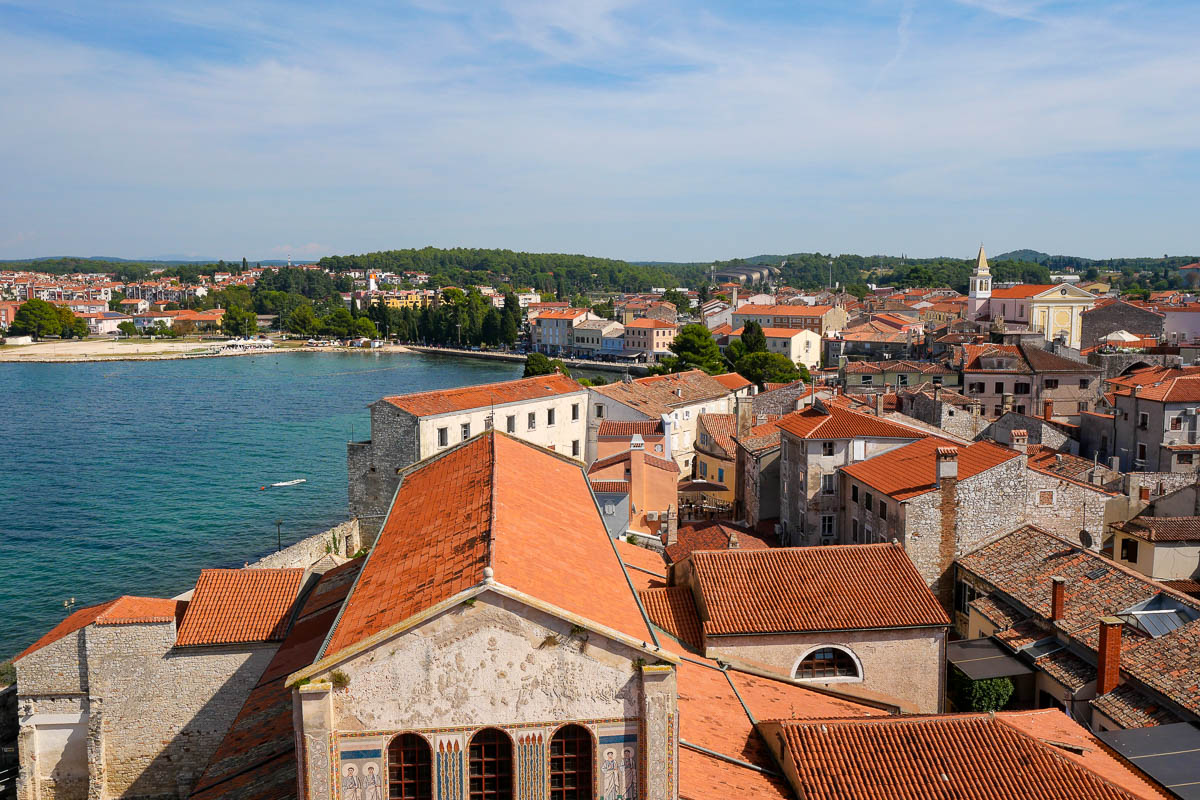
Along with Rovinj, Poreč is one of the leading summer tourism destinations in Istria. Built by the Romans, its old town features three Venetian towers, palaces, a UNESCO-listed basilica, and various Gothic, Baroque, and Romanesque buildings. Poreč is located 36 km north of Rovinj and is easy to visit from there. If you don’t have a car, buses connect Rovinj and Poreč.
For more information on things to do and see, you can read the article on what to do in Poreč.

Hilltop villages of Istria
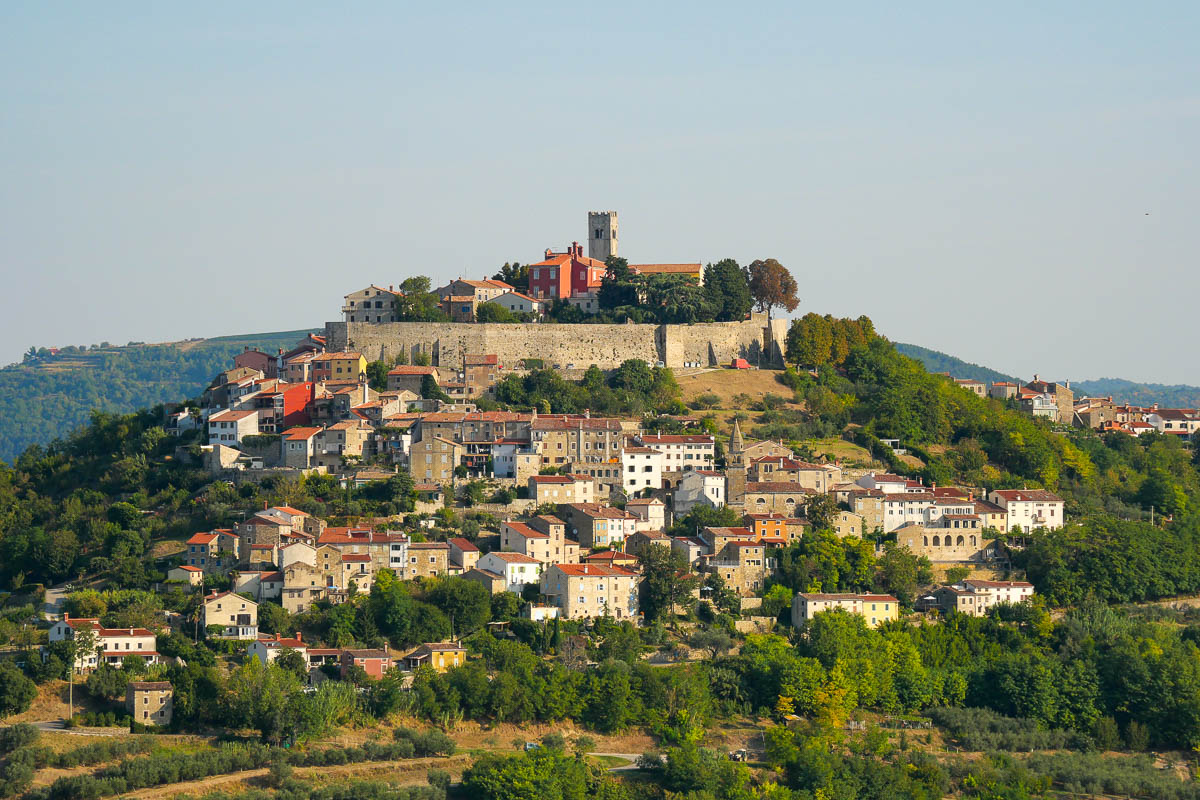
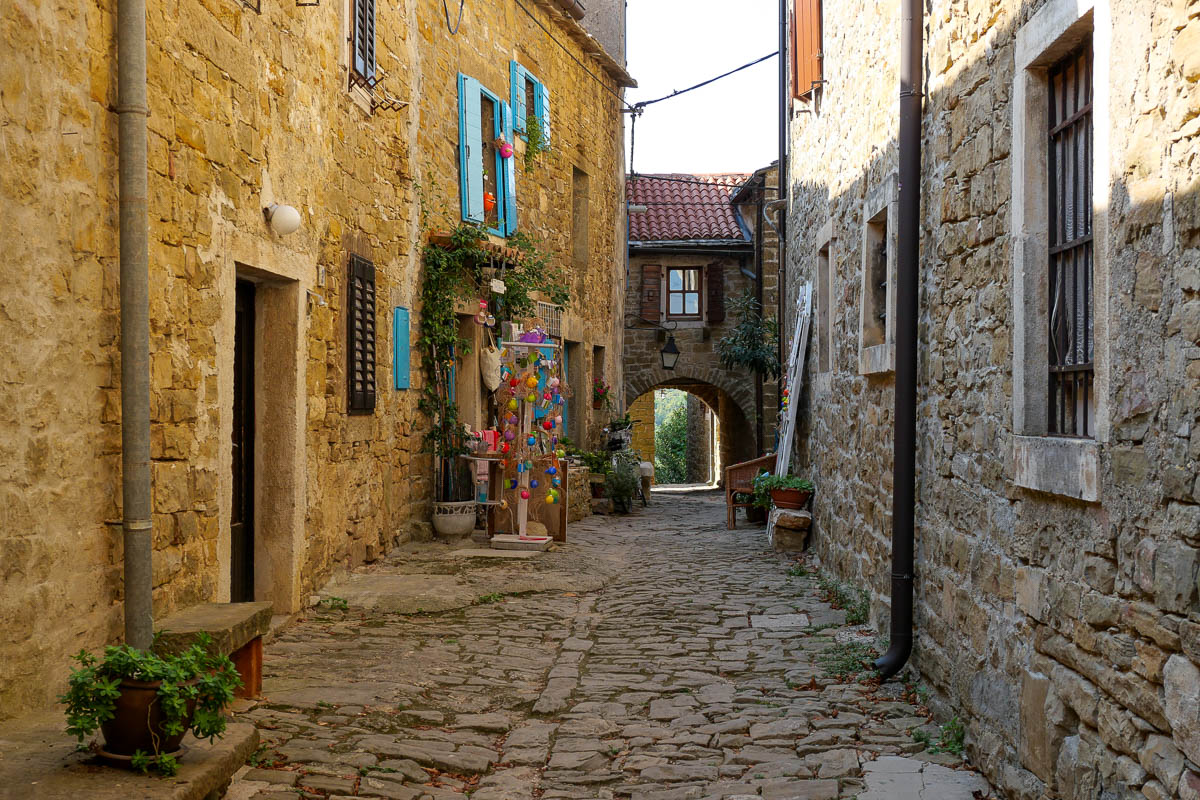
The inland region, much quieter than the crowded coastline in peak summer, is home to beautiful medieval hilltop villages set in the countryside. Here, there are no large resorts—just charming farms living to the rhythm of harvests and inviting you to embrace a slower pace of life.
To visit these hilltop villages, a car is almost essential, allowing you to travel independently and stay as long as you like. If you’re not bringing your own vehicle, I recommend using the AutoEurope comparison site to rent a car in Croatia—prices can be up to 25% cheaper.
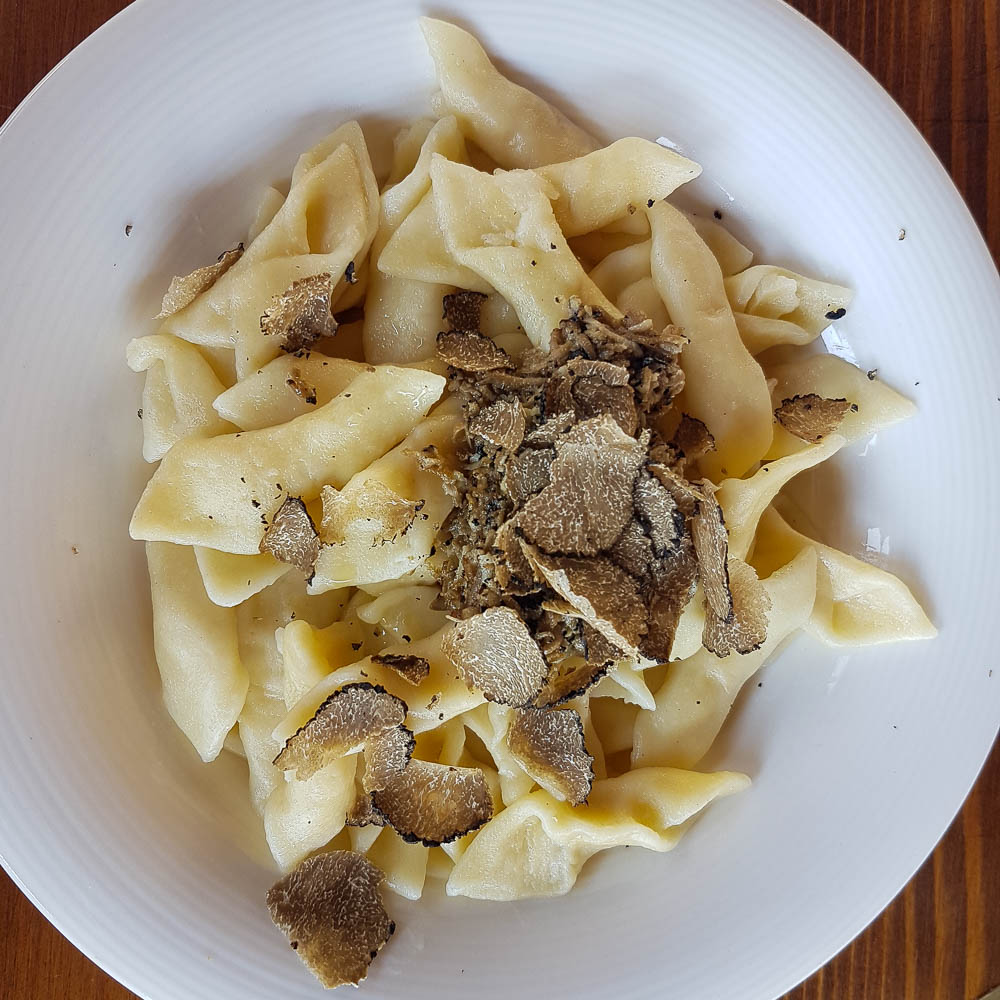
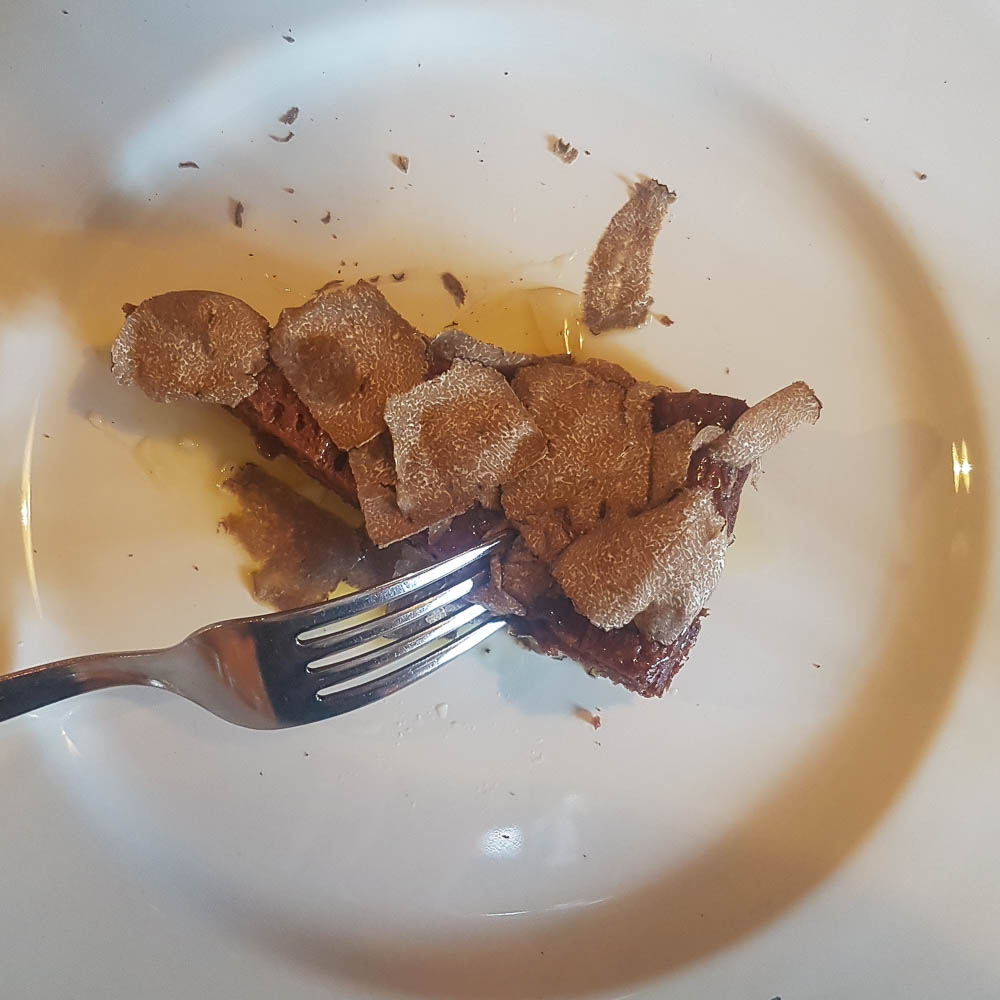
The region’s cuisine is renowned throughout the country, and you’ll find excellent restaurants in the villages. Take the opportunity to try truffles, one of Istria’s specialties (you won’t find them in restaurants in Dalmatia further south). They are featured in many dishes—we even had a chocolate cake sprinkled with truffle slices.
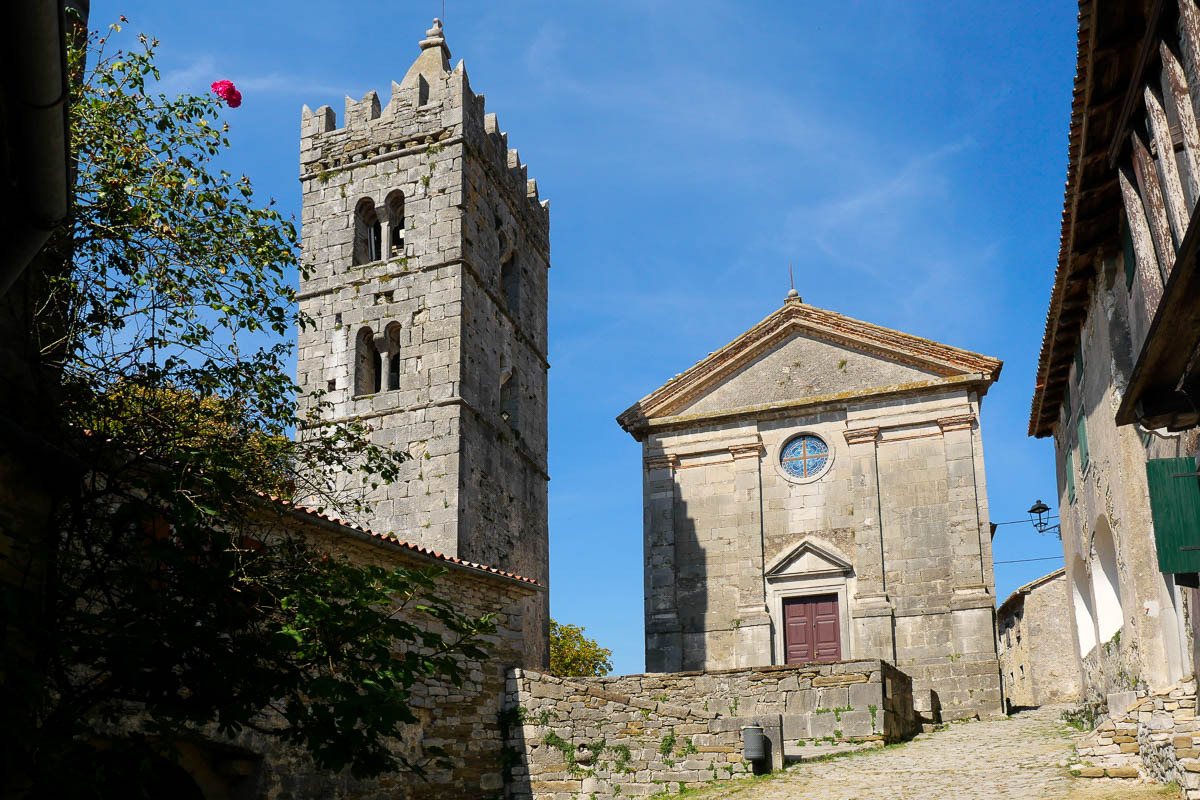
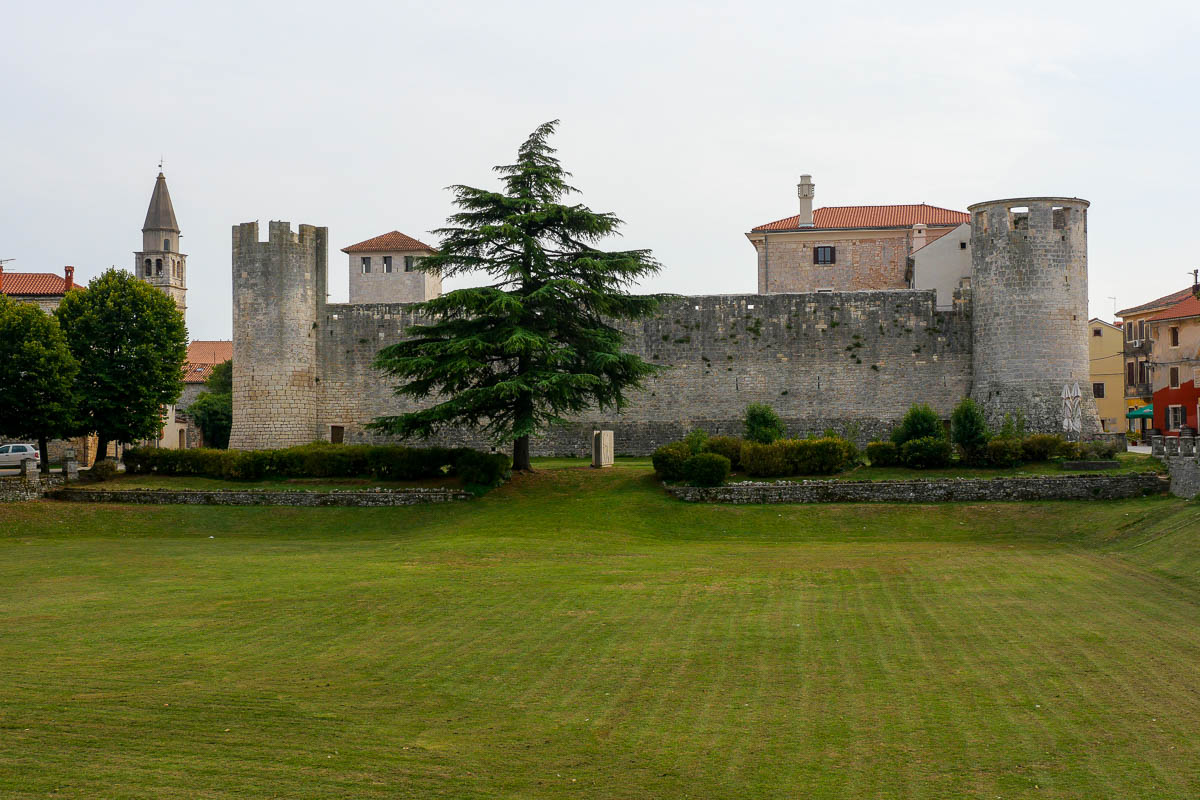
Among the medieval villages, here are the five we visited and recommend: Hum, Motovun, Grožnjan, Pazin (for its cave), and Svetvinčenat (for its castle).
Where to stay in Rovinj
Whether in Rovinj or Croatia in general, most accommodations are rental apartments, with relatively few hotels. The good news is that with a large supply, accommodation prices are quite affordable, offering excellent value for money when staying in Rovinj. Still, be sure to book in advance, especially if you’re visiting in July or August when demand is high.
If you’re staying only one or two nights in Rovinj, choose accommodation in the old town—you’ll be within walking distance of all attractions, bars, and restaurants. For a longer stay, especially if you plan to explore Istria from a single base, it’s more practical to stay in the surrounding area. Prices are also lower outside the old town.
In Rovinj’s historic center
- 63 € : Peter Apartment, this apartment for 3 people is one of the cheapest options in the old town. Located on the top floor, it is very bright and offers a beautiful view over the rooftops.
- 65 € : Apartment Giulio, located near the beach with sea views, this 45 m² apartment with full kitchen is perfect for a multi-day stay in Rovinj.
- 80 € : Planetrovinj apartments, this 25 m² apartment, located on one of Rovinj’s liveliest streets, offers sea views. Ideal for 2 people, it is fully equipped for self-catering.
- 132 € : Hotel Casa Garzotto, if you’re looking for charming accommodation in Rovinj, this hotel should suit you. The spacious 45 m² rooms feature rustic decor with wooden floors and exposed beams. Breakfast included and free private parking.
- 177 € : Royal Apartments, for a treat, this beautiful modern apartment offers stunning views over the sea, the surrounding islands, and the harbor. A guaranteed favorite!
Around Rovinj
- 36 € : Apartments Rajci, One of the cheapest places to stay in Rovinj, this 23 m² studio with terrace and equipped kitchen is perfect for budget travelers. On-site parking.
- 59 € : Villa Allegria, this guesthouse located in a quiet area 2 km from the harbor offers lovely rooms with small terraces overlooking the garden. Large pool and free parking.
- 67 € : Apartments Branko, located 1 km from the historic center (10-minute walk), this charming 30 m² apartment is equipped for cooking. Nice terrace with garden view and free private parking.
- 87 € : LUCIJA 2, this 48 m² apartment for 4 people, ideal for families or groups of friends, features a terrace with a view. Good location for visiting Rovinj and the surrounding area. Free private parking.
Tips and travel guide for visiting Rovinj
How to get to Rovinj
Rovinj doesn’t have an airport—the nearest one is in Pula on the southwest coast of Istria. There are no direct flights between France and Pula, so you’ll need a stopover in Switzerland or Germany. You’ll find the best prices for flights using this comparison site. I use it every time I need to book flights.
Public transport is well developed, and you can easily find buses from bus stations to and from Rovinj. The main connected cities are Pula, Poreč, Rijeka, and Zagreb.
If you’re including Rovinj in a trip to Croatia and need to rent a car, I recommend using the AutoEurope comparison site, which offers prices up to 25% cheaper.
Parking in Rovinj
Since the old town is entirely pedestrian, you’ll need to park in one of the peripheral parking areas. The largest one is located north of the city along the excursion boat quay (GPS coordinates). If it’s full or there’s too much waiting time, there is a second, smaller one here. For both parking lots, payment is made upon exit. South of the peninsula, you’ll find parking spaces along the quays (here), but payment must be made in advance, meaning you need to estimate how long you’ll stay.
Parking can be difficult in Rovinj, especially in the late afternoon when most lots are full—even during our road trip in mid-September. In the morning, however, there’s no problem finding a spot.
Where to exchange money
Since January 1, 2023, Croatia has officially adopted the euro as its currency. If you’re driving to Croatia, don’t exchange money at the Slovenia–Croatia border, where many exchange offices line the road—the rates are very poor. There are several money changers in Rovinj’s old town, all offering excellent rates. You’ll have no trouble exchanging dollars or English pounds once you’re there. Credit cards are also widely accepted, and there are many ATMs in the historic center.
You’re have now all information about the best things to do in Rovinj, Croatia. If you have any questions, feel free to ask them in the blog comments.