

You’re planning a road trip in Northern Italy and looking for things to do at the Italian lakes ? This Pre-Alps region, located on the border with Switzerland, is home to six major lakes, each with its own distinct identity. What they all have in common, however, is their beauty and romantic atmosphere, which attract millions of visitors every year. As Milan is fairly close to the lakes, it is an ideal base for organizing a road trip around the Italian lakes.
We were lucky enough to see most of the lakes of Northern Italy over several trips. Through this blog article, I’m sharing my experience and advice on which itinerary to choose, which lake is the most beautiful, what is the best time to go, and where to stay around the Italian lakes.
Italian lakes : which itinerary for a road trip ?
You’re not sure which Italian lakes to visit, which route to take, or which itinerary to choose to see the most beautiful lakes in Northern Italy ? When you don’t know the region, it can be difficult to decide and plan the best itinerary. It mainly depends on how much time you have. It’s possible to visit the Italian lakes in just a few days (not all of them, of course). But if you want to do a complete tour of the lakes, you should allow at least 10 days for a road trip.
I’ve shown on the map below the six major lakes to see in Northern Italy. They are covered in this guide from west to east across the country.

3-day itinerary around the Italian lakes
With only 3 days you’ll need to make smart choices. I recommend limiting yourself to just one lake. Among the best 3-day itineraries, I suggest Lake Como, Lake Garda, or Lake Maggiore + Lake Orta. Fly into Milan to save time.
5-day itinerary around the Italian lakes
With 5 days, you have time to see 2 or 3 lakes. For example, you can combine Lake Como + Lake Maggiore + Lake Orta. In my opinion, this is the best compromise and will allow you to see the most beautiful Italian lakes. Alternatively, you can do Lake Iseo + Lake Garda ; in that case, Bergamo Airport is the most convenient.
7 to 10-day itinerary around the Italian lakes
One week is the minimum to tour the Italian lakes. Here is the itinerary I recommend for 7 days : Lake Orta (1 day), Lake Maggiore (2 days), Lake Como (2 days), Lake Garda (2 days). We skip Lakes Lugano and Iseo, as they are the least interesting in my opinion.
With 10 days, you’ll have time to see all the Italian lakes. Add to the previous itinerary one day at Lake Lugano, another at Lake Iseo, and spend an extra day at either Lake Garda or Lake Como. You can then continue your road trip to Venice or even the Dolomites if you have 15 days of vacation.

How to get to the Italian lakes ?
If, like us, you live in the south of France, the easiest option is to come by car. In that case, you’ll start your Italian lakes road trip with Lake Orta. By plane, you have two international airport options : Milan Malpensa (north of Milan) and Milan Bergamo (near the city of Bergamo).
Low-cost airlines EasyJet and Ryanair offer direct flights to Milan and Bergamo airports starting at €40 per person. Choose the one that works best depending on your departure city and planned itinerary. If you’re planning to do a complete tour of the six Italian lakes, Bergamo has the advantage of being more central. However, Milan Airport is closer to Lake Maggiore and Lake Como. In any case, compare flight prices on this website.
From the airport, I recommend renting a car to be as independent as possible. While it’s easy to visit each lake without a car (thanks to ferries), it becomes more complicated when you want to visit several lakes on a single itinerary. You’ll be forced to go through a major city to travel from one lake to another by public transport. To find the best car rental rates, I always use AutoEurope.
What is the best time to visit the Italian lakes ?
It’s possible to visit the Italian lakes year-round, but the best period for a road trip in the region is from April to October. I recommend avoiding July and August, as summer is extremely busy with tourists, and it’s not always pleasant to walk through crowded streets or get stuck in traffic jams.
If you want to enjoy the blooming gardens (especially around Lake Maggiore and Lake Como), you should visit in April or May. This is when camellias, wisteria, and hydrangeas are in bloom. Spring is therefore the best time to visit the Italian lakes. Autumn, particularly September and October, is also pleasant in terms of weather and sees fewer tourists.
Lake Orta, the smallest
Lake Orta is not only the westernmost Italian lake (it’s located in Piedmont), it’s also the smallest. That doesn’t stop it from being one of my favorites, especially because of the charming atmosphere of the village of Orta San Giulio. It was a real favorite on this trip and, for me, it’s clearly one of the lakes not to be missed. The visit takes no more than one day, and it’s easy to reach from Stresa on the shores of Lake Maggiore. From Milan, allow about 1 hour by car.
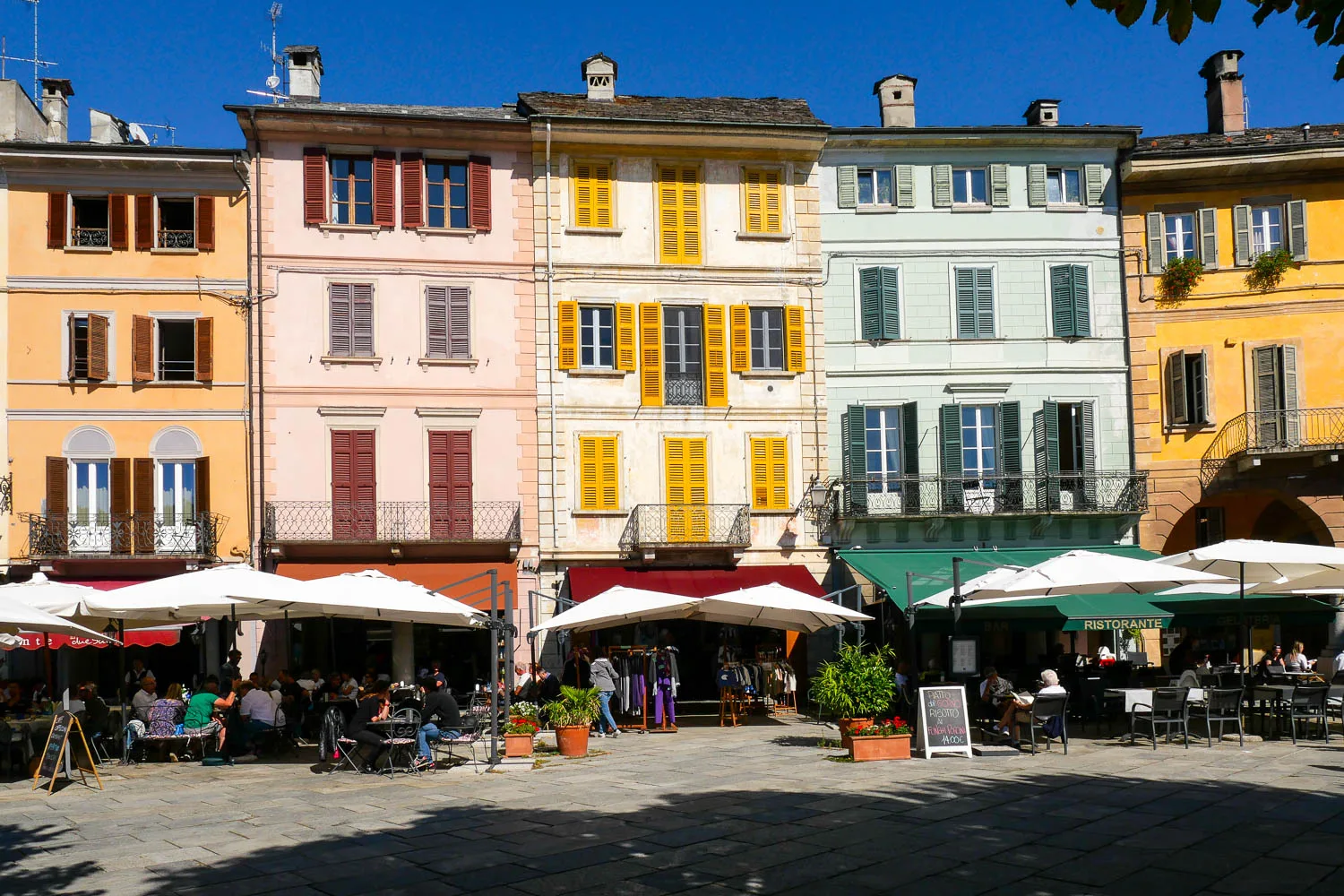
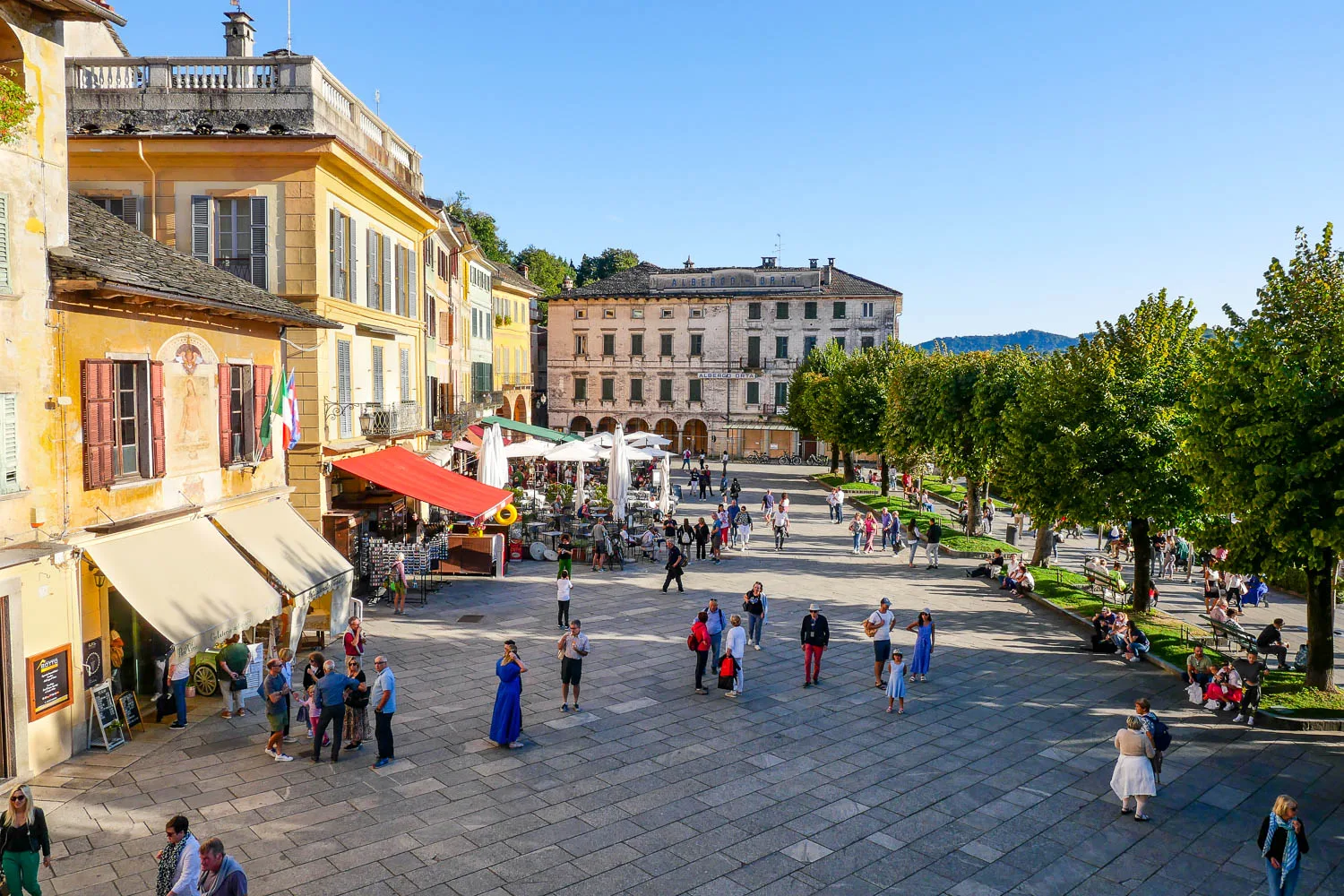
Orta San Giulio is the main village and, in my opinion, the only one really worth seeing around the lake. It doesn’t have many monuments to visit, but its architecture, colorful houses, quays, and small squares give it a deeply romantic atmosphere. Apart from weekends, when Milanese residents flock to the village, it’s relatively quiet.
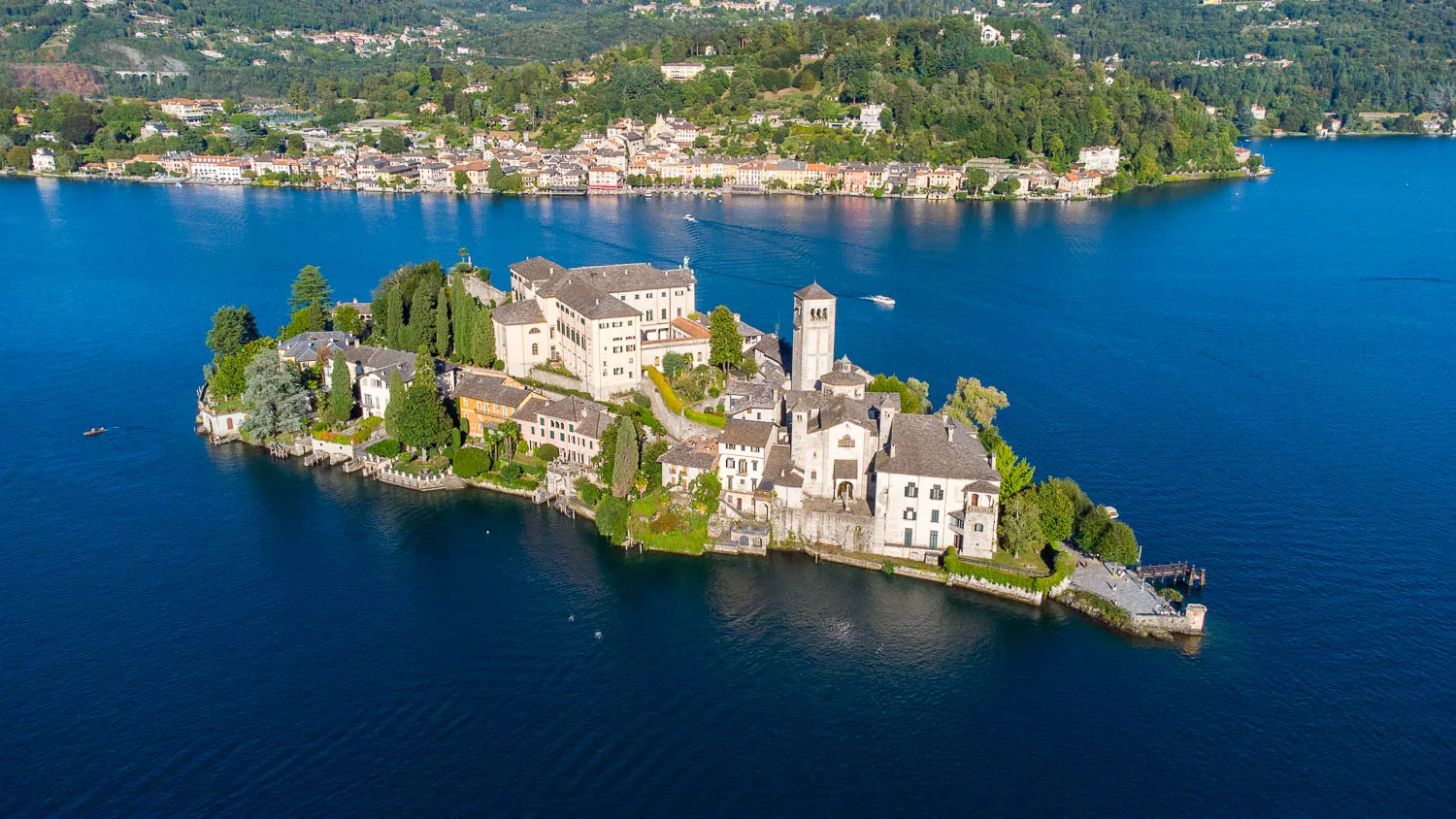
Opposite Orta San Giulio lies Isola San Giulio, a small island measuring 275 meters long and 140 meters wide, home to a beautiful 11th-century basilica. You can then walk around the island in just a few minutes, or even have a meal at the island’s only restaurant. The island is accessible by boat (a 5-minute ride) from Orta San Giulio.
From the village, you can also climb the hill of the Sacro Monte di Orta, which features a complex of 20 chapels depicting moments from the life of Saint Francis, a follower of Christ. The site is listed as a UNESCO World Heritage Site. Even if you don’t go up for the chapels, at least come for the magnificent view over the lake and Isola San Giulio.
To learn more, I invite you to read my article what to do in Lake Orta. You’ll find all the details on how to get there, where to park, and boat schedules.
Where to stay around Lake Orta ?
|

Lake Maggiore and the palaces of the Borromean Islands
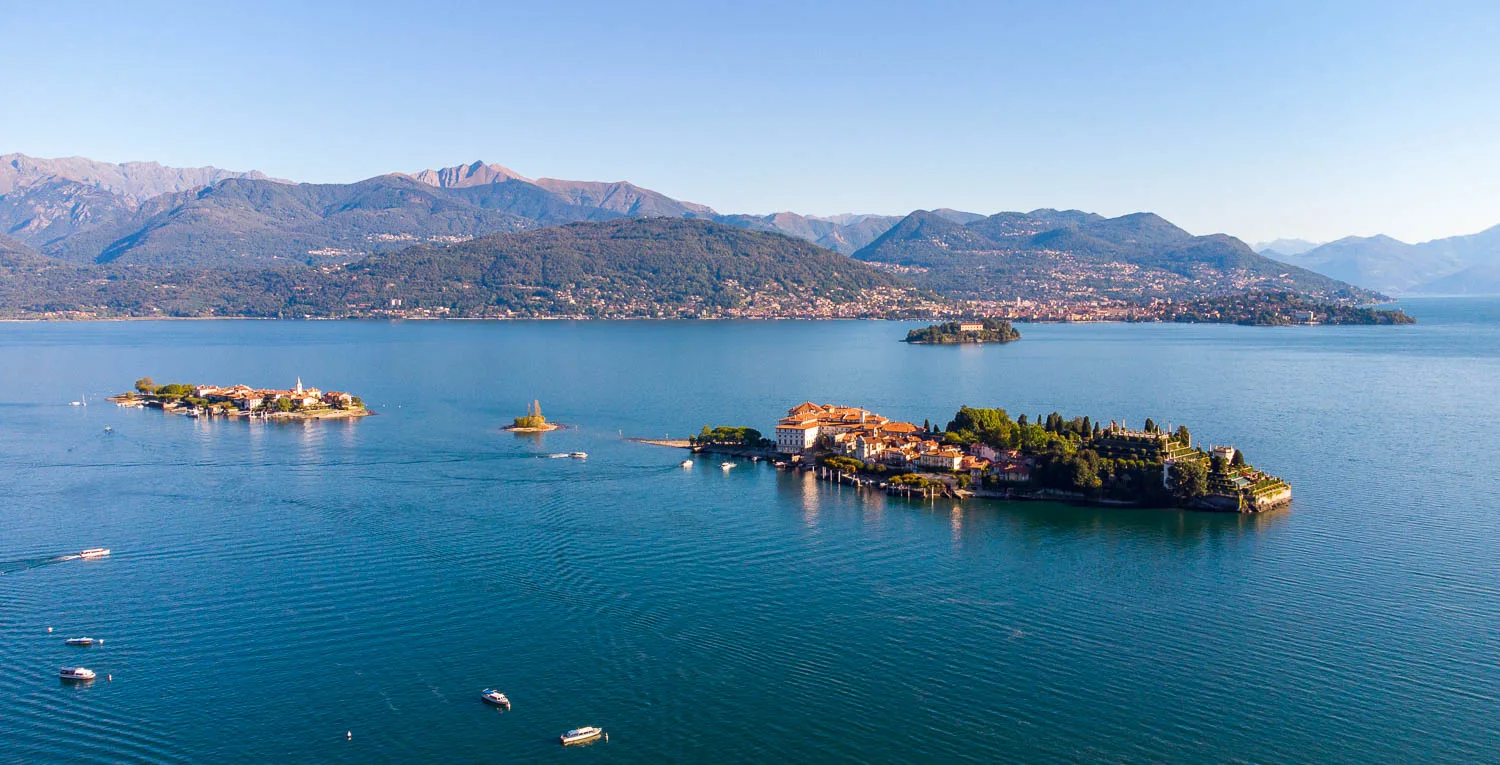
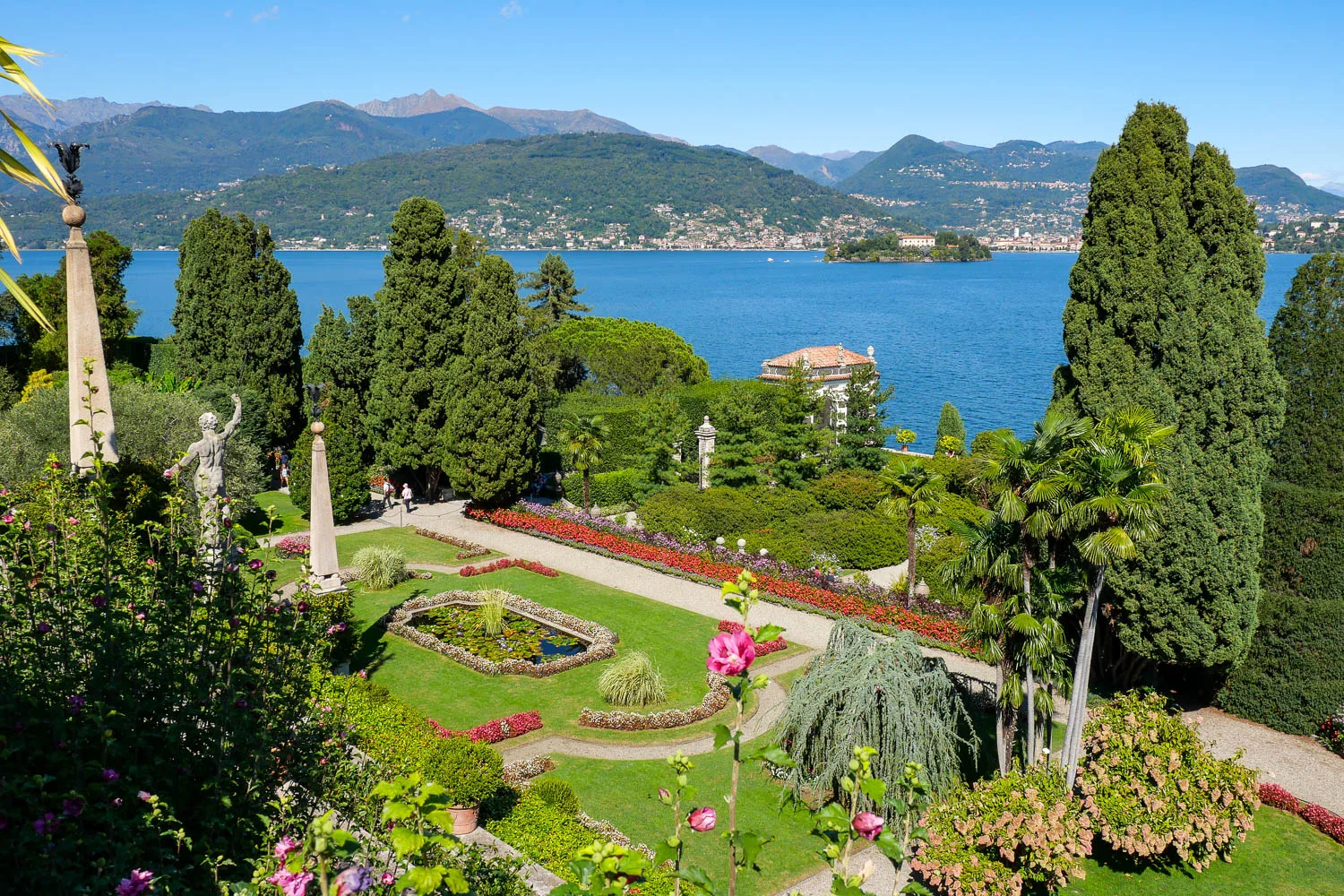
Just a few kilometers from Lake Orta, Lake Maggiore is famous for its stunning Borromean Islands, located off the coast of Stresa. On the two main islands open to visitors (Isola Madre and Isola Bella), magnificent palaces with gardens have been built. They are part of a group of five islands that have remained the private property of the Borromeo family since the 15th century. The Borromean Islands are accessible from April to the end of September, so it’s best to visit the Italian lakes during this period. Boats are the only way to get there; I recommend using the private shuttle service (advance booking advised), which is more convenient and cheaper than public ferries. Allow a full day to visit the three Borromean Islands.
On the shores of Lake Maggiore, Stresa serves as the “capital.” Its position facing the Borromean Islands makes it an excellent base for exploring the lake. Stresa has a small historic center and beautiful 19th-century hotels, but overall it didn’t particularly charm us. Still, we did enjoy its panoramic lakeside promenade, which offers views of Belle Époque hotel facades while overlooking the lake. There are also a few beaches where you can relax.
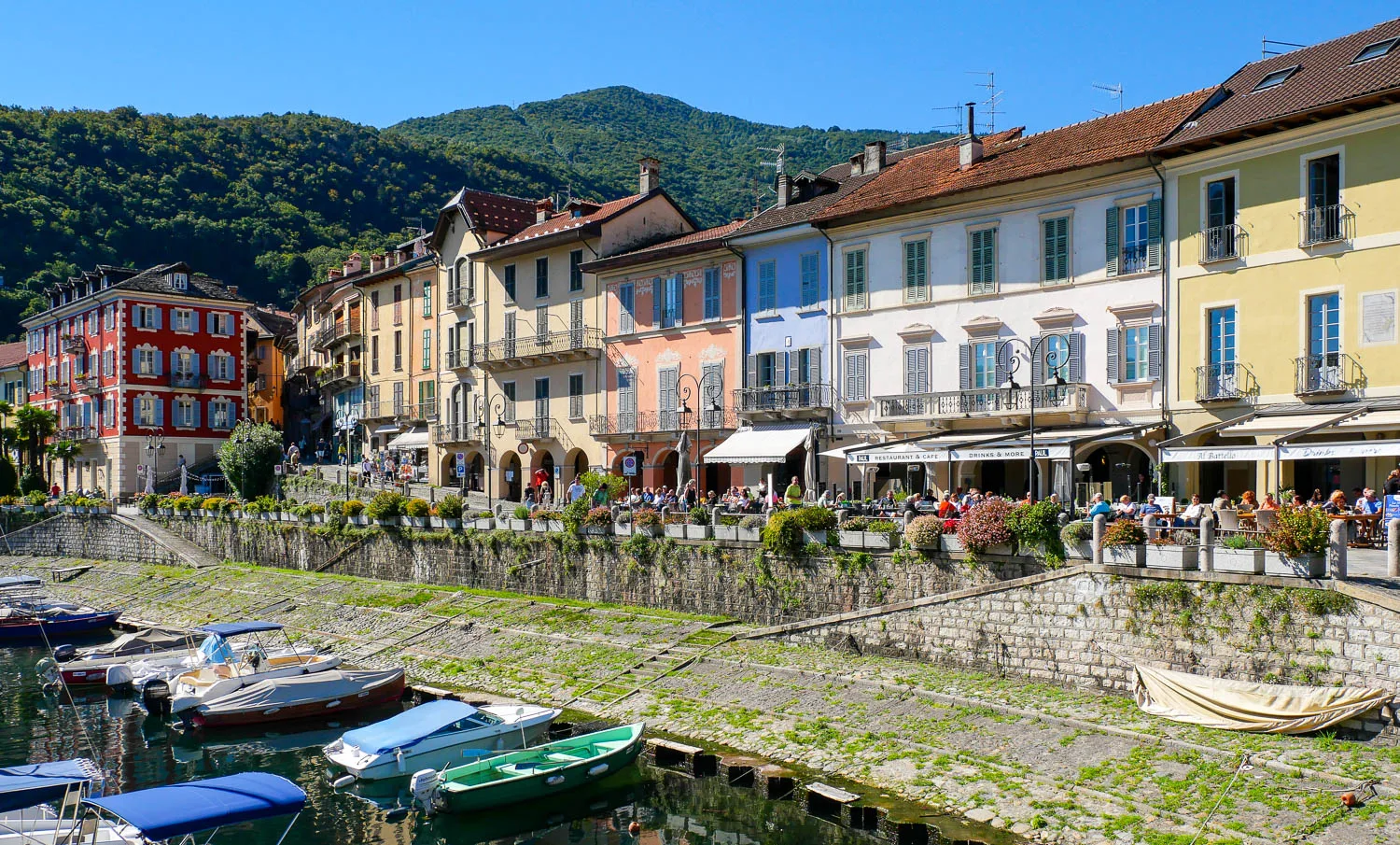
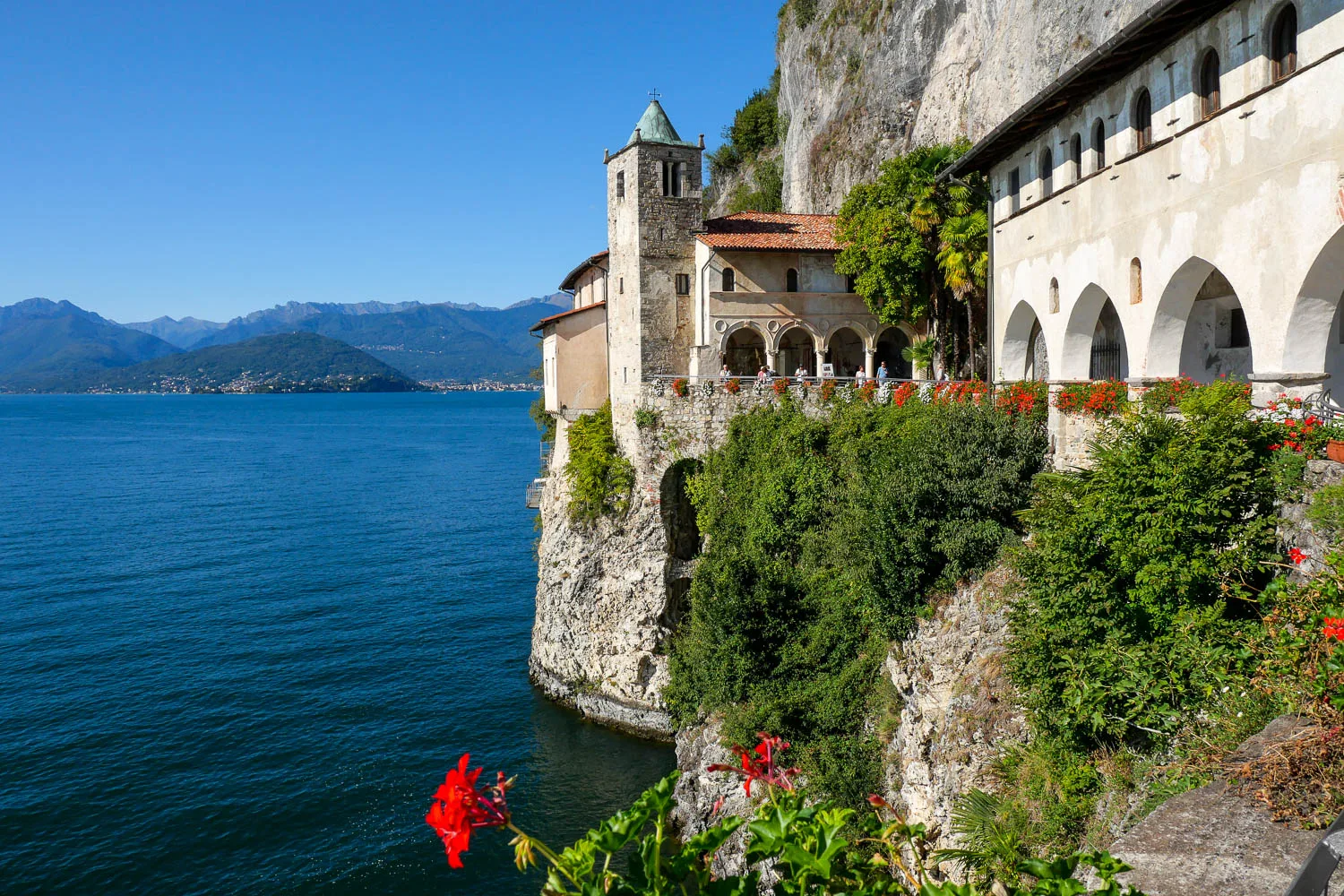
Our favorite town was Cannobio, at the very north of Lake Maggiore, just 5 km from the Swiss border. Its medieval old town with colorful houses is stunning. Along the way, you can also stop in Verbania to visit Villa Taranto and its magnificent gardens. On the eastern shore (easily accessible by public ferry), the Santa Caterina del Sasso monastery, built into a cliff face, is well worth a visit.
To organize your road trip, check out my article what to do in Lake Maggiore and the Borromean Islands.
Where to stay around Lake Maggiore
|
Lake Lugano, Swiss-style chic
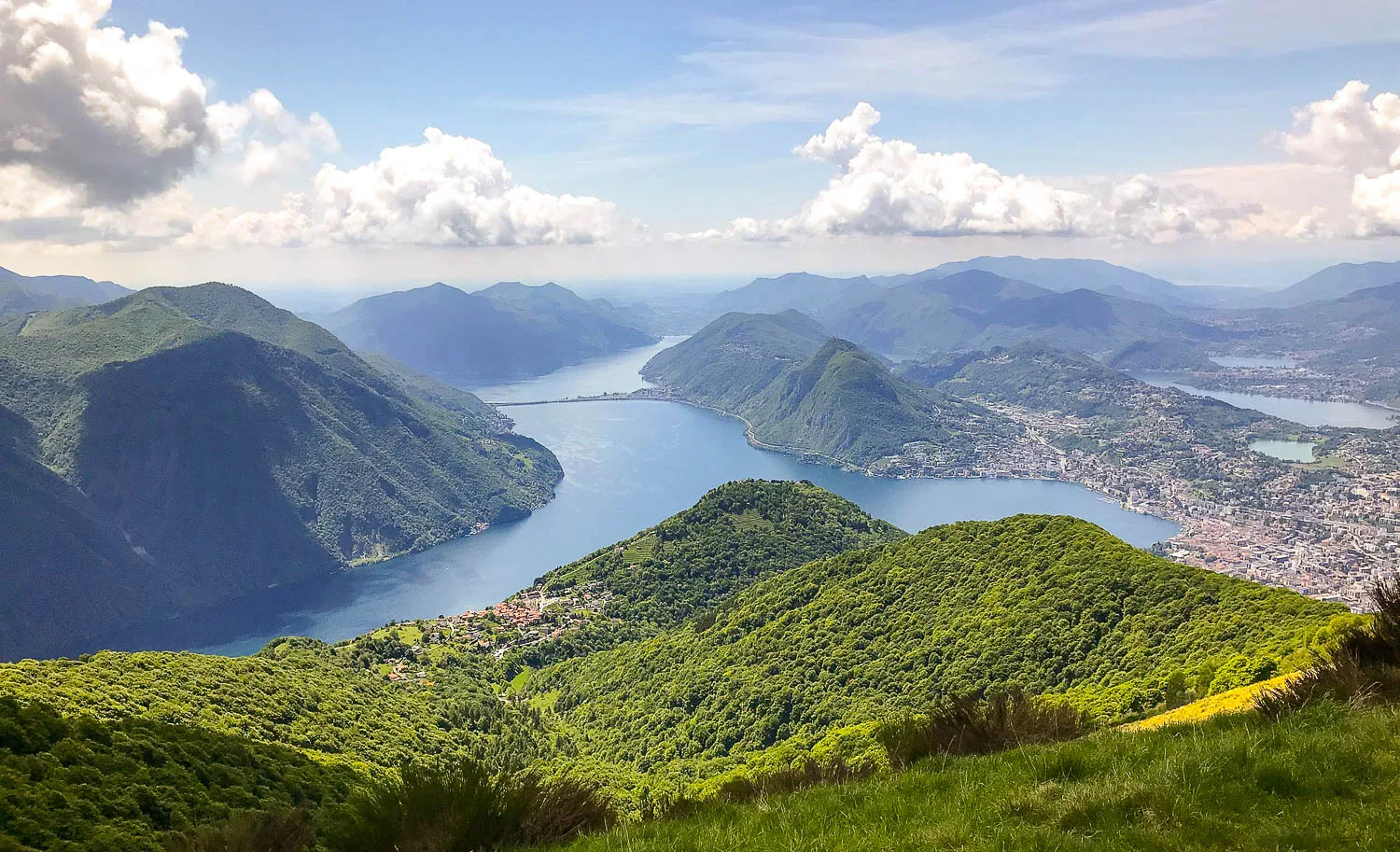
Lake Lugano lies mostly in Switzerland, which is why it’s not often included in an Italian lakes road trip. Prices double or triple as soon as you cross the border. The city of Lugano is the center of the region; it’s a chic city with many luxury shops, standing in contrast to the other towns around the Italian lakes. Lugano nevertheless enjoys a beautiful natural setting that offers many hiking opportunities for outdoor enthusiasts.
In the center of Lugano, take a stroll to see San Lorenzo Cathedral and the Church of Santa Maria degli Angioli. After that, gain some altitude by taking the Monte San Salvatore funicular for breathtaking views.
Outside Lugano, I recommend visiting Morcote, a pretty village built into a hillside. It’s especially known for the Church of Santa Maria del Sasso, perched above the village. Morcote can be reached in 15 minutes by car or 30 minutes by boat from Lugano.
Where to stay around Lake Lugano
|
Lake Como, the star of the Italian lakes
It’s the most famous of the Italian lakes, not only because it’s the closest to Milan and the easiest to access, but above all because it’s one of the most beautiful lakes in Northern Italy. Its villages, villas, and gardens are among the must-see sights of the Italian lakes. I recommend spending at least 2 days at Lake Como, as there’s a lot to see.
The city of Como, located at the southern end of the lake, is the main gateway if you’re arriving by public transport (direct train from Milan). The city has an interesting center that’s worth half a day, after which you should head north to discover the most beautiful villages.
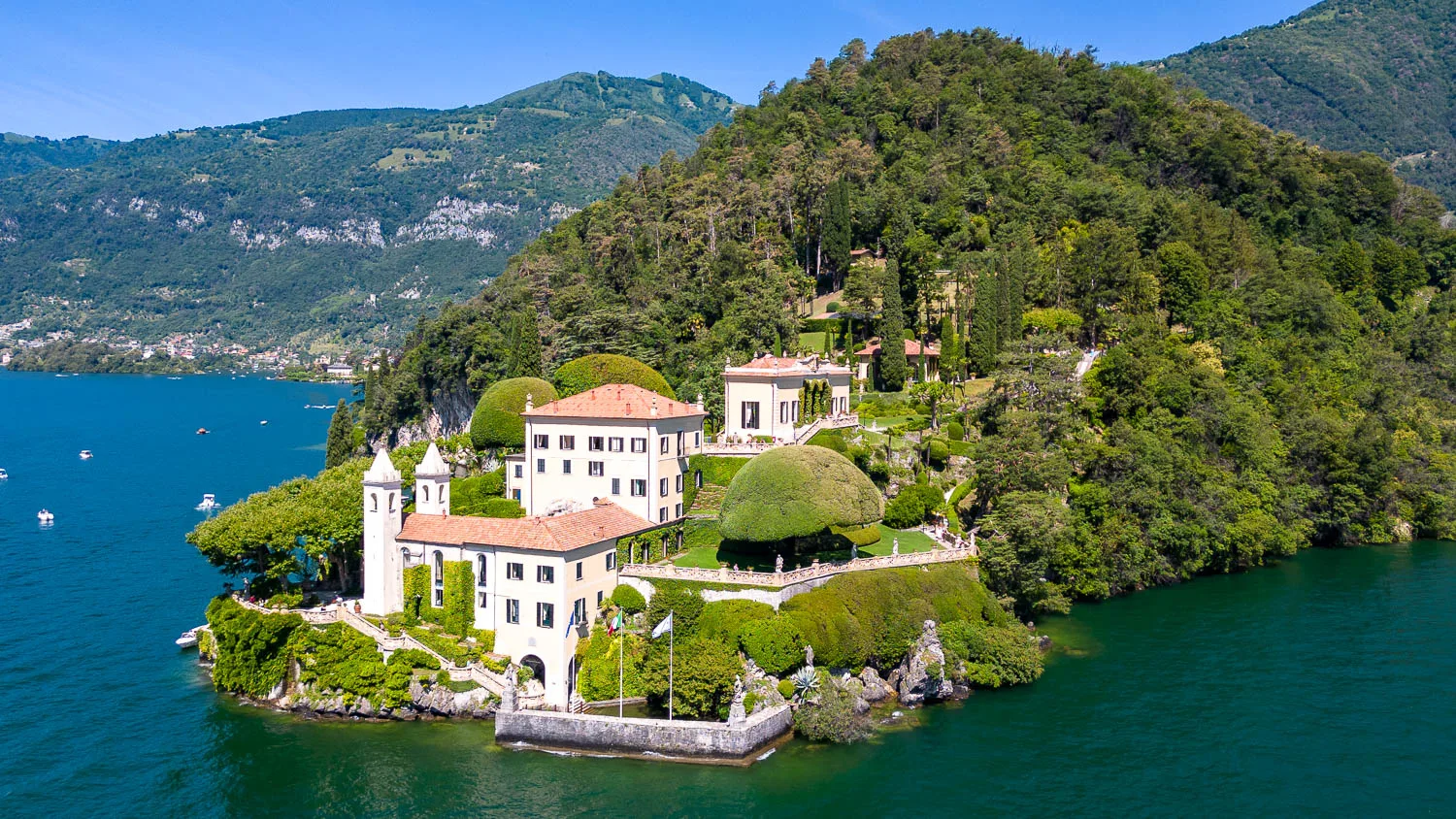
The three star locations of Lake Como are Menaggio, Varenna, and Bellagio. They’re all just a short boat ride apart. Each village has its own palace with gardens that are absolutely worth visiting. Other highlights include Villa Carlotta in Tremezzo and Villa Balbianello in Lenno. The latter is the most famous villa on Lake Como, as scenes from Star Wars and James Bond were filmed there.
Beyond the very touristy Golden Triangle, you can venture further north along the lake to discover Gravedona and Domaso. The atmosphere is more family-oriented and less chic, and you’ll even find a few beaches. Gravedona is home to the Church of Santa Maria del Tiglio, a masterpiece of Romanesque-Lombard architecture.
Take advantage of your stay to rent a boat and explore the lake at your own pace. The price is for the entire group, making it quite cost-effective if you’re traveling with several people. You can opt for this 2-hour rental or this private wooden speedboat tour.
To learn more about everything there is to do, I invite you to read my article what to do in Lake Como to best organize your stay.
Accomodations around Lake ComoBelow are a few favorite accommodations around Lake Como. You’ll find many more addresses and tips on choosing the best village to stay in within the article on where to stay at Lake Como.
|



Lake Iseo, the most discreet
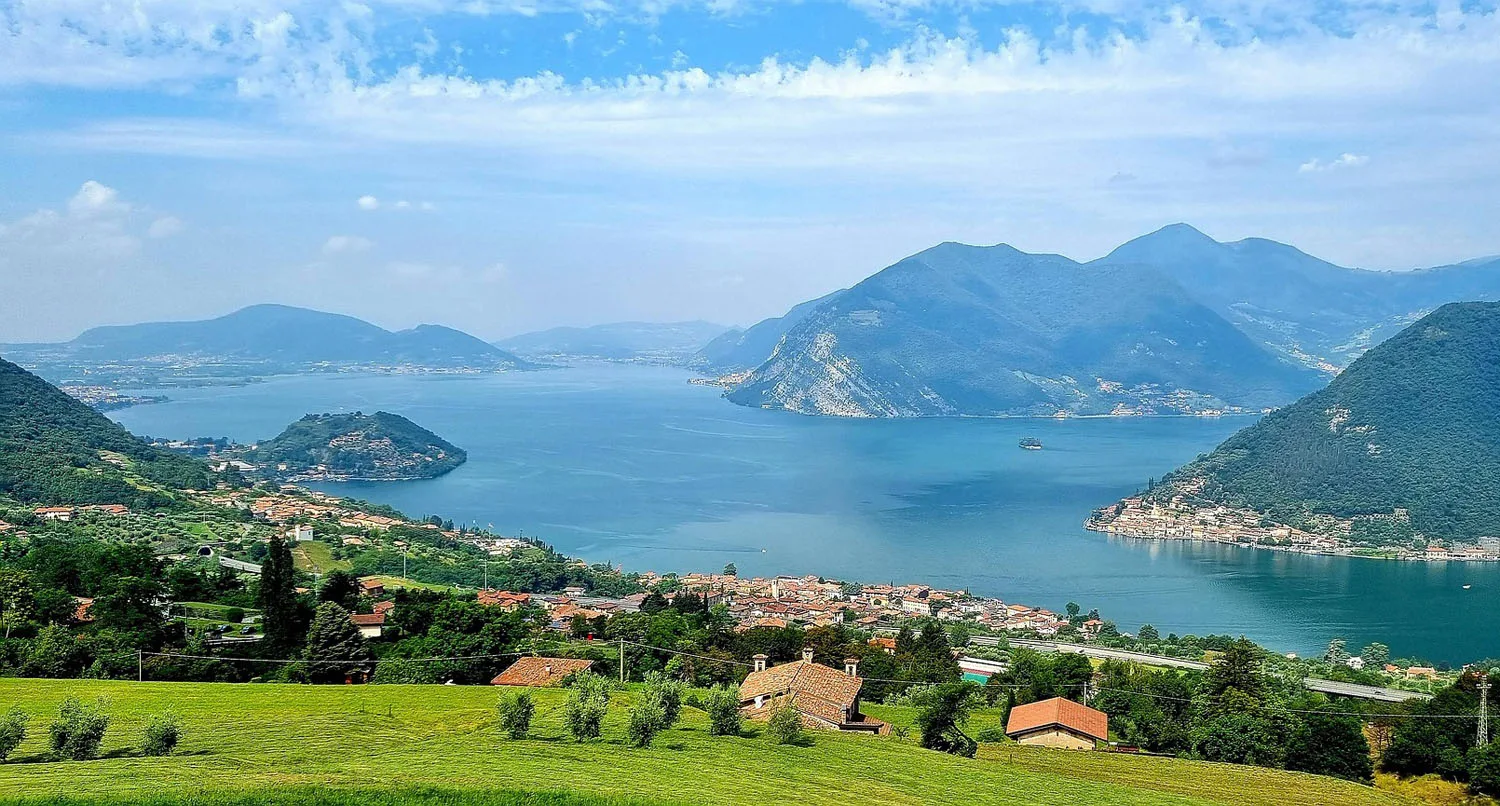
Tucked between the two major stars of the Italian lakes (Lake Como and Lake Garda), Lake Iseo struggles to gain recognition among tourists visiting Northern Italy. Yet it’s located very close to the beautiful city of Bergamo, which is well worth a visit if you’re exploring Lake Iseo.
Compared to its neighbors, Lake Iseo offers fewer activities. Here, you mainly enjoy the mountain atmosphere and the tranquility of the surroundings. Even in high season, you won’t find many people along the shores of Lake Iseo. Hiking enthusiasts will appreciate having the trails mostly to themselves.
Monte Isola, located in the center of the lake, is one of the must-see sights. In addition to its old fishing villages, it’s home to the Santuario della Madonna della Ceriola, which offers magnificent panoramic views from the island’s highest point (accessible by bus). You can walk around Monte Isola in about 3 hours, or faster by bike (bike rentals available on site).
The lake’s shores are lined with villages, the prettiest being Marone and Pisogne. Also take some time to explore the town of Iseo to discover its medieval center and lovely lakeside promenade.
Where to stay around Lake Iseo
|
Lake Garda, the largest of the Italian lakes
It’s the largest lake in Northern Italy, so plan at least 3 days to explore it fully. The northern part of Lake Garda lies in the autonomous region of South Tyrol (or Trentino-Alto Adige). Don’t be surprised to hear German spoken there. Austrian and German tourists are in fact very numerous along the shores of Lake Garda (unlike at the other Italian lakes).
Arriving from the south, don’t miss Sirmione, a fortified village built on a peninsula that juts out into the lake. Its walls rising directly from the water are among the most photographed sights of the Italian lakes. A small tip: avoid July and August if you’re looking for some peace and quiet. Lake Garda is extremely busy in summer due to its beaches and water sports. The most famous is Jamaica Beach, located north of Sirmione at the tip of the peninsula. It’s the ideal Italian lake for swimming.
Each shore has charming villages worth visiting. On the eastern side, Torri del Benaco is the most charming, with its lungomare, fishing harbor, and castle. Its central location also makes it a good base for exploring Lake Garda. From here, it’s easy to reach villages on the opposite shore by ferry. On the other side, don’t miss Salò, the most beautiful village on the western shore.
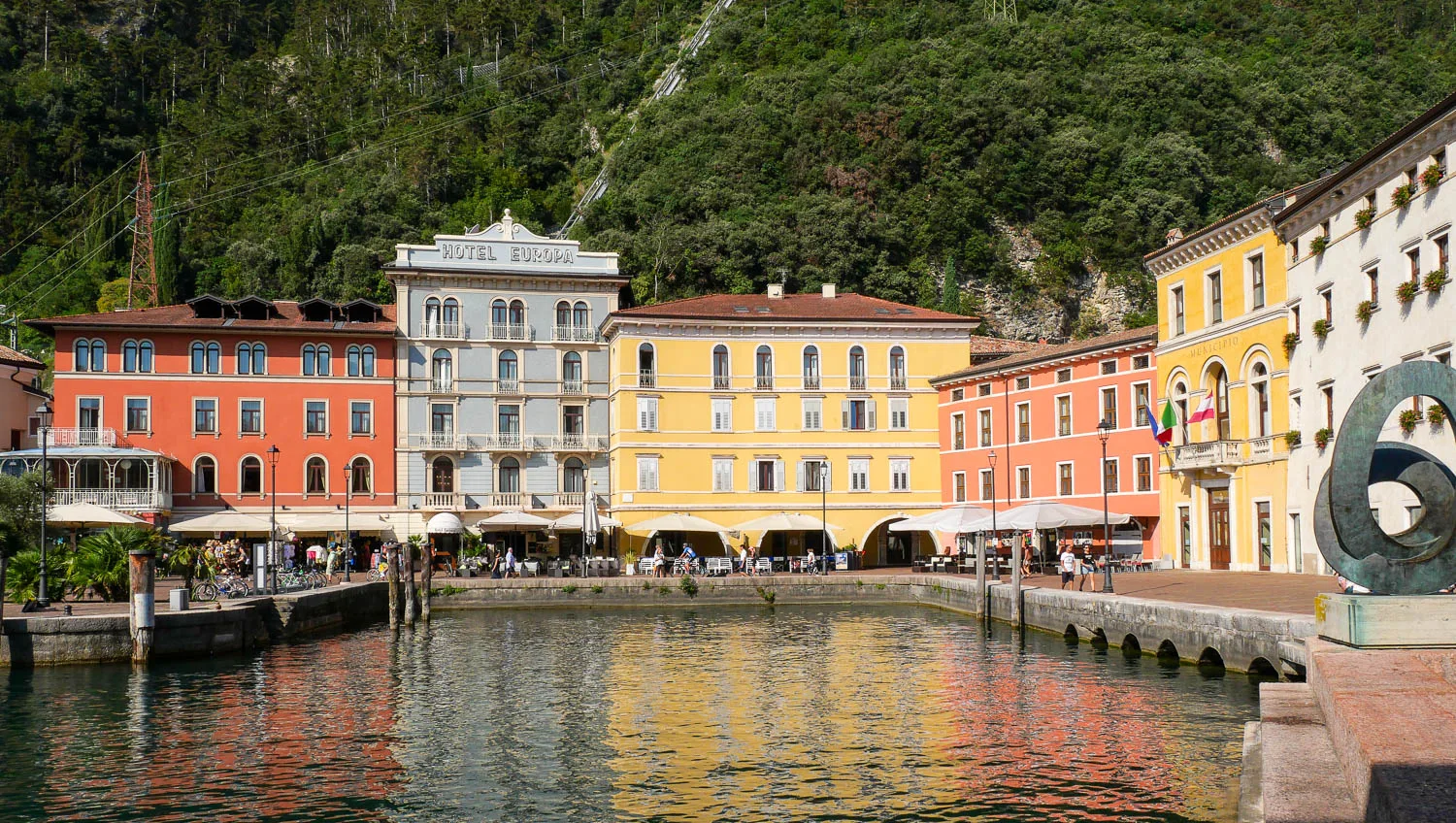
In the north of Lake Garda, we really enjoyed Riva del Garda, where we stopped on our way back from a road trip in Austria. The old town with its colorful houses is absolutely charming. In October, it was relatively quiet, allowing us to fully enjoy the pedestrian streets and lakeside areas.
Theme park lovers and those traveling with children can enjoy Gardaland, located near Peschiera del Garda. Find all the details on things to do and villages not to miss in my guide what to do in Lake Garda.
Where to stay around Lake GardaAs Lake Garda is quite large, it’s best to choose two accommodations in order to make a complete circuit. This avoids backtracking. Ideally, stay once in the south around Sirmione and once in the north around Riva del Garda.
|

Where to stay on the Italian lakes (complete tour)
To embark on the Italian lakes road trip described in this guide, you’ll need to change accommodations regularly. However, it’s possible to visit two lakes from a single base. For my favorite places to stay, refer to the addresses listed in each section.
Lake Maggiore : Stresa is the main town on Lake Maggiore and the most touristy, as it provides easy access to the Borromean Islands. It’s also well located for reaching Orta San Giulio (30 minutes by car). From Stresa, you can easily visit both Lake Orta and Lake Maggiore. See accommodations in Stresa.
Lake Como : Menaggio, located in the Golden Triangle of Lake Como, is one of the best bases (it’s also where we stayed). From there, you can take the ferry to any village on the lake, and you’re only 40 minutes by car from Lugano. See accommodations in Menaggio.
Lake Iseo : As Lake Iseo is too far from the other major Italian lakes, it can’t be used as a base for exploring the region (except for visiting Bergamo). See accommodations around Lake Iseo.
Lake Garda : It’s possible to visit Lake Garda from a single town, as it only takes 1.5 hours to drive from Sirmione to Riva del Garda. It’s up to you whether you prefer staying once in the north and once in the south, or visiting everything from the same base (personally, I prefer the first option). See accommodations around Lake Garda.
You’re now know what to do around the Italian lakes. If you have any questions, feel free to ask them in the blog’s comments section.