

You’re going to Italy and looking for the best things to do in Rome in 3 days and the must-see sites ? I wrote this guide with plenty of practical tips so you don’t miss anything during a 2, 3 or 4-day weekend. The Eternal City, with its 3,000 years of history, is an open-air museum, and it’s best to plan your stay carefully given how much there is to discover between Roman ruins and museums.
Regarding accommodations, I’ve written a guide on the different neighborhoods where to stay in Rome, with the best options for every budget.
What to do in Rome : must-see sites
The Italian capital has such a rich heritage that you would need far more than 3 days in Rome to see everything. Nevertheless, during a long weekend you will have plenty of time to visit all the must-see attractions. However, you’ll need to plan your visits carefully, as crowds can be heavy at the most famous landmarks (Colosseum, St. Peter’s Basilica, Vatican Museums, etc.). Booking your tickets in advance is therefore essential. Throughout this Rome guide, I provide links to official websites where you can buy skip-the-line tickets.
In the second part of this guide, I’ll talk about the different passes available for visiting Rome. You’ll see that depending on your itinerary, buying a pass is not always worthwhile (in fact, we didn’t buy one during our 3-day stay in Rome).
Freetour : for budget travelers, it’s possible to take a free walking tour of Rome (2.5 hours) with this freetour.
Colosseum, Roman Forum, and Palatine entrance ticketIt is essential to buy your entrance ticket online before visiting Rome. But beware of websites that redirect you to partners selling tickets at higher prices. The only link to use to purchase tickets is the official website of the Colosseum. And there’s no need for a skip-the-line or priority ticket, as it is already included in the basic ticket. In fact, you must choose your visit time when purchasing on the official website. There is no ticket to visit the Colosseum alone. You must purchase a combined ticket that grants access to the Colosseum, the Roman Forum, and the Palatine Hill. The ticket is valid for 24 hours, and you must choose your Colosseum entry time (slots every 5 minutes). Make sure you respect your ticket time, otherwise you will not be allowed to enter. You cannot buy tickets more than one month in advance for the Colosseum, the Roman Forum, and the Palatine Hill. Tickets are released on the official website only for the next 30 days. If you can’t find tickets for your dates, try GetYourGuide or Tiqets to see if any are still available. You can also choose a guided tour. It is not possible to book a guided visit on the official website, this can only be arranged on site. If you prefer to book in advance, the blog’s partner site offers this guided tour. Two different tickets are available to visit the Colosseum :
After purchase, you will receive your electronic ticket by email. You can print it or simply keep it on your smartphone to present at the entrance of each site. At each monument, you must pass through security (similar to an airport), which may cause queues. You are allowed to enter each site only once, access is not unlimited even if the ticket is valid for 24 or 48 hours. |
Colosseum
We begin this Rome travel guide with the iconic monument that best represents the capital of Italy, the Colosseum (Colosseo). This 50,000-seat amphitheater, the largest built in the Roman Empire, was constructed between 72 and 80 AD. For nearly five centuries, spectacles featuring gladiators and wild animals took place in the Colosseum. Even naval battle reenactments were staged there. The Colosseum fell into disuse from the 6th century onward and was gradually stripped of its decorative elements, such as marble. Today, it is a ruin open to visitors, yet it remains remarkably well preserved despite being 2,000 years old.
After passing through security at the Colosseum entrance, visitors go directly to the third level, where an exhibition retraces the monument’s history. You’ll also see marble pieces, mosaics, and even graffiti carved into stones. The corridor then leads to the former seating area, from which you can appreciate the immense scale of this remarkable structure. The visit allows you to walk around both levels, where several explanatory panels are displayed.
The Colosseum, the Roman Forum, and the Palatine Hill are among the must-see sites in Rome. If you have limited time, I recommend visiting these monuments first.
Opening hours : 9 a.m. – 7 p.m. from April to September (closing at 6:30 p.m. in October and 4:30 p.m. from November to March). Last entry 1 hour before closing. Toilets and water fountains are available inside the Colosseum, the Roman Forum, and the Palatine Hill.


Roman Forum
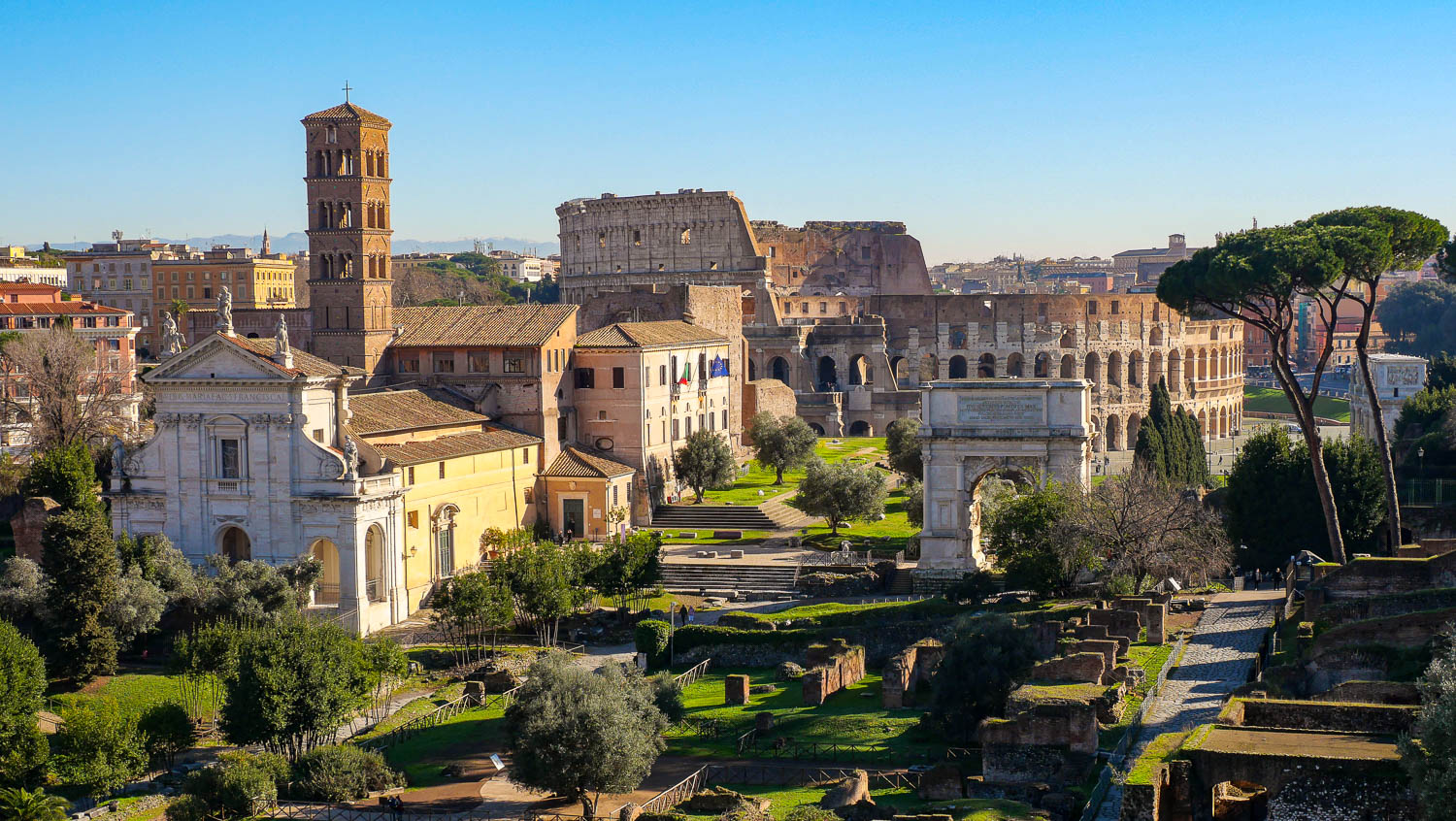
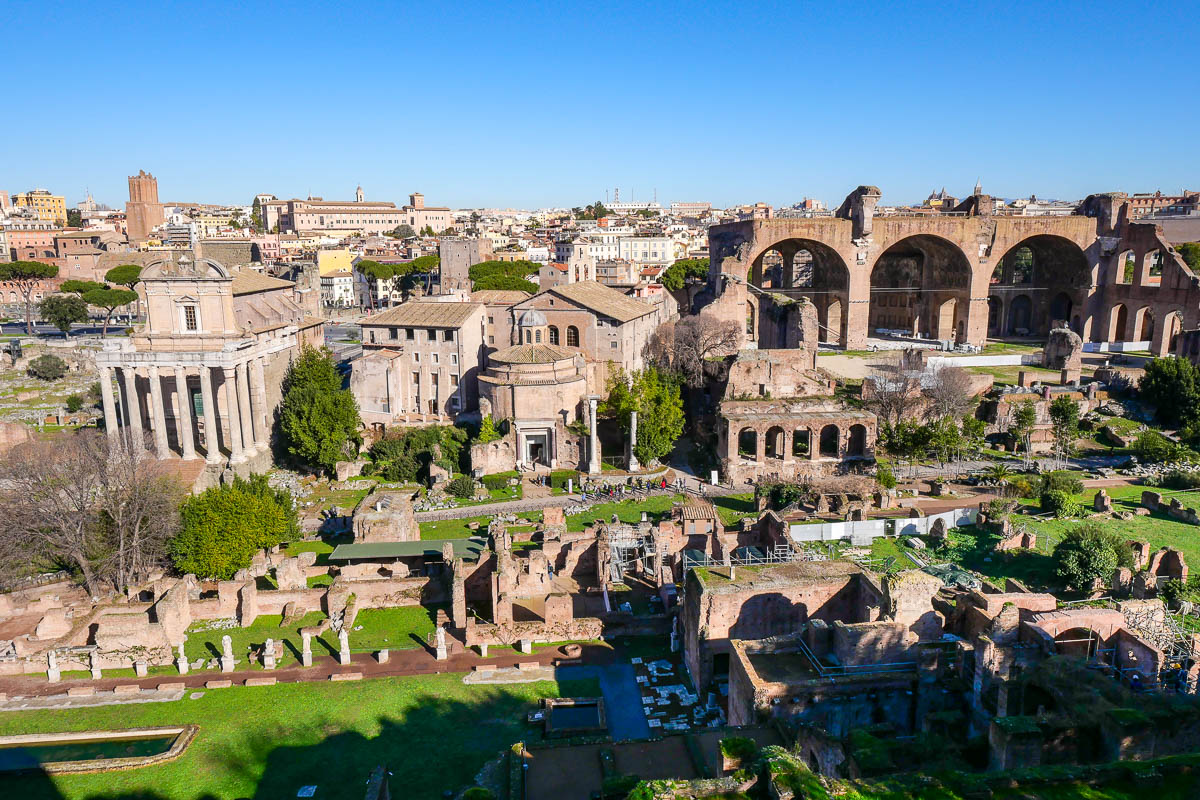
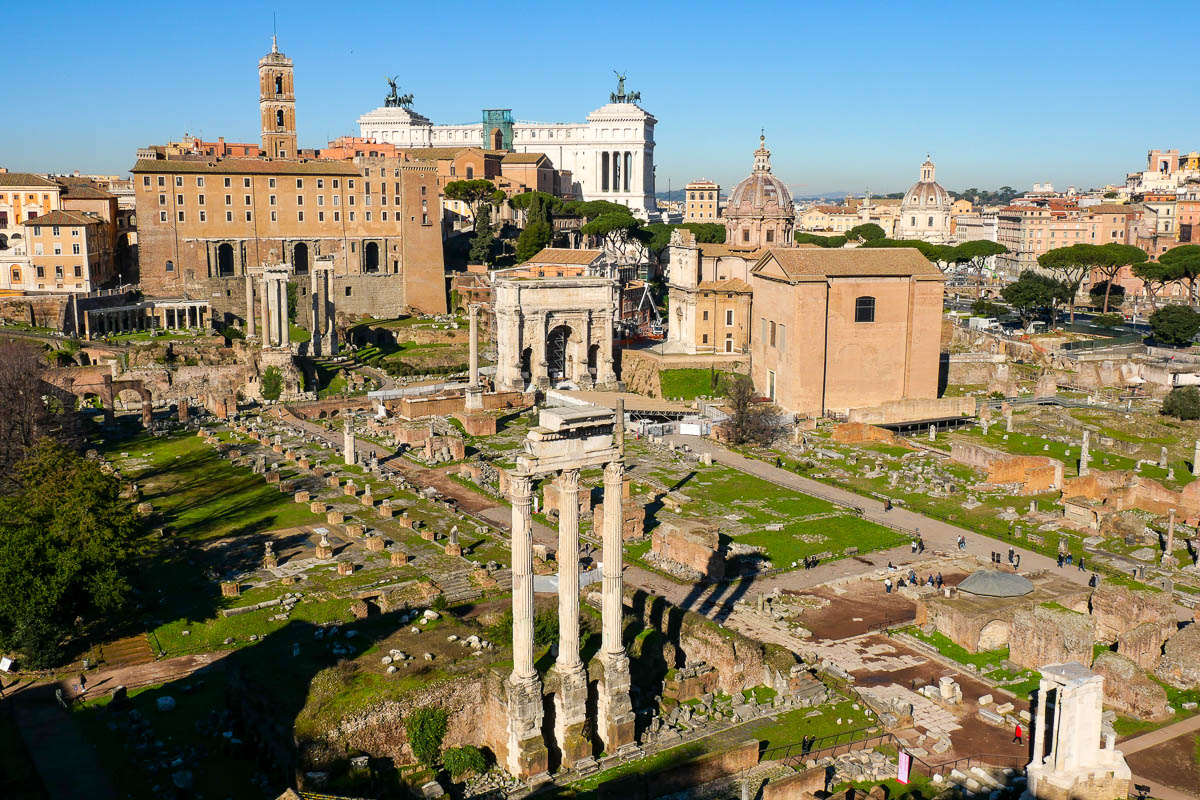
This collection of temple and basilica ruins formed the heart of social life during the Roman Empire. It is the most important archaeological site to visit in Rome. The Forum began to be developed in the 7th century BC and remained in use until the fall of the Roman Empire in 476.
The main entrance opposite the Colosseum passes beneath the Arch of Titus, which served as the model for the Arc de Triomphe in Paris. You should try to be methodical in order to see everything, as with ruins scattered throughout the site, it’s easy to get lost when you first arrive at the Roman Forum. The main thoroughfare, the Via Sacra, runs through the entire site. I’ll spare you a description of all the ruins. If you have a good guidebook (we used the Lonely Planet Rome), you’ll find all the explanations. Otherwise, you can opt for a guided tour (see the links above in the “entrance ticket” section), but be warned—it can be long 🙂
For the best photos of the Roman Forum, head up to Palatine Hill, which offers a panoramic view of the site.

Palatine Hill
This is one of Rome’s seven hills. To access it, take the staircase at the beginning of the Roman Forum on the Colosseum side. According to legend, this is where Romulus founded the city in 753 BC. During the Roman Empire, it was the residence of emperors, who built lavish palaces here. The gardens were created much later, during the Renaissance. It was also during this period (1691) that the large fountain you see while climbing the stairs to the Palatine was built.
Don’t miss visiting Palatine Hill, as this is where you’ll get the best views of the Roman Forum. To do so, head all the way west to the Orti Farnesiani sul Palatino, where a large terrace overlooks the entire Forum.
Leaving the Roman Forum by Via dei Fori Imperiali, you’ll come across the ruins of the Imperial Fora. This group of five forums was built when the Roman Forum became too small. The ruins are far less well preserved, and access is free. Worth seeing if you pass by, but they are not among the must-see attractions in Rome.
Trevi Fountain
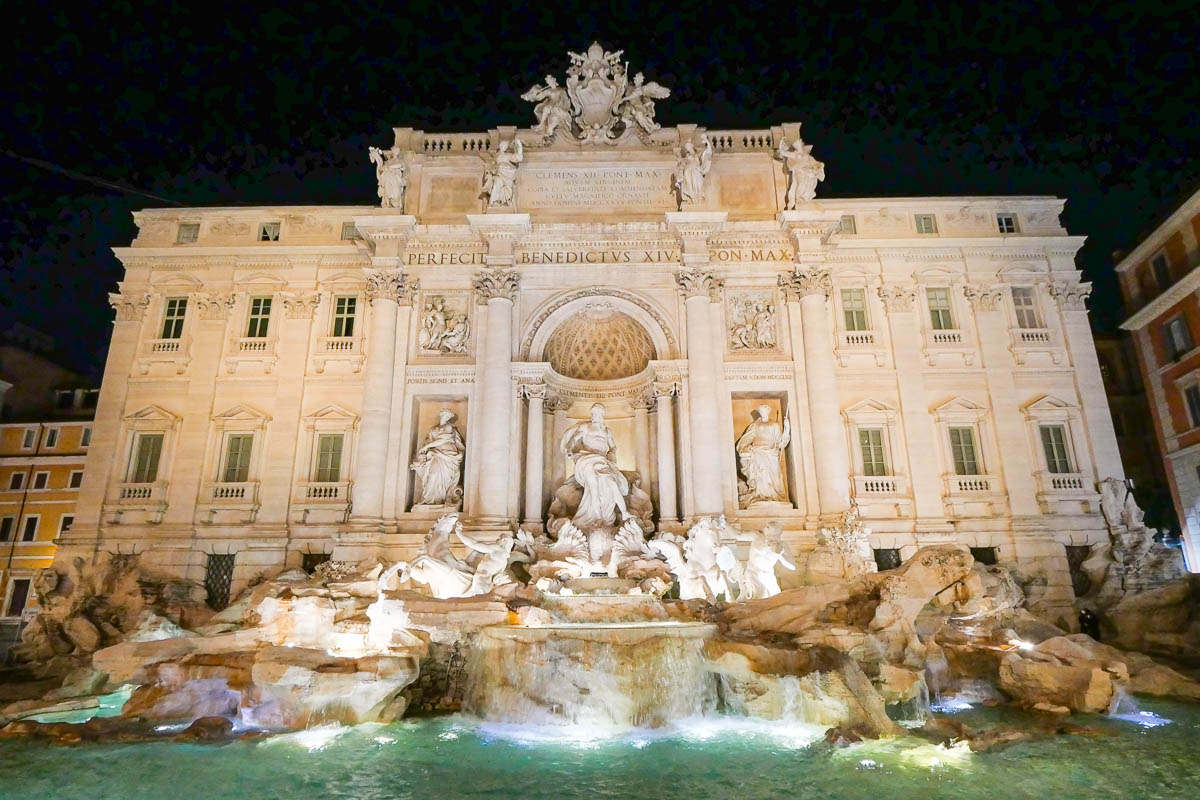
Leaving the Ancient Rome district heading north, you can either go toward the Historic Center or the Trevi district. The latter is home to Rome’s most famous fountain, a must-visit spot for if wondering what to do in Rome. This Baroque masterpiece (1762), made of white marble and measuring 20 m wide and 26 m high, occupies the entire Piazza di Trevi.
Tradition says that tossing a coin into the Trevi Fountain ensures you will return to Rome one day. It is forbidden to sit on the fountain, eat or drink, enter the water, or collect coins from the bottom. Police officers on site enforce the rules with frequent whistle blasts. Don’t miss returning in the evening to see the Trevi Fountain illuminated. To photograph the entire fountain, an ultra-wide-angle lens is essential due to the limited distance available.
It is also possible to visit the underground areas of the Trevi Fountain. This is an opportunity to see the only ancient aqueduct still supplied with water, located 9 m underground. The visit is conducted with a French-speaking guide who also explains the fountain’s history. Reservations can be made on this website (free cancellation up to 24 hours before). Starting in February 2026, it will cost €2 to approach the Trevi Fountain.


Piazza di Spagna and the Spanish Steps
Continuing north from the Trevi Fountain, you reach another of Rome’s iconic landmarks, Piazza di Spagna (Spanish Square) and the Spanish Steps. The square owes its name to the nearby Spanish embassy, not to the presence of a Spanish community. This is the most upscale district in Rome, as evidenced by its many luxury boutiques and high-end hotels.
The small Barcaccia Fountain (1627) and a majestic staircase (1725) leading up to the Trinità dei Monti church make up the main features of Piazza di Spagna. The church itself is fairly standard (there are far more beautiful ones in Rome), and a gate prevents visitors from entering. Sitting on the steps, eating, or drinking is prohibited and punishable by a €400 fine. Here too, many police officers are present.

Piazza del Popolo
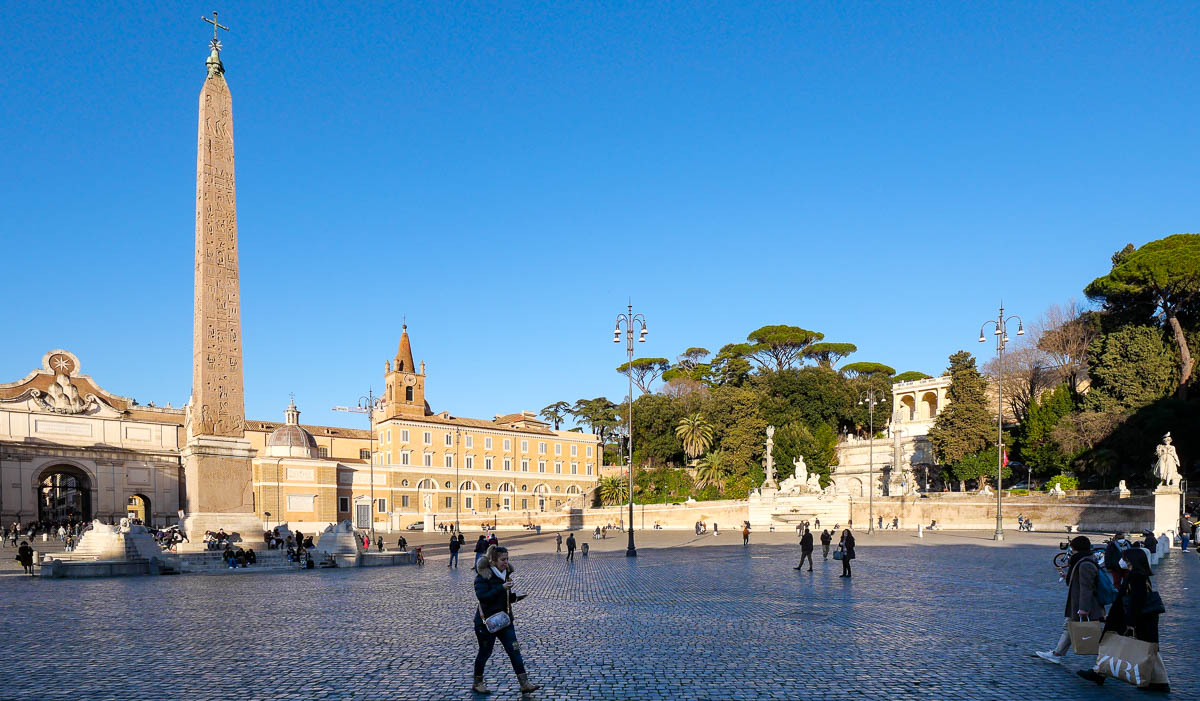
From Piazza di Spagna, continuing along the semi-pedestrian Via del Babuino lined with numerous shops, you arrive at Piazza del Popolo (People’s Square). At the center of this square, laid out in 1538, stands an obelisk, and to the south are two twin Baroque churches (Chiesa di Santa Maria dei Miracoli and Chiesa di Santa Maria in Montesanto). On the eastern side, the Pincio gardens overlook the square.
This is not the most beautiful square in the capital, and if you’re short on time you can skip Piazza del Popolo. However, it’s not a major detour from Piazza di Spagna, and walking along Via del Babuino will delight shopping enthusiasts.

Pantheon
We now move into the historic center (centro storico) in this Rome travel guide. The first must-see attraction is the Pantheon. It is the best-preserved ancient building in Rome, as this temple dedicated to all the gods was built 2,000 years ago. It was converted into a Christian basilica in the 7th century (Basilica di Santa Maria ad Martyres).
Since July 3, 2023, visiting the Pantheon has required an entrance fee (it was free during our weekend in Rome). The ticket, which includes an audio guide, costs €15, and a guided tour in English costs €25.50 (information and reservations on the official Pantheon website).
GetYourGuide regularly offers promotions on tickets, such as a 45-minute guided tour of the Pantheon. Prices are cheaper than on the official website, so it’s definitely worth checking. The standard visit with the official audio guide costs only €5.

Saint Louis of the French Church
Between the Pantheon and Piazza Navona, stop at the Saint Louis of the French church, built between 1518 and 1589. It bears this name because it was partly financed by the King of France and later consecrated as the church of the French in Rome. Its Renaissance-style façade features several statues of figures from French history, such as Charlemagne. The interior is decorated in a Baroque style with abundant marble and frescoes. However, Saint Louis of the French is best known for its three paintings by the Baroque master Caravaggio (Michelangelo Merisi). Free admission.

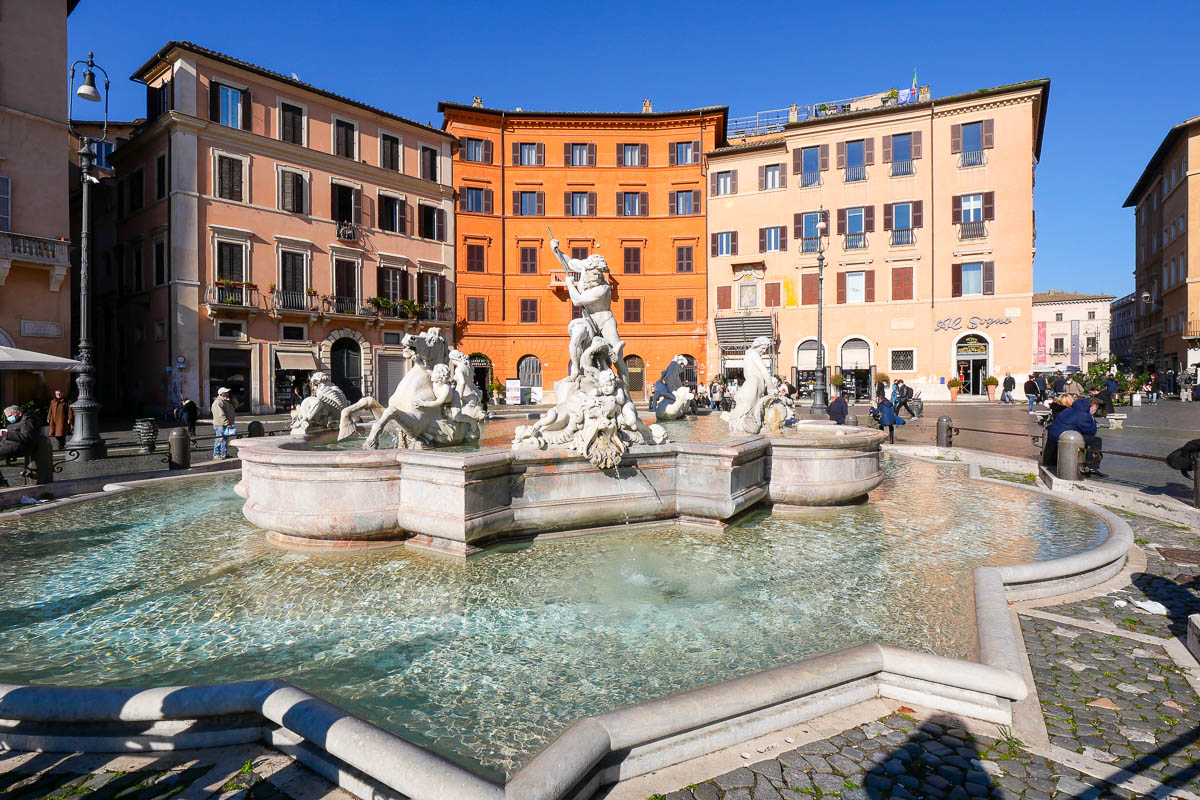
With its fountains and Baroque palaces, Piazza Navona is one of the most beautiful squares in Rome. It is a masterpiece of Baroque art and a must-visit when exploring Rome. It is also a very lively place, with many cafés surrounding the square—perfect for enjoying the view and atmosphere.
Three fountains stand in Piazza Navona. The most impressive is the Fontana dei Quattro Fiumi (Fountain of the Four Rivers, 1651) at the center of the square with its Egyptian obelisk. The four figures around it symbolize the four continents known at the time. The Fontana del Moro (Fountain of the Moor, 1576) to the south depicts a Moor surrounded by tritons. The last one to the north, the Fontana del Nettuno (Fountain of Neptune, 1574), represents the god Neptune surrounded by nymphs battling a sea monster.
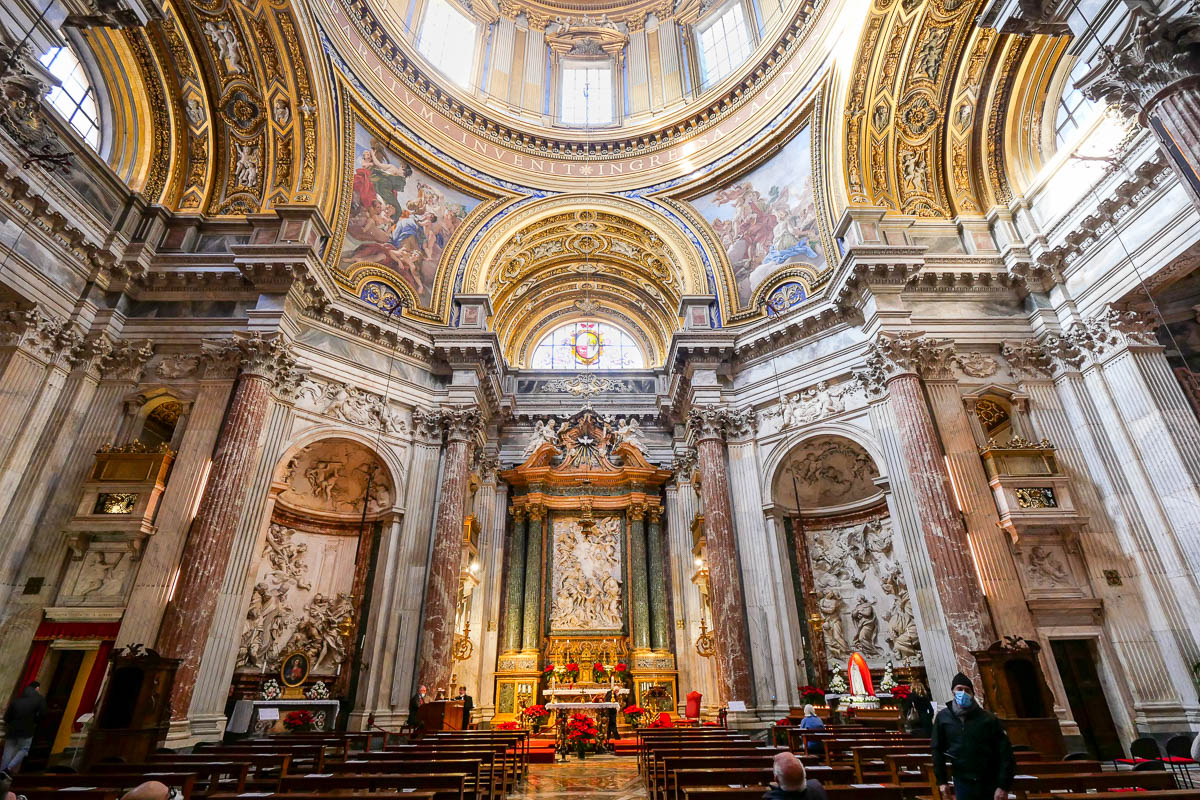
At the center of the square stands the Sant’Agnese in Agone church (9 a.m.–1 p.m. / 3 p.m.–8 p.m., closed Monday), typical of the Baroque style of the Italian architect Francesco Borromini, considered a major figure of this artistic movement. It was completed in 1657 on the ruins of an 8th-century oratory. The interior is covered with numerous frescoes. Underground passages lead to a Roman mosaic and remains of the Stadium of Domitian, which preceded the square in the 1st century.

St. Peter’s Basilica (Vatican)
Visiting Vatican City is one of the must things to do in Rome. It’s hard to skip the world’s smallest country, located in the heart of the capital. There are two major sites not to be missed: St. Peter’s Basilica and the Vatican Museums (including the Sistine Chapel).
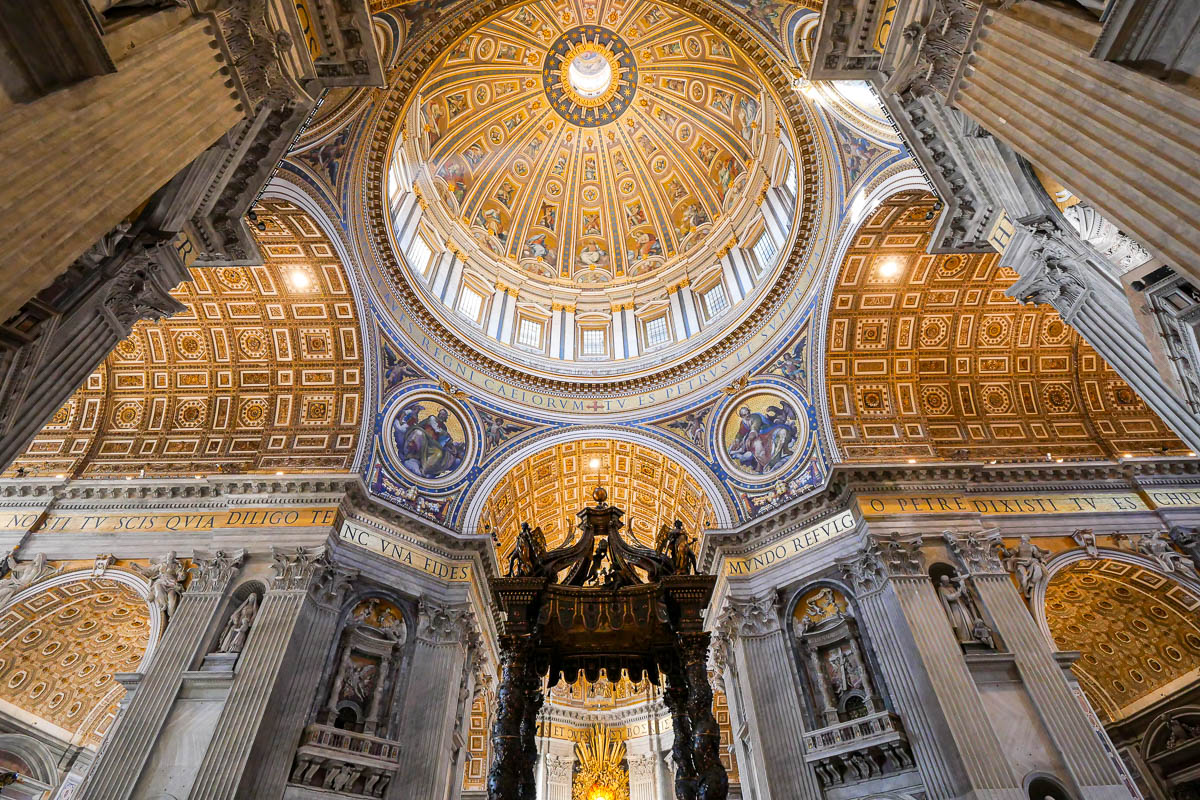
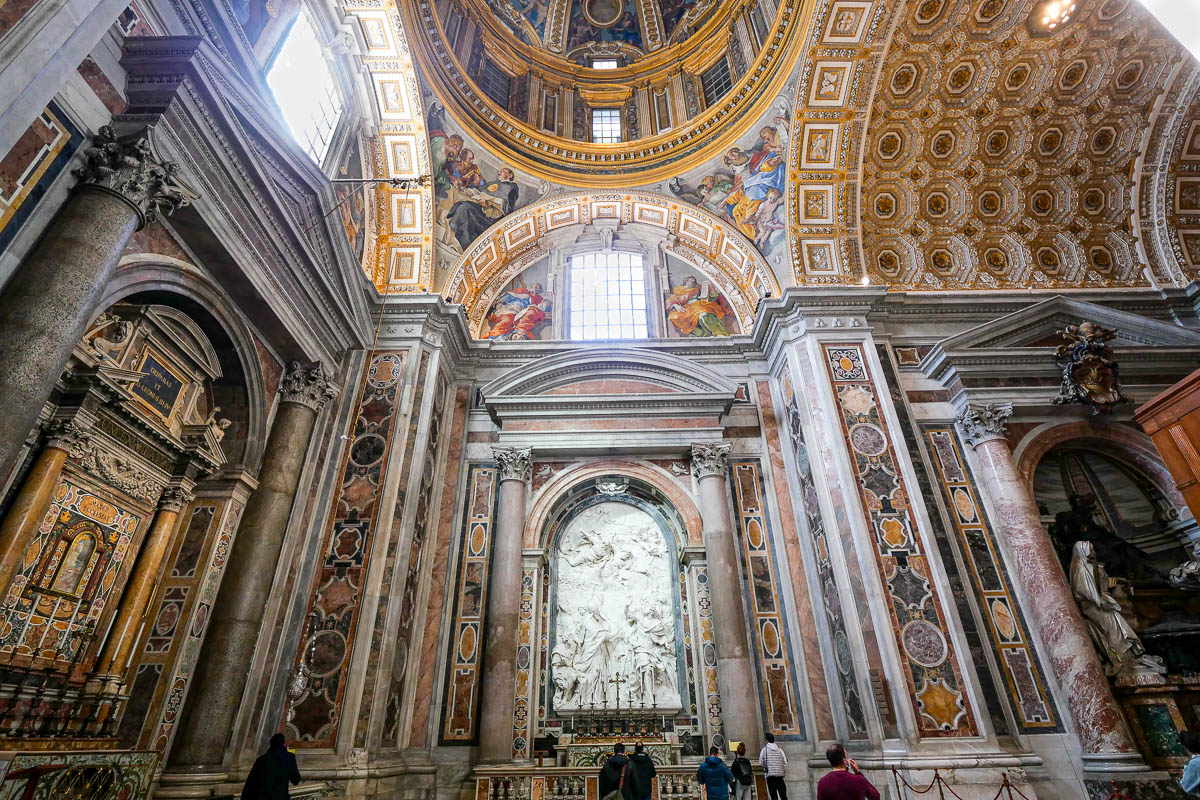
St. Peter’s Basilica is the most important building for Catholics and a major pilgrimage site. But you don’t need to be religious to be amazed by the Pope’s church, one of the most visited monuments in the world. The basilica was completed in 1656, and what strikes you as soon as you walk through the entrance is its immense size. It can hold more than 60,000 people. Inside, you’ll find a magnificent dome designed by Michelangelo, inspired by Florence’s Duomo, as well as numerous works of art.
Entry is free, but before accessing the interior of St. Peter’s Basilica you must go through security checks. It was one of the few places where we had to wait during our stay in Rome in January. Fortunately, the line moves fairly quickly.
If you wish to book a visit with a guide, I recommend this guided tour of St. Peter’s Basilica with dome ascent. You can also visit St. Peter’s Basilica on your own by purchasing the official audio guide (€8).
Opening hours : 7 a.m. – 7 p.m. from April to September / 7 a.m. – 6 p.m. from October to March. Proper dress required (knees and shoulders covered).


Access to the Dome
You must pay to access the dome of St. Peter’s Basilica, which offers a superb panorama. The entrance ticket purchased on site costs €10 with elevator access or €8 via the stairs. There are 551 steps in total to reach the top, and the elevator allows you to skip the first 231. You will therefore still need to climb 320 steps. Keep this in mind, especially if you are not in good physical condition. Some sections pass through quite narrow corridors, if there are many people and you suffer from claustrophobia, this may be an issue. As you climb, you’ll also be able to observe the dome’s details much more closely.
I highly recommend making the ascent to the dome. Once at the top, you’ll enjoy a magnificent view over St. Peter’s Square and the Vatican gardens.
Opening hours for dome access : 7:30 a.m. – 5 p.m. year-round with elevator / 7:30 a.m. – 4:30 p.m. from April to September (4 p.m. the rest of the year) via the stairs.

Vatican Museums
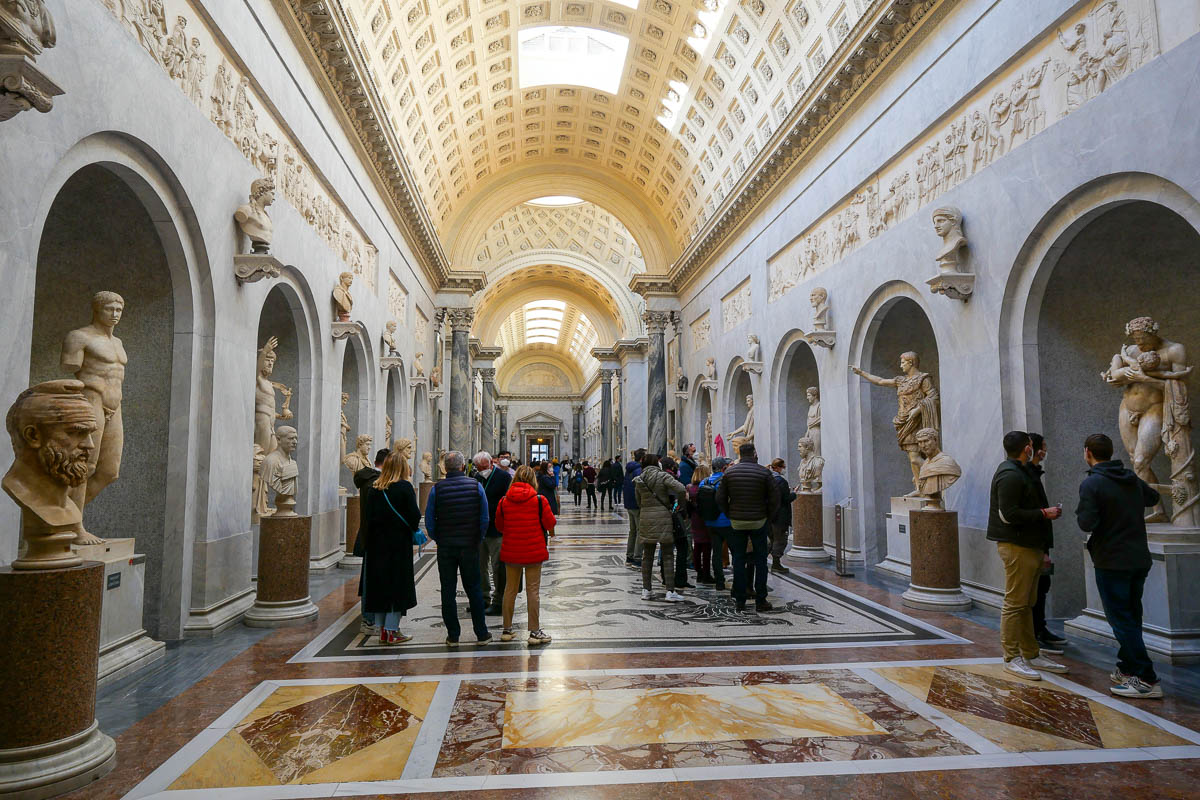
A visit to the Vatican Museums, which includes the Sistine Chapel, is one of the must-see experiences to do in Rome. This complex houses one of the world’s most important art collections. Wear comfortable shoes, as there are about 7 km of exhibitions.
The museum entrance is located north of the walls of Vatican City. You must walk all the way around the outside from St. Peter’s Square. It is well signposted, so you won’t get lost. Beware of touts along the route trying to sell you tickets.
Tickets for the Vatican MuseumsI strongly recommend buying your ticket for the Vatican Museums (skip-the-line ticket) in advance, as this will save you from long waiting times. To book your skip-the-line tickets, go to the official Vatican website. Tickets go on sale only four months in advance. As with the Colosseum, many websites encourage you to buy more expensive tickets from resellers, don’t be fooled ! The official Vatican website also offers guided tours of the museums and the Sistine Chapel as well as visits to the gardens. The price is €20 + €5 pre-sale fee (book here). If you want to visit the museums and the Sistine Chapel on your own without a guide, select the “Admission tickets – Vatican Museums and Sistine Chapel.” When purchasing, you must choose your visit time in 30-minute slots. You can optionally add the audio guide for €8. After completing your purchase, you will receive an email with a voucher containing a QR code. You can print it or keep it on your smartphone. By presenting this voucher at the reception desk upstairs (not at the ground-floor ticket office), you will receive your entry ticket. There is a dedicated line for those who have already booked online, allowing you to avoid queuing outside. If no tickets are available on the official website for your dates, try GetYourGuide or Tiqets, which offer last-minute tickets. They sell the same ticket but at a slightly higher price. Those who prefer detailed explanations can choose this guided tour of the Vatican and the Sistine Chapel. The Vatican Museums are free on the last Sunday of each month, but this is also when they are most crowded (Rome residents also take advantage of this). In short, it’s not necessarily the best time to visit. |
What to see in the Museums
The collection of rooms and galleries that make up the Vatican Museums is immense and resembles a labyrinth. The map provided at the entrance helps you find your way, as the signage alone can be a bit confusing. I recommend bringing the Lonely Planet Rome, which clearly details everything there is to see in the museums and provides plenty of explanations.
It is impossible to see everything in one day, so it’s best to head directly to the sections that interest you most. Don’t worry, you won’t miss the Sistine Chapel ; it’s located at the end of the first floor before descending. Photography is prohibited in the Sistine Chapel (you’ll have to explain to me why it’s the only place where it’s forbidden). Numerous guards in the room remind visitors whenever they see someone taking out a camera. But I still managed to bring back a photo 🙂
To take a break and get some fresh air between museums, enjoy the outdoor terrace and gardens. This is where you’ll find the sculpture of a sphere created by Arnaldo Pomodoro.
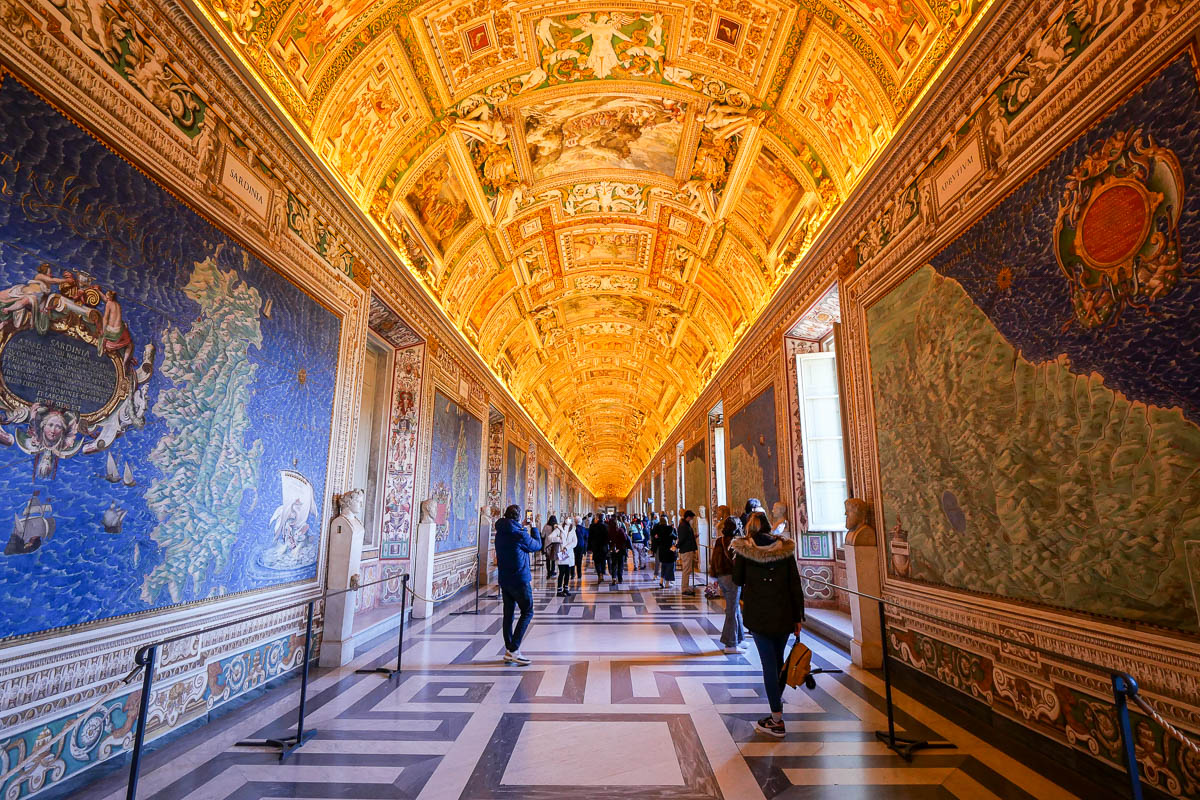
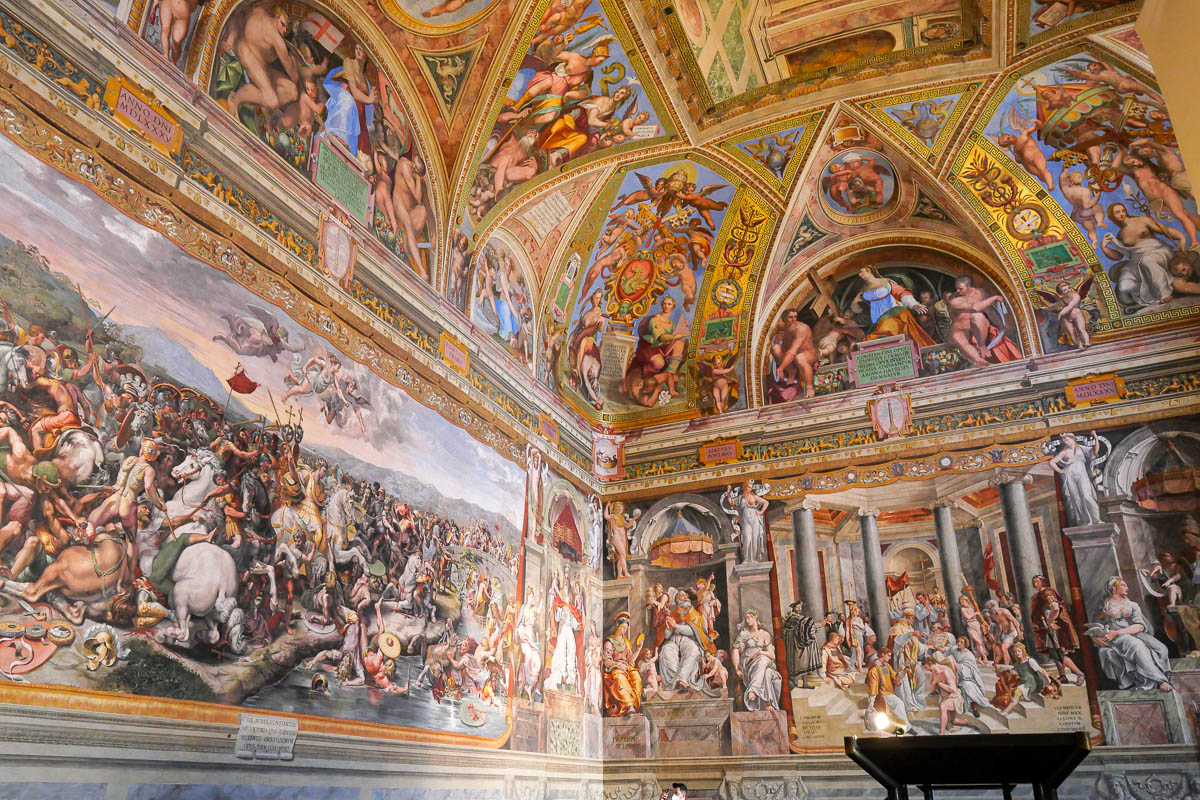
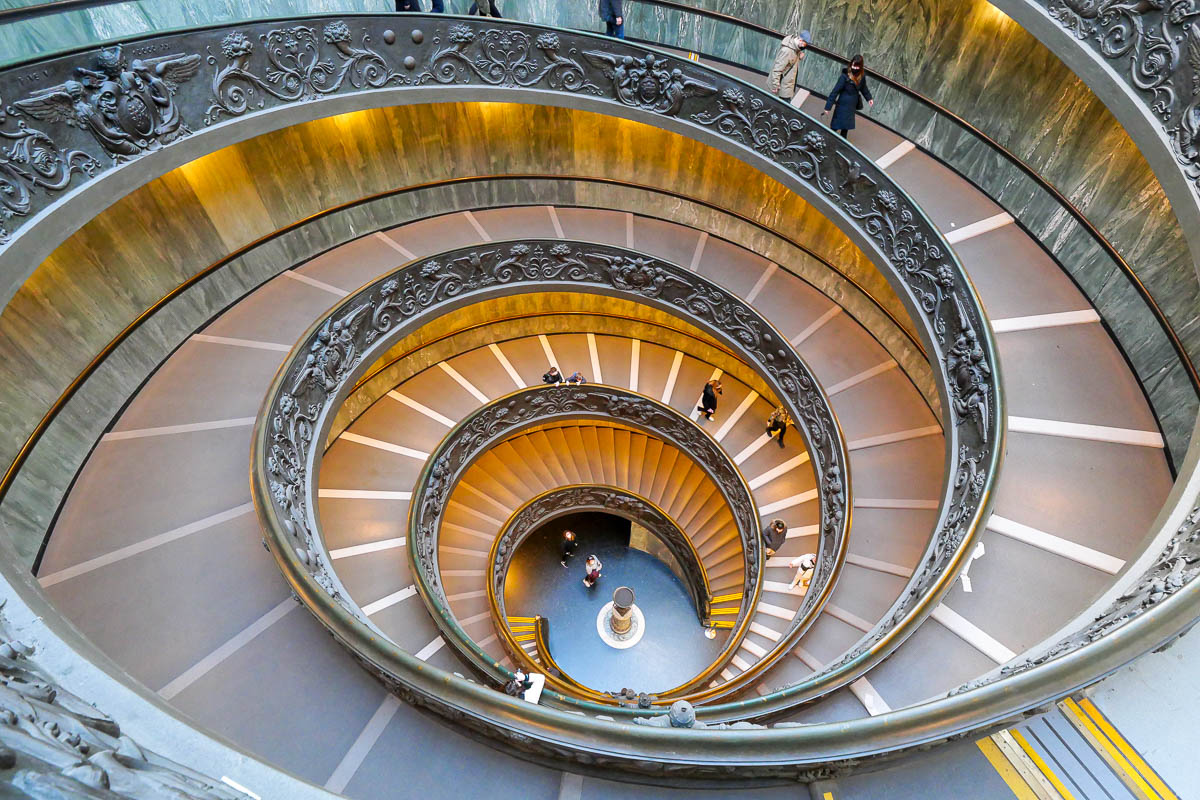
Among the sections we enjoyed most were the Raphael Rooms (Stanze di Raffaello), covered with frescoes and particularly beautiful (second floor). The famous Renaissance painter personally decorated two of them. The Gallery of Maps (galleria delle Carte), 120 m long with a magnificent painted vaulted ceiling, displays 40 topographical maps from the 16th century (second floor). In the Borgia Apartments, you’ll find more contemporary works, which offer a change of pace, including paintings by Salvador Dalí and Henri Matisse, for example. Just afterward, you reach the Sistine Chapel, Michelangelo’s masterpiece. The museum exit is via a superb spiral staircase designed by Donato Bramante.



Trastevere District
The Trastevere district lies south of Vatican City, on the opposite side of the Tiber from the historic center and the Colosseum. It is a very picturesque neighborhood made up of small streets and houses, with many restaurants and bars. It’s a popular nightlife spot and one of Rome’s most touristy districts. To reach Trastevere from the Vatican, we took the bus (one of the few times during our stay in Rome). From the historic center, you simply need to cross the Garibaldi Bridge.
Trastevere is mainly a place to enjoy the atmosphere. There are not many monuments to see ; one of the main ones is the Basilica di Santa Maria in Trastevere, located on a charming square. It contains numerous mosaics. Unfortunately, we couldn’t see them because on the day we visited it closed exceptionally at 5 p.m., and we arrived too late.
As for restaurants, we ate excellent rigatoni all’amatriciana at Nannarella. They serve food almost all day, which is convenient since we ate at 4 p.m. When visiting Rome, you lose track of time 😀 Prices are very reasonable, a great place we recommend.

Castel Sant’Angelo
This imposing circular fortress, built between 135 and 139, was originally a mausoleum for Emperor Hadrian. In the 6th century, the mausoleum was transformed into a castle. Since 1925, it has housed the Museo Nazionale di Castel Sant’Angelo, which displays a collection of paintings and armor. There is a secret passage, the Passetto di Borgo, linking Castel Sant’Angelo to the Vatican, allowing popes to escape in times of danger. The terrace at the top of the castle offers a lovely panoramic view of Rome and Vatican City.
To avoid queues, I recommend buying your ticket in advance on the official Castel Sant’Angelo website or purchasing a ticket that includes an english audio guide. Entry to the castle is free on the first Sunday of each month (no reservations possible).
Opening hours : 9 a.m.–7:30 p.m., closed Monday | Price : €16 (€2 for ages 18–25).

Which pass should you choose to visit Rome ?
As with most major cities, Rome is no exception in offering two official tourist passes (available in four versions), whose details I outline below. Before buying this type of pass, think carefully about what you plan to do in Rome, as it is not necessarily cost-effective.
For our part, we didn’t buy any pass to visit Rome in 3 days. And that didn’t prevent us from seeing most of the must-see sites. We didn’t need an unlimited transport pass since, with accommodation not too far from the center (Aventine district), we did everything on foot.
As for passes sold by ticket or activity booking websites, if you want to save money and pay the correct price, simply buy your tickets from the official websites that I mention each time.
Roma Pass 48h / 72h
- One free entry (or 2 entries for the 72h version) to a museum or archaeological site of your choice (list here)
- Free use of public transport during the validity period of the card (48h / 72h)
- Discounts on tourist attractions
- Augmented reality headset experience at the Circo Massimo (details here)
- Free access to toilets in the P.stop network
Price : €36.50 for 48h / €58.50 for 72h | Where to buy : official Roma Pass website or GetYourGuide.
My opinion : this pass is worthwhile if you plan to visit many tourist attractions and museums in Rome (it does not include those in the Vatican). It can also be convenient to have unlimited transport if your accommodation is far from the city center. For our part, we did everything on foot, only taking the bus twice in 3 days (ticket €1.50).
Omnia Card 24h / 72h
You’ll find all the detailed information and purchase links on the official Omnia Card website or on GetYourGuide (same price).
Omnia Card 24h
- Vatican Museums and Sistine Chapel
- Open Bus Vatican & Rome (hop-on hop-off bus)
- Carcer Tullianum (Mamertine Prison)
- Basilica of St. John Lateran and Cloister with audio guide, entry to the Treasury Museum
- Guided tour of one of Rome’s Catacombs (choice of site)
- Vox City Guide, the innovative app that guides you around the city
Price : 69 €
Omnia Card 72h
- Vatican Museums and Sistine Chapel
- Multilingual audio guide app for St. Peter’s Basilica
- Basilica of St. John Lateran and Cloister with audio guide, entry to the Treasury Museum (access to the Sancta Sanctorum not included)
- Open Bus Vatican & Rome (hop-on hop-off bus)
- Entry to the Carcer Tullianum
- Vox City Guide, the innovative app that guides you around the city
- 2 free entries to museums and/or archaeological sites in the city of Rome
- Reduced-price entry for subsequent visits to museums and/or archaeological sites in Rome included in the Roma Pass
- Free access to Atac public transport in Rome for 72 hours
Price : 149 €
My opinion : the 24h version is of limited interest because it is difficult to visit all the sites included in the pass in a single day. Considering that a ticket for the Vatican Museums and the Sistine Chapel costs only €25, the Omnia Card 24h is not a good deal.
The 72h version seems perfect for a 3-day stay in Rome, but the downside is that it is relatively expensive (too expensive in my opinion). You should carefully calculate based on the sites and museums you plan to visit to determine whether it’s worthwhile. The Vatican Museums (€25), the Colosseum Archaeological Park (€18), and the Borghese Gallery (€13) are the most expensive sites included (total €56). If you exclude the audio guides, which are not necessarily essential with a paper guide, and if you don’t intend to use public transport, there is still a significant gap to reach €149. Again, if you want to visit Rome at a relaxed pace without rushing from museum to museum and without needing public transport, the Omnia Card 72h is not worthwhile. To make the most of this pass, you must use all the options and frequently use public transport (a bus/metro ticket costs €1.50).
Rome Tourist Card
This tourist pass, which is not official, is sold by the ticket booking website Tiqets. It is a package they created that includes the main must-see sites in Rome. Priority access and other skip-the-line benefits are already included when purchasing on official websites (as I explained for the Colosseum and Vatican Museums tickets).
The Rome Tourist Card includes (official entry prices in red) :
- Colosseum, Roman Forum, and Palatine Hill (€18)
- Vatican Museums and Sistine Chapel (€25) or guided tour of St. Peter’s Basilica (€54 on GetYourGuide)
- Pantheon or Castel Sant’Angelo (€15 or €16)
- Audio guide app
- 10% discount on other attractions
Price : €98 compared to €72 if you buy your tickets individually on official websites. Audio guides can easily be replaced by a paper guide such as Lonely Planet. It’s up to you to decide whether the Rome Tourist Card is useful for you.

Travel tips for visiting Rome
How to get to Rome ?
Even though “all roads lead to Rome” as the proverb says, here are the main ways to reach the capital of Italy :
- Flight : the easiest, fastest, and cheapest way to get to Rome. Many low-cost airlines offer cheap tickets. To find the best fare, I recommend using this flight comparison tool.
- Train : Rome Termini railway station is located in the city center. The train is a good option if you’re coming from another Italian city, such as Pisa, for example.
- Car : this is not the most practical or fastest option, as you won’t need a car to visit Rome. However, if like us you are on a road trip in Italy (we came from Tuscany), you will arrive in the capital by car. In this case, it’s best to look for accommodation with parking so you can leave it there for your entire stay in Rome.
How to reach the city center from Rome airport ?
From Leonardo da Vinci–Fiumicino Airport, located 30 km from the city, you have several options :
- The Leonardo Express direct train to Rome Termini station, running from 6:08 a.m. to 11:23 p.m. with departures every 15 minutes (30 minutes during off-peak hours). This is the best and fastest option. Price: €14, duration: 32 minutes. You can buy tickets on site or on the Trenitalia website (official Italian train website). Select “Fiumicino Aeroporto” to “Roma Termini.” If you can’t find it, you can purchase it directly on this booking website (€17.9).
- Bus to Termini station, running from 6:05 a.m. to 12:40 a.m. It’s cheaper (€7) but slower (1 hour), and you may get stuck in traffic. You can buy the ticket on this website.
- Shuttle between Fiumicino Airport and your hotel in central Rome. Book here (€71 for 2 people, €88 for 4). Transfers are also available from/to the port of Civitavecchia and Ciampino Airport.
- Taxi, with a fixed fare of €48 to central Rome.
Where to park in Rome ?
If, like us, you’re on a road trip in Italy, you’ll arrive in Rome by car. Once there, you won’t need it during your 3-day stay or longer. You should therefore leave your car in a parking facility, preferably covered, to keep it safe. To avoid the hassle of searching for parking once in the city, I recommend booking your parking space with Parclick. It’s simple, fast, and helps you save money.
By clicking the link I provided above, you’ll also find all the information about Rome’s ZTL (limited traffic zone), which restricts vehicle access under certain conditions. This will help you avoid receiving a fine after returning from your stay in Rome.
Best time to visit Rome
The Italian capital can be visited year-round, but the best times to visit Rome are spring (April to June) and autumn (September and October). In summer it can be very hot, and between queues at monuments and outdoor visits (such as the Roman Forum), you spend a lot of time in direct sunlight, which can be uncomfortable for some.
For our part, we visited Rome in the middle of winter, in January. And as you can see in the photos, we had sunny weather throughout our stay. Temperatures were only cold after nightfall (which forced us to take out our beanies!). The advantage of visiting Rome in winter is that there are fewer tourists, something we truly appreciate if you follow our blog. The downside I found is that the sun sets early and remains low in the sky, which often creates shadows in photos.
For your stay in Rome, avoid Catholic religious holidays (especially Easter), which attract large crowds of tourists to the city and the Vatican.
Mobile phone and SIM Card
European travelers can use their mobile phones in Italy without additional charges (calls and SMS). For mobile internet (roaming), pricing varies greatly depending on the operator and type of plan. I recommend checking before visiting Rome. Normally it should be included.
For others it is possible to buy a physical SIM card locally. However, this is not the most practical solution because you will no longer be reachable on your regular phone number. This can be problematic if you need to confirm a transaction with a security SMS.
I recommend buying an eSIM instead. This allows you to keep your original SIM card to receive calls and SMS while using the eSIM for unlimited 4G/5G internet access. The price depends on the number of days. By clicking this link, you’ll receive a 5% discount.

Accommodation for visiting Rome
The city offers a wide range of accommodations, from hostels for budget travelers to five-star palaces. Whatever time of year you visit, the key is to book well in advance, as Rome is a very touristy city with high prices. It is Italy’s top destination and the fifth most visited city in Europe.
Each neighborhood has its advantages and disadvantages. Here are some good options located in the city center, classified by budget. For more information and advice, refer to the article where to stay in Rome.
- 82 € : Roman Central House, well located 800 meters from Basilica of Saint Mary Major, this guesthouse offers a room with a private kitchen.
- 99 € : Coliseum top floor with terrace and view, this apartment near the Colosseum, located on the top floor, has a terrace with a view.
- 107 € : B&B In Piazza, a bed and breakfast very close to the magnificent Piazza Navona, offering rooms with breakfast included.
- 135 € : Gemini Suites Navona, this guesthouse offers beautiful modern rooms just 20 meters from Piazza Navona.
- 139 € : Monti First, this 3-star hotel is very well located in the center, close to Rome’s must-see attractions.
- 147 : B&B Insula Urbis, located 400 m from the Pantheon, this guesthouse offers lovely modern rooms with a balcony. Breakfast included.

Where to eat in Rome ?
Any trip to Italy highlights gastronomy, and Rome is no exception. To eat like a Roman, I recommend going to trattorias. These restaurants serve simple but delicious homemade cuisine. On the menu are traditional pasta dishes (alla carbonara and all’amatriciana, which are my favorites) and Roman specialties such as saltimbocca alla Romana. The city also has a large number of pizzerias serving round Neapolitan-style pizzas (for your information pizza was born in Naples) as well as pizza by the slice called pizza al taglio, which has a thicker crust.
The Trastevere district is renowned for its many trattorias, bars, and cafés, making it the ideal area for lunch or dinner in Rome. You’ll find many excellent spots there, we went to Nannarella and it was outstanding.
Testaccio, a former working-class district of Rome, is also a major center of Roman gastronomy. Since our accommodation was right next to this area, we were able to try several places. We recommend Masto, a restaurant that also serves as a delicatessen. The dining room is very small, so reservations are essential. Also in Testaccio but a bit more upscale (it is recommended by the Michelin Guide), the restaurant Felice is another great address we tried.
To discover Roman cuisine with a guide, you can choose this evening food tour.
Cooking Classes
If you would like to learn how to prepare Roman specialties yourself, you can take a cooking class. The capital offers several options, often focused on making pasta. Here are some workshops you can join :
- Fettuccine & Tiramisù: Cooking Class with Wine & Limoncello
- Pizza & Tiramisu Class with Free Flowing Fine Wine
- Pasta, Ravioli & Tiramisu Class with Unlimited Wine
What to do around Rome ?
Pompeii and Mount Vesuvius
Want to leave the capital to discover other treasures of Italy ? This day trip to Pompeii and Mount Vesuvius from Rome will give you a change of scenery.
On board a private air-conditioned bus, you’ll discover Pompeii accompanied by an archaeologist guide. Skip-the-line entry and a guided tour of the ancient city are included. After visiting Pompeii, you’ll climb the slopes of Mount Vesuvius (from April to mid-November), one of Europe’s few active volcanoes located in Vesuvius National Park. From there, you’ll take a short hike to the smoking crater for breathtaking views of Capri and Sorrento. During the winter season, from November to March, Mount Vesuvius is closed, so your tour will follow the coastline and take you to the city of Naples.
Tuscany
Escape the hustle and bustle of Rome with this excursion to Tuscany with lunch and wine tasting. With travel and sightseeing already arranged, enjoy the famous dishes, wines, and landscapes of this picturesque region in just one day.
First, you’ll take a walking tour of the hilltop town of Montepulciano. Admire an ancient yet still functioning wine cellar and ruins predating Rome. Then visit San Biagio, a 16th-century Renaissance church. A short drive away, a delicious Tuscan lunch awaits. The three-course meal with wine pairings takes place in the wine cellar of an authentic winery, featuring the famous Brunello di Montalcino. The final stop is the village of Pienza before returning to Rome.
If Tuscany interests you, you can also visit Florence and Pisa from Rome with this excursion.
Positano and the Amalfi Coast
Fall under the charm of the Amalfi Coast with this day trip to Positano and the surrounding region, traveling by high-speed train from Rome to Naples. Then continue by minibus to Positano and Amalfi and enjoy the beaches and Italian boutiques at your leisure.
Positano is considered one of the most beautiful villages in southern Italy. Stroll through its narrow streets down to the harbor with its vibrant colors and discover unique local products in the many souvenir shops. Then experience authentic Italy in the heart of Amalfi, where the characteristic Mediterranean architecture—represented in particular by stunning white houses stacked seemingly one on top of another—will captivate you.
You’re now know what to do in Rome in 3 days, or even a little longer if you’d like to take excursions outside the city. If you have any questions about organizing your stay in Rome, feel free to use the blog’s comment section.