
Located in the northwest of Croatia on the border with Slovenia, Istria is not one of the regions travelers prioritize when planning a road trip in Croatia. Yet visiting Istria offers a contrast with the rest of the country, especially the Dalmatia region further south. The main appeal of this peninsula, long under Italian influence, lies in discovering the hilltop villages of the inland, where gastronomy based on olive oil and truffles still holds an important place. The coastline is also home to beautiful towns such as stunning Rovinj, with its Venetian influence, and the Roman city of Poreč with its listed basilica.
What the best things do in Istria on a road trip and where to stay? I share all my tips in this travel guide.
What to do in Istria : the best places
Because of its size (2,820 km²) and shape, the Istrian peninsula is perfect for a road trip of a few days. Distances between towns and villages are not very long, so the ideal option is to choose a base and explore from there, visiting a new spot on the coast or inland each day.
Istria is located on the border with Slovenia, so you can easily make a detour there, especially if you’re arriving from Italy. Nearby, you can visit the town of Piran (which resembles Rovinj) and the Škocjan or Postojna caves.
I’ve marked on the map below the towns and points of interest mentioned in this article (in grey, those we didn’t visit). This will give you a quick overview of things to do in Istria.

Rovinj
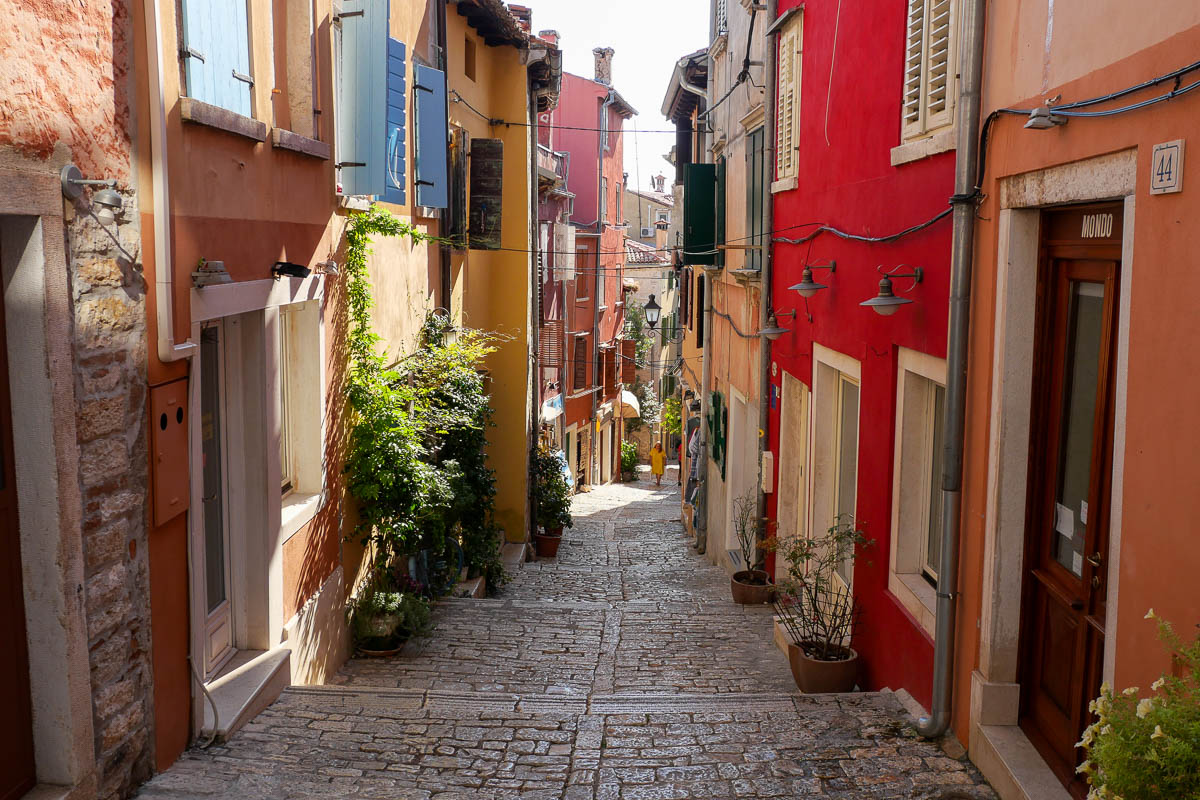
With its bell tower reminding you that the town was long under Venetian influence, Rovinj is certainly the most beautiful town in Istria and our favorite in Croatia. We fell in love with its small cobbled streets, its colorful facades, and its harbor offering magnificent views of the town. Sunsets over the Adriatic are stunning, and having a drink on a terrace or sitting on the rocks to admire the view is one of the must-do experiences. One day is enough to explore Rovinj, but we loved the atmosphere so much that we came back every evening.
For more information on what to see, check out the article things to do in Rovinj.

Poreč
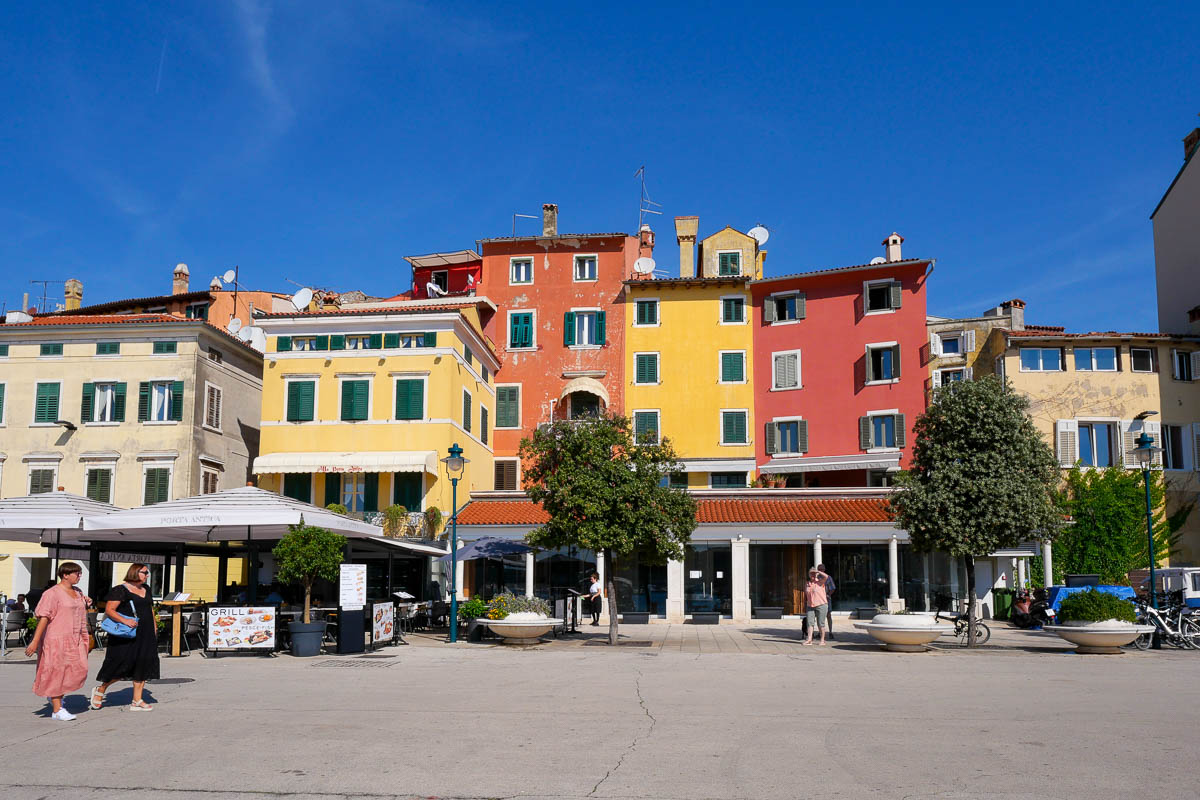
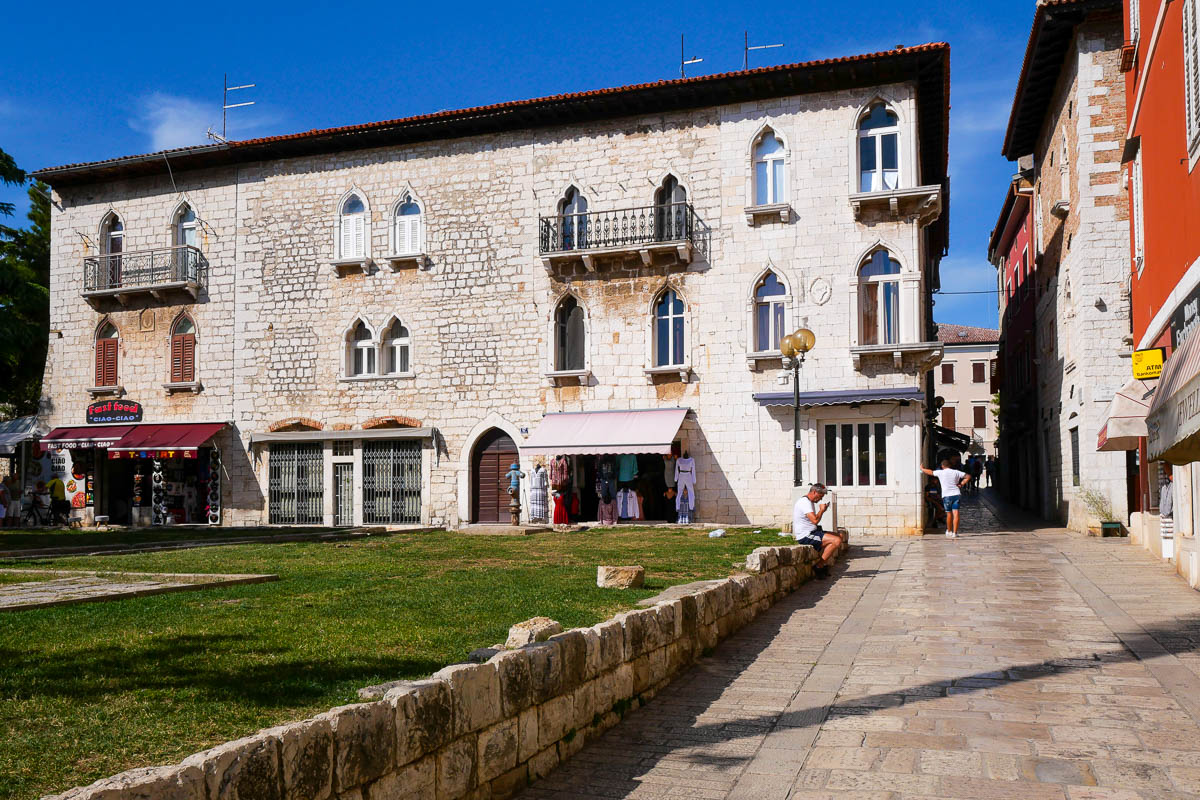
Founded by the Romans in the 2nd century BC, Poreč is one of the main tourist destinations in Istria. Holidaymakers come here for the sun and beaches, but also for the nightlife. It has become very popular among young partygoers. For others, its main attraction is the Euphrasian Basilica, a UNESCO World Heritage Site. Built in the 6th century in Byzantine style, it includes not only the basilica adorned with superb mosaics, but also an octagonal baptistery where early Christians were baptized, a sacristy, an episcopal palace, and a bell tower added in the 16th century.
Find more information on must-see sites in the article visiting Poreč.


Motovun
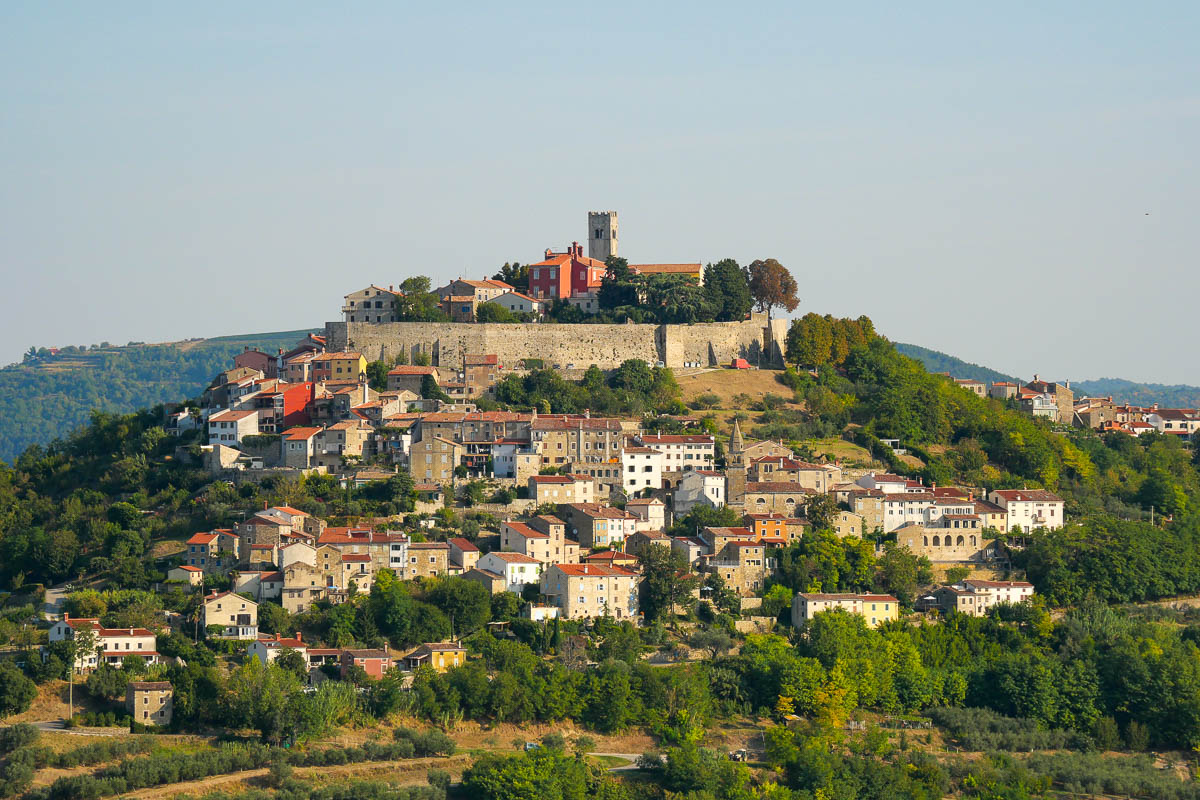
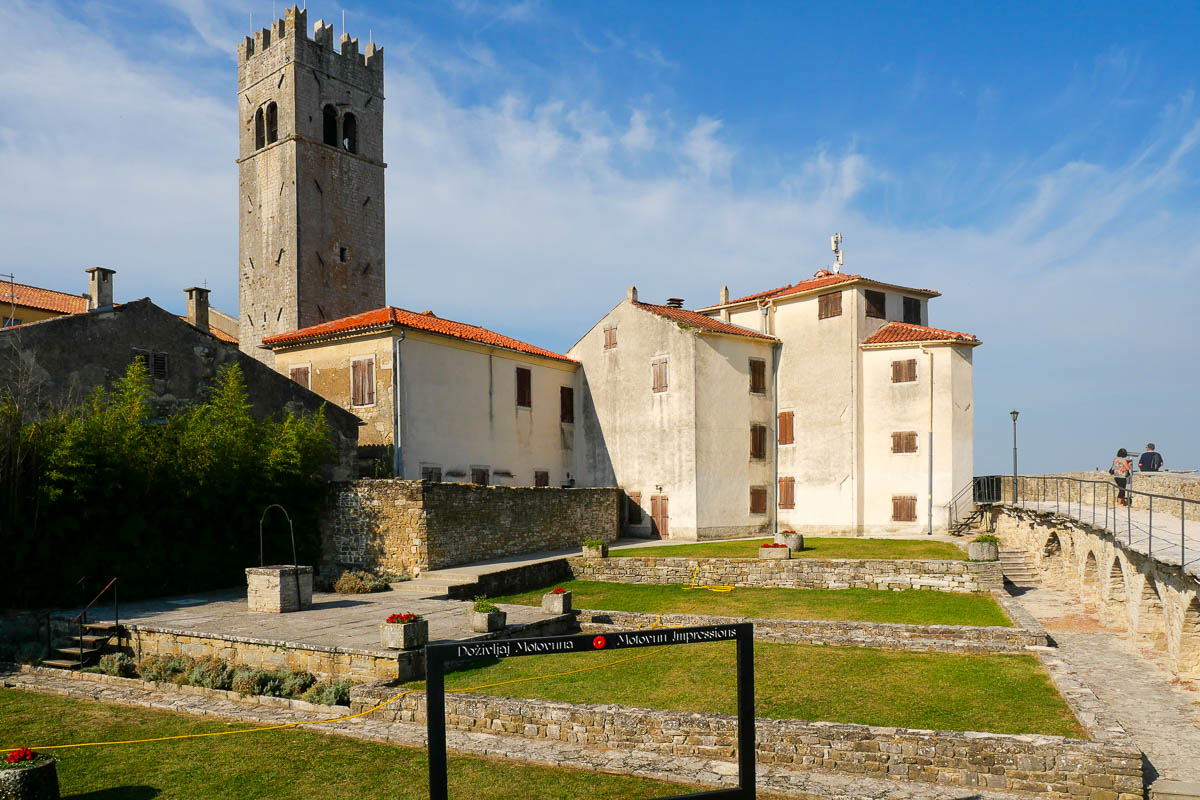
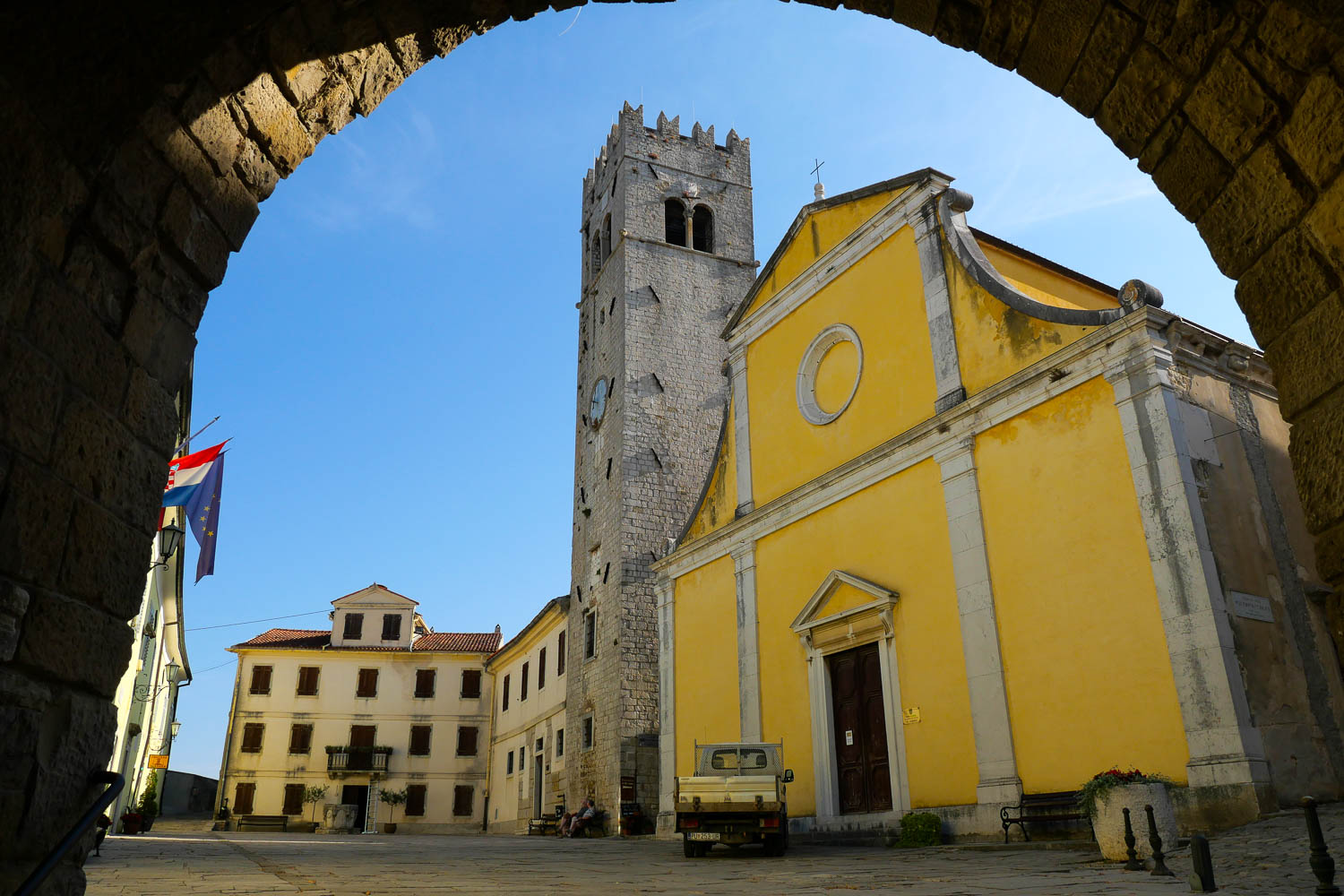
This is one of the most famous hilltop villages in Istria. Perched on a hill at 270 meters and surrounded by medieval walls, it has a striking appearance. The walls were built in 1278 when Venice took control of the town. You can walk along them and circle Motovun while enjoying the views and inner gardens. Tickets to access the walls can be purchased at the tourist office (during our trip the gate was open, and we slipped in unnoticed).
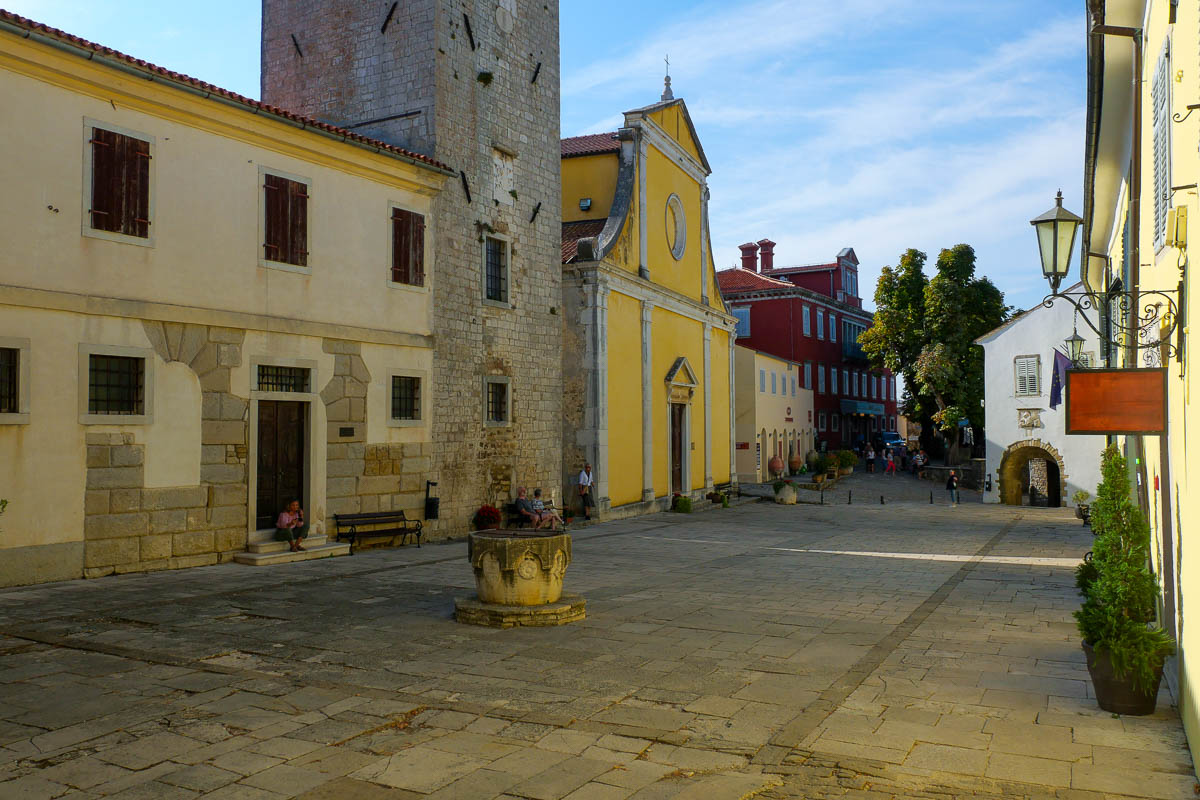
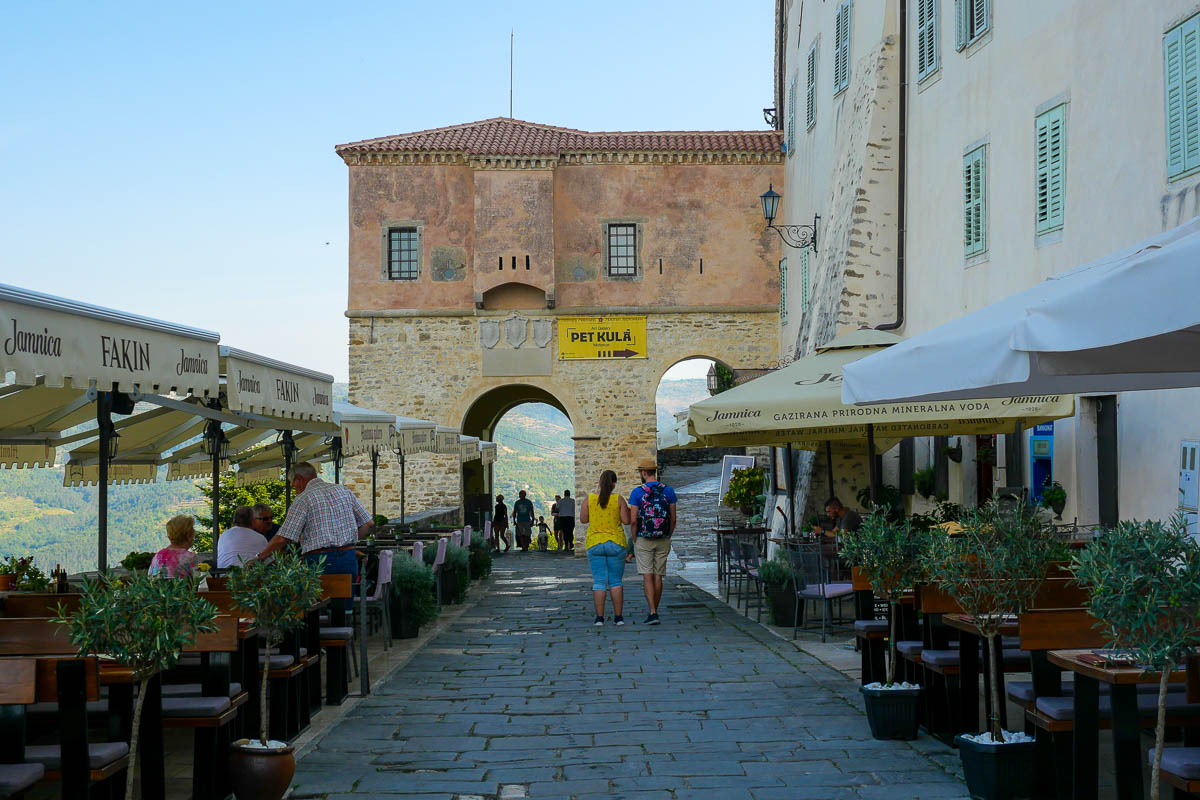
Inside the walls of Motovun, as you wander through cobbled streets or across a square, you’ll come across a 17th-century church with a yellow facade, a 13th-century bell tower, and palaces. Motovun is also known for hosting an international film festival every year in July.
Outside July and August, you’ll have no trouble parking at the top of the road leading to Motovun (in September it wasn’t crowded). Parking is paid (from June to the end of September), and the only parking meter is located next to the snack bar just before entering the village. In summer, if all the roadside spots are taken, you’ll need to park in the lower lot and walk up (15 minutes) or take the paid shuttle.

Hum
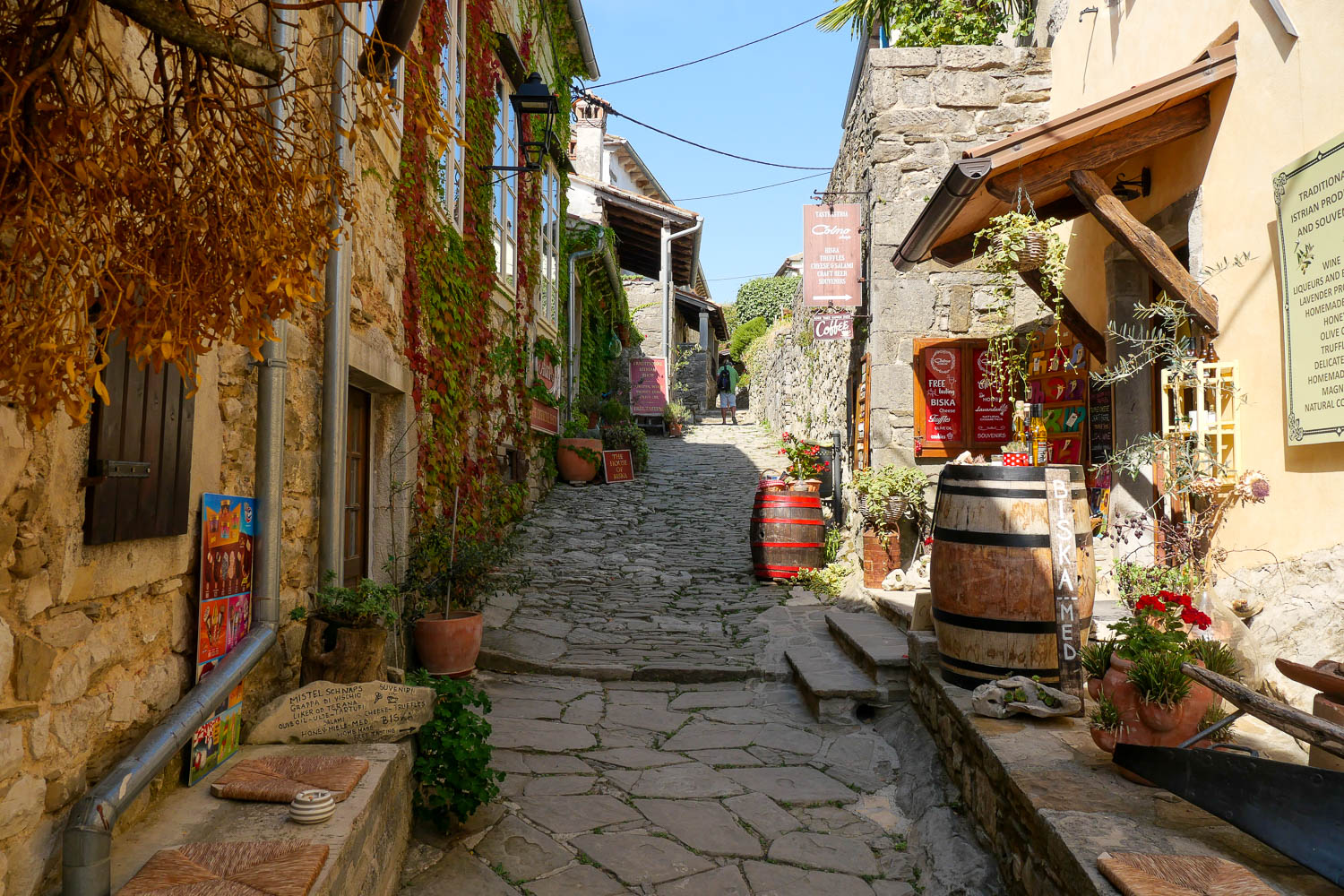
This tiny village of 28 inhabitants, consisting of a single street, has proclaimed itself the smallest town in the world. I don’t think that’s actually true, but from a marketing perspective it attracts tourists. Hum is still very charming and one of the must-stop places on an Istria road trip. The village dates back to the 11th century, but its current appearance dates from 1562. You enter through a beautiful double gate leading to the main square, where you’ll find a Romanesque chapel.
Given its small size, it can quickly feel crowded in peak season, so it’s best to visit outside July and August or early in the morning.
Parking on site is paid. The ticket is valid all day, but in one hour you’ll have more than enough time to walk around the village twice while reading all the information signs. Unless you spend three hours in the souvenir shop like my wife 🙂


Grožnjan
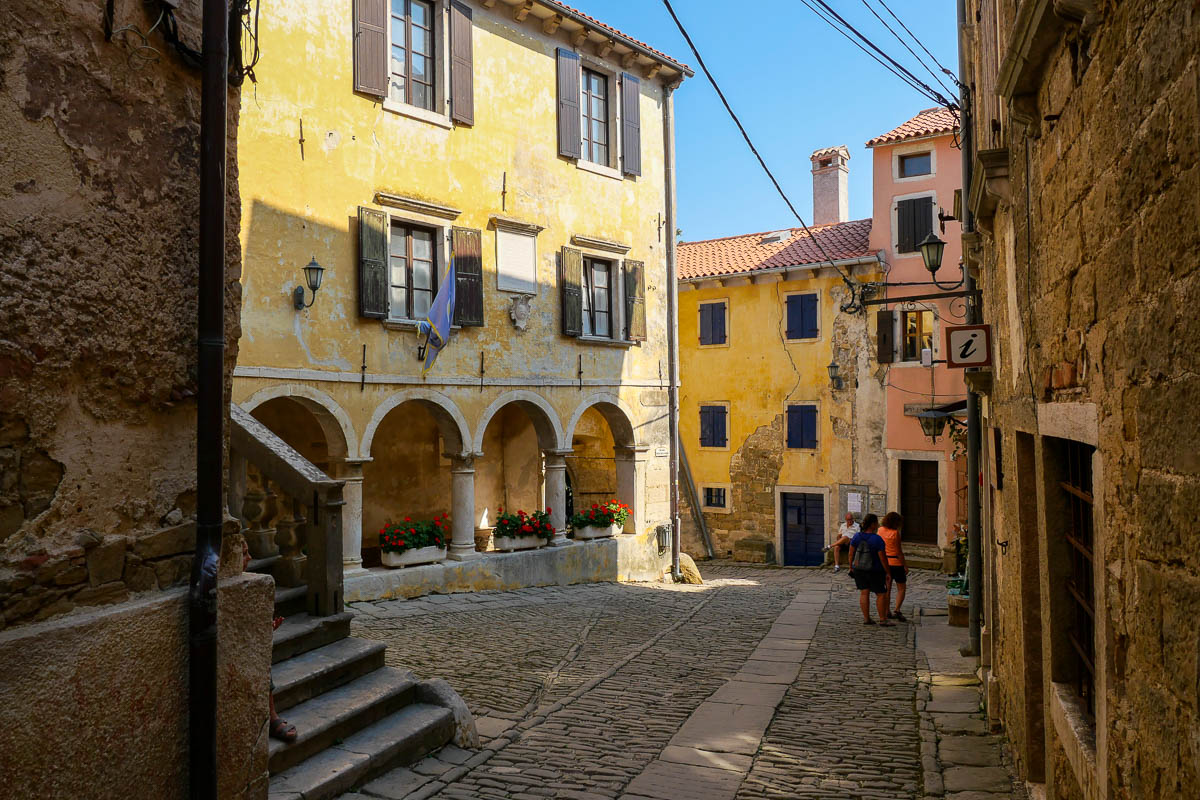
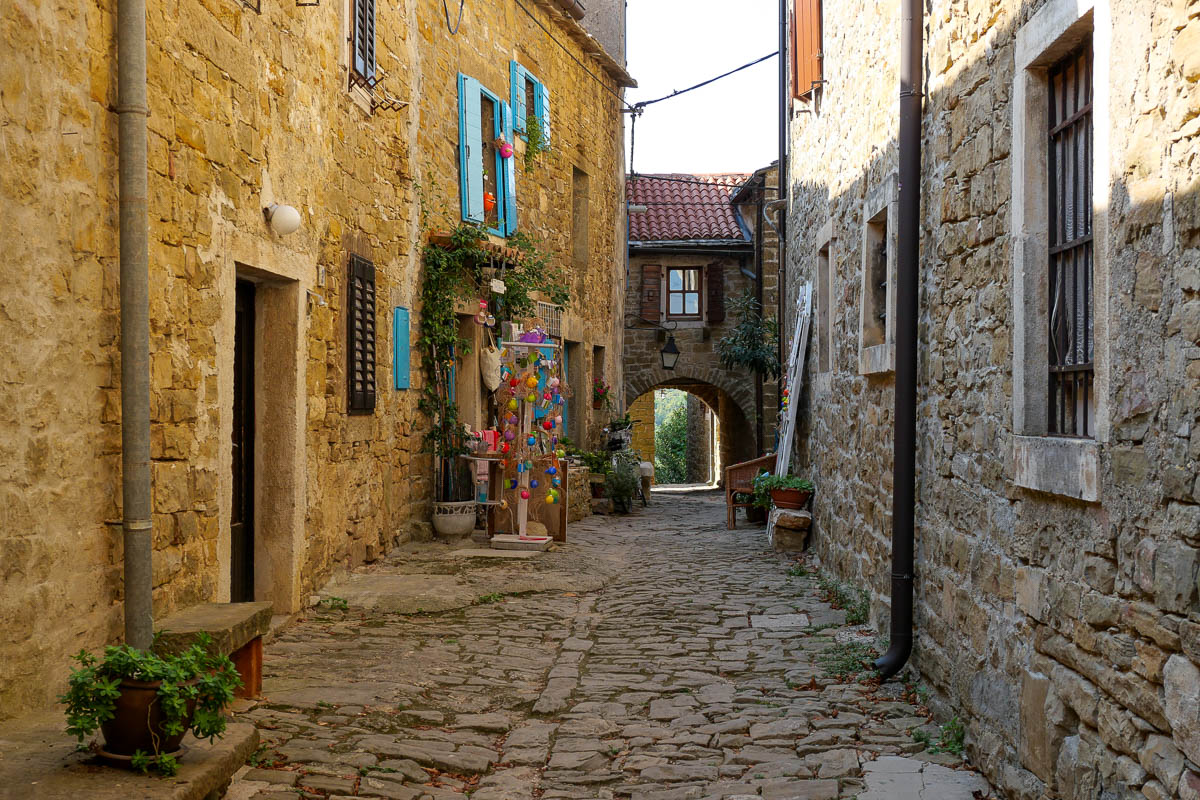
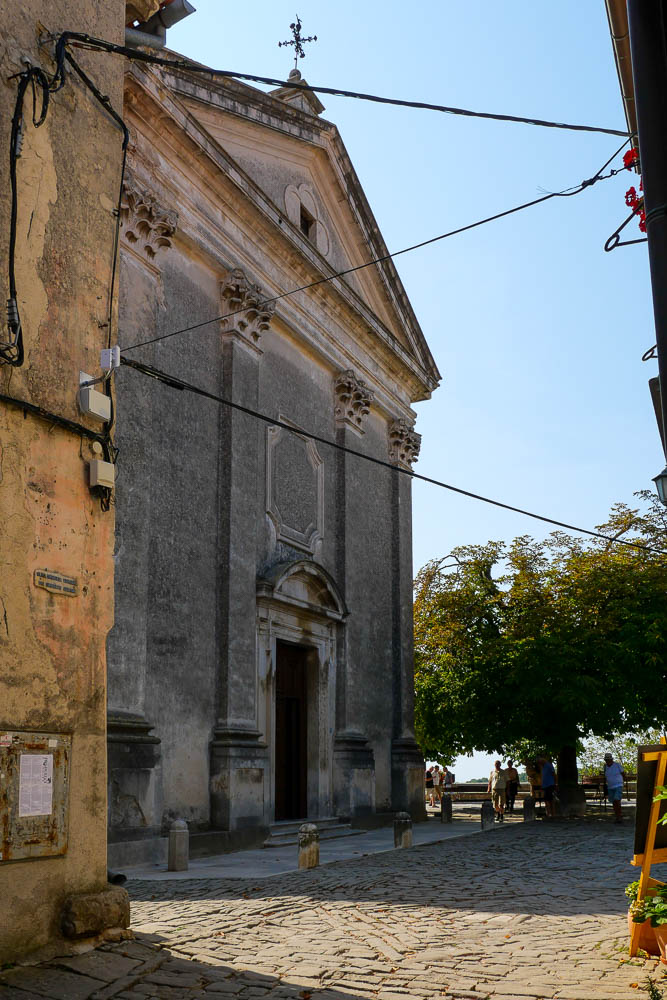
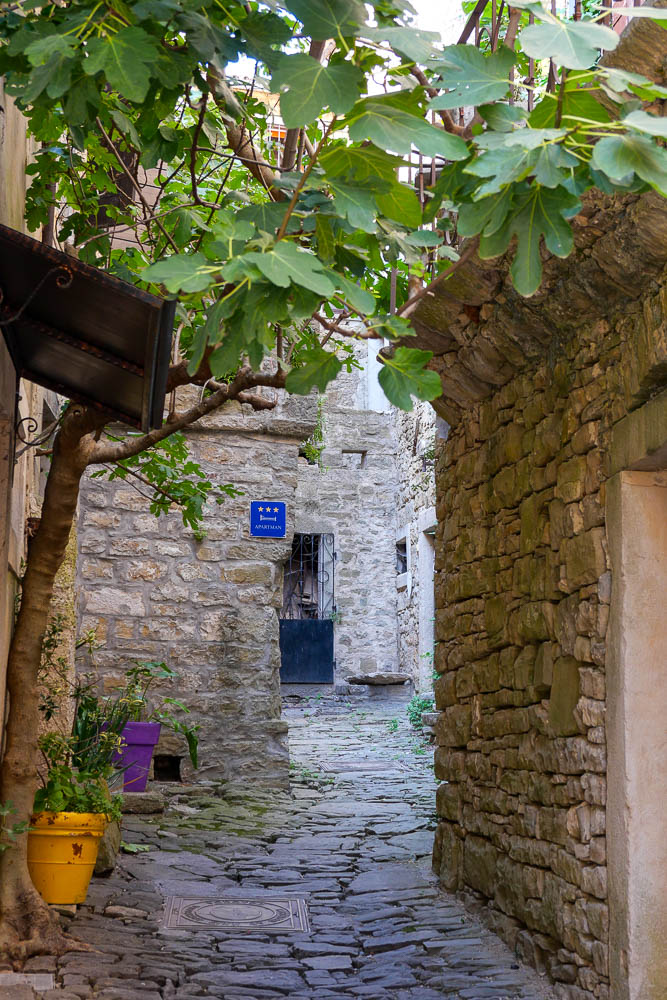
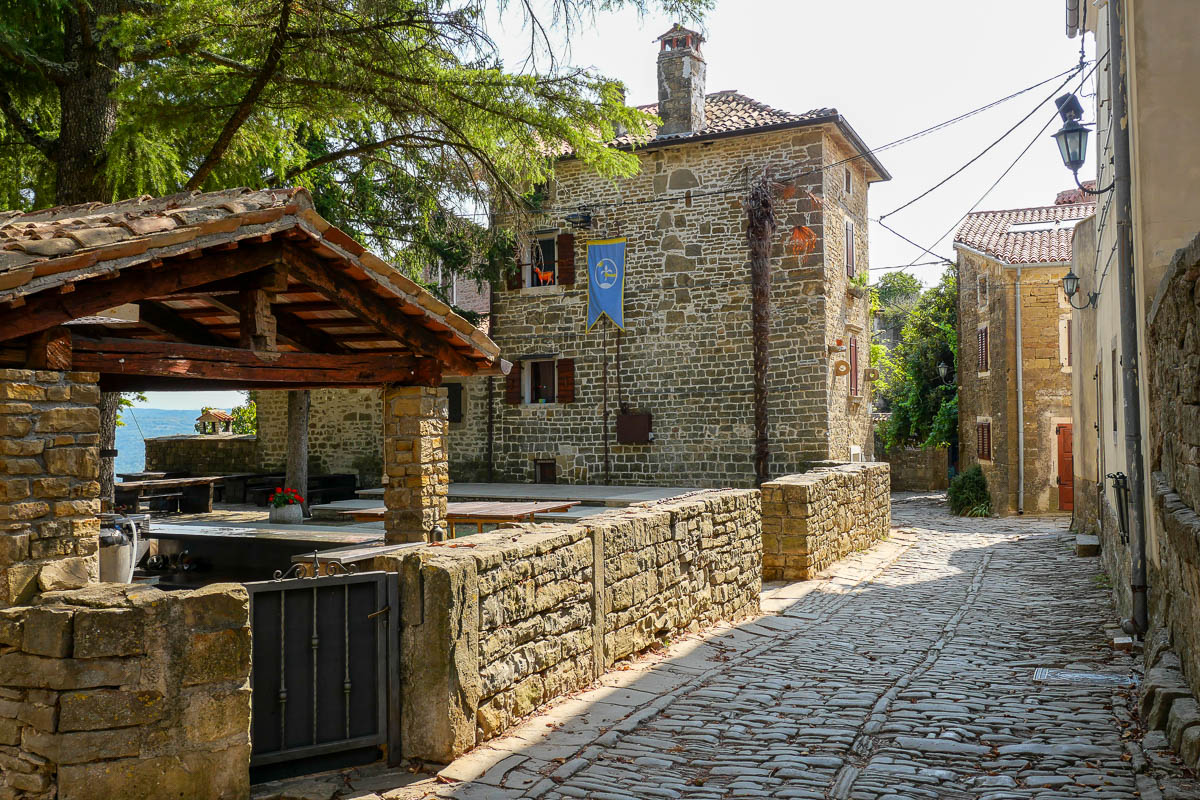
Grožnjan is a lovely fortified medieval village that would be a shame to miss if you’re visiting Istria. It is nicknamed the “Town of Artists” since several creators settled in abandoned houses in the village during the 1960s. Grožnjan was under Venetian rule from 1358 to 1797 before passing into the hands of France, the Austrian Empire, Italy, and then Yugoslavia.
Among the main monuments in Grožnjan are the castle (1102), two churches (1554 and 1748), a 14th-century loggia, a Baroque palace (1681), and a forge (1406). And of course, the usual souvenir shops selling olive oil, truffles, and other Istrian specialties.

Pazin
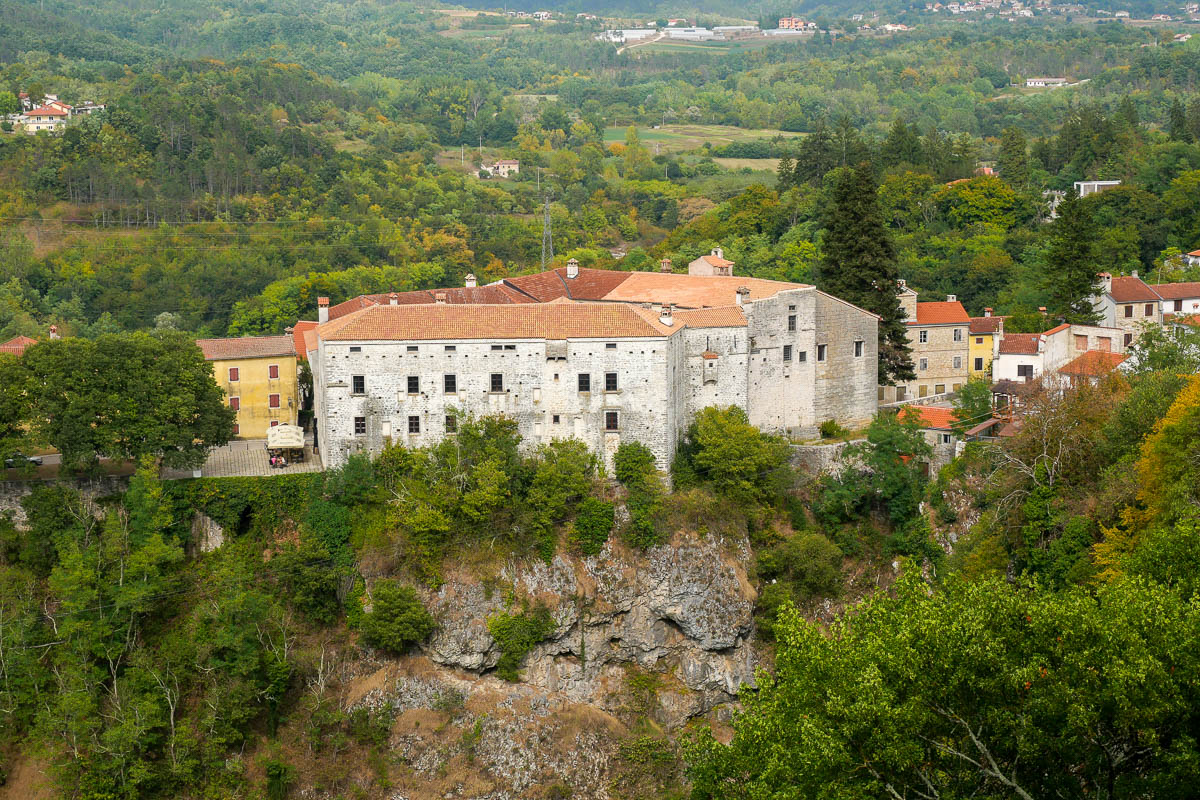
The town of Pazin is famous for its cave (287 meters long) created by the underground Pazinčica river, which inspired Jules Verne for his novels. But the main attraction is its castle built on a steep rock, first mentioned in 983. Its current appearance dates back to the 14th century. It is the largest and best-preserved fortress in Istria.
A trail leads down to the bottom of the cave; the starting point is located after the large bridge when coming from the castle. The more adventurous can try the 280-meter zip line crossing the chasm at a height of 100 meters.

Svetvinčenat
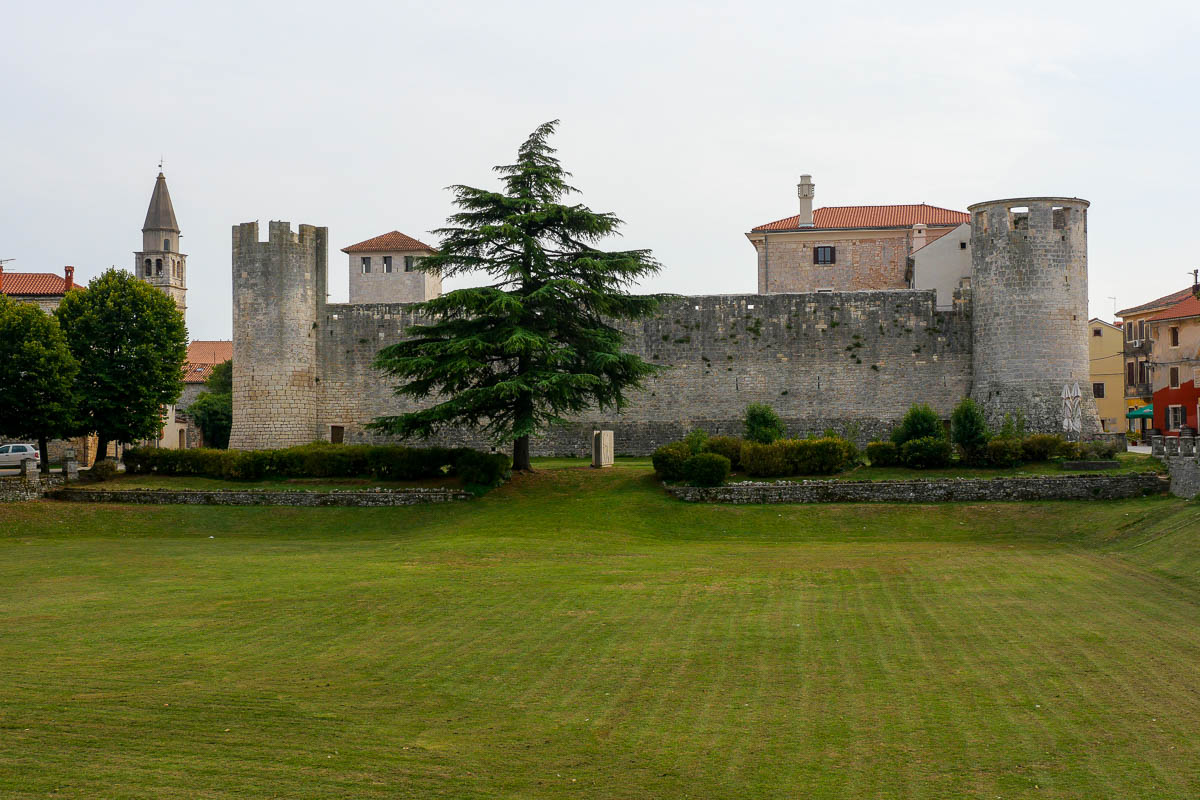
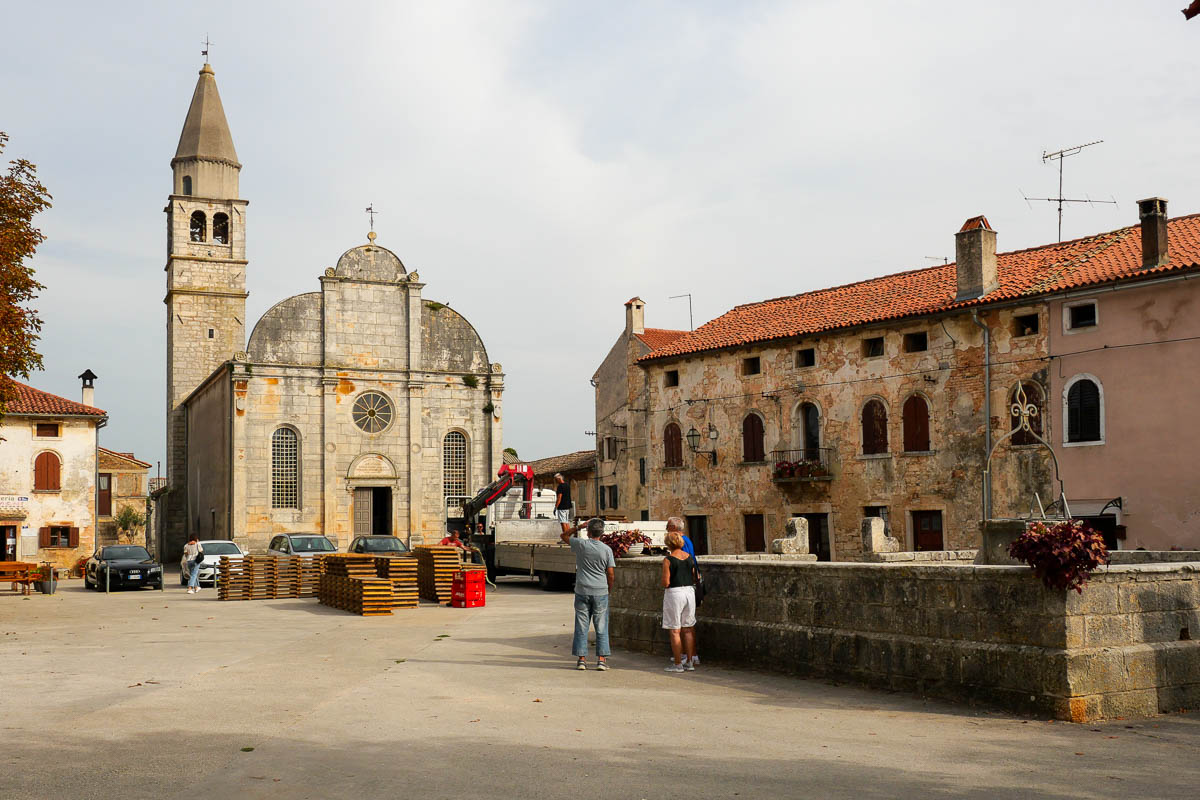
We discovered Svetvinčenat by chance during our Istria road trip. Its beautiful castle, visible from the road between Rovinj and Rabac, made us stop here. This 13th-century Morosini-Grimani castle can be visited (10am–6pm, closed on Mondays), although there doesn’t seem to be much to see apart from the towers and walls. You can also take part in an escape game, which sounds more fun.
Stop in Svetvinčenat if you’re passing nearby, but it’s not really worth a detour if you’re looking for the best things to do in Istria.
Labin
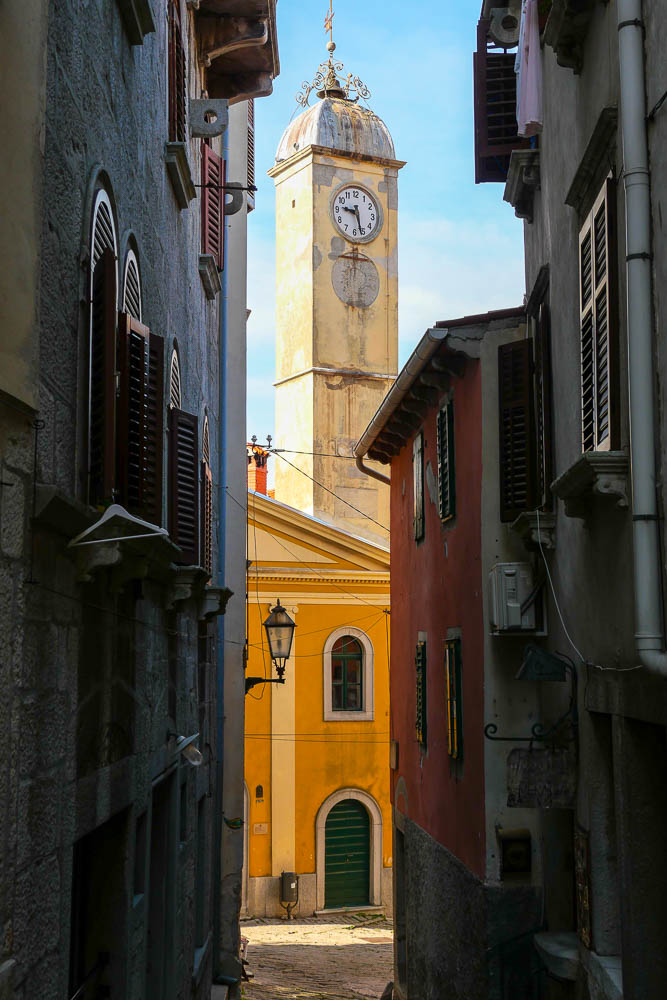
Located on a hill above the seaside resort of Rabac, Labin is a medieval town surrounded by walls that is pleasant to visit in Istria before heading to the beaches. It is one of the most beautiful hilltop villages in Croatia.
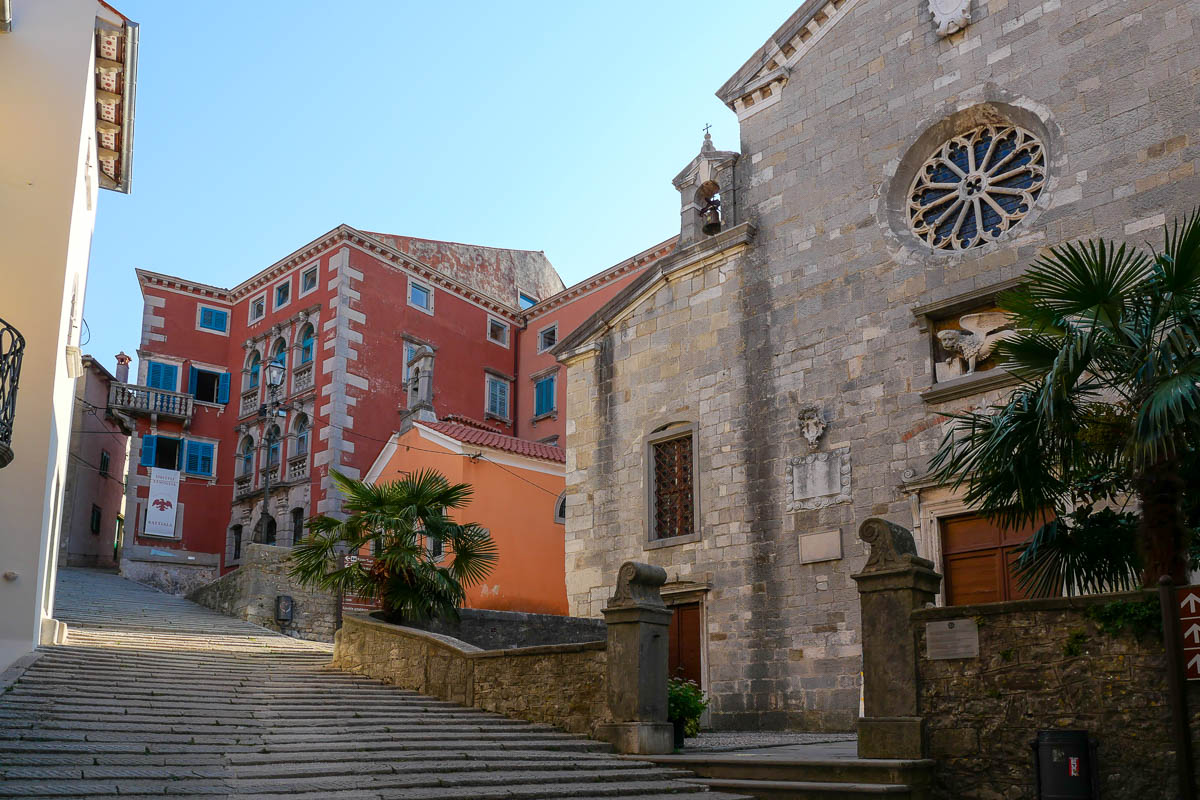
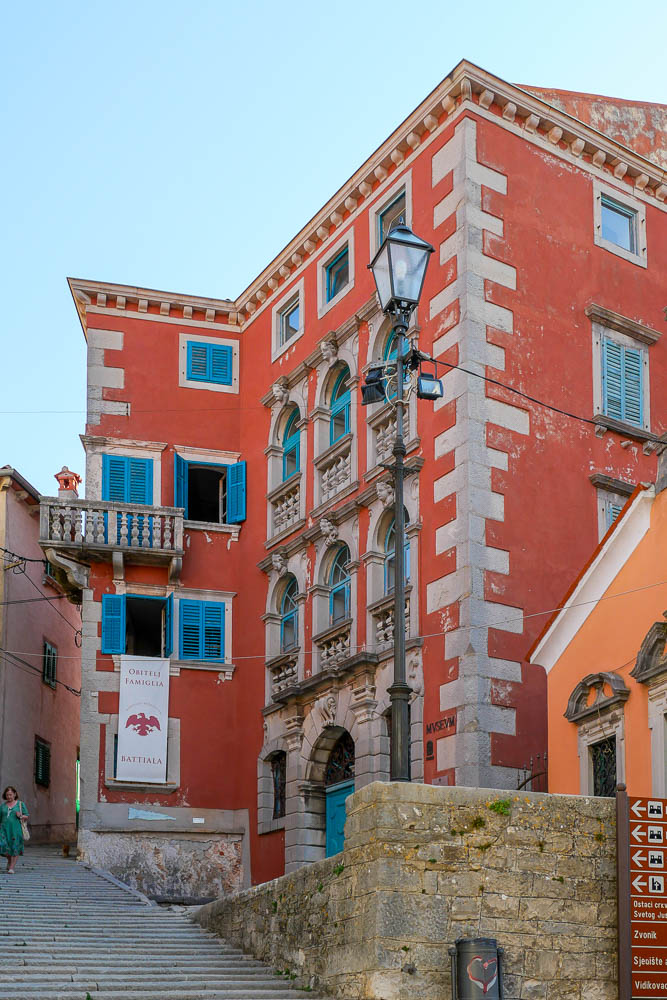
The entrance to Labin’s old town is through a 15th-century gate topped by the Venetian lion, just behind the walls where a cannon stands. The cobbled path leads to a square surrounded by a church and a beautiful Baroque palace from 1630 with a red facade. Don’t hesitate to wander through the streets; the different sites are marked by signs. During our trip in September, the village was almost deserted, which made it very pleasant to soak up the atmosphere (tourists were all on Rabac’s beaches).

Rabac
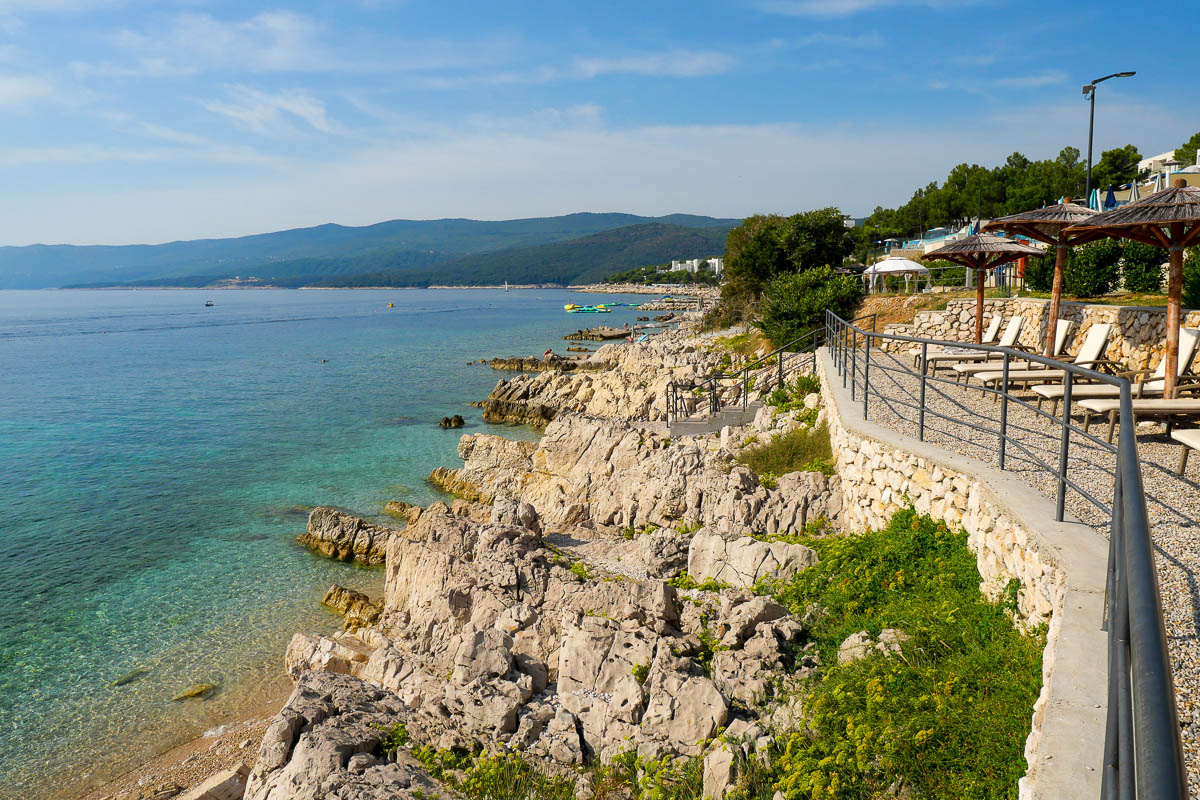
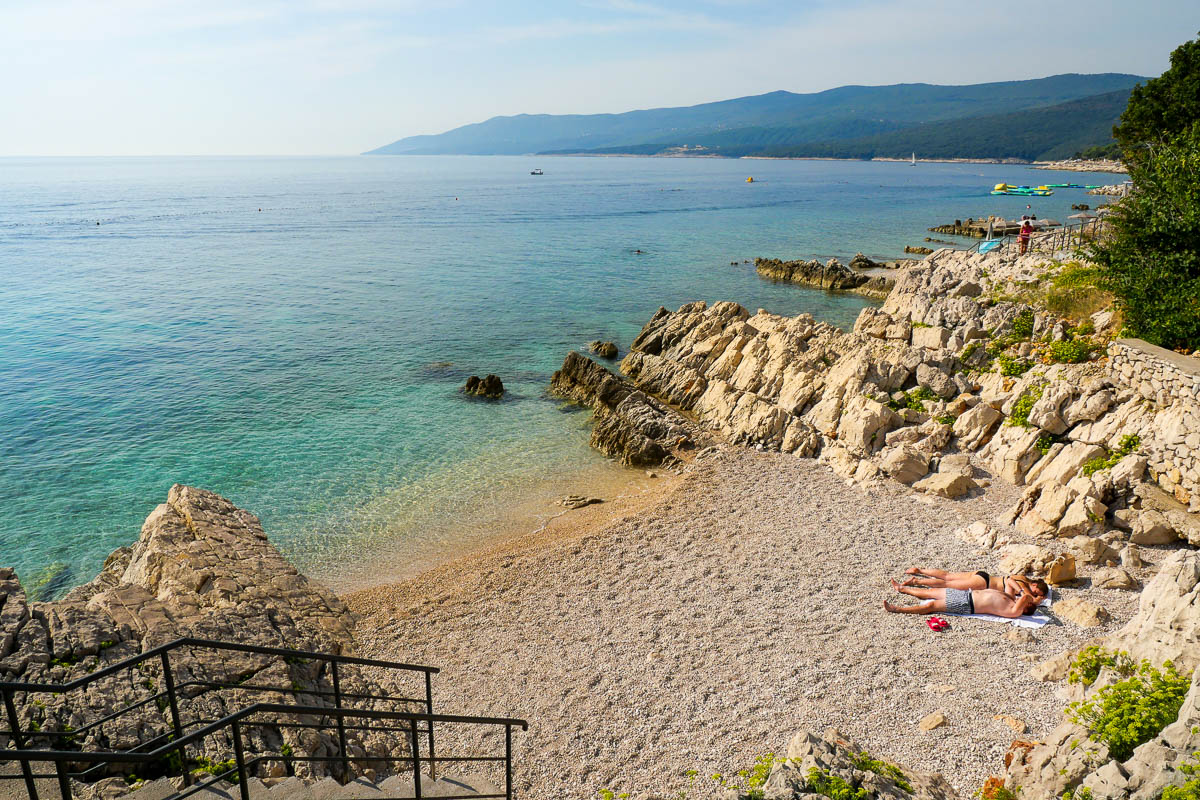
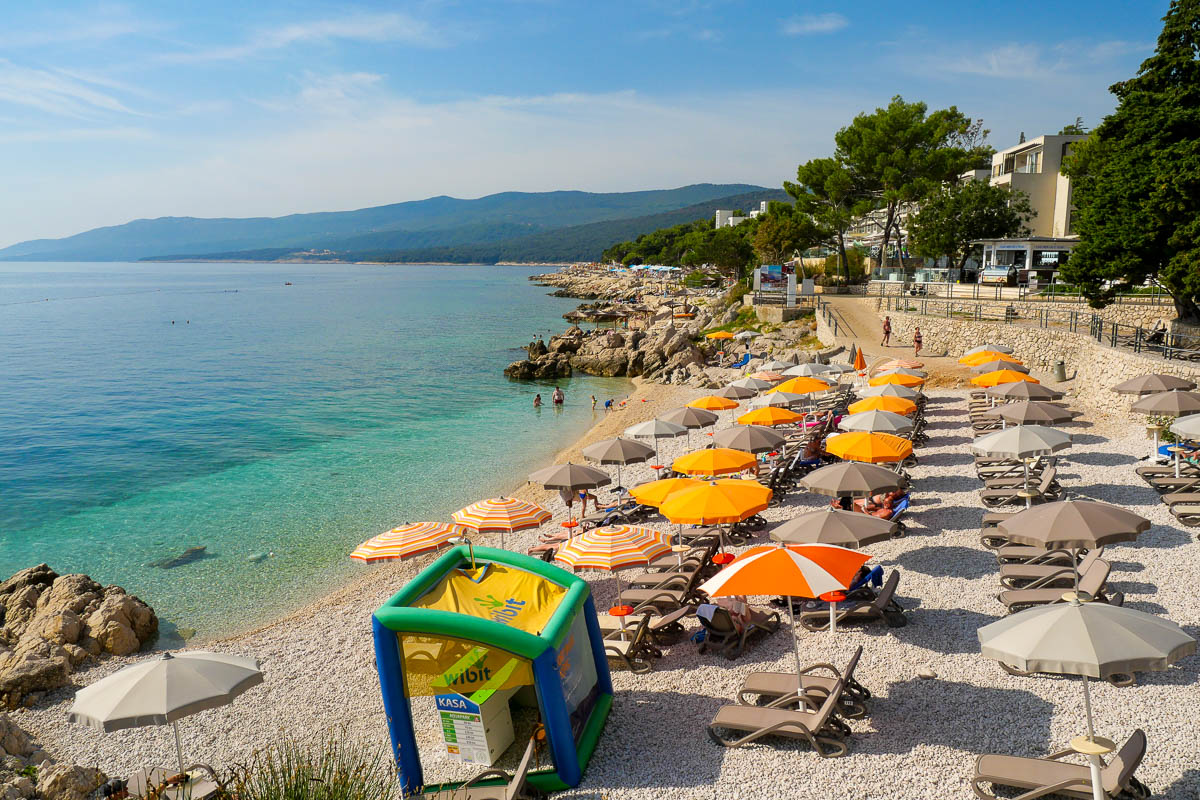
This is one of the most popular seaside resorts in Istria thanks to its beaches with crystal-clear water along the Kvarner Bay. It’s in Rabac that we found the most beautiful beaches in Istria and where we ended up laying down our towels to enjoy a few hours by the sea. We chose Girandella Beach (plaža Girandella), which is part of the Bellevue Resort complex. Once parked inside the complex, you just need to follow the coastline dotted with many small coves and pebble beaches to choose your favorite spot. Public or private, with or without sunbeds—there’s something for everyone.
Rabac is a destination very popular with Germans—we saw many during our trip to Istria. On the cultural side, the Rabac Festival dedicated to electronic music takes place in the town every year.

Other places to see
We only had 4 days to visit Istria during our trip to Croatia, so we had to make choices about what to see. I excluded the following places because they seemed less interesting:
Pula: the city is mainly known for its Roman ruins and amphitheater. For Dianela (who is Italian if you don’t follow the blog), once you’ve seen Rome, other Roman cities are less interesting.
Cape Kamenjak: this national park is located at the southern tip of the peninsula just past Pula. If you visit Pula, it’s worth making a detour. I read quite mixed reviews about this park, and since it’s quite far from the rest, we didn’t go. Feel free to share your opinion in the comments if you’ve been.
Brijuni Islands: the organized excursion aspect with a small train tour on an island featuring a safari park (which I boycott) didn’t really appeal to me (and the price is quite high). The scenery remains similar to what you can see along the Istrian coast.
Try truffles
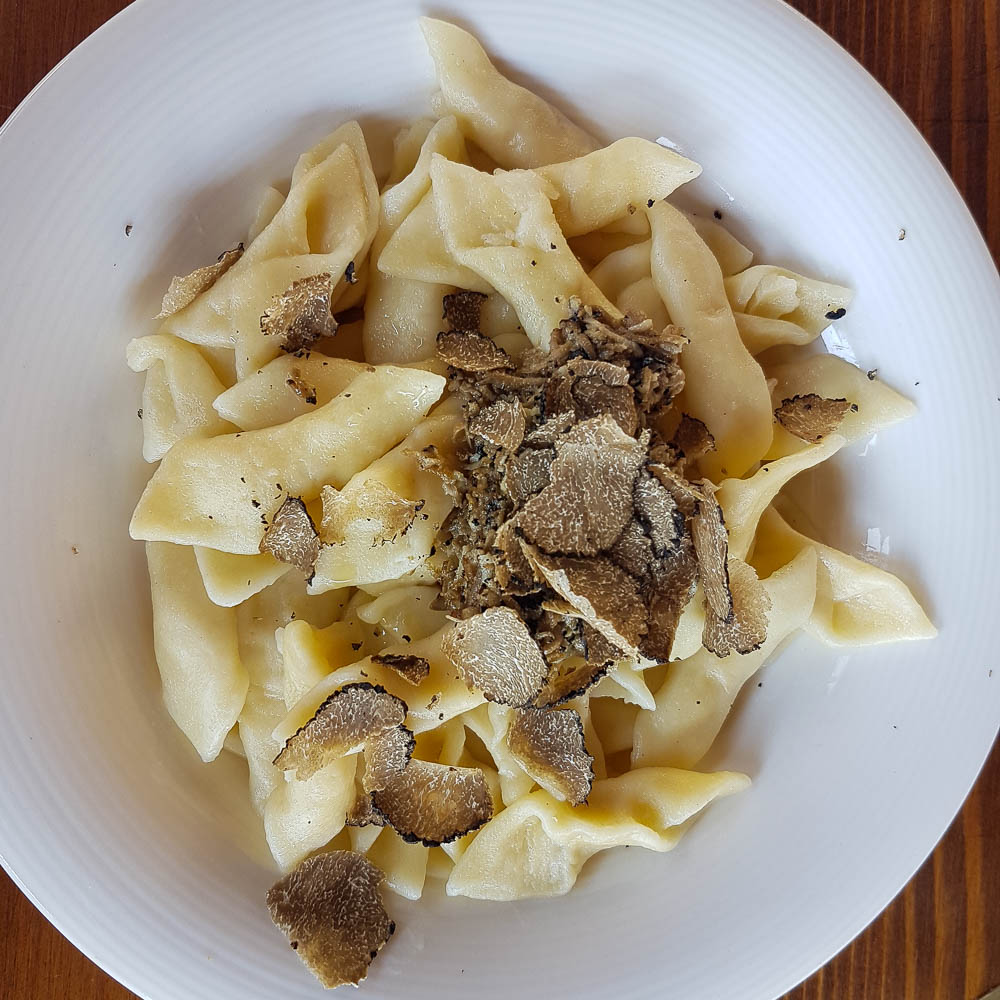
Don’t leave Istria without trying truffles, the region’s specialty. There are black truffles available year-round and white truffles available only from mid-September. However, it depends on the year, as during our road trip in September there were not yet any white truffles.
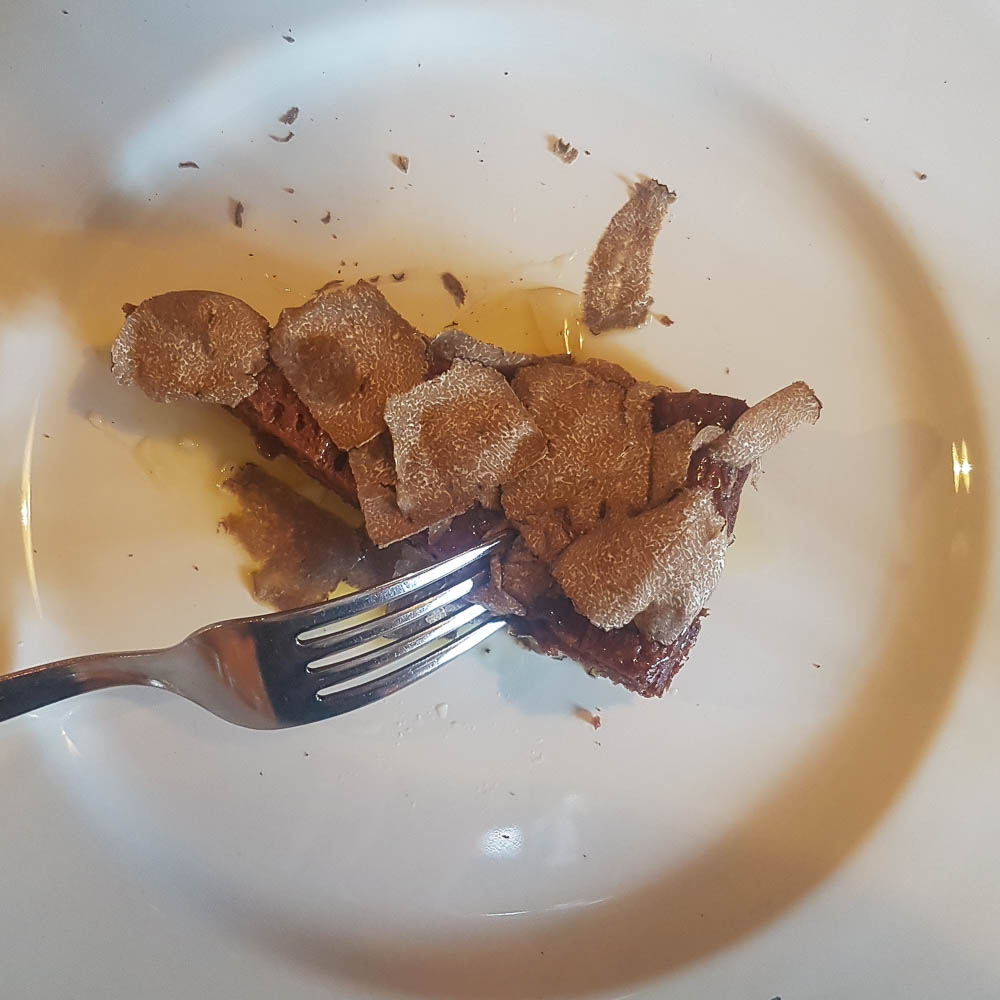
In the countryside around the hilltop villages of Hum and Motovun, you’ll find small restaurants serving excellent cuisine and truffle-based dishes. I thought I wouldn’t like this mushroom with its distinctive flavor, but I can tell you I loved it every time. We even had a chocolate cake sprinkled with slices of truffle and olive oil.
Here are two places we tried and recommend: Humska konoba in the village of Hum and Konoba Vela Vrata in the village of Beram (5 km from Pazin). For dishes with real shaved truffles, the prices are very reasonable. In Beram, we paid €35 for two plates of fuži pasta with truffles, a glass of local wine, and a chocolate truffle cake.
What to do around Istria?
Opatija
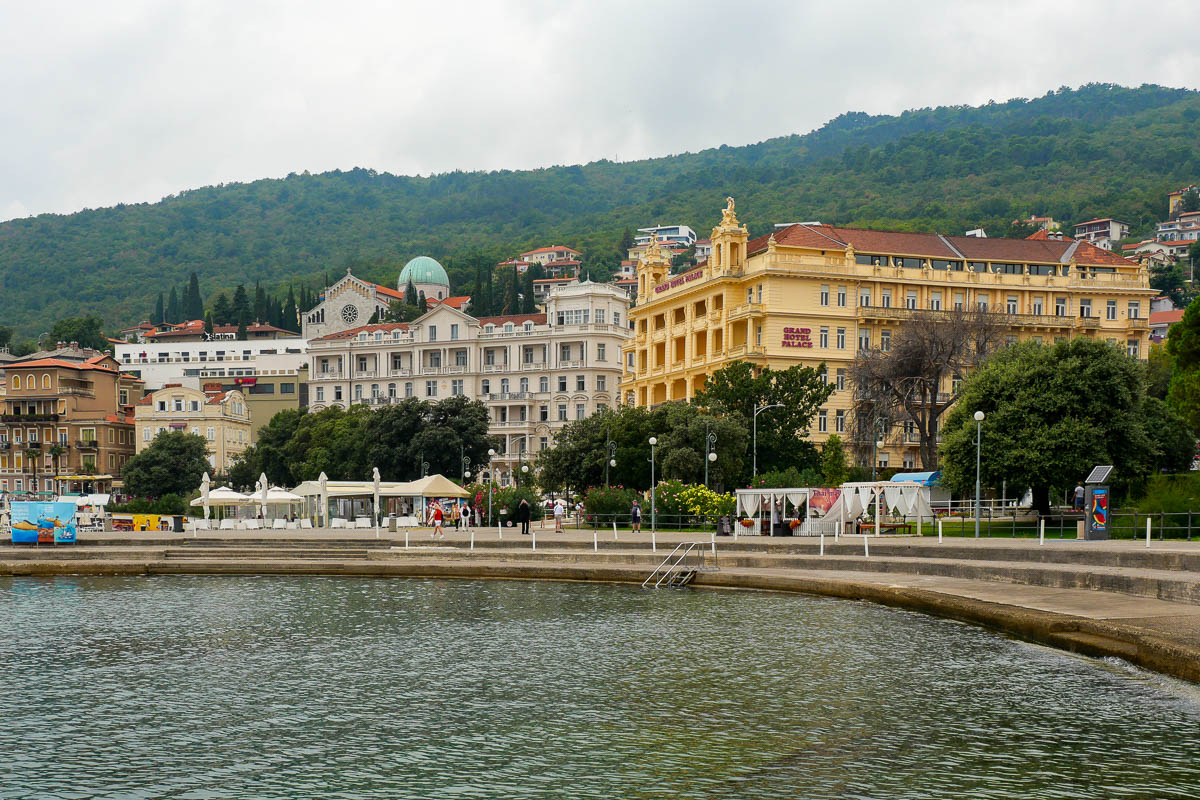
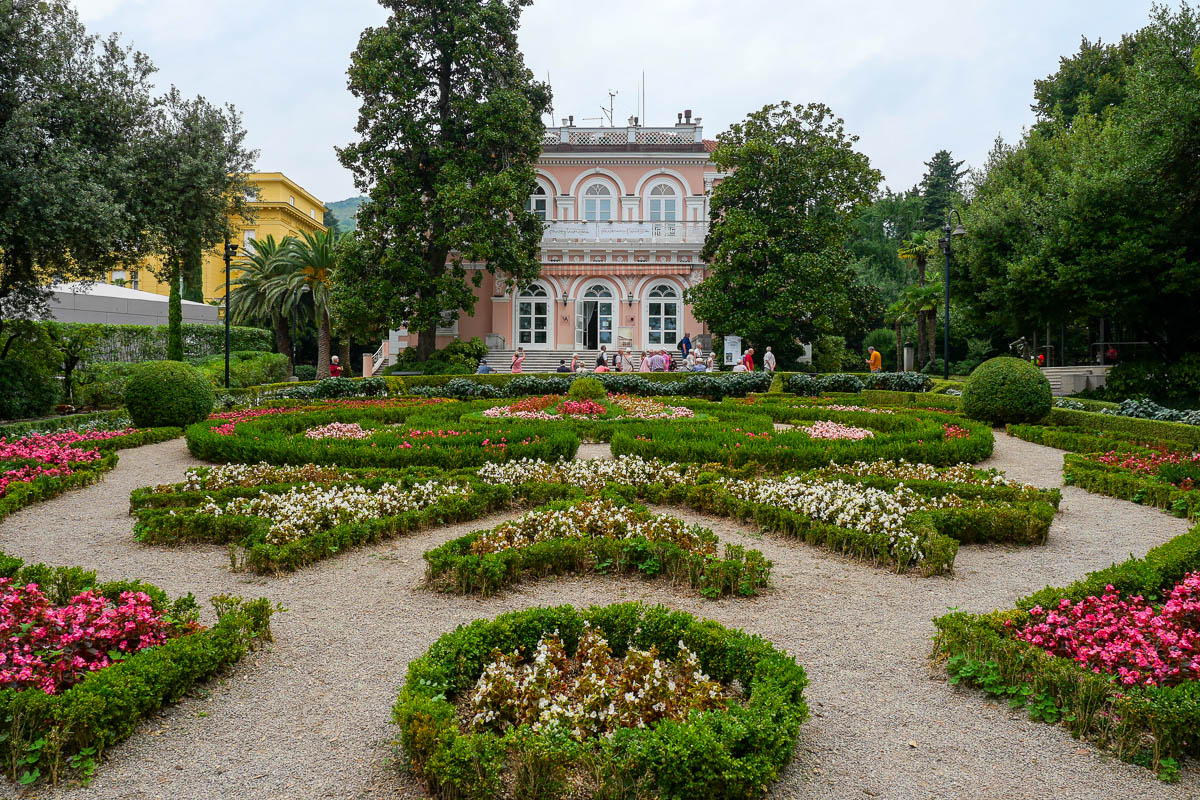
A famous seaside resort during the Austro-Hungarian Empire (19th century), Opatija has a beautiful 12 km seaside promenade (Lungomare) facing the Kvarner Gulf. This route runs past elegant villas and stunning gardens, although unfortunately the weather wasn’t great during our visit.
Opatija is geographically in Istria but administratively attached to the Rijeka region. If you’re doing a road trip in Croatia, you’ll inevitably pass through Opatija when heading to Istria from the south, making it a good opportunity for a short stop.
Rijeka
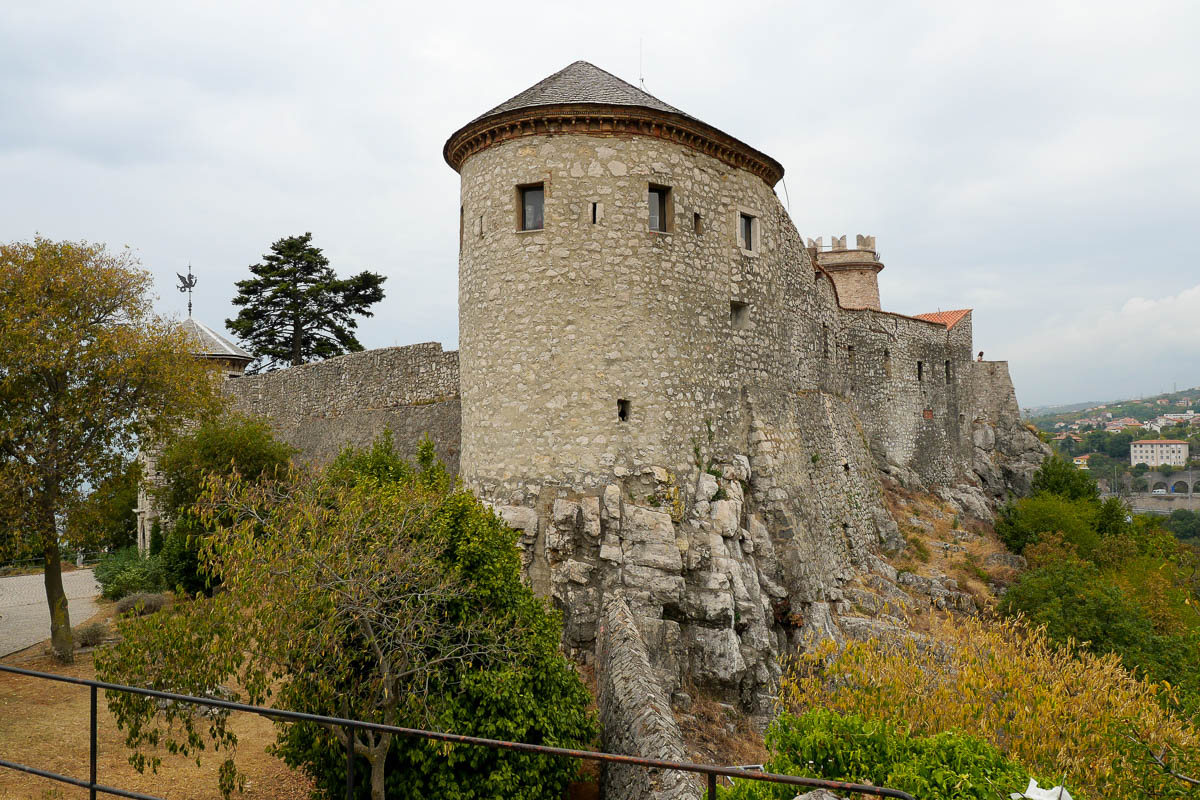
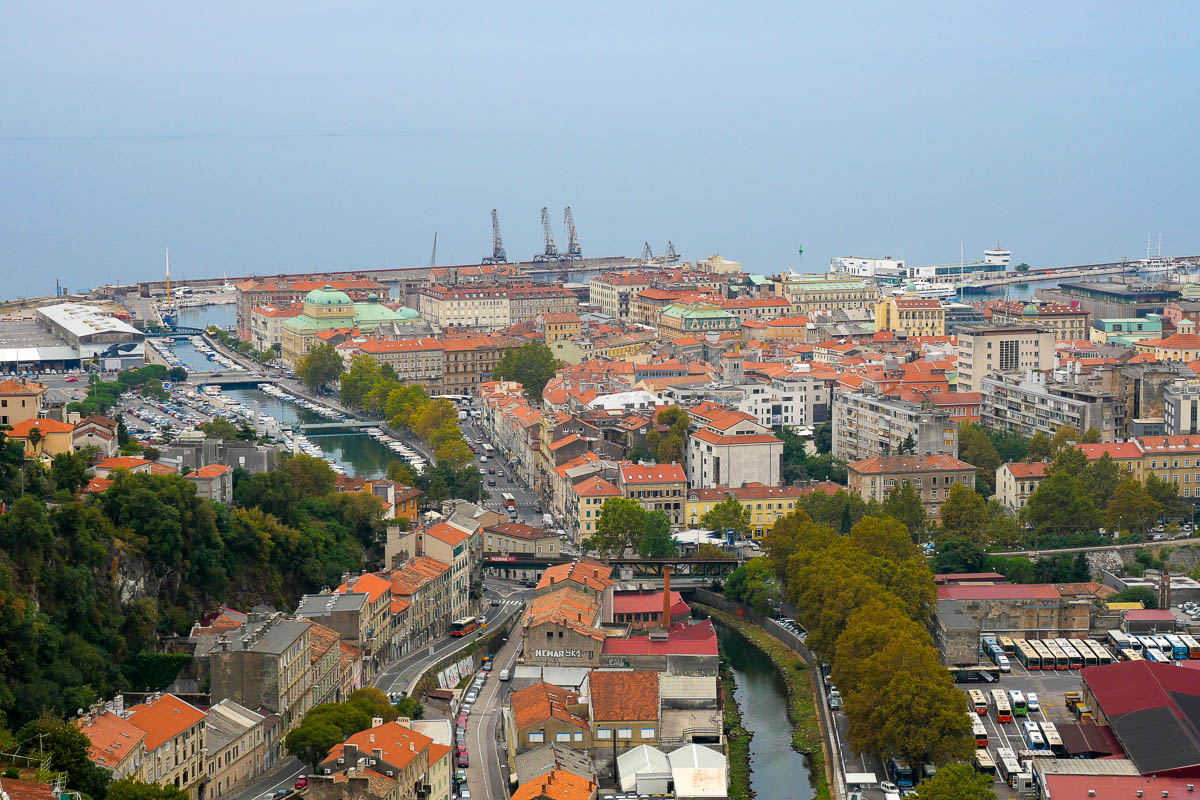
The third-largest city in the country, Rijeka (Fiume in Italian) is not really one of the places to visit in Istria. To be honest, if it hadn’t been on our Croatia itinerary, we would never have stopped there. At first glance, the city doesn’t seem very welcoming, with cranes in the port and high-rise buildings on the outskirts. However, Rijeka does have a center with Austro-Hungarian-style buildings like in Opatija. We made a quick visit to Trsat Castle (13th century) and the Sanctuary of Our Lady of Trsat before heading to the island of Rab. Both sites are located on a hill at 138 meters above sea level, offering views over the entire city.
As you’ve probably understood, if you’re short on time, you can skip Rijeka—you won’t miss much. In any case, you’ll find castles in many Croatian towns. If you continue south, you’ll see some in Šibenik and Trogir.
Where to stay in Istria?
The best option for visiting Istria is to choose accommodation roughly in the center of the peninsula. This way, you’ll never be more than an hour’s drive from the main sights. Accommodation prices vary depending on the season, with a peak in July and August, so be sure to book in advance.
When planning our Istria road trip, I initially looked at places to stay around Pazin, which is geographically central. In hindsight, I’m glad we didn’t choose that area, as it’s a bit too isolated and quiet (not to say “dead”). In the end, we rented an apartment in a small village just before reaching Rovinj.
Rovinj is located in the middle of the peninsula but has the major advantage of being by the sea. It is also the most beautiful town in Istria and the most pleasant for strolling or having a drink. For me, the area around Rovinj is the best option for where to stay in Istria on a road trip. On a practical note, there’s a large Kaufland supermarket just before entering Rovinj—perfect for groceries.
Poreč is also strategically located and is a good alternative, especially if you enjoy a lively, party atmosphere. There are also more beach options. For our part, we found the town less charming than Rovinj, which remains our favorite in Croatia.
Another option, if you want a stay focused on beaches and relaxation, is to stay in the seaside resort of Rabac on the southeast coast of Istria. And for camping enthusiasts, you’ll find many campsites along the entire west coast of the peninsula.
Accommodation around Rovinj
- 36 € : Apartments Rajci, one of the cheapest places to stay in Rovinj, this 23 m² studio with terrace and equipped kitchen is perfect for small budgets. On-site parking.
- 59 € : Villa Allegria, this guesthouse located in a quiet area 2 km from the harbor offers lovely rooms with a small terrace and garden view. Large pool and free parking.
- 67 € : Apartments Branko, located 1 km from the historic center (10 minutes on foot), this nice 30 m² apartment is fully equipped for cooking. Beautiful terrace with garden view and free private parking.
- 87 € : LUCIJA 2, this 48 m² apartment for 4 people is perfect for families or couples of friends and features a terrace with a view. Good location for exploring Istria on a road trip. Free private parking.
Accommodation around Poreč
- 40 € : Apartman Alberta, located less than 2 km from the old town, this nice 35 m² ground-floor apartment with a terrace offers excellent value for money. Ideal for a road trip in Istria.
- 70 € : Apartments Niko, this beautiful ground-floor apartment features a large terrace and a garden with a jacuzzi. Fully furnished with a large bathroom, it is located 2.4 km from the beach.
- 78 € : Apartment Alex, located 100 meters from the beach and easily accessible on foot, this 25 m² apartment has everything needed for a long stay in Poreč (terrace, barbecue, washing machine, equipped kitchen, etc.).
Accommodation in Rabac
- 33 € : Apartment Chantal, this 27 m² studio with terrace and sea view is one of the cheapest places to stay in Rabac. Nice garden with pool, sun loungers, and barbecue.
- 56 € : Apartment Lidija, well located 100 m from the public beach and close to town and shops, this fully equipped 38 m² apartment has 2 beds (price valid for up to 4 people).
- 80 € : Apartment Boris, this 45 m² apartment with 2 bedrooms can accommodate 4 people and is fully equipped. It features a terrace with a stunning sea view. A great place to stay when visiting Istria.
Planning a road trip in Istria
Best time to visit Istria
The region can be visited year-round thanks to its pleasant climate, but the best time to visit Istria is between May and September. During this period, you’ll enjoy sunshine and warm water for swimming. If you don’t like crowds, avoid July and August as much as possible, when thousands of tourists flock in, especially to the beaches. Towns like Rovinj and Poreč, as well as seaside resorts like Rabac, become crowded. Even small villages like Hum can feel cramped.
We did our Istria road trip in September, which is a great time to travel in Croatia. There are far fewer tourists, and the water is still warm enough for swimming. It’s also the start of white truffle season.
How many days in Istria?
Ideally, plan at least 3 days for the best things to do in Istria. Here are some itinerary ideas depending on how much time you have:
What to do in one day in Istria: if you only have one day while heading south toward Dalmatia, spend the morning in Rovinj and the afternoon in the villages of Hum and Motovun.
Visiting Istria in 2 days: spend the first day on the coast exploring Rovinj and Poreč. On day 2, head inland to visit Motovun, Hum, Grožnjan, and Pazin. If you prefer the beach, choose Labin followed by the beaches of Rabac.
What to see in 3 days in Istria: this is the ideal duration to explore a large part of Istria without rushing. Follow the previous itinerary and add either the hilltop villages or Labin and Rabac on day 3.
What to do in Istria in 4 days: with 4 days, you can add the city of Pula for its Roman ruins and amphitheater, a trip to the Brijuni Islands, and Cape Kamenjak for its wild beaches and coves.
Flights to Croatia and car rental
To visit Istria and arrive directly by plane, there is only one airport: Pula, on the southwest coast. It’s also possible to fly into Split and then drive up the coast. It depends on what you plan to visit in the country. I recommend comparing prices on this site to find the best airfare deals.
To explore Istria’s hilltop villages, a car is essential. It gives you full independence and allows you to stay as long as you want in each place. If you’re not traveling with your own vehicle, I recommend using the AutoEurope comparison site to rent a car in Croatia, where prices can be up to 25% cheaper.
Driving to Istria via Slovenia
This is the option we chose since, living in Nice, Istria is only 750 km away. If you’re driving from the north of Europe, you’ll have to cross Slovenia. There are no tolls on Slovenian highways; instead, you need to buy a vignette (available at gas stations near the Italian border) valid for 1 week (€15), 1 month (€30), or 1 year (€110). Be aware that there are checks and fines are very high. You can also leave the highway after Trieste and take secondary roads to the Croatian border—it’s a bit longer but free.
Tip: if you need to refuel during your trip, do it in Slovenia as fuel prices are much lower than in Italy (about €0.40 difference per liter).
If you have any questions about things to do in Istria, Croatia, feel free to use the blog comments. And if you enjoyed the article, click the heart or share it on social media 🙂