

It’s our favorite town in the Algarve, which is why I recommend visiting Lagos during your stay in southern Portugal. The old town with its cobbled streets, charming squares lined with historic houses, the wide range of activities, and its stunning beaches make it an excellent base for exploring the Algarve. Far from the soulless seaside resorts dedicated to mass tourism, Lagos has managed to preserve the authenticity of a maritime port, with its monuments and museums to visit.
So what to do in Lagos, Portugal ? What are the must-see sights ? What activities should you try ? Where to stay in Lagos ? I share all my tips in this blog article.
Best things to do in Lagos, Portugal
To discover the buildings, monuments, and museums of Lagos, everything is located in the old town. It’s therefore easy to explore Lagos on foot and see its must-visit sights. The large Meia Praia beach is also accessible from the historic center, at its closest point near the Rio Bensafrim. The places to see in this Lagos guide are presented in the order in which we visited them, not by preference.
Walk through the old town
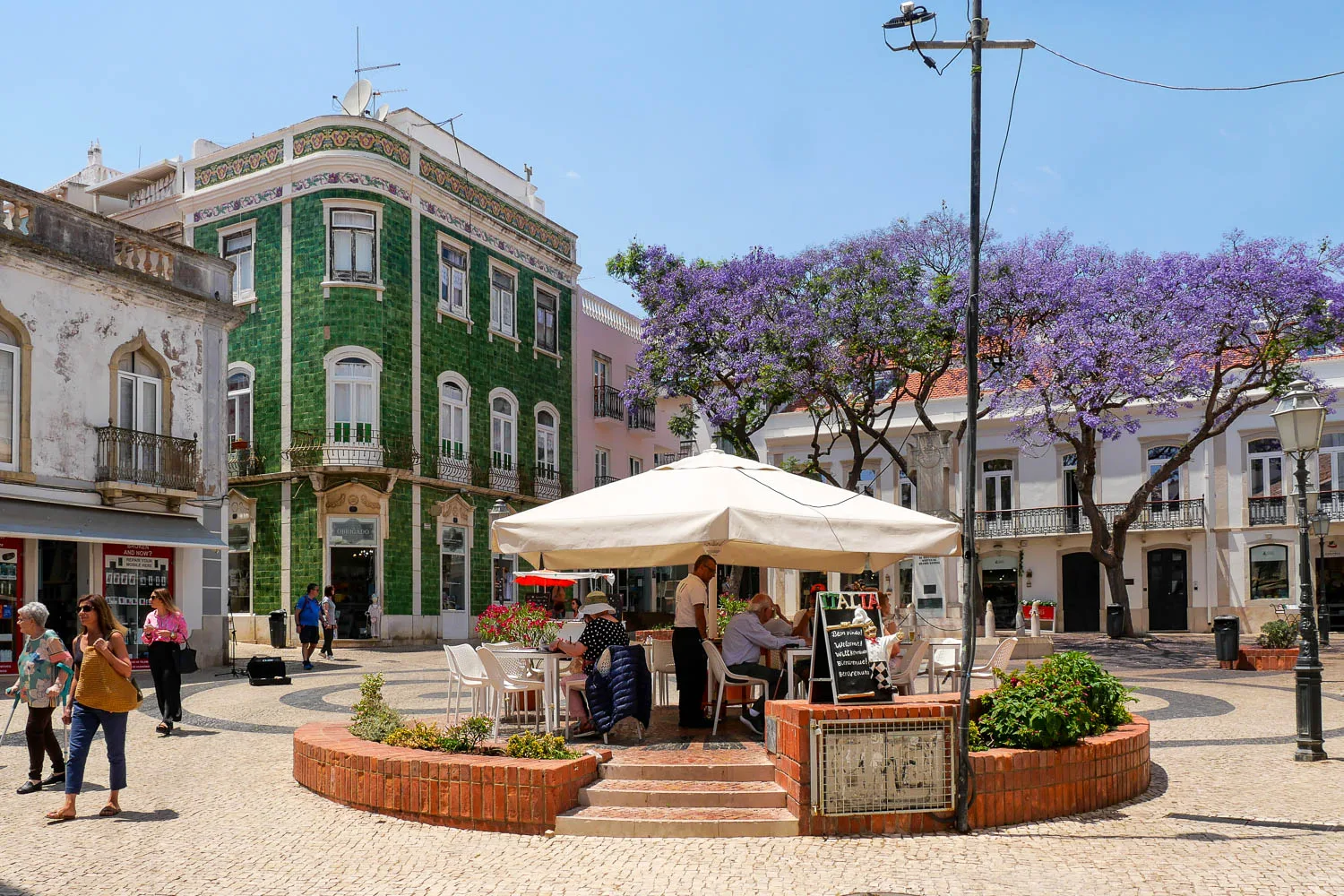
One of the best ways to visit Lagos is to wander through the streets of the old town, surrounded by 16th-century walls. Don’t hesitate to get lost in the less touristy streets to discover charming whitewashed and colorful houses. As Lagos is a very touristy town, you’ll find plenty of shops, restaurants, and bars in the historic center. But that doesn’t take away from the city’s charm. In short, we loved strolling through the cobbled streets of Lagos. And if, like us, you visit in spring (our stay in Lagos was in May), you’ll enjoy the beautiful purple bloom of the jacaranda trees.
Be sure to stop by the lovely Praça Luís de Camões square (coordinates), where you’ll find one of the most famous buildings in Lagos with its green-tiled façade. In the center, beneath the jacarandas, stands a monument dedicated to Portuguese soldiers who died during World War I.


Igreja de Santo Antonio
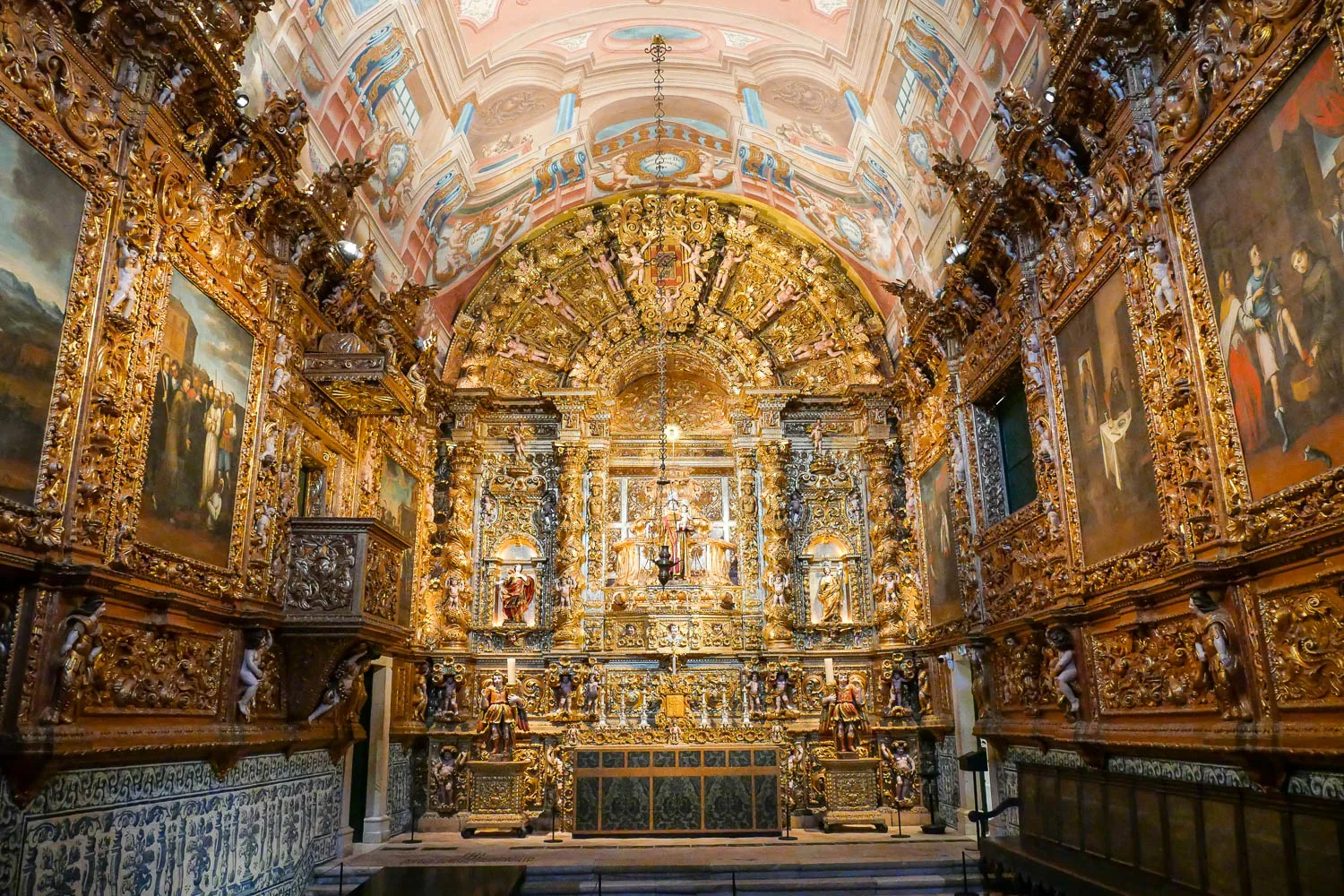
The Church of Santo Antonio, built in 1707 and destroyed by the 1755 earthquake, was rebuilt in 1769. It is one of the must-see monuments in Lagos, especially for its gilded carved woodwork. The church has been converted into a museum, so it can only be visited as part of the museum tour. You must enter through the door of the Dr. José Formosinho Municipal Museum located just to the right; the church entrance is always closed (we thought we could visit just the church, but that’s not possible, you have to pay for the museum entry).
While the exterior of the baroque façade of the Church of Santo Antonio is quite simple, the richly decorated interior is definitely worth a look. The walls and altarpiece are covered in gold and azulejos. The ceiling is painted in trompe-l’œil to enhance perspective. From a historical and artistic standpoint, the church is considered one of the finest examples of Portuguese Baroque.
The municipal museum attached to the church features collections of paintings, coins, archaeology, ethnography, sculptures, and religious art from different periods. Art and history lovers will enjoy it; as for us, we moved through this section fairly quickly. We mainly wanted to see the inside of the church.
Price : €3 (€1.50 for ages 12–18 and 65+, free for under 12s). Combined ticket €5 with the Rota da Escravatura museum.
Opening hours : 10am–1pm and 2pm–6pm, Tuesday to Sunday.


Igreja Santa Maria
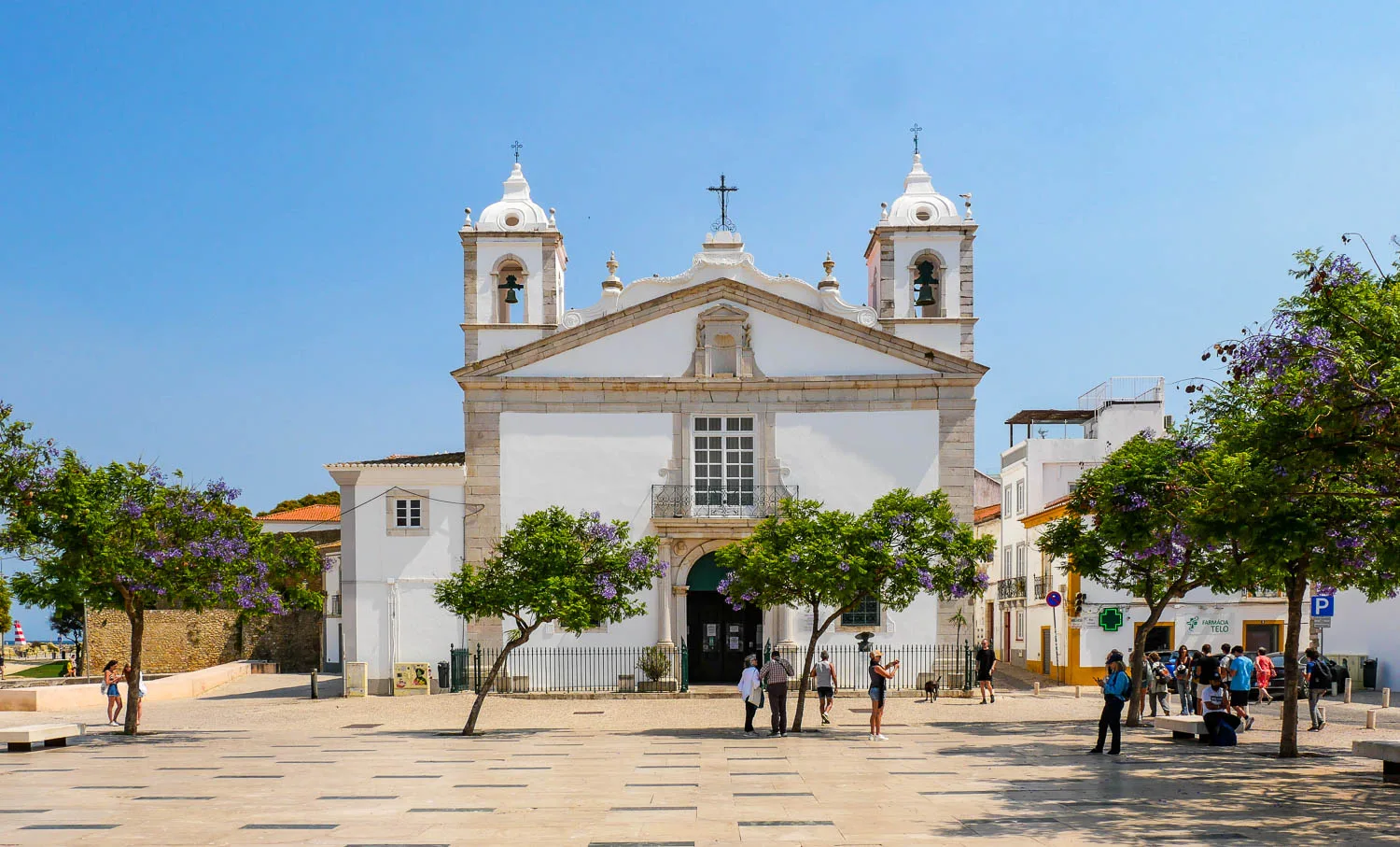
After visiting the Church of Santo Antonio, Santa Maria (15th century) may feel a bit underwhelming. But since entry is free and you’ll inevitably pass by on your way to the fort, you might as well step inside for a quick look. The rectangular single nave features three side chapels, a sacristy, and an elevated choir.
Rebuilt after the 1755 earthquake and a fire in 1888, the façade is in neoclassical style with two bell towers. In front of the church, the square is planted with jacarandas, creating beautiful colors in spring. The church is still used for mass at 6:30pm Monday to Saturday and at 12pm on Sunday.


Porta de São Gonçalo
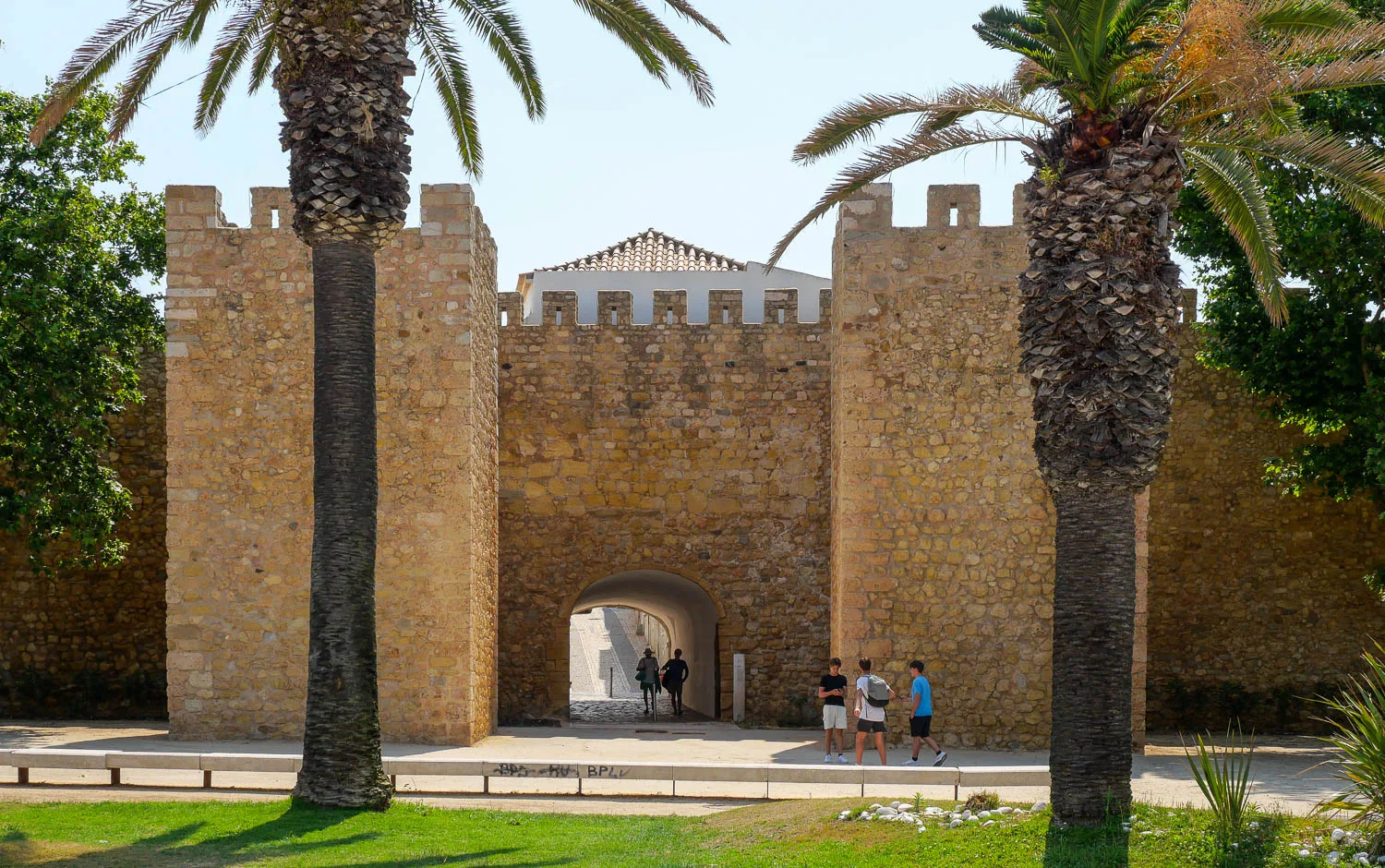
Just behind Santa Maria Church is the old city gate that once allowed entry into the fortified town surrounded by walls. The Porta de São Gonçalo dates back to the 14th century and is flanked by two square towers that protected the city from external attacks. The gate also connected the old town with the port located directly opposite (where the fort stands).
Passing through this entrance brings you to the upper part of Lagos’s old town. This area is full of typical streets (without shops or restaurants) with beautiful whitewashed or colorful houses.
Fort of Ponta da Bandeira
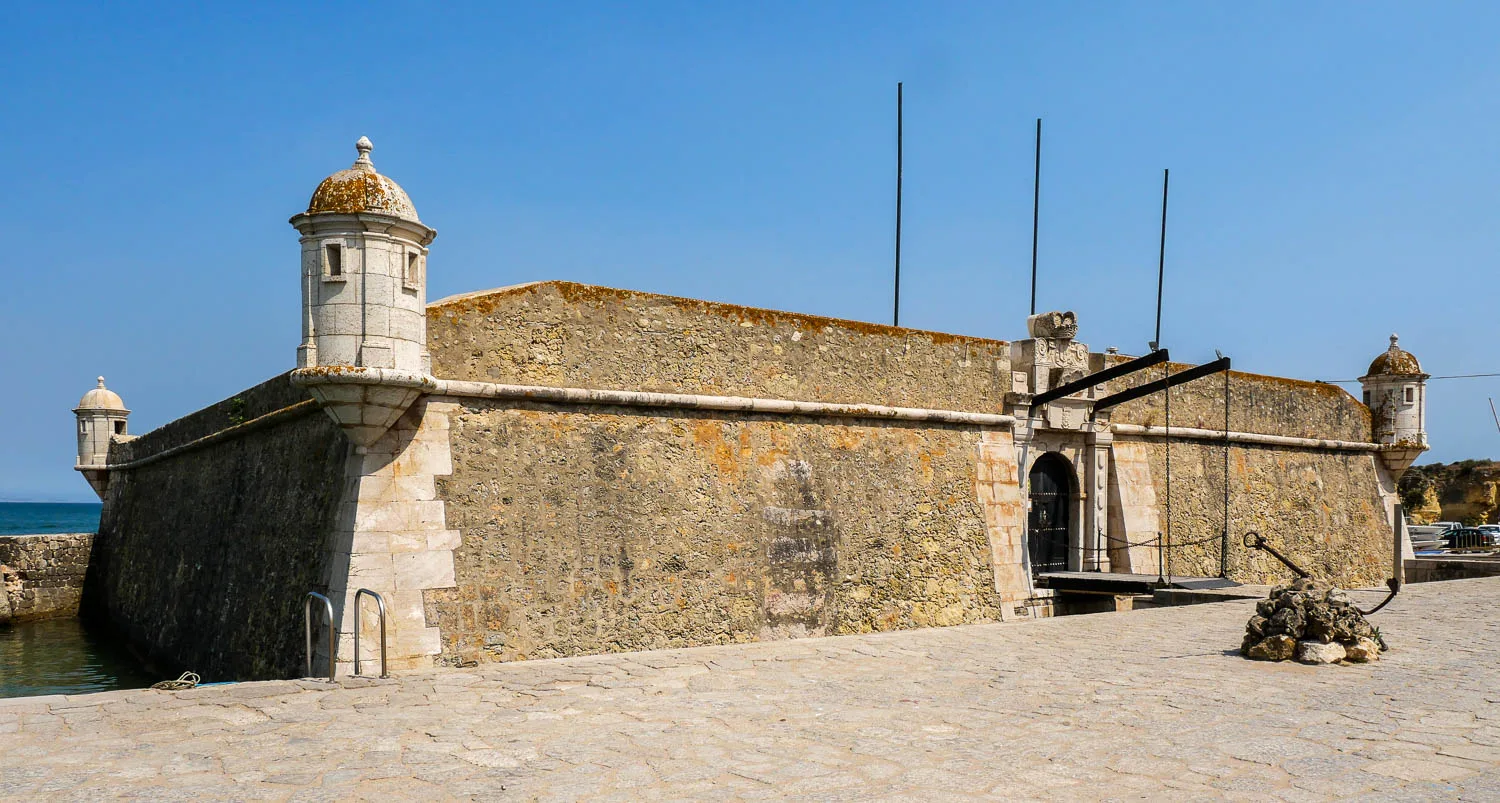
The Fort of Nossa Senhora da Penha de França, located opposite the old town gate, was built between 1680 and 1690. It was used to defend the harbor docks as well as the southeast of the city. At the time, it was one of the most advanced fortresses in the Algarve. This fine example of military architecture is built on a square plan with thick seaward-facing walls. The only entrance to the fort is via a drawbridge crossing a moat. The small cylindrical towers at each corner were added during 20th-century restoration work. Inside the fort is a chapel dedicated to Saint Barbara, decorated with azulejos.
The Fort of Ponta da Bandeira was closed during our stay in Lagos in May 2023. A notice on the door stated “closed until further notice” without specifying a reopening date. Feel free to let me know in the blog comments.
Lagos city walls
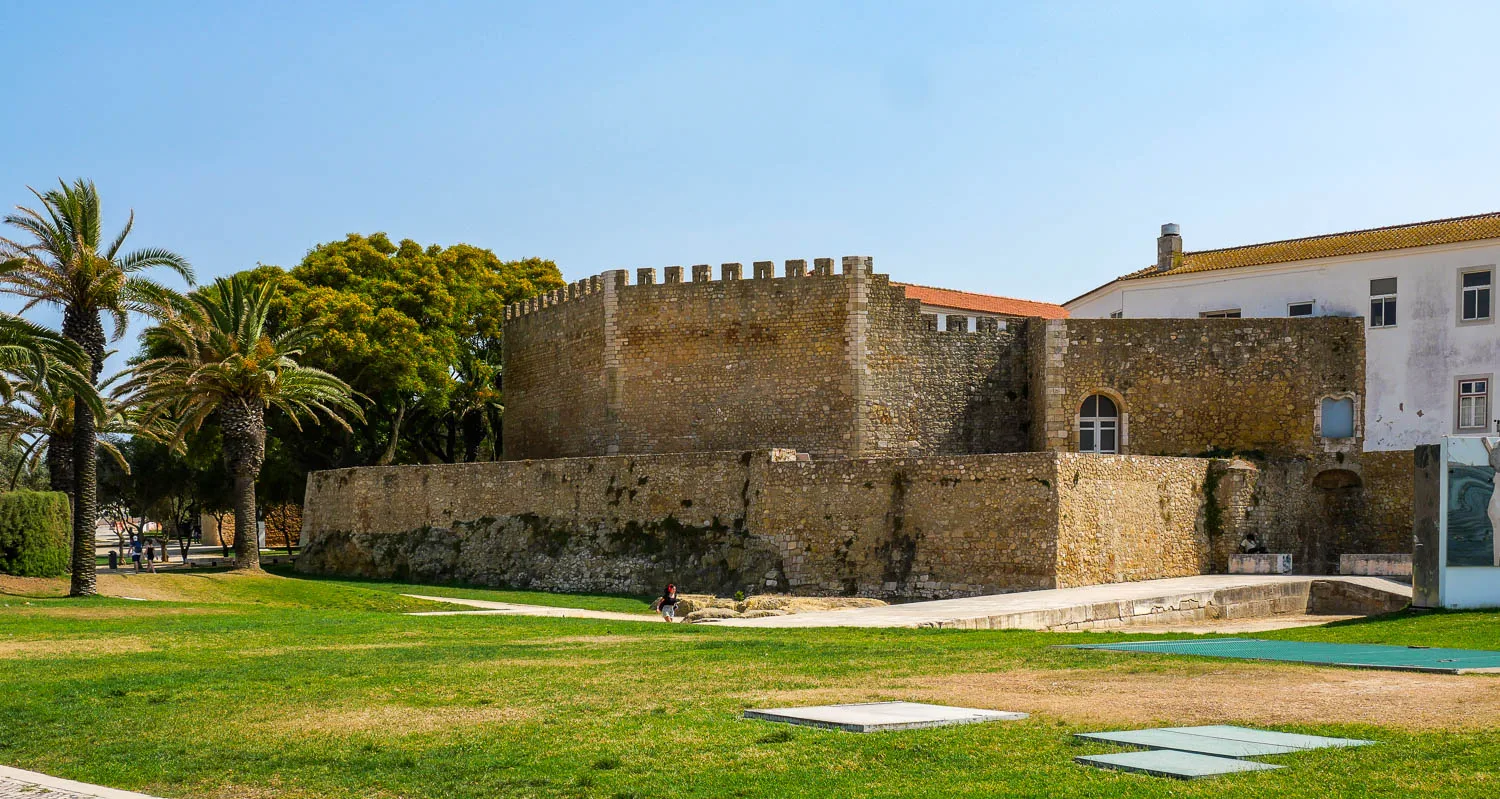
As mentioned earlier in this Lagos travel guide, the historic city gate is just one part of the fortifications. The walls of Lagos, dating back to the 16th century, extend far beyond this entrance and encircle the old town for about 1.5 km. The ramparts are punctuated by defensive bastions. Some sections no longer exist, but overall the walls are very well preserved (thanks to restoration work after the earthquake). You’ll get the best view of the walls from the outside, especially if you walk around the old town while looking for parking.
Between Santa Maria Church and the Porta de São Gonçalo is the Castelo dos Governadores (Governors’ Castle). This building, integrated into the walls and heavily modified over time, still features a Manueline-style window on its façade. Legend has it that from this window, King Sebastião I of Portugal listened to mass before departing for the Battle of Alcácer Quibir in Morocco, where he lost his life.
Rota da Escravatura museum
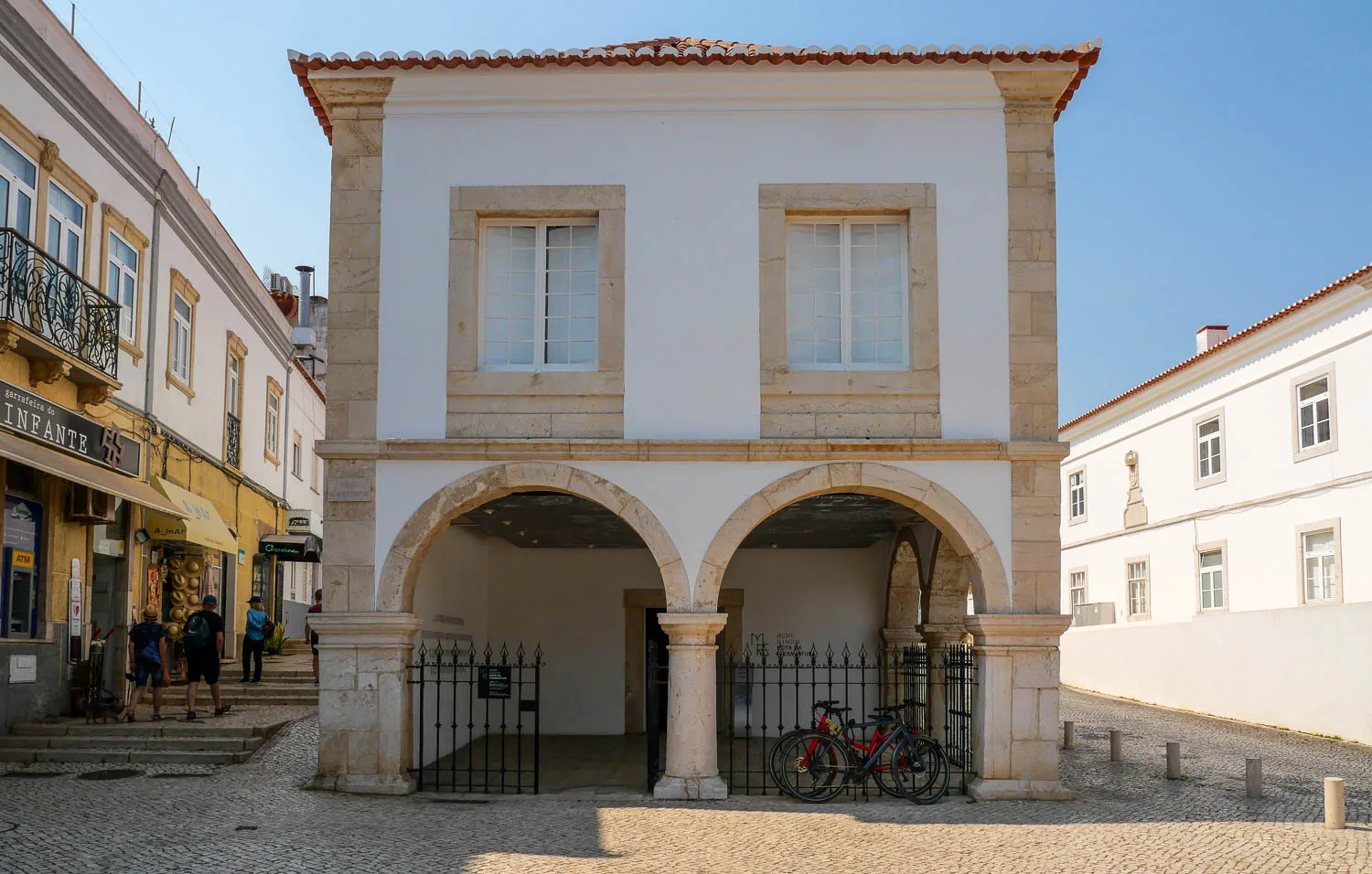
Located opposite Santa Maria Church, this museum highlights a much darker chapter in the history of Portugal and the Algarve: slavery. In 2009, during archaeological work linked to the construction of a parking lot outside the walls, a pit containing around 150 human skeletons was discovered. Analysis showed that the remains belonged to African slaves brought to Lagos as commodities. These slaves, who were sick, were killed and buried at this site.
This Slave Route museum, also known as the slave market, sheds light on the connection between Lagos and the slave trade in the 15th century.
Price : €3 (€1.50 for ages 12–18 and 65+, free for under 12s). Combined ticket €5 with the municipal museum and Igreja de Santo Antonio.
Opening hours : 10am–1pm and 2pm–6pm, Tuesday to Sunday.
Walk along the Rio Bensafrim
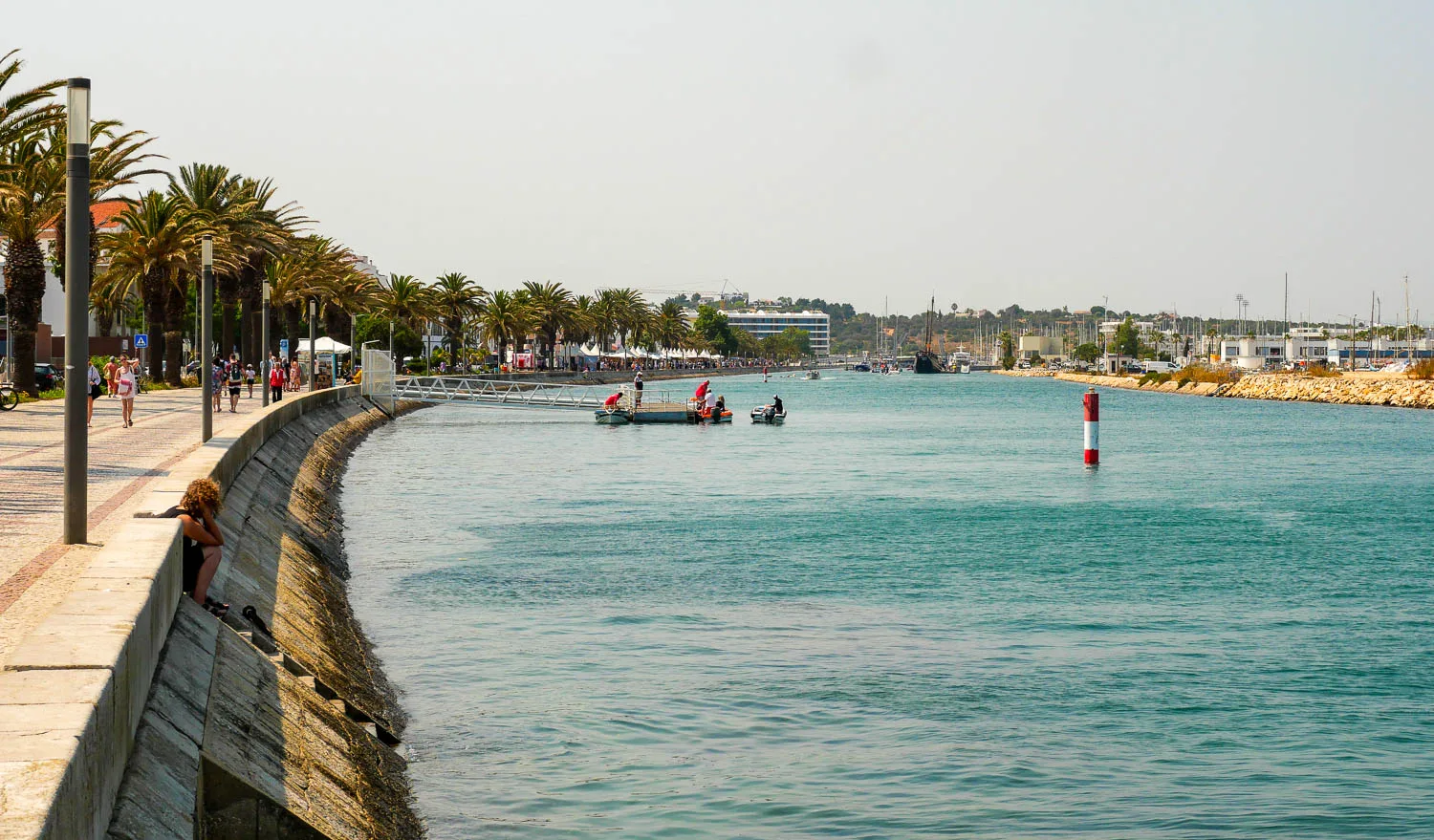
For a relaxing stroll, you can walk along the banks of the Rio Bensafrim, the river that runs through Lagos and flows into the ocean. The paved pedestrian path follows Avenida dos Descobrimentos.
This walk along the Rio Bensafrim is best done in the early evening when it’s cooler and the city is lit up. At 5pm during our visit to Lagos, it was still too hot (and the light wasn’t great). You can walk up to the pedestrian bridge that crosses the river and leads to Meia Praia beach.
Enjoy the beach
It may seem so obvious that I almost didn’t mention it in this blog article about Lagos. I’m sure you’ll find the beaches easily without my help 🙂
Lagos has a huge 4 km-long sandy beach, Meia Praia, on the left bank of the Rio Bensafrim estuary. It’s easily accessible on foot from the city center (1.5 km) via the marina footbridge. In summer, a shuttle boat provides access.
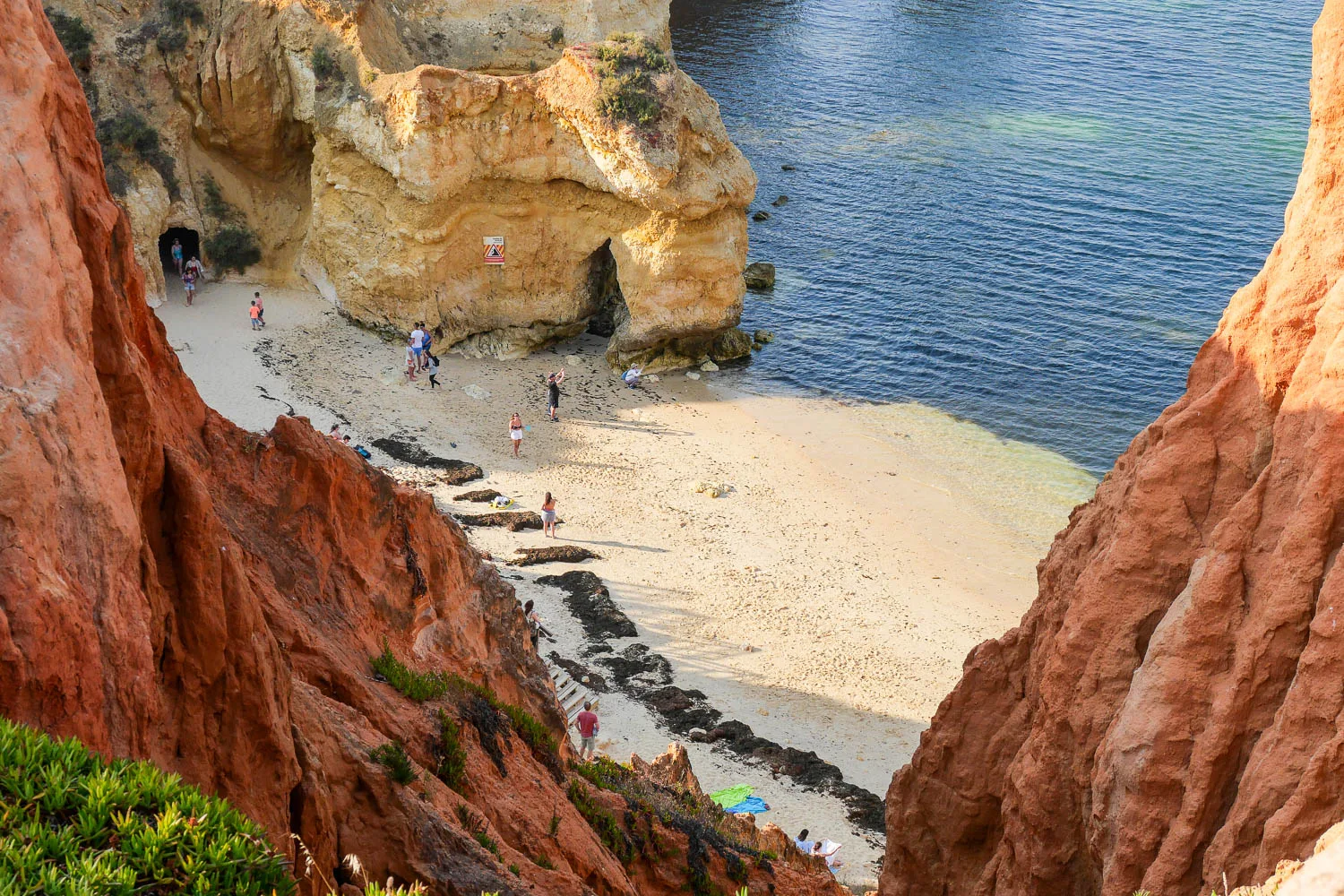
To the south of Lagos, you’ll find smaller beaches and coves. The closest, Praia dos Estudantes, is 300 meters from the fort. For the beaches of Ponta da Piedade, it’s better to have a car as it’s a bit far on foot.
Have a drink and go out
Who said the Algarve is only for retirees? If during your stay in Lagos you feel like going out for a drink or partying, I recommend heading to Rua 25 de Abril and the surrounding streets. This pedestrian street starts from the main square where Santa Maria Church is located and heads north toward Rua da Estrema. Along the way, you’ll find plenty of trendy bars as well as restaurants. It’s touristy, but far from the British pub atmosphere of Albufeira.
One of the most famous bars, “Bon Vivant” (in red in the second photo below), is a cocktail hotspot. Every evening, you can enjoy live DJ sessions, or head to the rooftop terrace if you prefer a quieter atmosphere.
Food lovers and those wanting to discover traditional Portuguese specialties can join this food tour in Lagos. The idea is to stroll through the city while learning about its history, with stops to taste food and drinks (included in the price).


Lagos boat rental
To explore the coastline around Lagos freely (on your own or with a skipper), the best option is to rent a boat through Click&Boat. This allows you to discover the most beautiful beaches and access secret caves only reachable from the sea.
Click&Boat, a leading online boat rental platform (sailboats, catamarans, or motorboats), offers the best prices and a choice from private owners and professionals. You can choose a boat with or without a license, and with or without a professional skipper, there are plenty of options for spending one or several days at sea. You’ll find many boats for rent at Lagos Marina by clicking the link below.
Another option is to rent a private boat for half a day with drinks, snacks, stand-up paddle boards (SUP), and snorkeling gear included. It’s perfect for a relaxing half-day with friends, as everything is included, you don’t need to bring anything. The price of €850 is for the entire group (maximum 8 people). Details and booking are available on this site.
What to do in Lagos : Ponta da Piedade
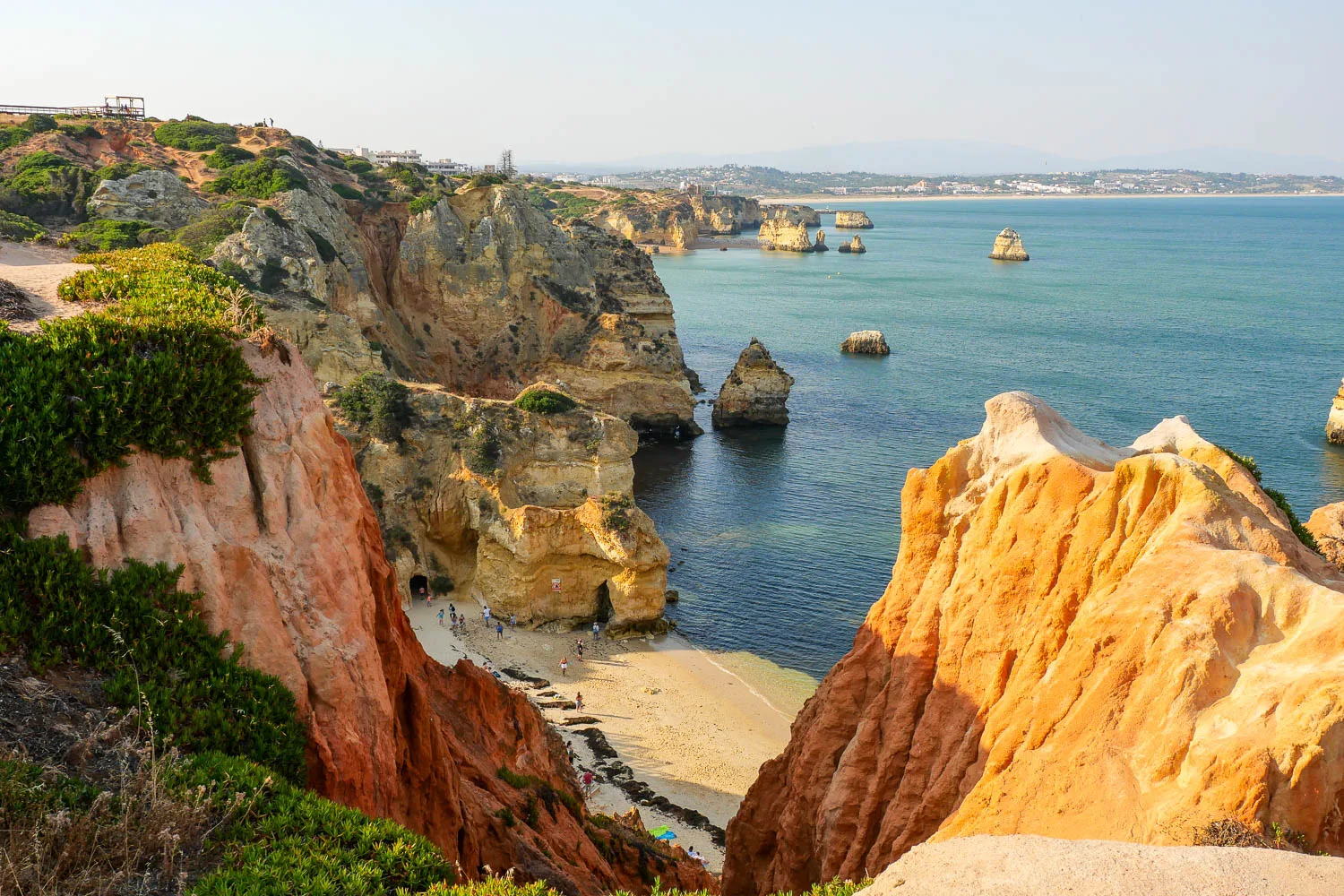
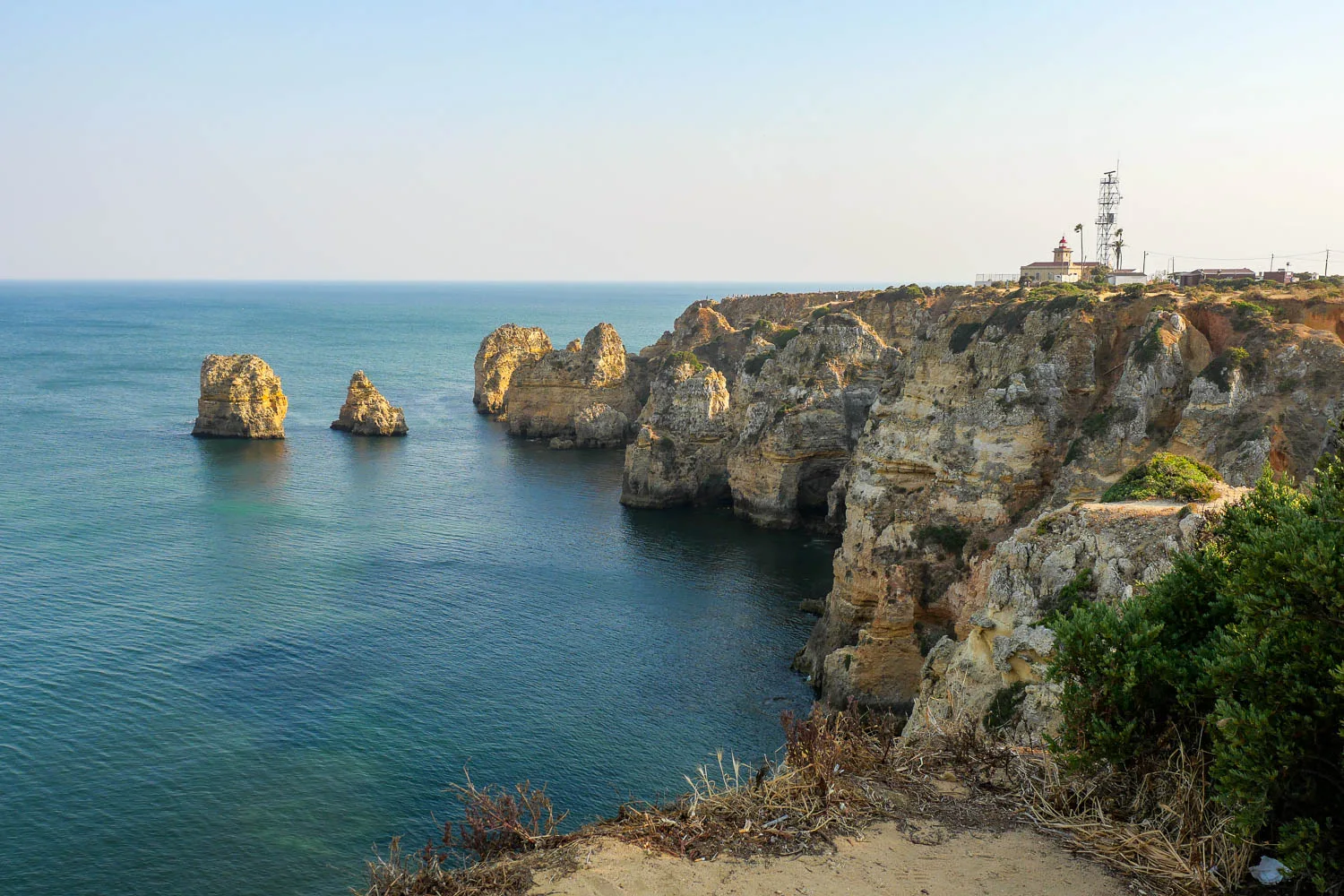
Located 10 minutes by car south of Lagos’s historic center (25 minutes on foot), Ponta da Piedade is one of the must-see sites in Lagos. Along this coastline exposed to wind and sea, erosion has shaped the cliffs into spectacular forms and colors.
A path along the top of the cliffs allows you to explore Ponta da Piedade on foot all the way to the lighthouse (farol). Along the route, signs indicate distances so there are no surprises. The trail includes wooden walkways installed on the cliff tops for panoramic views. Stairs lead down to various beaches and coves, but be prepared, it’s quite a workout with lots of steps.
There are four different parking areas at Ponta da Piedade between Praia do Camilo and the lighthouse, making it possible to visit quickly without too much walking. Besides walking, you can also admire the cliffs from the sea. Boat excursions depart from Lagos, such as this Ponta da Piedade Caves Boat Trip (€25).


Activities and excursions from Lagos
Lagos has the advantage of offering many activities and excursions in the surrounding area. If you don’t have a vehicle and don’t want to deal with public transport, this is the ideal solution. Be sure to book your activities and excursions in Lagos in advance, especially if you’re visiting during the high season in July and August. Most activities offer free cancellation up to 24 hours in advance.
Algarve coast cruises
With a coastline made up of spectacular cliffs and caves, Algarve cruises are one of the most popular activities for travelers. They allow you to see the rock formations from a new perspective that you can’t get from land. Cruises are often combined with other activities such as dolphin watching, which children will love.
Here are the cruises and boat excursions I recommend from Lagos :
- Lagos: Piedade Caves & Coastline – Catamaran
- Lagos: Combo Dolphin and Benagil Tour with Marine Biologist
- From Lagos: Boat Cruise to Ponta da Piedade
Kayak excursions
For those who prefer to be closer to nature and are reasonably active, I recommend kayak excursions. We tried it during our stay in the Algarve and it was really great. It allows you to explore sea caves and hidden beaches. Kayak tours are guided.
- Lagos: Kayak Experience
- Lagos: Guided Kayak Tour
- From Lagos: Ponta da Piedade Caves Kayak Tour from Catamaran
Paragliding, 4×4, kitesurfing, and surfing
Looking for thrills ? These excursions in the heart of the Algarve are perfect for adventurers ! They include pickup and drop-off in Lagos, so there’s no need to worry if you don’t have a rental car. Click on each activity for full details.
- Sagres Coast Sunset Jeep Tour
- Jeep Safari with Distillery Visit & Lunch
- 2-Hour Beginner Surf Lesson
- Kitesurfing lessons and courses in Lagos
- Paragliding in Lagos
Hot air balloon flight near Lagos
Experience a hot air balloon flight over the valleys of western Algarve or the rolling landscapes of the Lower Alentejo region near Lagos. You’ll drift with the wind in complete silence while taking in stunning views from above. It’s a unique experience to try at least once in your life.
The departure point is Lagos aerodrome, where you’ll take part in inflating the balloon. The flight lasts about 1 hour and covers a distance of 5 to 20 km. The altitude depends on the pilot according to local aviation regulations, but generally ranges between 152 and 915 meters above ground.
Book your hot air balloon flight near Lagos on this site. Note that the cancellation policy is different for this type of activity, full refunds are only available up to 10 days in advance (see all details via the link).
Seven Hanging Valleys Trail
The Seven Hanging Valleys Trail is the most beautiful hike you can do in the Algarve. It has even been awarded the title of best route by European Best Destinations. This 3-hour route, divided into several stages, allows you to see magnificent landscapes with rock formations (caves, arches, rock stacks) and stunning beaches.
This is truly the excursion to choose for hiking enthusiasts who also want to enter Benagil Cave. Booking is required via this link (duration 4.5 hours). Free cancellation up to 24 hours before the activity.

Visiting Lagos : what to do nearby
Benagil Cave
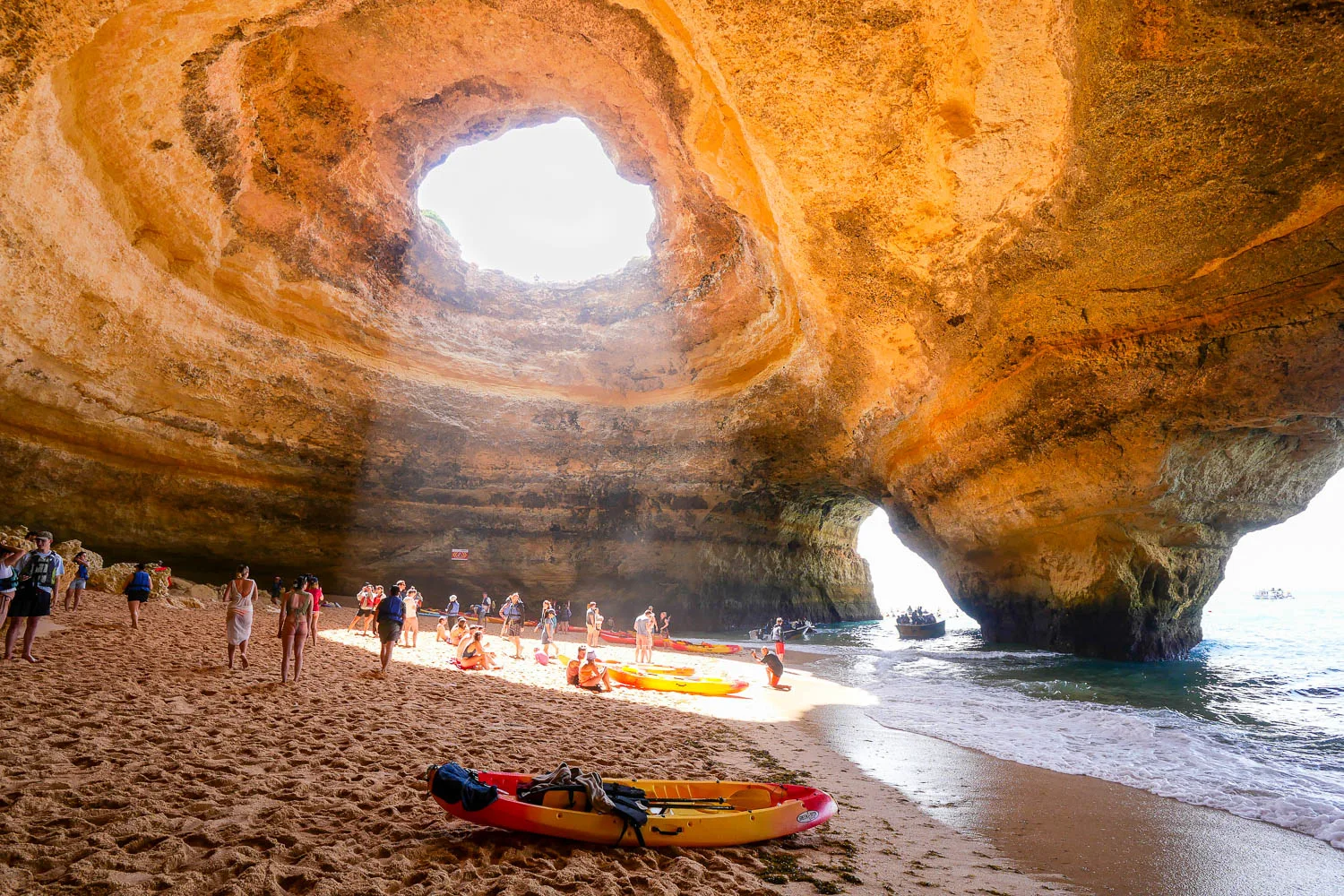
This is one of the most iconic sites in Portugal and a must-do in Lagos. Benagil Cave is located between Portimão and Albufeira, about 35 minutes by car from Lagos. You can reach Benagil Cave with a boat excursion. Several providers offer this option with boats of varying speeds. Some cruises combine the cave visit with dolphin watching. From Lagos, you can visit Benagil Cave with this excursion or with this cruise.
Silves
Looking to leave the coast and explore the Algarve countryside ? I recommend visiting Silves, one of the most beautiful towns inland in the Algarve. Although the region is mainly known for its beaches, there are also some lovely villages away from the coast.
The old town of Silves is dominated by a fortress built by the Moors between the 8th and 10th centuries. The other iconic monument is the cathedral, considered architecturally the most remarkable in the Algarve. Silves is less than 30 minutes by car from Lagos (free parking available).
If you don’t have a car, you can visit Silves and other inland villages on a day trip from Lagos. Here are two activities I recommend :

Sagres and São Vicente
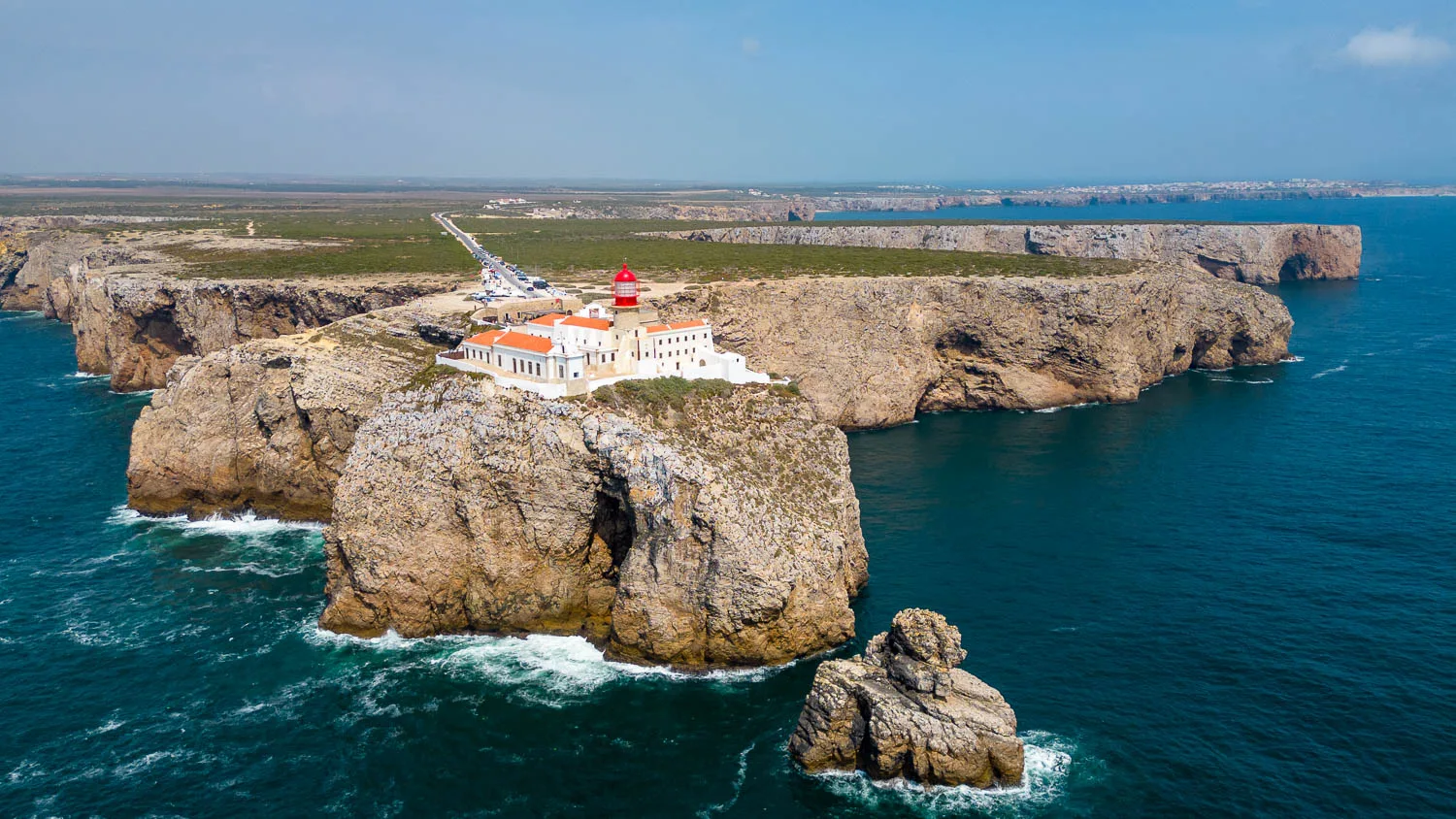
At the southwestern tip of the Algarve lies the town of Sagres and Cape St. Vincent (Cabo São Vicente in Portuguese). It’s 30 km from Lagos and easily doable as a day trip by car. The village of Sagres itself is fairly unremarkable (we didn’t like it much); it’s mainly frequented by surfers who enjoy the waves at Praia do Tonel near the town center. The surrounding area is more interesting, with several beaches, a military fort, and Cape St. Vincent with its lighthouse. The landscapes here are quite spectacular, with massive cliffs plunging into the sea.
It’s also possible to take an excursion to Sagres and Cape St. Vincent from Lagos.
Where to stay in Lagos ?
As mentioned in the introduction of this Lagos travel guide, the town is an excellent base for exploring the Algarve. You can easily spend a week here without getting bored. There are plenty of activities starting from Lagos and the beaches are stunning. Only the very pretty town of Tavira is a bit far away (115 km). If you’re unsure where to stay, I recommend reading my article on where to stay in the Algarve.
Many apartment rentals are only available for full-week bookings, so you won’t find them if you plan to stay in Lagos for just a few days. In that case, opt for bed and breakfasts. If you plan to move around frequently and have a car, it’s wise to stay outside the city center for easier travel.
Prices depend on the booking period. Rates are highest in July and August. Be sure to book well in advance for a summer stay.
- 24 € : Orange3 Hostel, a great option for budget backpackers visiting Lagos. At this price, you’ll get a bed in a dormitory (4 or 8 beds, mixed only). The hostel is located in the city center.
- 66 € : Pacheco’s Guesthouse, this bed and breakfast offers the cheapest private bathroom rooms in town. The decor is a bit vintage (to put it kindly), but there is a balcony. Located north of the old town.
- 83 € : Bedrooms AP Garden, very well located 200 meters from the center, this guesthouse offers modern rooms, some with balconies and nice city views. Reviews consistently praise the host’s kindness.
- 90 € : Marina Park 205, this apartment price is for 4 people, ideal for families or couples traveling together. Outdoor pool, free parking, and beach 1.9 km away.
- 97 € : Costamar, this studio south of Lagos center (30-minute walk) is 550 meters from Porto de Mós beach. It includes a kitchenette, a large balcony, and free parking.
- 109 € : Marina Park – Martine et Thierry, located 1.2 km from Meia Praia beach and 800 meters from the marina, this fully equipped 63 m² apartment (including washing machine) sleeps 4. Outdoor pool.
- 112 € : Casa Luma B&B, great location 700 meters from Praia da Forte da Bandeira and 100 meters from the center. Modern rooms. Breakfast is extra (€7.50) and highly rated.
- 163 € : Tivoli Lagos, for those who prefer hotel services, this 4-star property offers modern rooms for 2 to 3 people. It features a spa, a pool, and a free shuttle to its private beach club at Meia Praia.
Travel guide and tips for visiting Lagos in Portugal
How to get to Lagos ?
In most cases, if you’re spending your vacation in the Algarve, you’ll land at Faro Airport (the region’s only international airport). From there, you can reach Lagos in several ways :
- By car : a vehicle is very convenient for a road trip around Lagos and the surrounding area. You’ll find many rental agencies at Faro Airport, but it’s essential to book in advance. To get the best deal, I always use this price comparison tool.
- By bus : 6 buses per day connect Faro and Lagos (2h15). There are also 6 daily services to Lisbon (3h45).
- By train : faster than the bus, you can take a train from Faro to Lagos. The journey takes about 1h45 (Lagos is the final stop).
- Private transfer : the most comfortable option to reach Albufeira. The driver will meet you directly at the airport arrivals hall. Travel time is about 40 minutes. The price is €39 for up to 4 people and €48 for up to 8 people. Book your transfer to Lagos here.
Parking in Lagos
If you’re visiting Lagos by car, the first challenge is finding a parking spot. There are several free parking areas on the outskirts of the city, but you’ll need to walk a bit to reach the center.
We chose to use the paid underground parking located right in front of the old town (GPS coordinates). Pricing is calculated per 15 minutes, averaging €1.20 per hour. The maximum daily rate is €12.
How long to spend in Lagos ?
To visit all the sites and monuments in the historic center presented in this guide, you’ll need at least half a day. However, if you add a walk to Ponta da Piedade, some shopping, relaxing on a terrace with a drink, and lunch at a restaurant, it’s best to plan a full day to visit Lagos.
Of course, if you plan to do many excursions and enjoy the beach, it’s easy to spend a full week on vacation in Lagos. With its charm and wide range of activities, it’s an excellent base for exploring the region.
Best time to visit Lagos
The high tourist season in the Algarve runs through July and August. If you enjoy nightlife, this is when the city is most lively. However, the beaches can be crowded.
For a quieter experience, June and September are ideal months to visit Lagos. The water is warm enough for swimming, and there are fewer tourists. You’ll also benefit from better accommodation rates.
For hiking, spring and autumn are ideal to avoid the heat. The inland areas are also cooler, and you’ll have villages almost to yourself. In winter, the Algarve’s mild and sunny climate makes it a great destination for those seeking warmth during this season.
Lagos can be visited year-round, but if you want to enjoy the beaches, aim for June to September (the less sensitive to cold can swim in May, we saw some !).
You know now the best things to do in Lagos, Portugal. If you still have questions about things to do, feel free to leave a comment on the blog.